When you’re staring at a blank wall, a beige sofa, and a plant that’s doing its best but clearly needs emotional support,
it’s easy to think you’re “just not a decor person.” Good news: you don’t need a design degree, a huge budget, or a TV crew
from a makeover show to create a home you love. You just need a handful of clever decoration ideas, a tiny bit of courage,
and maybe a roll of painter’s tape.
Inspired by the playful spirit of Bored Panda’s “95 Decoration Ideas” list and backed by tried-and-true tips from major
home decor sites, this guide breaks creative inspiration into bite-size themes. Think of it as your personal mood board:
gallery walls, plant jungles, lighting tricks, pattern play, small-space hacks, and easy DIY projects you can actually finish.
You don’t have to use all 95 ideas at once (please don’t). Instead, skim, cherry-pick, and layer a few at a time until
your place looks less “temporary storage unit” and more “I did this on purpose.”
1. Let Your Walls Do the Talking
1.1 Create a gallery wall with a twist
A gallery wall instantly turns a boring wall into a story. Mix framed prints, family photos, postcards, and even quirky
objects like vintage keys or tiny mirrors. For a modern look, keep frames in one color (all black, all wood, or all white).
For a playful, eclectic vibe, mix frame sizes and finishes and let the arrangement feel a little imperfect.
Pro tip: lay everything out on the floor first and snap a photo. Then transfer the layout to the wall. That way, your decor
ends up on the wall and not in a pile of “oops” holes.
1.2 Try peel-and-stick wallpaper or decals
Peel-and-stick wallpaper is the commitment-phobe’s best friend. Use it on a single accent wall, inside a bookcase, or behind
open shelves to add pattern without repainting the whole room. Removable decalslike oversized florals, geometric shapes,
or starsare perfect for renters, kids’ rooms, and the decor-indecisive.
1.3 Lean, don’t hang
If you’re nervous about putting holes in the wall, lean art instead of hanging it. Prop a big framed piece on a console,
mantle, or dresser and layer smaller frames in front. It looks relaxed and intentional, and you can swap things around
whenever your mood or color palette changes.
2. Bring Nature Indoors (Without Turning Your Home Into a Jungle Gym)
2.1 Build a simple plant wall
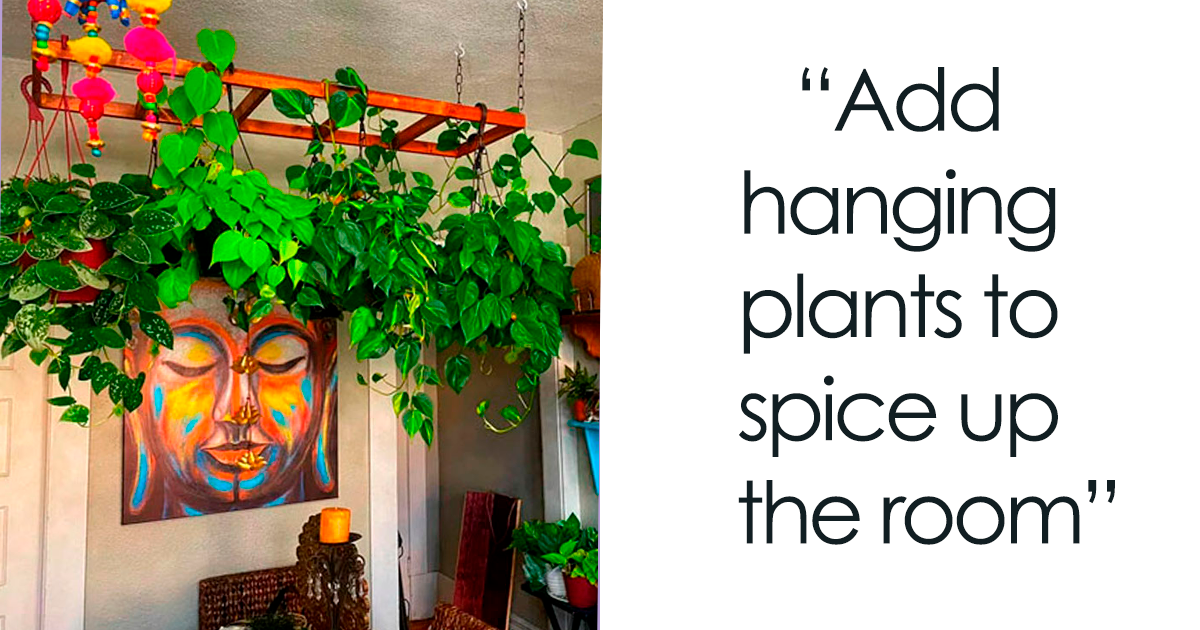
You don’t need a full vertical garden system to create plant magic. A row of wall-mounted planters, a narrow shelf filled
with trailing pothos, or a pegboard with hanging pots instantly adds life and texture. Mix heights so some plants droop,
some stand tall, and some softly frame artwork or a TV.
2.2 Mix real and faux greenery
If your talent for plant care is… aspirational, combine a few hardy real plants (snake plant, ZZ plant, pothos) with good-quality
faux greenery. Use real plants where they’ll get decent light and faux stems in spots that are mostly decorative, like high
shelves or dim hallways. Your guests will assume everything is real, and you don’t need to correct them.
2.3 Use plants as room dividers
In a studio or open-plan space, line up tall plants on a bench or console table to visually divide zones. A row of monsteras
or palms can separate “living room” from “bedroom” without building a walland it looks much cooler than a folding screen
you bought in a panic.
3. Play With Light Like a Designer
3.1 Layer your lighting
Great decor isn’t just about what you seeit’s about how you light it. Instead of one harsh overhead light, aim for three
types of lighting in each room:
- Ambient: the main overhead or flush-mount light.
- Task: desk lamps, reading lamps, under-cabinet lights.
- Accent: picture lights, LED strips, candles, and string lights.
When you combine them, even a basic rental suddenly feels warm, cozy, and intentional.
3.2 Use string lights beyond the holidays
String lights aren’t just for dorm rooms and December. Wrap them around a headboard, tuck them into a glass jar on a shelf,
or drape them along a curtain rod. Choose warm white bulbs for a soft glow rather than bright blue-white that makes your room
feel like a convenience store.
3.3 Highlight what you love
Got a favorite painting, framed vinyl record, or quirky sculpture? Add a tiny spotlight or picture light above it. The moment
you light something, it becomes special. Bonus: people will assume you’re an art collector instead of someone who just really
likes that one thrift-store print.
4. Textiles: The Fastest Makeover You Can Buy
4.1 Upgrade your sofa with pillow “outfits”
Throw pillows are like clothing for your couch. Mix three basic elements:
- One solid color that anchors your palette.
- One bold pattern (stripes, checks, or florals).
- One textured pillow (bouclé, velvet, tassels, or embroidery).
Stick to two or three main colors so things look coordinated, not chaotic. Swap covers seasonallycozy knits in winter,
lighter linen in summerto keep your decor feeling fresh.
4.2 Don’t underestimate a great rug
A rug can tie a room together, define a seating area, and hide the mysterious stain you stopped asking questions about.
In the living room, aim for a rug large enough that at least the front legs of your sofa and chairs sit on it. In the bedroom,
place a rug under the lower two-thirds of the bed so you step onto softness in the morning instead of a cold floor and
existential dread.
4.3 Soften your space with layered textiles
Layer a throw blanket over the arm of a chair, drape another along the end of the bed, and add a cushy pouf or floor cushion
for extra seating. This not only looks intentional but also quietly tells your guests, “Yes, you can actually relax here.”
5. Small-Space Decorating Tricks That Feel Like Cheating
5.1 Go vertical
When floor space is limited, think upward. Tall bookcases, wall shelves, and hooks pull the eye up and make ceilings feel
higher. Use the top of cabinets and wardrobes to display baskets, large vases, or art you rotate in and out of your gallery wall.
5.2 Choose furniture with secret superpowers
Look for pieces that multitask: an ottoman with storage inside, a coffee table with shelves, or a bench that can slide under
a table when not in use. A narrow console behind a sofa can double as a work-from-home desk, a drop zone for keys, and a place
to style a lamp and some decor.
5.3 Use mirrors like windows
Mirrors bounce light around and make small rooms feel bigger. Place a large mirror opposite a window to reflect daylight, or
use a group of smaller mirrors as wall art. Arched mirrors can mimic the look of architectural windows without any construction.
6. Color, Pattern, and Personality
6.1 Add a bold color pop (without repainting everything)
If you’re color-shy, don’t start with the wallsstart with accents. Pick one bold hue (mustard yellow, teal, coral, or emerald)
and repeat it in a few places: a lamp, a pillow, artwork, or a small side table. Your room will feel cohesive, not chaotic.
6.2 Try color-blocking or “micro” accent walls
Instead of painting an entire room, paint just:
- A rectangular block behind your headboard.
- The lower third of the wall in a contrasting shade.
- The inside of a doorway or alcove.
These mini accent moments add depth without the drama of repainting four walls at once.
6.3 Mix patterns with one simple rule
You can absolutely mix florals, stripes, and checksjust keep a common color running through all of them. For example, if
your rug has navy and rust, choose a striped pillow that also has navy and a floral pillow that includes a touch of rust.
Different patterns, same color family: instant harmony.
7. DIY & Upcycled Decor That Actually Looks Good
7.1 Paint (or re-paint) one piece of furniture
A tired dresser, side table, or bookcase can become the star of the room with a coat of paint and new hardware. Go classic
with deep navy or charcoal, or try a fun color like sage, terracotta, or soft blush. Swap standard knobs for brass, leather,
or ceramic pulls and suddenly your “old” furniture feels custom.
7.2 Turn everyday items into decor
Not everything on your shelves has to come from the decor aisle. Stack pretty cookbooks in the kitchen, display your favorite
mugs on hooks, or fill a glass jar with matchbooks, seashells, or wine corks. When you decorate with things you actually use,
your home automatically feels more personal and less staged.
7.3 Style shelves like a pro
Use a simple formula:
- One stack of books (horizontal or vertical).
- One decorative object (a small sculpture, vase, or candle).
- One plant or something with organic texture.
Repeat in different variations on each shelf. Leave some breathing room; negative space is part of the design, not a failure
to buy more stuff.
8. Seasonal and Holiday Layers (Without Needing a Storage Unit)
8.1 Swap simple accents, not entire rooms
Instead of buying decor that only works for one month of the year, focus on pieces you can tweak. A neutral wreath can get
a new ribbon each season. A simple glass vase can hold branches in winter, tulips in spring, hydrangeas in summer, and dried
stems in fall. Pillow covers are easier to store than whole pillows and can change the vibe in minutes.
8.2 Decorate small spaces smartly
In tiny apartments or dorms, go vertical for holiday decor. A wall-mounted tree alternative, a garland around a doorway, or
fairy lights around a mirror can bring plenty of festive energy without costing you precious floor space. Think “festive
outlines” instead of giant centerpieces.
8.3 Create a flexible “seasonal corner”
Designate one surfacea console, shelf, or coffee tableas your seasonal stage. Rotate decor there throughout the year:
pumpkins and warm candles in fall, greenery and twinkle lights in winter, bright florals and citrus bowls in spring and
summer. The rest of your home stays calm and consistent while that one spot satisfies all your “I want to decorate everything”
urges.
9. What I Learned After Trying “95 Decoration Ideas” in Real Life
Let’s be honest: when you hear “95 decoration ideas,” it sounds a little overwhelming, like someone asking you to watch an
entire TV series in one night. In practice, though, trying a bunch of ideas over time is more like slow-cooking your style.
You keep what works, quietly retire what doesn’t, and end up with a home that feels like younot a catalog.
The first thing you notice when you start experimenting is how big the small stuff feels. Swapping in a new rug or hanging a
handful of frames can completely change how you use a room. A once-ignored corner suddenly becomes a reading nook because you
added a lamp, a chair, and a plant. That tiny change affects your nightly routine more than buying a whole new sofa ever would.
Another lesson: there’s no “perfect” version of your home waiting for you at the end of some magical project list. You try a
gallery wall and realize you prefer fewer pieces. You paint an accent color that looks amazing at 2 p.m. and slightly unhinged
at 9 p.m., so you dial it back a shade. You buy a plant assuming it will thrive by sheer positive thinking and end up learning
about light levels and drainage the hard way. Each experiment makes you a little braver and a lot clearer about what you
actually like.
You also start seeing decor opportunities in everyday objects. Maybe those cookbooks stacked on the counter become a styled
moment with a candle and a small framed print. That pile of blankets turns into an intentional basket in the living room.
The more you play with your space, the more you realize you already own half of what you needyou just hadn’t arranged it
thoughtfully yet.
And then there’s the emotional side. A home you’ve slowly decorated feels different to live in. The gallery wall of photos
reminds you of trips and people you love. The plant shelf is proof that you can keep something alive longer than a week.
The cozy reading corner makes it easier to unplug from your phone at night. These little pockets of beauty and comfort
are tiny daily gifts from “past you” to “future you.”
The biggest takeaway from working through dozens of decoration ideas is that style isn’t about perfectionit’s about repetition.
You try, adjust, repeat. Over time, your decorating choices stop being random and start connecting: a color that appears in
your pillows shows up in your art, then in your rug, then in a vase you didn’t plan to match but somehow does. Your home becomes
a visual echo of your habits, hobbies, and quirks.
So if you’re looking at your space and thinking, “I don’t know where to start,” pick one tiny idea from this list: hang a picture,
move a lamp, add a plant, toss a throw over the sofa. Live with it for a week. Then add another layer. Before long, you’ll look
around and realize you’re not just following decoration ideas from the internetyou’re creating your own.