Fashion has a funny way of pretending to be simple. A shirt is a shirt, a dress is a dress, and jeans are supposed to be jeans until the fitting room mirror starts acting like a courtroom witness. Suddenly, one outfit becomes thirty-seven questions: Is this too tight? Too loose? Too bold? Too “not for me”? That is exactly why the viral idea behind two friends wearing the same outfit on different body types feels so refreshing. It takes the pressure off perfection and puts the spotlight back where it belongs: on personal style, confidence, and the joy of getting dressed without asking permission from imaginary fashion police.
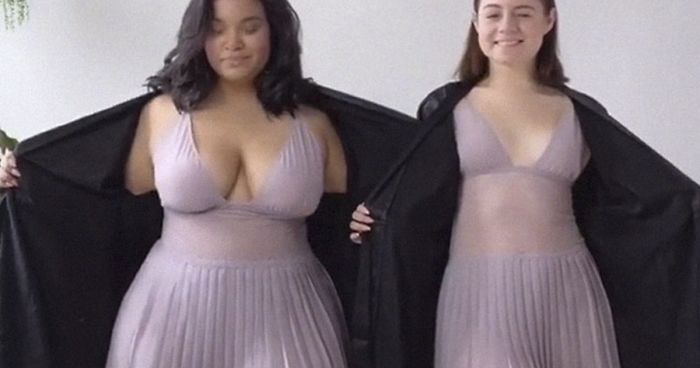
The popular #StyleNotSize concept, made famous by friends Denise Mercedes and Maria Castellanos, shows two women with different body shapes wearing matching outfits side by side. The result is not a competition. It is not a “who wore it better” trap. It is a visual reminder that the same outfit can look beautiful in more than one way. A crop top can be playful on one body and powerful on another. A bodycon dress can hug curves, skim lines, create movement, and still be the same dress. Clothes do not have one correct body. They have wearers.
In these 33 new-pics-style fashion moments, the real star is not only the clothing. It is the friendship, the humor, the twinning energy, and the quiet rebellion against outdated style rules. Because frankly, “only certain bodies can wear certain outfits” belongs in the same dusty drawer as low-rise jeans trauma and mascara from 2008.
Why “Same Outfit, Different Body Types” Went Viral
The reason this trend works is wonderfully simple: people want to see real-life style variety. Traditional fashion campaigns often show clothes on one model, one sample size, one lighting setup, and one carefully edited fantasy. That can be pretty, but it is not always useful. Most shoppers want to know how a dress moves, how a waistband sits, whether a top still looks cute when the body underneath is not shaped like a store mannequin with Wi-Fi.
When two friends wear the same outfit in different sizes, viewers instantly get more information. The look becomes more human. Instead of asking, “Can I wear that?” the viewer starts thinking, “How would I style that for me?” That tiny shift is powerful. It turns fashion from a gatekeeping system into a playground.
Denise and Maria’s matching looks became popular because they are fun, clear, and emotionally satisfying. They show that a mini dress does not need a height requirement. A bikini does not need a committee vote. High-waisted jeans do not care whether your stomach is flat, soft, round, athletic, or somewhere in between. The outfit is not the boss of you. At most, it is a very cute employee.
The Message Behind the 33 New Pics
The biggest message is that style has no size. That phrase may sound simple, but it challenges years of fashion advice built around hiding, minimizing, slimming, balancing, disguising, and generally treating bodies like suspicious luggage at airport security. These photos say the opposite: wear the color, wear the print, wear the fitted dress, wear the shorts, wear the swimsuit, wear the thing you saved in your cart for six months because you were waiting to become a “future version” of yourself.
The same outfit on two different body types also proves that clothing does not need to create identical results to be successful. On one friend, a satin slip dress might look sleek and delicate. On the other, it might look glamorous and curve-skimming. A blazer-and-trouser set might feel sharp and tailored on one body, relaxed and bold on another. Both interpretations are valid. Fashion is not a photocopier. Thank goodness, because photocopiers jam when you need them most.
It Is Not About Comparison
The internet loves comparison. It can turn two people standing next to each other into an unsolicited debate panel. But the healthiest way to read these images is not “better or worse.” It is “different and beautiful.” One body may emphasize the neckline. Another may make the silhouette feel more dramatic. One person may style the outfit with dainty shoes, while the other adds chunky sneakers or a strong lip. The magic is in the difference.
It Makes Fashion More Practical
These posts also help shoppers make smarter choices. A single product photo rarely tells the whole story. Seeing the same outfit on multiple bodies can reveal stretch, length, coverage, structure, transparency, and proportion. That is useful information, especially for online shopping, where “true to size” sometimes means “true to a mysterious forest creature none of us have met.”
What the Outfits Teach Us About Body Confidence
Body confidence is not always a dramatic mirror speech with swelling background music. Sometimes it is simply putting on the outfit and leaving the house. Sometimes it is buying the shorts. Sometimes it is posting the photo. Sometimes it is wearing the bikini even though part of your brain is still repeating old nonsense from a magazine you read at age thirteen.
The same-outfit trend works because it normalizes visible bodies. It shows arms, stomachs, hips, thighs, shoulders, busts, waists, and legs without turning them into problems to solve. Viewers see that confidence does not come from having the “right” body. It often comes from seeing enough examples of people like you enjoying fashion until your brain finally says, “Fine, maybe we can wear the dress.”
Experts on body image have long noted that unrealistic appearance ideals can affect self-esteem, especially when people constantly compare themselves to edited media images. That is why diverse representation matters. When social media shows only one body type, it quietly teaches people that beauty has a narrow doorway. When creators show multiple body types in the same outfit, they kick that doorway wide open and walk through it wearing matching boots.
Why Inclusive Sizing Still Matters
As inspiring as these photos are, they also highlight a practical issue: brands need to make clothes in more sizes. It is not enough to say “everyone can wear it” if only five people can actually buy it. Size inclusivity means offering a thoughtful range, grading patterns properly, testing fit on different bodies, and treating plus-size, petite, tall, curvy, athletic, and mid-size shoppers as real customers rather than special side quests.
Many shoppers know the disappointment of finding a perfect outfit online, clicking the size menu, and watching hope disappear faster than a hair tie in a laundry room. Inclusive fashion should not feel like treasure hunting. If a dress is part of a brand’s main collection, a wider range of customers should be able to access it. The same-outfit trend makes that need visible in the most stylish way possible.
Good Fit Is Not One-Size-Fits-All
Fit is not just about numbers on a tag. Two people can wear the same size and need completely different cuts. One may need more room in the bust, another in the hip, another in the shoulder, another in the rise of the pants. This is why stretch, adjustable straps, wrap designs, elastic waistbands, thoughtful tailoring, and accurate measurements matter. A good outfit should support movement, not require a full negotiation every time you sit down.
Representation Builds Trust
Brands that show clothing on different body types give shoppers confidence. They are saying, “We know our customers are not all built the same, and we planned for that.” That kind of honesty is better than pretending every dress magically falls the same way on every person. Spoiler: it does not. Fabric has opinions.
Style Lessons From the Same Outfit Trend
The beauty of this trend is that it teaches practical styling without sounding like a rulebook written by someone allergic to fun. Here are the biggest lessons:
1. Proportion Is Personal
A cropped jacket may hit one person at the natural waist and another slightly above it. A midi skirt may read as elegant on one height and almost maxi on another. That does not make the outfit wrong. It just means styling is personal. Shoes, belts, layering pieces, and accessories can all shift proportion.
2. Comfort Changes Everything
An outfit looks better when the wearer can breathe, walk, sit, dance, and eat fries without entering a legal dispute with the waistband. Confidence is not only visual. It is physical. If you are tugging, pulling, hiding, and adjusting every six seconds, the outfit may not deserve your loyalty.
3. Color Belongs to Everyone
Bright colors are often treated like a privilege reserved for the bold, the thin, or the vacationing. Nonsense. Hot pink, cobalt blue, lemon yellow, emerald green, and fiery red can look amazing on every size. The real trick is finding shades that make you feel awake, expensive, or ready to emotionally dominate brunch.
4. Prints Are Not the Enemy
For years, many people were told that prints “add volume.” But prints also add personality, energy, and visual interest. Florals, stripes, checks, animal prints, and abstract patterns can all work beautifully on different body types. The question is not “Am I allowed to wear this print?” It is “Do I like this print enough to let it represent me in public?”
5. Tailoring Is a Secret Weapon
Sometimes the difference between “almost” and “amazing” is a hem, a dart, a waist adjustment, or a strap alteration. Tailoring is not admitting defeat. It is customizing the outfit to your actual body, which is much more sensible than expecting your body to apologize to a pair of pants.
How to Recreate the Look With Your Best Friend
If you want to try the same-outfit idea with a friend, start with something both of you genuinely like. Do not choose a dress because it is trendy if one of you secretly feels like a decorative napkin in it. Pick a theme: denim day, vacation dresses, blazer outfits, matching swimsuits, monochrome looks, date-night style, cozy fall layers, or “we are going to Target but spiritually we are on a runway.”
Next, focus on fit options. Look for brands with broad sizing, flexible fabrics, and clear measurement charts. If the exact same piece is not available in both sizes, choose similar silhouettes, colors, or textures. The point is not forensic identicalness. The point is shared style energy.
Finally, pose in a way that feels natural. Laugh. Move. Stand tall. Sit down if the outfit allows it. Twirl if the skirt demands drama. The best photos often happen when both friends stop trying to look perfect and start enjoying themselves. Fashion loves confidence, but it absolutely adores joy.
The Bigger Cultural Impact
At its best, the same-outfit movement pushes fashion media toward a more realistic future. It asks magazines, brands, influencers, stylists, and shoppers to stop treating one body type as the default. It encourages people to separate style from size and beauty from sameness. It also reminds us that social media can do something good when it is not busy convincing us to buy a 12-step skincare routine and a lamp shaped like a mushroom.
The trend also expands the definition of aspiration. Aspiration does not have to mean wanting to look like someone else. It can mean wanting to dress with more courage, shop with better standards, support inclusive brands, or stop saving “good outfits” for an imaginary life. The life is now. Wear the outfit now.
Personal Experiences and Real-Life Reflections on Same-Outfit Styling
One of the most relatable things about seeing two friends wear the same outfit on different body types is how familiar the situation feels. Almost everyone has had a shopping moment with a friend where one item looks completely different on each person. Sometimes it is hilarious. Sometimes it is confusing. Sometimes it is the emotional equivalent of opening a bag of chips and discovering it is mostly air. But those moments can also teach us that clothes are flexible, bodies are individual, and style is not a math equation.
Imagine two friends trying on the same wrap dress. On one, the waist tie lands exactly at the narrowest point and creates a soft hourglass shape. On the other, the tie sits higher, the neckline opens differently, and the skirt falls with more movement. At first glance, someone might say, “It looks different.” But different is not failure. Different is the entire point. The dress is having two separate conversations, and both can be stylish.
The same thing happens with jeans. One friend may love a rigid straight-leg pair because it gives structure. Another may prefer stretch denim because it follows curves comfortably. If they both wear the same wash and style it with white tanks and blazers, the final outfits can still feel connected. One version might be polished and crisp; the other might be relaxed and cool. Neither friend has to shrink, pad, hide, or explain herself. The outfit adapts, and where it does not adapt, the styling can.
Swimwear is often the most emotional example. Many people carry years of insecurity into a fitting room, especially when the lighting appears designed by someone seeking revenge. Seeing two friends wear the same bikini or one-piece can soften that fear. It shows that stomachs, hips, thighs, and busts do not need to look identical for swimwear to be beautiful. A high-waisted bikini can feel retro on one body and supportive on another. A one-piece can look sporty, elegant, sexy, or playful depending on the wearer. The body is not ruining the swimsuit. The body is giving it context.
Another real-life lesson is that confidence grows through practice. The first time someone wears a bold outfit, they may feel exposed. The second time, they feel curious. By the fifth time, they are recommending red lipstick to strangers and walking through the grocery store like aisle seven is Paris Fashion Week. Clothes can help people rehearse confidence until it becomes less of a performance and more of a habit.
Friendship makes that process easier. A trusted friend can say, “You look amazing,” when your inner critic is acting like an unpaid intern with too many opinions. Taking photos together, swapping styling ideas, and laughing at awkward poses turns fashion into connection instead of pressure. That is the quiet charm of the same-outfit trend: it is not just about looking good online. It is about reminding each other that style is more fun when nobody is left out.
Conclusion: The Same Outfit Can Tell Many Beautiful Stories
The appeal of Two Friends Show How The Same Outfit Looks On Their Different Body Types is not just visual. It is emotional, practical, and cultural. These 33 new-pics-style moments show that clothing does not belong to one shape, one size, or one narrow beauty ideal. The same dress, swimsuit, blazer, or pair of jeans can create different results on different bodies, and that is not a flaw. That is fashion doing its job.
Denise Mercedes, Maria Castellanos, and the broader #StyleNotSize movement remind us that the best outfit is not the one that makes you disappear into someone else’s standard. It is the one that helps you feel present, comfortable, expressive, and maybe just a little dangerous to outdated fashion rules. Wear the crop top. Try the color. Buy the dress. Take the photo. And if someone says your body is not “right” for the outfit, feel free to smile politely and continue looking fabulous. Some opinions are dry-clean only, and frankly, not worth the bill.
Note: This article is original editorial content written for web publication and synthesized from real fashion, media, and body-image information without inserting source links into the article body.