If you have scoliosis, it is completely reasonable to ask whether a chiropractor can help. When your spine is doing its best impression of a winding road, “hands-on help” sounds appealing. The honest answer is a little less dramatic and a lot more useful: a chiropractor may help some people with scoliosis feel better, especially when muscle tightness, stiffness, or back pain are part of the picture, but chiropractic care is not considered a proven treatment for correcting the spinal curve or stopping scoliosis from progressing.
That distinction matters. Feeling better and changing the actual curve are not the same thing. One is symptom relief. The other is structural treatment. If you know the difference, you can make smarter choices, ask better questions, and avoid spending months hoping your spine will suddenly become cooperative out of sheer optimism.
What scoliosis actually is
Scoliosis is a sideways curve of the spine, often with some rotation of the vertebrae. Instead of looking straight from behind, the spine may form an “S” shape or a “C” shape. It most often shows up in late childhood or the early teen years, especially during growth spurts, although adults can also develop scoliosis or continue to live with curves that started earlier in life.
Some cases are mild and barely noticeable. Others cause uneven shoulders, a tilted waist, one hip sitting higher than the other, a rib hump when bending forward, back pain, fatigue, or changes in balance and posture. Severe curves can create bigger problems, including nerve symptoms or breathing issues in some cases. So no, scoliosis is not always “just a posture thing.” Sometimes it is quiet. Sometimes it is a major orthopedic issue wearing a subtle disguise.
So, can a chiropractor help with scoliosis?
Yes, but with an asterisk the size of a brace. A chiropractor may help with symptoms related to scoliosis, such as back discomfort, muscle tension, stiffness, or limited movement. That can be valuable. Pain relief counts. Better mobility counts. Being able to sit through dinner without feeling like your back is filing a complaint absolutely counts.
What chiropractic care is not known to do reliably is:
- straighten a structural scoliosis curve in a lasting way,
- reduce the Cobb angle consistently over time,
- prevent curve progression in growing children or teens,
- replace bracing when bracing is medically indicated, or
- replace surgery when surgery is clearly needed.
That is the big takeaway. A chiropractor may be part of a comfort-focused plan, but not usually the captain of the ship when it comes to managing the curve itself.
What the evidence suggests
Mainstream orthopedic and scoliosis organizations have been remarkably consistent on this point. Proven scoliosis treatments center on observation, bracing, and surgery, depending on the person’s age, growth remaining, symptoms, and curve size. Alternative approaches such as chiropractic care may be used by some patients for pain relief, but they have not been shown to stop the curve from worsening or to correct it long term.
That does not mean every chiropractic visit is pointless. It means expectations should be realistic. If someone tells you a few adjustments will “fix” scoliosis, your skepticism should sit up straighter than your spine ever has.
Where chiropractic care may fit in a scoliosis plan
1. Symptom relief
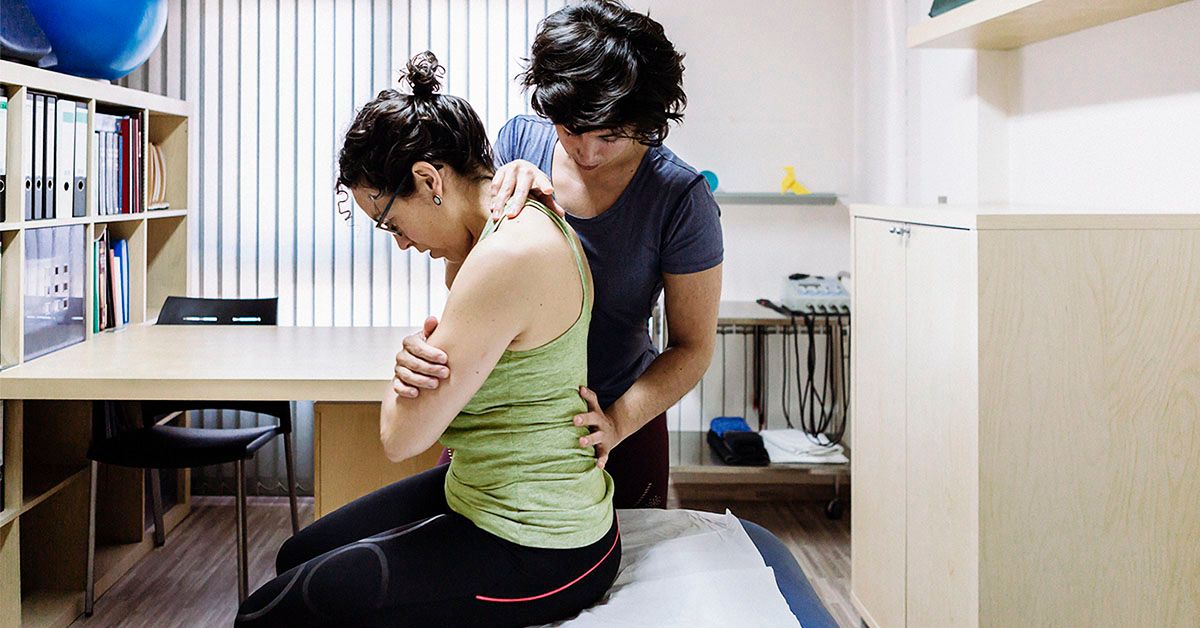
Adults with scoliosis often deal with secondary issues more than the curve itself: sore muscles, stiffness, joint irritation, fatigue after standing, or mechanical back pain. In that setting, manual therapy may help some people feel looser and more comfortable. It may also make it easier to tolerate exercise, physical therapy, or daily activity.
2. Short-term improvement in function
Some patients report better movement after hands-on treatment. That can matter if your muscles around the curve are tight and overworked. The improvement may be practical rather than dramatic: getting through a workday more comfortably, walking longer, sleeping better, or not needing to perform a three-step ceremony every time you stand up from the couch.
3. A supportive role alongside exercise
Chiropractic care may make more sense when it supports a larger plan that includes targeted exercise, medical follow-up, and, when appropriate, scoliosis-specific physical therapy. In other words, it can be a teammate. It should not be asked to play every position at once.
What treatments are more established for scoliosis?
Observation
Many mild curves only need regular monitoring. This is common in children and teens whose curves are small and in adults whose scoliosis is stable. Observation does not mean neglect. It means checking the spine at appropriate intervals to see whether anything changes.
Bracing
For growing children and adolescents with moderate curves, bracing is one of the most established nonsurgical tools. The goal is not usually to make the spine perfectly straight. The goal is to keep the curve from getting worse while the child is still growing. That is a very important difference, because a brace is playing defense. Good defense is not glamorous, but it wins games.
Physical therapy and scoliosis-specific exercise
Physical therapy can help with strength, posture, balance, endurance, and pain management. Scoliosis-specific exercise methods, such as Schroth-based programs, are often used in specialized settings. These approaches are not magic either, but they may help improve body awareness, muscular support, breathing mechanics, and daily function.
Medication, injections, and broader nonsurgical care
Adults with scoliosis may benefit from a more general spine-care plan, including physical therapy, medications, activity modification, and sometimes injections for pain related to arthritis, nerve irritation, or spinal degeneration. In adults, the pain source may not be the curve alone. It may be the wear-and-tear that builds around it over time.
Surgery
Surgery is generally reserved for more severe curves, progressive curves, or cases involving major symptoms, nerve problems, functional decline, or failure of nonsurgical care. No one rushes into spinal surgery for fun. It is considered because the downside of doing nothing becomes bigger than the downside of operating.
Who should see a chiropractor, and who should see a scoliosis specialist first?
If you have scoliosis and are thinking about chiropractic care, the safest starting point is this: get a proper diagnosis first. That usually means an evaluation by a physician, orthopedic specialist, spine specialist, or another qualified clinician who can confirm the diagnosis and, when needed, measure the curve on X-ray.
A chiropractor may be a reasonable addition to care if:
- your scoliosis has already been diagnosed,
- you understand your curve is being monitored appropriately,
- you are mainly seeking help for pain or stiffness, and
- your chiropractor works within a broader medical plan instead of pretending the rest of medicine misplaced the map.
You should see a scoliosis specialist first, or urgently, if:
- the curve is newly noticed in a child or teen,
- you have not had imaging and no one has measured the curve,
- the curve seems to be worsening quickly,
- you have numbness, weakness, trouble walking, or balance changes,
- you have bowel or bladder symptoms, or
- pain is severe, persistent, or interfering with daily life.
Those are not “wait and see if a few adjustments help” moments. Those are “get medically evaluated” moments.
Questions to ask before starting chiropractic care for scoliosis
If you are considering a chiropractor, ask smart questions up front:
- Have I had the right evaluation and imaging for my scoliosis?
- Are you treating the curve itself, or mainly helping with pain and function?
- How will we know whether care is helping?
- Are you willing to coordinate with my orthopedist, primary care clinician, or physical therapist?
- What symptoms would mean I should stop and get medical reassessment?
Clear answers are a good sign. Grand promises are not. Any provider who acts like scoliosis is simple probably should not be in charge of something as complicated as a rotating spine attached to an actual human.
Common myths worth retiring immediately
“If the pain improves, the scoliosis is fixed.”
Not necessarily. Pain can improve even if the curve is unchanged. Relief is good, but it is not proof that the scoliosis has been corrected.
“A child with scoliosis can just do chiropractic instead of bracing.”
That is not what established scoliosis guidelines support. In a growing child with a moderate curve, bracing may be important to reduce progression risk. Skipping it can mean losing time that cannot be recovered later.
“Only severe scoliosis needs attention.”
Mild curves may only need observation, but they still deserve a proper diagnosis and follow-up. In growing children, a small curve can become a bigger one.
“All scoliosis causes terrible pain.”
No. Many children and teens with scoliosis have little or no pain. Adults are more likely to experience discomfort, especially when degeneration is part of the picture.
The bottom line
A chiropractor can sometimes help a person with scoliosis feel better, particularly when pain, tight muscles, and stiffness are the main complaints. That can make daily life easier, and there is nothing trivial about that. But chiropractic care is generally not considered a proven standalone treatment for changing the curve or preventing it from worsening.
If you or your child has scoliosis, the best move is usually a team-based one: get the curve properly evaluated, understand whether it needs observation, bracing, exercise-based rehab, pain management, or surgical consultation, and then decide whether supportive chiropractic care has a useful role. Think of it this way: comfort care can be helpful, but it should not distract from curve care when curve care is what the spine actually needs.
Experiences people often have with scoliosis care
Note: The examples below are illustrative composites based on common real-world situations in scoliosis care. They are not individual patient testimonials.
A teen whose family hoped a simple fix would work
A parent notices one shoulder looks higher in school photos. The child is not in much pain, so the family assumes it is posture, a heavy backpack, or the universe being rude during growth spurts. They try stretching, massage, and maybe a few chiropractic visits because those seem less intimidating than a spine clinic. The teen feels looser for a day or two, which is encouraging. But once X-rays are done, the family learns the curve is moderate and the child is still growing. Suddenly the conversation changes from “How do we make this feel better?” to “How do we keep it from getting worse?” That is when bracing and specialist follow-up become the real story. The lesson is not that symptom relief was bad. It is that relief did not answer the bigger question.
An adult who mainly wants less pain and more mobility
An adult with long-standing scoliosis often tells a different story. The curve has been around for years, maybe decades. The biggest issue is not panic about progression but the daily grind of pain, stiffness, muscle fatigue, and feeling crooked after standing too long. For this person, chiropractic care may feel helpful in a very practical way. They may walk out moving more easily, sleep better that night, or tolerate exercise more comfortably the next day. But the people who do best usually understand the deal: chiropractic care is one tool, not the whole toolbox. They often combine it with physical therapy, core strengthening, walking, medical pain management, and periodic specialist check-ins. Their success comes from consistency and realism, not from chasing a miracle.
A family that loses time because the curve was underestimated
Another common experience is delay. A child or teen is told the curve is “not a big deal,” or the family is reassured that conservative hands-on care will correct it. Months pass. Then more months. By the time proper imaging is repeated, the curve has progressed enough that the treatment window is narrower than it used to be. This is one of the hardest experiences for families, because it comes with regret. They were trying to help. They were not being careless. They just did not get a clear explanation that growth changes the rules. With scoliosis, timing matters. A growing spine does not wait politely while adults compare opinions.
A patient who benefits most from coordinated care
The most encouraging stories usually involve coordination. A patient has an orthopedist measuring the curve, a physical therapist teaching scoliosis-specific exercises, a primary care clinician helping manage overall health, and maybe a chiropractor contributing symptom relief when appropriate. No one overpromises. No one pretends to be the only answer. Progress is measured honestly: pain scores, function, stamina, posture, and imaging when needed. Patients in this situation often feel less overwhelmed because the plan makes sense. They know what is being treated, why it is being treated, and what success actually looks like. In scoliosis care, that kind of clarity can be as therapeutic as anything else.
Conclusion
If you are wondering whether a chiropractor can help with scoliosis, the best answer is this: possibly for symptoms, probably not for the curve itself. That may sound less exciting than a dramatic before-and-after promise, but it is far more useful. The right plan depends on age, curve size, symptoms, growth status, and whether the goal is comfort, curve control, or both. When in doubt, start with a proper medical evaluation, then build care around facts instead of wishful thinking.