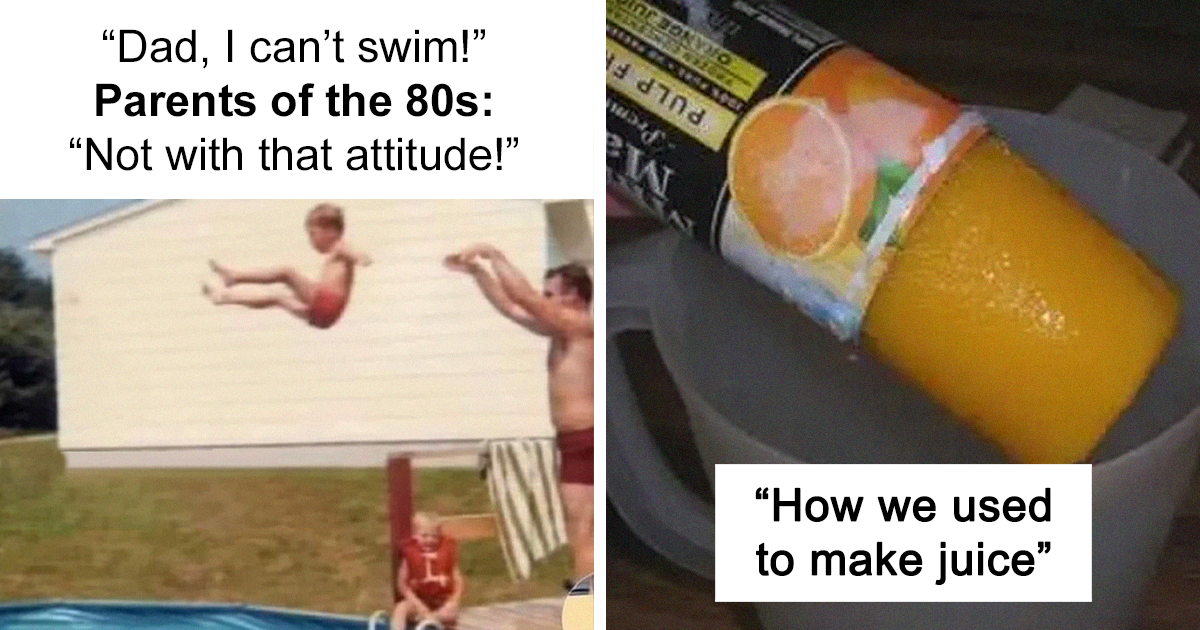
Long before children could stream any cartoon ever made while video-calling three friends and ordering snacks from a tablet, entertainment required patience, planning, and occasionally a pencil shoved into a cassette tape. Growing up in the 1980s and 1990s meant living in a strange transitional period: technology was becoming exciting, but it was still slow enough to test the human spirit.
A popular Facebook nostalgia community, “Grew Up In The 80’s and The 90’s,” preserves memories from this wonderfully inconvenient era. When the group was featured in 2022, it reportedly had attracted around 1.6 million members who shared old toys, forgotten household objects, pop-culture jokes, and childhood experiences. The posts are funny because they are familiarbut only to people who remember when a busy phone line could destroy an entire evening.
Community background researched from the original feature and Facebook post.
Here are 50 classic ’80s and ’90s memories that may require some explaining to today’s kids.
Music, Movies, and Television Required Commitment
-
Making a Cassette Mixtape
A playlist once required blank tape, handwritten labels, perfect timing, and the reflexes of a professional athlete. Talking over the final five seconds of a song was grounds for removing a radio DJ from your imaginary Christmas-card list.
-
Rewinding a Cassette With a Pencil
When the tape came loose, a pencil became a precision audio-repair instrument. Today’s kids may call it primitive; we called it saving battery power.
-
Waiting Beside the Radio for One Song
You could wait an hour for your favorite song, press “record” half a second late, and accidentally capture an advertisement for discount mattresses. That imperfect recording would still become treasured property.
-
Carrying a Walkman Everywhere
The portable cassette player represented personal freedom, even if it was bulky, skipped songs only through aggressive fast-forwarding, and consumed batteries like a hungry robot. Sony introduced the original Walkman in 1979, and it became one of the defining personal-audio devices of the following decade.
-
Flipping the Tape to Side B
Albums had an intermission. When Side A ended, listeners physically removed the cassette, turned it over, and continued the musical journey.
-
Returning VHS Tapes Rewound
“Be kind, rewind” was both customer-service advice and a moral philosophy. Returning an unrewound movie meant forcing the next customer to stare at fast-moving credits before reaching the beginning.
-
Friday Night at the Video Store
Choosing a movie involved walking through aisles, examining boxes, and negotiating with family members. If every copy of the new release was gone, democracy immediately collapsed.
-
Recording Television on a VCR
Programming a VCR timer was an advanced technical qualification. Many households simply accepted that the display would blink “12:00” forever.
-
Using a TV Guide
Viewers once consulted a printed booklet to discover what was airing. There was no recommendation algorithmonly tiny text, channel numbers, and the crushing realization that nothing good was on.
-
Saturday Morning Cartoons
Children woke up early for a scheduled block of cartoons because the shows could not be summoned on demand. Missing an episode meant waiting for a rerun and hoping fate was feeling generous.
Historical context for the Walkman, cassette media, cable television, MTV, home video, and scheduled television culture.
Communication Was Slower and Much More Dramatic
-
Calling a House Instead of a Person
Phoning a friend meant calling the entire household. A parent, sibling, or suspicious grandparent might answer and demand your identity before allowing the conversation to continue.
-
Stretching the Phone Cord Into Another Room
Privacy depended on the length of a coiled cord. Teenagers could be found sitting in closets, hallways, or under tables while whispering intensely into a beige telephone.
-
Hearing a Busy Signal
A busy signal provided no helpful explanation. You simply knew the person was talking to somebody else, and your imagination supplied several unnecessarily dramatic possibilities.
-
Leaving a Message on an Answering Machine
Families recorded elaborate outgoing greetings, often featuring music, jokes, or several people speaking at once. Every caller then faced the pressure of sounding intelligent after the beep.
-
Checking the Machine as Soon as You Got Home
The flashing red light could mean exciting news, a missed invitation, or six seconds of somebody breathing before hanging up.
-
Using a Payphone
A quarter and a memorized phone number could rescue you from almost anywhere. Public phones were navigation centers, emergency tools, and mysterious metal boxes covered in questionable fingerprints.
-
Making a Collect Call With a Secret Message
When asked to state their name, creative callers quickly shouted something like, “MomPickMeUpAtNine,” hoping the recipient would reject the charged call but understand the message.
-
Carrying a Pager
A pager announced that somebody wanted youbut not necessarily why. You then had to locate a telephone, creating suspense that modern notifications simply cannot reproduce.
-
Memorizing Everyone’s Phone Number
Brains once stored dozens of phone numbers instead of passwords. Losing an address book could erase half your social network in one tragic event.
-
Passing Folded Notes in Class
Paper messages functioned as private chats, relationship updates, and breaking news. The folding patterns were often more sophisticated than the content.
Household answering machines changed expectations about availability and privacy before mobile communication became dominant.
School Life Had Its Own Lost Technology
-
Taking Typing Class on a Real Keyboard
Students practiced “home row” while teachers covered their hands or keyboards. Speed mattered, but so did surviving a room filled with thirty people striking keys at once.
-
Researching With an Encyclopedia
Homework involved opening a heavy volume and hoping the information had not become outdated since publication. There were no extra browser tabsonly extra books.
-
Using the Library Card Catalog
Finding a book meant searching labeled drawers filled with index cards. It was essentially a search engine made from wood, paper, and quiet determination.
-
Saving Work on a Floppy Disk
The save icon was once a physical object. A floppy disk held a tiny amount of information and still managed to feel incredibly important.
-
Visiting the School Computer Lab
Computer time was a special event. Students walked into the lab like future astronauts, then spent most of the session selecting fonts or guiding a wagon across the Oregon Trail.
-
Covering Textbooks With Paper Bags
Brown grocery bags became custom book jackets. Students decorated them with band names, doodles, and evidence that mathematics had been temporarily abandoned.
-
Using Correction Fluid
A typing mistake required white liquid, patience, and faith. Applying too much created a small mountain range where one incorrect letter used to be.
-
Writing Reports by Hand
Changing a sentence near the beginning could require rewriting an entire page. Copy-and-paste existed only as scissors, glue, and questionable academic judgment.
-
Watching a Television Rolled Into Class
The sight of a TV cart immediately improved student morale. It usually meant a documentary, but even a documentary was better than a surprise quiz.
-
Celebrating a Genuine Snow Day
Bad weather could cancel school without replacing it with online lessons. Children watched local television announcements and treated every closure like a personal victory over the educational system.
The Early Internet Was Exciting, Noisy, and Extremely Slow
-
Receiving Free AOL Discs in the Mail
AOL trial discs appeared in mailboxes, magazines, stores, and apparently every unexplored drawer in America. They promised hundreds of free internet hours and made surprisingly durable coasters.
-
Listening to a Dial-Up Modem Connect
Going online began with electronic screeching that sounded like two robots arguing inside a fax machine. The noise was annoying, but it also announced that the future was arriving.
-
Getting Kicked Offline When Someone Used the Phone
Internet access and telephone calls competed for the same line. One relative lifting the receiver could destroy a download, end a chat, and start a family feud.
-
Waiting for One Picture to Load
An image appeared gradually from top to bottom. Sometimes the mystery was exciting; sometimes you waited three minutes to discover a blurry photograph of somebody’s cat.
-
Choosing the Perfect AIM Screen Name
Your online identity required creative spelling, random numbers, and perhaps an emotional reference to your favorite band. Changing an away message was a form of public relations.
-
Entering Internet Chat Rooms
Before social media feeds, users gathered in topic-based rooms with mysterious strangers and colorful usernames. The experience was equal parts community, confusion, and digital Wild West.
-
Typing “U” and “R” to Save Characters
Text abbreviations were practical before they were fashionable. Early mobile plans could charge per message, and typing on a numeric keypad required repeated button presses.
-
Installing Software From Multiple Disks
A computer might request Disk 2, Disk 3, or Disk 14. Losing one disk transformed an exciting installation into a rectangular plastic tragedy.
-
Experiencing the Windows 95 Launch
A new operating system once generated blockbuster-level excitement. Microsoft supported the 1995 launch with a massive advertising campaign, turning a Start button into a genuine pop-culture event.
-
Believing the Y2K Bug Might End Everything
As 1999 ended, people wondered whether computers would understand the year 2000. Some prepared for technical chaos; others prepared snacks and watched the clock.
In 1995, Pew found that 14% of U.S. adults had internet access, mostly through slow dial-up connections. Government data also documented the dominance of regular telephone-line access, while AOL, early online services, AIM, and Windows 95 helped shape 1990s computer culture.
Toys, Fashion, and Shopping Were Gloriously Excessive
-
Playing Game Boy Until the Batteries Died
The Game Boy brought cartridge-based gaming into backpacks and back seats. Nintendo launched it in the United States in 1989, creating millions of young battery economists.
-
Blowing Into Game Cartridges
When a game failed to load, players blew into the cartridge, reinserted it, and repeated the ritual. Whether it truly helped was less important than everybody believing it did.
-
Keeping a Tamagotchi Alive
A tiny digital pet could demand food, attention, and cleanup during math class. Its emotional manipulation was impressive for something displayed in black pixels.
-
Trading Pogs
Cardboard circles briefly became a schoolyard economy. A powerful slammer could deliver glory, heartbreak, or an immediate teacher-enforced confiscation.
-
Collecting Beanie Babies as an Investment
Many adults believed certain stuffed animals would eventually finance retirement. The toys remained adorable; the retirement strategy required revision.
-
Owning a Trapper Keeper
This colorful binder was not merely school equipment. It was an organizational system, fashion statement, and loud Velcro announcement that somebody had opened their homework.
-
Covering Everything in Lisa Frank Designs
School supplies featured neon rainbows, dolphins, unicorns, and colors intense enough to be visible from space. Subtlety was apparently unavailable until the 2000s.
-
Wearing Windbreakers and Using Industrial Quantities of Hairspray
The jackets were loud even when their owners stood still. Hairstyles were large, heavily engineered, and prepared to survive several weather systems.
-
Spending an Entire Saturday at the Mall
The mall was a social network with escalators. Teenagers browsed music stores, visited arcades, shared food-court fries, and hoped to be noticed by exactly the right person.
-
Ordering From a Printed Catalog
Shopping from home involved circling items, completing a form, mailing it, and waiting several weeks. There was no package tracking, so every delivery felt like a surprise party.
Nintendo records the Game Boy’s 1989 U.S. launch, while broader histories of the 1980s document the growth of personal electronics, consumer culture, cable networks, blockbuster entertainment, and portable media.
Why Today’s Kids May Never Fully Understand These Posts
The biggest difference is not that older technology looked strange. It is that inconvenience shaped the entire experience. A favorite song mattered partly because it was difficult to capture. A television episode became an event because everyone watched it at the same time. A phone conversation felt private because it required successfully escaping the rest of the household while attached to the wall.
Scarcity also created shared culture. Children watched the same limited selection of cartoons, played the same handful of video games, and recognized the same commercial jingles. When someone references an AOL connection sound, an unrewound VHS tape, or Wilson hiding behind the fence on Home Improvement, millions of people instantly understand the joke.
Today’s entertainment is more convenient, diverse, and accessible. That is clearly an improvement. Still, unlimited choice can make individual moments feel less permanent. An old cassette, battered Game Boy, or faded photograph carries evidence of the effort once required to enjoy ordinary things.
What Growing Up in the ’80s and ’90s Actually Felt Like
Imagine waking up on a Saturday without checking a phone. There is no phone to check. Your first important decision is whether to eat cereal before the cartoons begin or carry the bowl into the living room and accept the risk of spilling milk on the carpet. You cannot pause the show, so bathroom breaks must be timed with military precision.
Later, you call a friend. His older brother answers and loudly announces your name to everybody in the house. After several uncomfortable seconds, your friend finally comes to the phone. You agree to meet near the park at noon. Neither of you sends a confirmation message. Somehow, both of you simply arrive.
You spend the afternoon riding bicycles through neighborhoods your parents cannot track on an app. The official instruction is to return “before the streetlights come on,” a deadline that is both vague and universally understood. Nobody photographs lunch. Nobody reviews the park. Nobody earns points for completing the trip.
Back home, you discover that your favorite song is playing on the radio. You dive across the room and press the record button, but the first few seconds are already gone. The DJ talks over the ending. You keep the recording anyway because another opportunity may not appear for days.
On Friday night, the family visits the video store. The newest movie is unavailable, so everyone selects something based almost entirely on the artwork printed on the box. At home, the tape begins in the middle because the previous customer did not rewind it. Dad sighs as though civilization itself has failed.
School brings another collection of physical experiences: pencil shavings, overhead-projector transparencies, freshly copied worksheets that are still warm, and textbooks carrying the names of six previous students. Notes travel from desk to desk through a network of trusted classmates. Getting caught can expose an entire romantic subplot to the teacher.
When the family finally gets internet access, the computer lives in a shared room. Going online requires permission because it blocks the telephone. The modem performs its metallic concert, a web page opens, and suddenly you can communicate with people across the worldvery slowly. Even a basic website feels futuristic.
None of this means the past was automatically better. There was less convenience, fewer entertainment options, limited access to information, and plenty of frustrations. But the waiting created anticipation. The physical objects accumulated stories. A handwritten mixtape label could reveal who made it, when they made it, and possibly whom they were secretly trying to impress.
That is why nostalgia posts work so well. They do more than display outdated objects. They restore the sensations surrounding them: the click of a cassette door, the smell of a video store, the glow of an arcade screen, the anxiety of calling a crush’s house, and the joy of discovering that somebody else remembers exactly the same ridiculous thing.
Conclusion
The funniest posts about growing up in the ’80s and ’90s are built on a simple truth: ordinary life has changed faster than many people realize. Objects that once filled every homeanswering machines, cassette players, phone books, VHS tapes, pagers, floppy disks, and printed catalogsnow look like museum exhibits to younger generations.
Yet the emotional experiences behind them remain recognizable. Kids still want independence, music still carries memories, friends still invent private languages, and every generation develops habits that the next one finds completely baffling. Today’s children may never understand why rewinding a tape was an act of kindness, but one day they will probably explain disappearing apps, charging cables, and early social-media trends to equally confused descendants.
Note: This article provides original descriptions and analysis of common nostalgia themes. It does not reproduce the Facebook group’s images, posts, or captions verbatim.
Additional research synthesis included material from the Smithsonian’s National Museum of American History, History, the Computer History Museum, Pew Research Center, NTIA, Nintendo, TIME, Wired, the Library of Congress, GQ, AP, and The Washington Post.