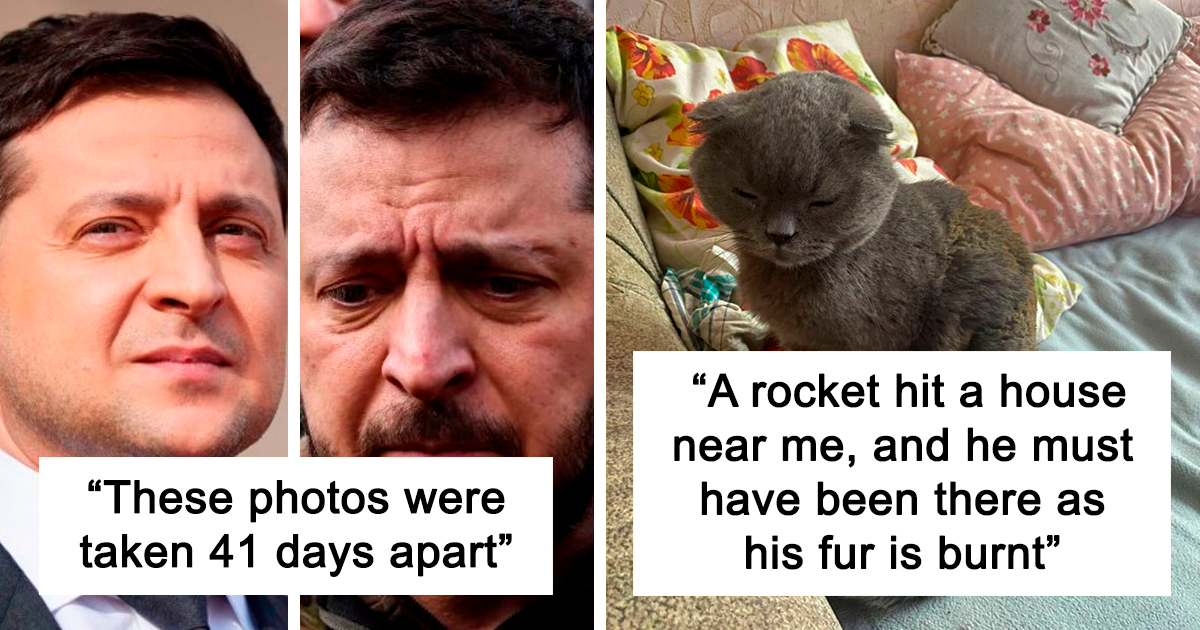
Some photographs do not ask for attention. They simply stand there, quiet and immovable, until the viewer understands that looking away is not the same as forgetting. The war in Ukraine has produced thousands of such images: families waiting at train stations with one suitcase too small for a whole life, apartment blocks split open like dollhouses, soldiers hugging children they may not see again, and civilians staring at ruins where kitchens, classrooms, and bedrooms used to be.
This article is not a gallery in the usual “scroll and move on” sense. The title, 40 Photos That Carry With Them The Most Heartbreaking Stories From The War In Ukraine, points to a deeper truth: the most powerful Ukraine war photos are never just about what is inside the frame. They are about the seconds before and after. They are about the person who had to run, the mother who stayed calm for her child, the rescuer who kept digging, the photographer who pressed the shutter while history was still burning.
Since Russia launched its full-scale invasion of Ukraine on February 24, 2022, photojournalists have documented not only battlefields but also the civilian heart of the war. Their work has shown the siege of Mariupol, the horror discovered in Bucha, evacuations from Irpin, missile strikes in Kharkiv, funerals in small towns, and the stubborn, almost rude persistence of ordinary life. Yes, rude persistence: the kind of defiance that says, “You may bomb the power station, but someone is still going to make soup.”
Why Ukraine War Photos Matter
War reporting often arrives as numbers: casualties, displaced people, damaged buildings, miles of territory, weapons delivered, sanctions imposed. Numbers are necessary, but they can become strangely weightless. A photograph gives weight back. One child’s stuffed animal on a train platform can say more about displacement than a spreadsheet with ten tabs and a very serious font.
The best Ukraine war photography does three things at once. It records evidence, preserves memory, and makes the human cost visible. In Mariupol, images from hospitals and mass graves challenged denial and misinformation. In Bucha, photographs of bodies in streets and destroyed neighborhoods became part of the world’s understanding of possible war crimes. In Kharkiv and Kyiv, images of damaged schools, blacked-out homes, and crowded shelters revealed how war stretches far beyond the front line.
These photos matter because they resist abstraction. They remind readers that “infrastructure damage” means a grandmother climbing nine flights of stairs in winter because the elevator has no power. “Evacuation corridor” means a cat in a carrier, a child in snow boots, and a father pretending not to cry because someone has to look brave.
40 Heartbreaking Photo Stories From The War In Ukraine
The following 40 photo stories are written as narrative reflections based on widely documented scenes from the war in Ukraine. They are not captions copied from agencies. They are original, SEO-friendly summaries that capture the kinds of images that have defined the conflict for global audiences.
1. The First Morning Of The Invasion
One of the earliest images many people remember is smoke rising over Ukrainian cities on the morning of February 24, 2022. The story behind that image is the shock of a nation waking up to sirens, phone calls, packed bags, and the sudden knowledge that ordinary Thursday plans had been canceled by history.
2. Traffic Leaving Kharkiv
Long lines of cars leaving Kharkiv became a symbol of instant displacement. Inside those vehicles were families who had made impossible decisions in minutes: what to pack, who to call, whether to leave pets, and whether they would ever return home.
3. The Goodbye At The Train Station
Photos of couples embracing at train stations show one of war’s cruelest routines: farewell without a guaranteed reunion. Men leaving for military service, women and children heading west, and elderly parents standing nearby created images that felt both intimate and national.
4. Children In Subway Shelters
In Kyiv and Kharkiv, metro stations became underground bedrooms. Photos of children sleeping on blankets beneath fluorescent lights show the strange creativity of survival. The subway became a school, nursery, living room, and bunker, all with terrible acoustics.
5. The Destroyed Bridge At Irpin
The broken bridge at Irpin became one of the defining images of civilian escape. Families crossed beneath it while shelling continued nearby. The photo story is not only about destruction; it is about movement, fear, and the terrifying geography of getting to safety.
6. A Mother Carrying Her Child Through Rubble
Images of parents carrying children through blasted streets capture the oldest instinct in the world: protect the small person first. The background may be smoke and concrete, but the center of the frame is usually a hand, a coat, or a face turned away from danger.
7. The Mariupol Maternity Hospital
Few Ukraine war photos became as internationally recognized as the images from the bombed maternity hospital in Mariupol. A pregnant woman carried on a stretcher, shattered windows, and medical workers moving through chaos turned one attack into a global symbol of civilian suffering.
8. The Woman Who Survived The Hospital Blast
Another widely seen image showed a pregnant woman walking down damaged hospital stairs after the Mariupol strike. Her survival became a story of both trauma and propaganda, as her image was twisted online. The photo reminds us that victims do not stop being real people when the internet starts shouting.
9. Doctors Working Without Enough Supplies
Hospital photographs from Mariupol, Kharkiv, and other cities show doctors treating patients under bombardment. These images carry the exhaustion of medical workers who had to perform surgery while buildings shook. The Hippocratic oath, apparently, does not come with noise-canceling headphones.
10. The Mass Graves Of Mariupol
Photographs of graves in Mariupol are almost unbearable because they show the collapse of normal mourning. A proper funeral requires time, names, flowers, and silence. War replaces those rituals with urgency, mud, and numbers that no family should ever have to accept.
11. Bucha’s Silent Streets
After Russian forces withdrew from Bucha, images of bodies in the streets shocked the world. The most heartbreaking part of those photos is their stillness. Streets are supposed to contain bicycles, neighbors, and someone complaining about parking. In Bucha, silence became testimony.
12. A Bicycle Beside A Body
Some Bucha images showed ordinary objects near the dead: a bicycle, a shopping bag, a coat. These details made the horror harder to dismiss. They suggested errands interrupted, groceries never cooked, and people killed while doing the most civilian thing possible: trying to live.
13. The Burned-Out Apartment Block
Photos of apartment buildings torn open by missiles reveal private lives exposed to the sky. You can sometimes see wallpaper, kitchen tiles, or a curtain still hanging. The heartbreak is in the domestic details: a room built for breakfast suddenly turned into evidence.
14. A Child’s Toy In The Rubble
A toy among debris has become a recurring image of the war in Ukraine. It is a simple visual language: childhood was here. A teddy bear or plastic truck does not need a caption to explain loss. It does, however, deserve one.
15. Pets During Evacuation
Photos of Ukrainians carrying cats, dogs, parrots, and occasionally deeply unimpressed rabbits show another side of displacement. When people flee with pets, they are carrying family, comfort, and a small piece of normal life that sheds fur in the back seat.
16. Volunteers At Border Crossings
Images from borders with Poland, Romania, Moldova, and other countries showed volunteers offering food, blankets, transport, and phone chargers. In war, a charged phone can be as precious as bread. It connects families, maps routes, and lets someone send the message: “I’m alive.”
17. Refugee Children With Name Tags
Some children traveled with names and phone numbers written on paper or clothing. The photographs are devastating because they reveal a parent’s worst calculation: if we are separated, may this note help my child be found.
18. Elderly Residents Refusing To Leave
Many photos show older Ukrainians staying in damaged villages despite danger. Their stories are complex: attachment to home, fear of uncertainty, lack of mobility, and the stubborn dignity of people who have survived enough history to have opinions about it.
19. Sandbags Around Monuments
Images of statues and cultural sites wrapped in sandbags show Ukraine protecting memory itself. A monument covered for survival looks oddly like a patient in a hospital gown. The photo says: art, history, and identity are also targets in war.
20. Churches With Broken Windows
Photos of damaged churches show spiritual spaces turned fragile. Whether one is religious or not, the image of shattered glass in a place built for prayer has a special ache. It suggests that even silence had to duck.
21. Soldiers In Trenches
Front-line photographs from Donbas show mud, exhaustion, winter, drones, and men who look older than their birthdays. These images connect Ukraine’s modern war to older wars of attrition, while also showing new technologies hovering above like mechanical mosquitoes with terrible intentions.
22. A Soldier Video-Calling Home
One of the quietest war images is a soldier holding a phone, speaking to family from a trench or barracks. The phone screen becomes a tiny window into normal life. Somewhere, someone is asking whether he has eaten. Of course someone is asking that. Love is practical.
23. Funerals With Flags
Photos of military funerals in Ukraine are filled with blue-and-yellow flags, kneeling relatives, and communities gathered in grief. They show that public honor does not cancel private pain. A nation may call someone a hero; a child still calls him Dad.
24. The Empty Classroom
Images of damaged schools are among the most painful because classrooms are supposed to be noisy with pencils, jokes, and someone claiming the dog ate homework. Broken desks and shattered windows show the theft of routine, safety, and future.
25. Lessons In A Shelter
At the same time, photos of children studying in shelters show Ukraine’s refusal to pause childhood entirely. The lesson may happen beside concrete walls and emergency supplies, but the message is powerful: education continues, even when the world is behaving badly.
26. Firefighters After A Strike
Images of firefighters climbing through smoke and rubble after missile attacks show emergency workers as some of the war’s constant witnesses. They arrive after the explosion, when panic has already had its opening act, and begin the slower work of rescue.
27. Rescue Workers Searching At Night
Nighttime rescue photos are especially haunting: floodlights, dust, helmets, and hands moving debris piece by piece. These pictures carry suspense and grief at once. Everyone in the frame is listening for a sound they desperately want to hear.
28. A Kitchen Still Standing In A Ruined Home
Some destroyed-home photos show one surviving corner: a stove, a cabinet, a cup. These images hurt because kitchens are places of care. A surviving teacup in a ruined room feels like a tiny, breakable protest against chaos.
29. Power Outages In Winter
Photos from blacked-out cities show people using candles, generators, and public charging stations. Russia’s attacks on energy infrastructure made ordinary warmth a battlefield concern. A glowing phone in a dark room became a small modern campfire.
30. The Subway Concert
Not every heartbreaking image is only bleak. Musicians performing in shelters created photos of beauty under pressure. The story is bittersweet: people listening to music underground while danger moved overhead. Culture did not end; it lowered its volume and kept playing.
31. Weddings During War
Photos of Ukrainian couples marrying during wartime show love making a schedule and refusing to cancel. Some ceremonies happened quickly, with uniforms, modest flowers, and air-raid anxiety. Romance, in these images, wears practical shoes.
32. Newborns In Bomb Shelters
Images of newborn babies in shelters or hospital basements are almost too much to process. They show life arriving in the middle of destruction, tiny and furious, as babies tend to be. Even war cannot stop someone from needing a nap and a bottle.
33. The Farmer And The Tank
Some viral images and videos of Ukrainian farmers near abandoned military equipment offered dark humor amid horror. They became symbols of local resilience and internet folklore. Still, behind the joke was a serious reality: rural communities were living beside lethal machinery.
34. Fields Scarred By Mines
Photographs of mined farmland show how war damages the future long after front lines move. A field is supposed to promise bread. When it is seeded with explosives, recovery becomes slow, dangerous, and painfully literal.
35. The Zoo Animals Of War
Images of animals evacuated from zoos and shelters reveal another layer of vulnerability. War disrupts ecosystems of care: keepers, volunteers, food supplies, transport, medicine. Even lions, bears, and dogs depend on humans not blowing everything up.
36. Kharkiv Under Fire
Kharkiv has appeared again and again in photo coverage: damaged residential blocks, wounded civilians, burned cars, and rescue teams. Its closeness to Russia makes warning times brutally short. Some images from the city feel like they were taken in the breath between explosion and siren.
37. Odesa Behind Sandbags
Photos from Odesa show a port city guarding itself while trying to keep its soul intact. Sandbagged landmarks, soldiers near historic streets, and the sea in the background create a strange contrast: vacation-postcard beauty wearing body armor.
38. Bakhmut’s Ruins
Images from Bakhmut show the pulverizing effect of prolonged combat. Streets, trees, homes, and apartment blocks became gray fragments. The photo story of Bakhmut is about endurance, but also about the terrible question of what victory can mean when a city is almost erased.
39. Families Returning Home
Some photographs show families coming back to liberated or damaged areas. Return is not always joyful. It can mean finding a broken roof, missing neighbors, mined roads, and a garden that kept growing as if nothing happened. Nature, frankly, has awkward timing.
40. The Photographer’s Reflection
Finally, there are images that include journalists themselves: shadows on walls, reflections in broken glass, cameras raised in smoke. These photos remind us that documentation is a human act. Someone chose to stay, look, and record what others wanted hidden.
The Stories Behind The Most Powerful Ukraine War Photos
What makes these 40 photo stories so heartbreaking is not shock value. It is specificity. A destroyed building is sad; a destroyed building with a child’s drawing still taped to the wall is unforgettable. A refugee line is tragic; a refugee line with a grandmother holding a houseplant becomes a complete essay on displacement. The plant says, “I thought I would be back soon.”
Photojournalists in Ukraine have often worked under extreme danger. Some documented attacks while missiles were still landing. Others entered liberated towns before the world fully understood what had happened there. Their images have helped establish timelines, counter false claims, and preserve evidence for future investigations. The camera, in these circumstances, is not just an artistic tool. It is a witness with a memory card.
The emotional power of Ukraine war images also comes from contrast. A bride in a white dress beside a soldier’s uniform. A ballet class in a shelter. A birthday cake in a dark apartment. These contrasts do not make the war lighter; they make it more human. People do not stop being funny, vain, tender, hungry, annoyed, romantic, or late for things just because history has become violent.
What These Photos Teach Us About Civilian Life In War
First, they teach that civilians are not background characters. In many of the most important images from Ukraine, civilians are the story: teachers, doctors, train conductors, pensioners, children, volunteers, electricians, bakers, and neighbors with shovels. Their lives are not “collateral” in any moral sense. They are the center of what war destroys.
Second, the photos teach that home is more than a structure. When Ukrainians stand in front of ruined apartments, they are not only looking at bricks. They are looking at birthdays, family arguments, slippers by the door, winter coats, favorite mugs, and the exact drawer where someone kept batteries but never scissors. A home contains a thousand ordinary systems. War breaks all of them at once.
Third, these images show how memory becomes a form of resistance. Funerals, murals, flags, songs, and rebuilt schools all say the same thing: we were here, we are here, and we intend to remain. Photography preserves that statement for people far away, including readers who may never hear an air-raid siren except in a news clip.
How To Look At War Photography Responsibly
It is easy to consume war photos too quickly. The internet encourages fast scrolling, quick outrage, and then a snack. But photographs from the war in Ukraine deserve slower attention. Look for context. Read captions carefully. Notice who took the image, where it was made, and what is known or unknown about the people in it.
Responsible viewing also means refusing to turn suffering into entertainment. These images can move us, inform us, and even change public understanding, but they are not disaster wallpaper. Behind every powerful Ukraine war photo is someone’s worst day, someone’s last message, or someone’s long road toward rebuilding.
At the same time, do not look away from every difficult image. A healthy society needs witnesses. The challenge is to look with respect, not appetite; with attention, not numbness. The goal is not to collect sadness. The goal is to understand what war does to human beings and why truth matters.
Personal Reflections And Experiences Related To These Ukraine War Photos
When people discuss heartbreaking photos from the war in Ukraine, they often mention the famous images first: Mariupol, Bucha, Irpin, Kharkiv, Bakhmut. But the experience of engaging with these photographs is also personal for viewers far from the front. Many readers encounter them during ordinary moments: drinking coffee, riding a bus, sitting at a desk, checking the news between emails. That contrast can feel almost indecent. One screen shows devastation; the next tab asks whether you want to update your password. Modern life has terrible timing.
The most lasting experience is often not shock but recognition. A kitchen in Ukraine looks like a kitchen anywhere. A child’s backpack looks like a child’s backpack anywhere. A father waving goodbye at a train station looks like every goodbye that lasted too long. These images cross language quickly because they are built from familiar things. A viewer may not know the street name or military situation, but they understand a hand pressed to a window.
Another experience is helplessness. Photos can make people feel the distance between awareness and action. You see a ruined hospital and want to fix it. You see a crying child and want to offer the kind of comfort that cannot be delivered through a screen. That helplessness is uncomfortable, but it can be useful if it becomes attention, donations to credible humanitarian groups, support for independent journalism, or simply a refusal to let the story fade into background noise.
There is also the experience of learning how fragile normal life is. The war in Ukraine has shown that ordinary routines are not boring; they are blessings in disguise. A quiet breakfast, electricity, a safe school run, a boring weather forecast, a night without sirensthese are not small things. They are the architecture of peace. War photography makes that architecture visible by showing what happens when it is smashed.
Finally, these photos create a responsibility to remember accurately. The internet is full of recycled images, false captions, and emotional manipulation. Viewers should be careful, especially with graphic or viral content. Trustworthy photojournalism depends on verification, captions, dates, locations, and ethical editing. The most respectful response to heartbreaking images is not only emotion; it is accuracy. Memory should not be lazy. It should put on its shoes, check its facts, and show up on time.
The 40 photo stories connected to the war in Ukraine are heartbreaking because they show loss without letting loss have the final word. They show grief, but also rescue. Ruins, but also rebuilding. Farewells, but also reunions. Darkness, but also candles, phone screens, and stubborn little lamps. In the end, the most powerful photographs do not merely say, “Look what happened.” They say, “Remember who it happened to.”
Conclusion
The war in Ukraine has produced some of the most unforgettable images of the 21st century. From Mariupol’s maternity hospital to Bucha’s silent streets, from train-station farewells to children studying underground, these photographs carry stories that statistics alone cannot hold. They document destruction, but they also preserve dignity. They show the cost of aggression, the courage of civilians, and the essential role of photojournalists who risk their lives to make denial harder.
40 Photos That Carry With Them The Most Heartbreaking Stories From The War In Ukraine is not just a title built for search engines. It is a reminder that every image has a human center. Behind each frame is a life interrupted, a family changed, a community tested, and a memory that deserves careful attention. The photographs hurt because they are true. They endure because the people in them matter.
Note: This HTML body is written as an original, publication-ready article based on verified public reporting and photojournalism about the war in Ukraine.