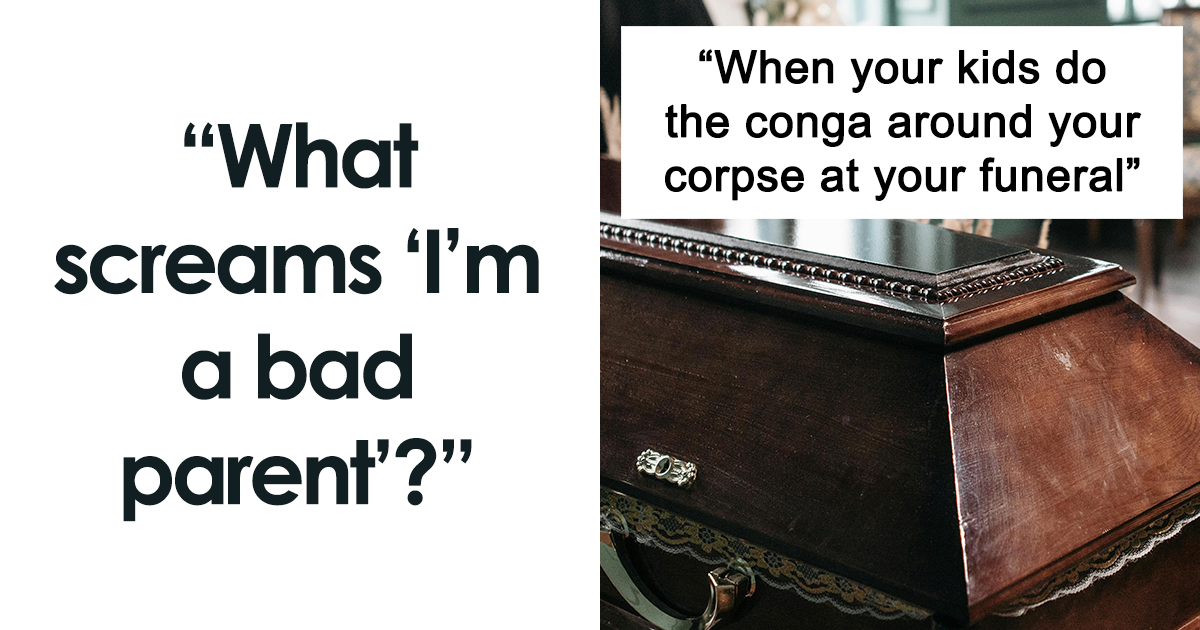
Ask a room full of adults what makes someone look like a bad parent and you will get a fast, noisy answer. Someone will mention the parent who ignores a crying toddler for ten minutes while filming a story. Someone else will nominate the adult who treats a child like a personal assistant, therapist, or emotional punching bag. And, inevitably, one person will say, “Letting them eat blue frosting for breakfast,” which is not ideal but also not an indictable offense.
That is the point: parenting is messy, public, and judged with the confidence of a person who has never tried putting shoes on a furious three-year-old. A rough morning, a forgotten permission slip, or a child having a meltdown in aisle seven does not make anybody a bad parent. What deserves concern is a repeated pattern of unsafe, cruel, dismissive, or irresponsible behaviorespecially when an adult refuses to learn, repair, or protect the child.
Research note: This practical roundup synthesizes recurring concerns in family discussions with child-development guidance from the American Academy of Pediatrics, CDC, American Psychological Association, Mayo Clinic, Child Welfare Information Gateway, Nemours KidsHealth, Children’s Hospital of Philadelphia, Child Mind Institute, NICHD, UC Davis Health, Parents, Psychology Today, and Verywell Family. It is not a diagnosis or a substitute for professional or emergency help.
What “Bad Parenting” Actually Meansand What It Does Not
“Bad parent” is a blunt phrase, and blunt tools can bruise the wrong people. Financial hardship is not neglect. A child with big feelings is not proof of failed parenting. A parent who apologizes after losing their temper is not perfect, but that apology can be a powerful lesson in responsibility.
The real red flags are less about Instagram-ready lunches and more about a child’s safety, dignity, and ability to trust the adults in charge. Federal child-welfare guidance distinguishes neglect from poverty and focuses on whether essential care and protection are missing in ways that threaten a child’s well-being.
50 Blunt Answers to “What Screams ‘I’m a Bad Parent’?”
When Safety Is Treated Like an Optional Upgrade
- Ignoring obvious safety risks because supervision is inconvenient. A toddler near water, a child in a moving car without proper restraint, or a teen in a dangerous situation needs an adultnot a shrug.
- Leaving young children responsible for problems beyond their age. “Watch your little brother while I disappear for hours” is not character building; it can be unsafe.
- Skipping necessary medical, dental, vision, or mental-health care without a serious reason. Kids do not need a parent to be a doctor; they need one who notices and seeks help.
- Driving impaired with children in the vehicle. The back seat is not a magical force field against adult decisions.
- Bringing children into violent adult conflict. A child should never become the referee, messenger, or human shield in a grown-up war.
- Exposing kids to substances, weapons, or hazardous situations with no safeguards. “They know not to touch it” is not a safety plan.
- Regularly failing to provide food, clean clothing, safe shelter, or reliable supervision when help is available. These are needs, not luxury add-ons.
- Mocking a child for being hurt, sick, frightened, or overwhelmed. Toughness is not taught by making a child ashamed of needing care.
- Refusing to protect a child from a known unsafe adult. Believing, acting, and getting help matter more than preserving an adult’s comfort.
- Calling preventable danger “just how kids learn.” Children do learn through experience, but adults are still supposed to keep the experience from becoming a catastrophe.
When Discipline Becomes a Power Trip
- Using fear as the family’s main communication system. If children obey mainly because they are terrified, the home has a control problem, not a respect problem.
- Hitting, humiliating, or screaming as routine discipline. Major pediatric and psychological organizations recommend discipline that teaches behavior without physical punishment, shaming, or verbal cruelty.
- Making threats you never intend to carry out. “I will throw away every toy you own” may feel dramatic, but it teaches children that words are theater.
- Changing the rules whenever the adult feels annoyed. A child cannot learn expectations from a rulebook written in disappearing ink.
- Punishing a child for developmentally normal behavior. A toddler melting down, a preschooler forgetting, and a teen needing privacy are not all personal attacks.
- Demanding perfection while offering no instruction. “Do better” is not a lesson plan. Show the skill, practice it, then expect progress.
- Turning every mistake into a lecture marathon. By minute twelve, the child is not reflecting; they are mentally redecorating the ceiling.
- Using food, affection, or silence as a weapon. Consequences should relate to behavior, not make love feel conditional.
- Forcing apologies without teaching repair. “Say sorry” is hollow if nobody explains what happened, how it affected someone, and what can be done next.
- Calling a child “bad” instead of addressing the behavior. Children need to hear, “That choice was not okay,” not “You are the problem.”
When a Child’s Dignity Is the Punchline
- Posting a child’s humiliating moment for laughs. Viral embarrassment may earn adult attention, but children deserve privacy and future dignity.
- Mocking their body, voice, interests, identity, or learning struggles. The home should not be the place where a child practices flinching.
- Comparing siblings like they are appliances in a product review. “Why can’t you be more like your sister?” creates rivalry, not motivation.
- Sharing private medical, school, or emotional details for social clout. A child is a person, not content inventory.
- Joking that a child was unwanted or ruined your life. Children can hear sarcasm. They can also carry it much longer than the speaker expects.
- Using insults disguised as honesty. “I am just telling the truth” is often the camouflage worn by cruelty.
- Making love feel earned through grades, trophies, weight, or obedience. Achievement deserves celebration; it should not become rent for belonging.
- Forcing affection for relatives or strangers. Teaching politeness should never erase a child’s right to bodily boundaries.
- Invalidating every emotion. Kids can be corrected without being told they are dramatic, crazy, weak, or attention-seeking for having feelings.
- Using a child as the family comedian at their own expense. The funniest story in the room should not leave the smallest person ashamed.
When Connection and Guidance Are Missing
- Never listening unless the child is in trouble. A child who only gets attention for mistakes may start believing negative attention is the only kind available.
- Dismissing every attempt at conversation with “not now.” Parents cannot be available every second, but “later” needs to become an actual time.
- Making a child manage the adult’s emotions. A child should not have to keep Mom calm, make Dad happy, or mediate a breakup.
- Confiding adult relationship, money, or legal problems as though the child were a peer. Honesty has an age-appropriate setting; emotional dumping is not it.
- Never apologizing. Adults who repair mistakes teach children that accountability is strength, not surrender.
- Ignoring bullying, school distress, or sudden withdrawal because it is “probably a phase.” Curiosity and follow-up cost less than regret.
- Taking zero interest in a child’s world. You do not need to love Minecraft, K-pop, dinosaurs, or dance recitals. You do need to care that they do.
- Letting devices replace every difficult conversation. Screens are tools, babysitters, classrooms, and sometimes sanity saversbut not a substitute for a relationship. The AAP emphasizes media quality, context, and conversation, not a one-size-fits-all stopwatch.
- Being emotionally absent but materially generous. A bedroom full of expensive things cannot answer, “Did you notice I was scared today?”
- Making the child choose sides between adults. Children should be able to love both parents or caregivers without being recruited into a loyalty contest.
When Adults Refuse to Model the Behavior They Demand
- Demanding respect while insulting everyone in the house. Respect is caught as much as it is taught.
- Expecting honesty while lying to teachers, relatives, employers, and kids. Children learn the rule that actually gets practiced.
- Applauding aggression in adults but punishing it in children. “Do as I say, not as I slam doors” has never been a reliable curriculum.
- Blaming a child for the parent’s outburst. “Look what you made me do” hands adult responsibility to someone who cannot carry it.
- Refusing help because pride matters more than the family’s stability. Parenting classes, therapy, medical care, respite, and support networks are toolsnot admissions of defeat.
- Making one child the household scapegoat. When every conflict somehow becomes one kid’s fault, the family has stopped solving problems and started assigning villains.
- Allowing a partner to demean or frighten the child. Protection includes speaking up inside your own home.
- Expecting children to regulate emotions that the adults never regulate. “Calm down” lands differently when the person saying it is calmly demonstrating how.
- Celebrating independence only when it makes parenting easier. Children need age-appropriate freedom, mistakes, and chances to grownot permanent dependence disguised as obedience.
- Seeing feedback as an insult instead of information. The strongest parenting move is sometimes, “You are right. I handled that badly. I will try again.”
Why These Red Flags Matter More Than Perfect Parenting
Healthy parenting is not permissive parenting. Children need limits, routines, supervision, consequences, and adults willing to say no. The better alternative to harshness is not chaos; it is calm authority. Clear, age-appropriate expectations, consistent follow-through, active listening, and specific praise give children a structure they can understand.
The goal is not to create children who never cry, argue, fail, or embarrass you in public. That child does not exist outside a very strange corporate brochure. The goal is to raise a child who feels safe enough to tell the truth, secure enough to make mistakes, and guided enough to repair them.
Extended Experiences: What These Patterns Look Like in Real Life
The following are composite, everyday scenarios based on common family dynamicsnot identifiable case histories.
Consider the parent who explodes during the breakfast rush. The child spills milk, the parent is late, the dog is doing whatever dogs do when they sense chaos, and suddenly everyone is yelling. One bad morning is not a personality test. The revealing moment comes afterward. Does the adult pretend it never happened? Do they insist the child “made” them yell? Or do they circle back, say, “I was stressed, but I should not have spoken to you that way,” and explain what they will do differently tomorrow? Repair does not erase the stress, but it teaches a child that love and accountability can occupy the same room.
Then there is the family where every difficult feeling gets waved away. A child says school is lonely. The answer is, “You are fine.” A teen says they are anxious. The answer is, “You have nothing to be anxious about.” The adult may mean to reassure, but the message received is often: My inner life is inconvenient. A better response does not require a PhD or a mood ring. It can be as simple as, “That sounds rough. Tell me what happened,” followed by a practical question: “What would help right now?” Listening is not agreement; it is the decision to take the child seriously before deciding what to do.
Another familiar scene plays out online. A parent posts a photo of a child crying, adds a snarky caption, and waits for the likes to roll in like tiny digital slot-machine bells. The adult may see a funny moment. The child may see proof that their most vulnerable moments are public property. Before sharing, a useful test is brutally simple: Would I want someone to post this about me at work, at school, or during a hard day? Children deserve the same privacy grace adults expect.
Sometimes the issue is not anger but absence. A caregiver works long hours, arrives home exhausted, and reaches for a phone because the brain has become oatmeal. That does not automatically mean neglect; many families are surviving impossible schedules. The pivot is whether the adult can create small, repeatable moments of connection: ten device-free minutes at bedtime, a walk around the block, one question at dinner, a Saturday errand together. Connection does not require a theme park budget. It requires attention that is not constantly auditioning for something else.
Finally, think about the parent who recognizes a pattern and asks for help. Maybe they are repeating the way they were raised. Maybe stress, depression, addiction, trauma, financial strain, or an unsupported co-parenting arrangement has made every day feel like a five-alarm fire. Asking a pediatrician, therapist, school counselor, trusted relative, or parenting program for support is not what screams “bad parent.” Often, it is the clearest sign that someone is trying to become a safer one. When a child may be in immediate danger, seek emergency help or contact local child-protection authorities right away.
Conclusion: The Standard Is Safety, Respect, and Repair
The sharpest answers to “What screams ‘I’m a bad parent’?” are not about mismatched socks, drive-thru dinners, or the occasional cartoon marathon. They are about ongoing choices that make a child unsafe, unseen, ashamed, or responsible for adult behavior. The encouraging flip side is that parenting can improve. Listen more. Set clearer limits. Apologize faster. Ask for help sooner. Children do not need flawless adults; they need adults who keep showing up, keep learning, and never confuse control with care.