An Australian father crossed an ocean to stop his newborn daughter from being placed for adoption. He reached Texas, held his baby, and prepared to bring her homeonly to learn that the plan had changed. Yet the viral headline captured just one painful moment in a far more complicated story.
A 15-Hour Flight Fueled by Fear and Determination
When Sydney carpenter Dan Gaut learned that his former partner was considering adoption for their unborn daughter in Texas, he did not respond with a cautious email or a polite request for a conference call. He boarded a roughly 15-hour flight to the United States.
Dan’s objective was simple, even if everything surrounding it was not: he wanted the opportunity to raise his daughter, Ana. According to public accounts, the child’s mother, Liv Pavlov, had initially discussed allowing him to take the baby to Australia if he arrived in the United States during or shortly after the birth.
Friends organized a crowdfunding campaign to help cover airfare, immigration paperwork, legal expenses, and the unexpectedly expensive collection of tasks involved in moving a newborn internationally. Parenthood already comes with paperwork, but cross-border parenthood apparently arrives with the deluxe filing-cabinet package.
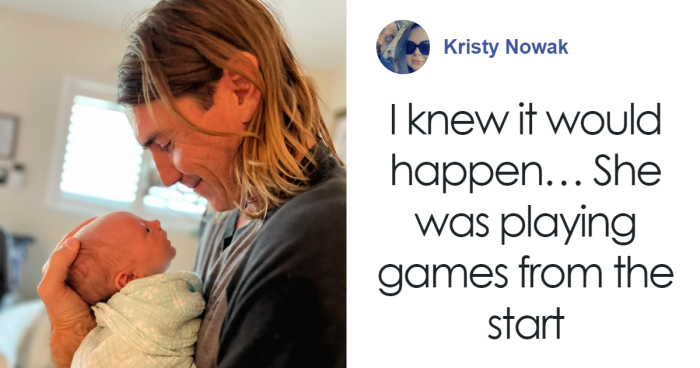
Dan reached Austin, Texas, shortly after Ana was born. He met his two-day-old daughter and described an immediate feeling of love and connection. For a brief period, it appeared that the frantic journey might end with father and daughter returning to Australia together.
How Dan and Liv’s Cross-Border Parenting Story Began
A Relationship That Crossed the Pacific
Public reporting indicates that Dan met Liv while traveling in San Francisco in early 2023. Their relationship moved quickly, and Liv later joined him in Australia. The couple reportedly discussed starting a family, and Liv became pregnant.
During the pregnancy, however, Liv returned to the United States. Dan said he initially understood the trip as an opportunity for her to reconnect with friends, relatives, and a familiar support network. She ultimately remained in Texas, and the couple’s romantic relationship ended.
Dan later told reporters that Liv had reconnected with a previous partner and had begun sending him information about potential adoption arrangements. He opposed the idea, saying he wanted Ana and was prepared to care for her.
The Proposed Plan for Ana to Live in Australia
According to Dan’s account, the parents reached a preliminary understanding: if he came to Texas near the time of Ana’s birth, he could assume primary responsibility for her and eventually take her to Australia.
The arrangement was never as straightforward as booking a return ticket and purchasing the world’s smallest pair of noise-canceling headphones. Establishing parentage, securing passports, confirming citizenship, obtaining the necessary consent, and resolving custody would all require formal legal steps.
Still, Dan traveled believing that Ana would return with him. After arriving, he began caring for his newborn daughter and worked on her documentation. A migration professional reportedly helped secure recognition of Ana’s Australian citizenship and an Australian passport.
Why Dan Had to Leave the United States Without His Daughter
At the end of March 2024, the situation changed dramatically. Liv decided that she wanted to remain Ana’s primary caregiver and raise her in the United States.
Dan publicly wrote that he felt “heartbroken and empty” as he prepared to leave America alone. He said he would use the remaining crowdfunding money to obtain legal representation in Austin and visit Ana as frequently as possible.
That development produced the devastating headline: the father who flew 15 hours to prevent an adoption now had to part ways with the baby he had come to collect. However, “part ways” did not mean Dan had surrendered his role as Ana’s father. It meant the parents had not agreed on where their daughter should live or how they would divide parenting responsibilities across two countries.
It is also important to distinguish adoption from custody. Preventing or abandoning an adoption plan does not automatically award one parent sole custody. Once Liv decided to parent Ana herself, the central dispute was no longer whether strangers would adopt the baby. It became a question of how two biological parents living on opposite sides of the Pacific could share responsibility.
Liv Pavlov Shared a Different Side of the Story
Early coverage largely centered on Dan’s frantic journey and heartbreak. Later, Liv publicly described the situation from her perspective. She said she had felt isolated and insufficiently supported in Australia during her pregnancy and returned to Texas because she needed her established community.
Liv also acknowledged that she had considered adoption. Following Ana’s birth, however, she decided that she wanted to raise her daughter. She characterized the conflict as a situation in which “two truths” could exist: Dan could genuinely feel devastated by the changed plan, while she could genuinely believe that remaining in Texas was necessary for her and the baby.
Her explanation did not erase Dan’s pain, nor did his pain automatically invalidate her concerns. The story became less like a tidy tale with a hero and villain and more like actual family lifemessy, emotional, and stubbornly resistant to fitting inside a viral caption.
Liv later said she wanted Dan to have a major role in Ana’s life and hoped they could establish a healthy co-parenting relationship. Reports in April 2024 indicated that the parents were discussing a joint custody arrangement rather than proceeding with adoption.
The Story Did Not End With Their Airport Goodbye
The original “must now part ways” report reflected Dan’s circumstances at one particular moment. Subsequent updates made the outlook more hopeful.
Liv publicly stated that Ana was loved by both parents and that she and Dan planned to work on a shared custody agreement. Later reporting said Ana eventually traveled to Australia for her first visit, where she spent time with her father. Photographs shared publicly showed them enjoying ordinary family activitiesa welcome change from passports, lawyers, emergency flights, and televised interviews.
Those developments do not necessarily reveal the parents’ current legal arrangements. Family agreements can evolve, and many details properly remain private. They do show why viral stories should be read as snapshots rather than permanent verdicts.
A headline published on Monday may announce heartbreak. By Friday, mediation may be underway. Months later, a baby may be visiting the country she was once expected to call home. The internet likes endings; real families tend to produce chapters.
Why Citizenship Did Not Automatically Decide Custody
Ana reportedly received Australian citizenship and a passport while also qualifying as a United States citizen by birth. Dual citizenship can make lawful travel and residence possible, but it does not independently decide which parent receives custody.
Citizenship answers whether a person belongs to a country under its nationality laws. Custody addresses parental rights, decision-making, residence, and access. A passport is therefore not a permission slip allowing one parent to relocate a child without the other parent’s consent or an appropriate court order.
The U.S. Department of State warns parents to obtain qualified legal advice before removing a child from another country without the other parent’s consent. Australia and the United States participate in international legal frameworks intended to address wrongful removal or retention of children, but their application depends on facts such as custody rights and habitual residence.
Texas law also contains detailed rules concerning parentage, paternity registration, adoption, notice, and termination of parental rights. The Child Welfare Information Gateway emphasizes that unmarried parents may need to take formal steps to establish legal parentage. Biology is enormously important, but courts and government offices still expect the correct documents.
What Matters Most for a Baby Caught Between Two Countries?
In a cross-border custody disagreement, adults naturally focus on fairness: Who changed the plan? Who traveled farther? Who spent more money? Who made the greater sacrifice?
For a child, the central needs are usually more immediate. Babies require safe caregivers, predictable routines, responsive attention, medical care, and opportunities to form secure relationships. Geography matters, but emotional stability matters too.
Guidance from the American Academy of Pediatrics notes that children generally benefit when safe, capable parents remain positively involved and minimize conflict. Consistency across households, reliable contact, and respectful communication can protect children during parental separation.
For Dan and Liv, a workable arrangement would need to consider Ana’s age, feeding and sleep schedule, travel burden, health, attachment to caregivers, and contact with extended family. As she grows, education, holidays, travel costs, and digital communication may become equally important.
No clever slogan can make Sydney and Austin neighboring suburbs. Successful international co-parenting requires planning, money, flexibility, and enough calendar coordination to make an air-traffic controller request a quiet room.
Related Experiences and Lessons for Long-Distance Parents
The experiences surrounding Dan’s 15-hour journey reflect challenges faced by many separated parents, even when their stories never become international news. The following lessons are not claims about his private legal case. They are practical observations drawn from common adoption, custody, and long-distance co-parenting experiences.
1. Verbal Agreements Can Collapse Under Emotional Pressure
Pregnancy and the days following birth can bring exhaustion, fear, physical recovery, and changing emotions. A plan that appeared acceptable months earlier may feel impossible once the baby arrives. Parents should not assume that text messages or informal promises settle adoption, custody, or international relocation.
When major decisions are involved, each parent should obtain independent legal advice early. Written agreements should be created through the proper legal process. This protects both parents and, most importantly, prevents a child’s future from depending on a conversation remembered differently by two distressed adults.
2. Establishing Legal Parentage Should Not Be Delayed
Unmarried fathers sometimes believe that biological parenthood automatically gives them every legal right they may need. Procedures vary by jurisdiction. Acknowledging paternity, registering with a state registry, requesting genetic testing, or filing a court action may be necessary.
The practical lesson is unglamorous but crucial: act promptly, keep records, learn the applicable deadlines, and consult a family-law attorney where the child is expected to be born. Nobody dreams of celebrating fatherhood by organizing certified forms, but missing a deadline can have consequences far more painful than a paper cut.
3. Crowdfunding Can Help, but Costs Continue
Community fundraising may cover an emergency flight or an initial legal consultation. Long-distance parenting, however, creates continuing expenses: airfare, accommodations, passport fees, attorneys, mediation, missed work, and child-friendly transportation.
Parents benefit from building a realistic annual travel budget rather than relying only on emergency donations. Agreements can specify who purchases tickets, who accompanies a young child, how cancellations are handled, and whether travel costs affect other financial responsibilities.
4. A Child Should Never Become the Family Messenger
As children grow, parents may be tempted to send information through them: “Tell your dad the flight changed” or “Ask your mom why she did not call.” That places an adult burden on the child and can create loyalty conflicts.
A shared calendar, parenting application, email thread, or scheduled video meeting allows adults to manage logistics directly. Communication can remain brief and businesslike when emotions are high. The goal is not to become best friends; it is to prevent the child from becoming an unpaid international relations officer.
5. Predictable Contact Builds Trust
For a baby, contact may involve frequent photographs, recorded voices, short video calls, and in-person visits designed around feeding and sleep. As the child gets older, parents can establish recurring calls, shared bedtime stories, online games, and reliable holiday routines.
Consistency matters more than grand gestures. A dramatic flight may begin a father’s fight to stay involved, but ordinary repetitioncalling when promised, remembering appointments, showing up, and cooperating with the other caregiveris what builds a durable parental relationship.
6. Mediation Can Create Options That Headlines Miss
Courts may be necessary when safety, parentage, relocation, or enforceability is disputed. Yet mediation can help parents examine arrangements that are more flexible than a simple winner-and-loser outcome.
One parent might initially travel more while the child is an infant. Longer visits may become appropriate later. Extended family could assist with transitions, and the parents might reconsider residence as employment or family circumstances change. A strong agreement can provide structure while allowing age-appropriate adjustments.
Conclusion: From Adoption Scare to an Ongoing Family Story
Dan Gaut’s journey resonated because it presented a powerful image: a father crossing the Pacific to make sure his daughter knew she was wanted. His disappointment was equally compelling. After reaching Texas, caring for Ana, and preparing to take her home, he returned to Australia without her.
But that goodbye was not the end. Liv abandoned the adoption plan, publicly supported Dan’s continued involvement, and discussed shared custody. Later reports of Ana visiting Australia suggested that cooperation was possible, even after an extraordinarily difficult beginning.
The most meaningful outcome is not whether one parent “wins” Australia or the other “wins” Texas. It is whether Ana can grow up secure in the knowledge that both parents crossed emotional and physical distances to remain part of her life.