Forex trading looks deceptively simple: buy one currency, sell another, and collect the difference when the exchange rate moves your way. The buttons are easy. The difficult part is knowing when to press them, how much money to risk, and when to admit that the market has politely rejected your brilliant theory.
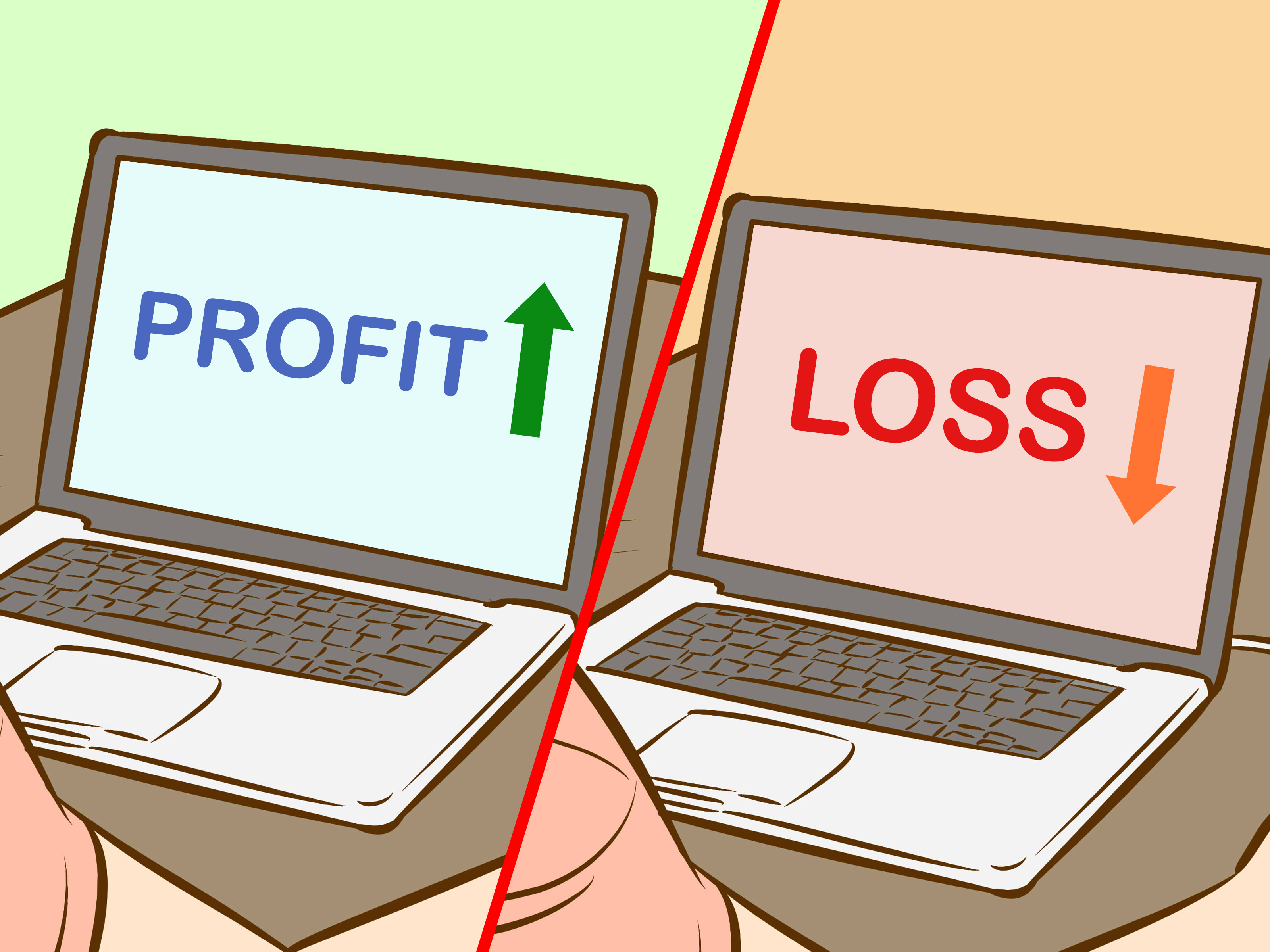
The foreign exchange market connects banks, businesses, governments, investment firms, and individual traders around the world. Retail traders can access it through online forex brokers, but easy access should never be confused with easy profits. Leverage magnifies small price movements, meaning a modest market change can produce an impressive gain or an equally impressive financial crater.
This step-by-step guide explains how to trade forex responsibly, from learning currency-pair basics and choosing a regulated broker to building a strategy, calculating position size, placing an order, and reviewing the result. It is written for beginners who want a practical process rather than promises involving beach houses, rented sports cars, or mysterious “secret indicators.”
What Is Forex Trading?
Forex, short for foreign exchange, is the process of exchanging one currency for another. Every forex trade involves a currency pair, such as EUR/USD, GBP/USD, or USD/JPY.
In the pair EUR/USD, the euro is the base currency, and the U.S. dollar is the quote currency. If EUR/USD trades at 1.1000, one euro is worth approximately 1.10 U.S. dollars. Buying the pair means expecting the euro to strengthen relative to the dollar. Selling it means expecting the euro to weaken.
Retail forex commonly takes place over the counter, meaning transactions are conducted through a dealer rather than on one centralized stock exchange. Exchange-traded currency futures are another way to obtain currency exposure, but their contract structure differs from retail spot forex.
Common Forex Terms Beginners Should Know
A pip is a standard unit used to describe a currency pair’s price movement. For many pairs, one pip equals 0.0001. For Japanese yen pairs, it is commonly 0.01. Some platforms display an additional decimal called a fractional pip or pipette.
The spread is the difference between the bid price and ask price. It is one of the costs of opening a trade. A lot describes trade size: a standard lot is commonly 100,000 currency units, a mini lot is 10,000, and a micro lot is 1,000. Many brokers also permit flexible unit-based sizing.
How to Trade Forex in 12 Steps
-
Step 1: Decide Whether Forex Trading Fits Your Finances
Before studying charts, examine your financial situation. Forex trading should be funded only with risk capital: money you can afford to lose without missing rent, delaying medical care, skipping debt payments, or turning dinner into an exciting experiment involving one potato.
Do not treat forex as an emergency-income solution. The market does not know that your car needs repairs, and it will not adjust EUR/USD out of sympathy. Maintain an emergency fund, control high-interest debt, and understand that speculative trading is different from long-term diversified investing.
U.S. regulators repeatedly warn that leveraged retail forex is highly risky. The Commodity Futures Trading Commission has reported that roughly two out of three retail forex customers lose money during a typical quarter. That does not make learning pointless, but it does make humility an essential trading tool.
-
Step 2: Learn How Currency Pairs Move
Exchange rates respond to supply and demand. Traders constantly reassess expected interest rates, inflation, employment, economic growth, trade conditions, political stability, and overall appetite for risk.
Currency pairs are often divided into three groups. Major pairs involve heavily traded currencies and usually include the U.S. dollar, such as EUR/USD and USD/JPY. Cross pairs do not include the dollar, such as EUR/GBP. Exotic pairs combine a major currency with one from a smaller or emerging economy.
Beginners are generally better served by studying one or two liquid major pairs. Their spreads are often more competitive, information is easier to find, and price behavior is typically less erratic than in thinly traded exotic pairs. Trading seven unfamiliar pairs at once does not create diversification; sometimes it simply creates seven simultaneous ways to be confused.
-
Step 3: Understand Leverage, Margin, and Liquidation Risk
Leverage allows a trader to control a position larger than the cash deposited in the account. In U.S. retail forex, federal rules require a minimum security deposit of 2% of notional value for designated major currency pairs and 5% for other pairs. These percentages correspond to maximum leverage of 50:1 and 20:1, although brokers may impose stricter requirements.
Suppose you control a $50,000 position using $1,000 of margin. A 1% favorable move represents $500 before transaction costs. Unfortunately, a 1% unfavorable move also represents $500. The currency barely stretched; your account performed an entire gymnastics routine.
Margin is not a recommended risk amount. It is collateral required to maintain the position. If account equity falls below the broker’s threshold, the broker may close trades automatically. Beginners should use far less leverage than the maximum available.
-
Step 4: Choose a Properly Regulated Forex Broker
Broker selection is part of risk management. U.S. residents considering over-the-counter retail forex should verify that the firm is appropriately registered and review its background through the National Futures Association’s BASIC database.
Check the firm’s registration status, disciplinary history, legal name, physical address, withdrawal policies, trading costs, execution practices, and customer disclosures. Confirm everything independently rather than trusting a link sent through social media or a messaging app.
Warning signs include guaranteed returns, pressure to deposit immediately, payments to personal bank accounts, crypto-only funding demands, difficulty withdrawing a small test amount, and an “account manager” who becomes dramatically less charming when you ask about regulation.
Compare spreads, commissions, overnight financing charges, platform reliability, minimum trade sizes, customer support, and available order types. The cheapest advertised spread is not automatically the best deal if execution quality is poor or withdrawals become an archaeological project.
-
Step 5: Open a Demo Account and Learn the Platform
A demo account lets you practice with simulated funds. Use it to learn how to open and close trades, adjust position size, set stop-loss and take-profit orders, read account equity, and locate transaction-cost information.
Treat demo trading seriously. Use the same account size, position limits, and strategy you expect to use with real money. Turning a $5,000 practice account into an imaginary $800,000 empire by risking 40% per trade proves only that the platform’s buttons function.
Demo results have limitations. Simulated fills may differ from live execution, and fake losses do not trigger the same emotional reactions as real ones. The goal is not to become a demo millionaire. It is to demonstrate that you can follow a repeatable process.
-
Step 6: Select a Trading Style
Your trading style should match your schedule, temperament, and ability to monitor positions. Scalpers pursue very small movements over short periods. Day traders usually close positions before the trading day ends. Swing traders may hold for several days, while position traders can remain in a trade for weeks or months.
Shorter-term trading demands fast decisions, sustained concentration, and close attention to transaction costs. Longer-term trading reduces screen time but introduces overnight gaps, financing costs, and exposure to unexpected news.
Choose one style for your initial testing period. A strategy cannot be evaluated properly if it transforms from a five-minute scalp into a three-week “investment” immediately after the stop-loss is threatened.
-
Step 7: Build a Written Forex Trading Strategy
A trading strategy should define exactly what creates a valid setup. It may combine market structure, trend direction, support and resistance, momentum, volatility, economic conditions, or scheduled news events.
For example, a simple trend-following plan might permit long trades only when price is above a long-term moving average. Entry could require a pullback into support followed by a bullish candle closing above the previous candle’s high. The stop might sit below the pullback low, while the profit target could be twice the initial risk.
Your written rules should identify:
- The currency pairs and time frames you will trade
- The conditions required for entry
- The conditions that cancel the setup
- The stop-loss placement method
- The profit-target or exit method
- The maximum risk allowed per trade and per day
- The economic events during which trading is prohibited
A strategy does not need twelve indicators stacked like pancakes. It needs clear rules that can be tested consistently.
-
Step 8: Calculate Position Size Before Entering
Position sizing connects your stop-loss distance to the amount of money you are willing to risk. A common formula is:
Position size = Dollars at risk ÷ (Stop distance in pips × Pip value per unit)
Imagine a $5,000 account with a 1% risk limit. The maximum planned loss is $50. If the stop is 25 pips away and each 1,000 units of EUR/USD changes by approximately $0.10 per pip, then 1,000 units would risk about $2.50.
Dividing $50 by $2.50 produces 20, so the approximate position size is 20,000 units. Actual pip values vary according to the currency pair, account denomination, and exchange rate, so use the broker’s calculator and verify the number before placing the order.
Position size should adapt to the stop, not the other way around. Do not squeeze a logical 40-pip stop into 10 pips merely because you want a larger position.
-
Step 9: Check the Economic Calendar
Major economic releases can cause rapid movements, wider spreads, and slippage. Watch scheduled announcements involving inflation, employment, gross domestic product, retail sales, central-bank decisions, and speeches from monetary-policy officials.
For U.S. dollar pairs, the Federal Reserve’s policy announcements, the Bureau of Labor Statistics’ employment and inflation reports, and other official government releases deserve particular attention. Compare both currencies in the pair. EUR/USD depends on European developments as well as U.S. developments.
Beginners may choose not to open new trades immediately before major announcements. A stop-loss remains important, but it does not guarantee execution at the requested price during a fast market. Prices can jump past the stop and fill at the next available level.
-
Step 10: Place the Trade With Protective Orders
A market order seeks immediate execution at the best available price. A limit order attempts to enter at a specified price or better. A stop-entry order activates after price reaches a chosen level, often when trading a breakout.
Before submitting the order, review the currency pair, buy or sell direction, position size, order type, stop-loss, take-profit, and estimated risk in dollars. One incorrect decimal can turn a carefully planned micro position into an unwanted adventure.
Place the stop where the trade idea becomes invalid, not where the potential loss begins to feel annoying. Consider setting the protective stop when the order is entered rather than promising to add it later. “Later” has funded many educational experiences in financial markets.
-
Step 11: Manage the Open Position Without Improvising
Once the trade is active, follow the written management rules. Do not increase the stop-loss merely to avoid accepting a loss. Doing so changes a limited-risk trade into an undefined-risk trade.
If your plan permits trailing stops, partial exits, or moving the stop to breakeven, define the conditions in advance. Moving a stop too quickly can remove a position during normal market noise. Moving it too slowly may return a large unrealized gain to the market.
Avoid adding to a losing position unless the technique has been specifically designed, tested, and strictly limited. Randomly doubling the trade because “it has to turn around” is not analysis. It is bargaining with a currency pair, which has no customer-service department.
-
Step 12: Record and Review Every Trade
A forex trading journal converts individual wins and losses into usable evidence. Record the date, pair, direction, entry, stop, target, position size, setup, market conditions, result, screenshot, and whether every rule was followed.
Separate the quality of the decision from the outcome. A valid trade can lose, and a reckless trade can win. Rewarding rule-breaking because it happened to make money trains exactly the wrong behavior.
After a meaningful sample, calculate win rate, average gain, average loss, maximum drawdown, expectancy, and performance by setup. Expectancy can be estimated with this formula:
Expectancy = (Win rate × Average win) − (Loss rate × Average loss)
A strategy does not need to win most of the time if its average winners are sufficiently larger than its average losses. What matters is whether the method shows positive expectancy after spreads, commissions, financing, and slippage.
Experience-Based Lessons Traders Commonly Learn the Hard Way
Reading about forex trading creates the impression that the central challenge is predicting price direction. Practical experience usually reveals something less glamorous: survival depends more on risk control, consistency, and emotional discipline than on producing spectacular forecasts.
The Best-Looking Setup Can Still Lose
A chart may show a clean trend, a textbook pullback, supportive economic data, and an entry candle that looks ready for a finance textbook cover. The trade can still fail within minutes. Markets deal in probabilities, not obligations.
Experienced traders therefore think in series rather than individual outcomes. One loss says little about a strategy. A properly documented sample of 50 or 100 comparable trades says far more. This mindset reduces the temptation to abandon a tested plan after three losses or declare oneself a genius after three wins.
Small Risk Feels Boring Until a Losing Streak Arrives
Risking a small percentage of account equity can seem unnecessarily cautious when recent trades have been profitable. Then five losses arrive close together, which is entirely possible even with a strategy that has a genuine edge.
A trader risking 1% per trade loses less than 5% after five consecutive full-risk losses, excluding compounding details. A trader risking 10% per trade loses more than 40%. Recovering from the smaller drawdown is manageable. Recovering from the larger one requires an enormous percentage gain and possibly a new relationship with caffeine.
More Screen Time Does Not Guarantee Better Decisions
Watching every tick encourages traders to invent opportunities where no valid setup exists. The chart begins to resemble a personality test: stare long enough, and it appears to confirm whatever you already wanted to do.
A more effective routine is to define specific trading hours, pairs, and setup conditions. When those conditions are absent, the correct action is no action. Flat is a legitimate market position, and unlike a bad trade, it has no spread, no slippage, and no dramatic story attached.
News Trading Is Often Harder Than Predicting the Number
A trader may correctly predict that inflation will exceed expectations and still lose on a dollar trade. The market may have already priced in a larger surprise, another part of the report may conflict with the headline, or traders may focus on what the release means for future policy rather than the current figure.
During major announcements, spreads may widen and prices can reverse abruptly. Beginners often benefit from observing the first reaction rather than trying to beat professional algorithms to the first millisecond.
Changing Strategies Constantly Prevents Learning
A common cycle begins with a trend strategy, shifts to price action after two losses, moves to a new indicator after watching a video, and ends with an automated robot discovered in a comment section. Because no method receives enough consistent testing, nothing meaningful is learned.
Choose a logical strategy, define it precisely, backtest it, practice it on a demo account, and review a reasonable sample. Change one variable at a time. Otherwise, you cannot identify whether performance changed because of the entry rule, exit rule, market environment, or random variation.
Emotional Control Starts Before the Trade
Discipline is easier when the position size is modest and the maximum loss is known. It becomes much harder when a single trade can erase a month of progress. Many apparent psychology problems are actually position-sizing problems wearing an inspirational quote as a disguise.
Create daily and weekly loss limits. Step away after reaching them. Avoid trading while angry, exhausted, distracted, or desperate to recover a loss. Revenge trading rarely wins revenge; it usually produces a sequel.
Withdrawals, Records, and Taxes Matter Too
Trading is not finished when a position closes. Keep accurate statements, confirmations, deposits, withdrawals, and profit-and-loss records. Test the broker’s withdrawal process early with a modest amount rather than discovering problems only after building a large balance.
U.S. tax treatment can depend on the type of currency contract, the transaction structure, and any valid elections. Some foreign-currency gains or losses may receive ordinary treatment under Section 988, while qualifying contracts can be subject to different rules. A tax professional familiar with active trading can help determine the correct reporting method.
The central lesson is simple: professional habits are usually unexciting. Verify the broker. Limit risk. Wait for the setup. Record the result. Repeat. The process lacks the cinematic charm of predicting a 300-pip move from a laptop beside an infinity pool, but it has a much better relationship with reality.
Conclusion
Learning how to trade forex begins with understanding that currency speculation is a risk-management exercise, not a shortcut to guaranteed income. Start by studying how pairs are quoted, how leverage affects losses, and which economic forces influence exchange rates. Then select a properly regulated broker, practice on a realistic demo account, and create written rules for entries, exits, position size, and maximum loss.
When you begin live trading, start smaller than your ego recommends. Judge performance over a series of consistently executed trades, not one exciting afternoon. A durable forex trading plan protects capital first and pursues profit second. Without capital, even the world’s greatest setup becomes merely an interesting screenshot.