The stock market has entered the final stretch of 2026 carrying an unusual collection of luggage: exceptional corporate earnings, stubborn inflation, expensive valuations, an artificial intelligence spending boom, elevated bond yields, geopolitical risks, and investors who remain strangely talented at changing their minds before lunch.
As of July 31, 2026, the S&P 500 closed at 7,489.72 and had gained approximately 9.4% for the year. The Dow Jones Industrial Average and Nasdaq Composite were also up about 9%, while the small-cap Russell 2000 had advanced more than 18%. In other words, this has not merely been another megacap technology rally. Smaller companies and previously neglected sectors have increasingly joined the party.
My year-end stock market forecast is cautiously bullish. I expect the S&P 500 to finish 2026 near 7,950, with a reasonable trading range between 7,700 and 8,100 during the fourth quarter. That would represent additional upside of roughly 6% from the end of July, although the route will probably resemble a mountain road rather than a moving walkway.
Note: This forecast reflects information available through August 2, 2026. It is general market commentary, not personalized investment advice or a recommendation to buy or sell any security.
My 2026 Year-End Stock Market Forecast at a Glance
- Base-case S&P 500 target: 7,950
- Bull-case target: 8,350
- Bear-case target: 6,650
- Most likely fourth-quarter pattern: Volatility followed by a modest year-end rally
- Preferred market areas: Financials, industrials, power infrastructure, selected healthcare stocks, profitable small caps, and proven AI beneficiaries
- Biggest risk: Inflation forcing interest rates and Treasury yields higher
I assign approximately a 55% probability to the base case, 25% to the bull case, and 20% to the bear case. These probabilities are not engraved on a marble tablet. They should change when inflation, earnings, monetary policy, or geopolitical conditions change.
The Bullish Foundation: Corporate Earnings Remain Powerful
The strongest argument for a higher stock market is not excitement, social-media enthusiasm, or the number of people asking whether a particular technology company can triple by Friday. It is corporate profitability.
FactSet reported that S&P 500 companies were producing second-quarter earnings growth of 47.4%, while analysts expected full-year 2026 earnings growth of 29.1%. Forecasts called for earnings to rise 27.4% in the third quarter and 25.2% in the fourth quarter. Revenue growth was also expected to remain in double digits.
Those numbers may eventually be revised, and unusually easy comparisons contributed to some of the growth. Even so, the direction matters. Earnings estimates have risen rather than collapsed, giving investors a fundamental reason to remain invested.
Fidelity has noted that S&P 500 operating margins reached roughly 16%, an all-time high, as profits grew faster than revenue. Schwab likewise observed that full-year earnings expectations had increased dramatically from where analysts began the year. Strong margins suggest that many large companies have retained pricing power and successfully controlled expenses despite rising wages, energy costs, and financing expenses.
AI Spending Is Becoming an Earnings Story
Artificial intelligence remains an important driver of the 2026 market outlook, but the narrative has evolved. In earlier stages of the rally, investors rewarded almost anything wearing an AI name tag. Now they are asking harder questions about revenue, margins, cash flow, and returns on capital.
Goldman Sachs estimated that AI investment could contribute about 40% of S&P 500 earnings growth in 2026, supported by approximately $670 billion in planned spending from the largest cloud-computing companies. That spending benefits semiconductor manufacturers, data-center operators, networking companies, power producers, electrical-equipment suppliers, cooling specialists, and software platforms.
The opportunity is significant, but the market will no longer reward every participant equally. The next phase should favor companies converting AI spending into measurable revenue rather than companies converting the letters “A” and “I” into a press release.
The Economy Is Slowing, but It Is Not Collapsing
Real U.S. gross domestic product expanded at a 1.5% annualized rate in the second quarter, down from 2.1% in the first quarter. At first glance, that appears concerning. Beneath the headline, however, real final sales to private domestic purchasers increased 3.9%, indicating healthier consumer spending and private investment than the top-line GDP figure suggested.
This combination creates a tolerable backdrop for stocks: economic activity is growing slowly enough to discourage excessive enthusiasm, but private demand remains strong enough to support corporate revenue.
The Federal Reserve’s June projections called for real GDP growth of 2.2% in 2026 and an unemployment rate of 4.3% in the fourth quarter. Those forecasts describe a slower but still expanding economy rather than an imminent recession.
The labor market deserves attention. June payroll growth slowed to 57,000 while unemployment stood at 4.2%. A gradual cooling in hiring could help reduce inflation pressure. A sudden jump in unemployment, however, would weaken consumer spending and increase recession risk.
Inflation and Interest Rates Are the Main Obstacles
The bullish case is credible, but it is not bulletproof. Inflation remains the loose floorboard everyone keeps stepping on.
The Consumer Price Index fell 0.4% in June on a seasonally adjusted basis, but it was still 3.5% higher than a year earlier. Core CPI, excluding food and energy, increased 2.6% over the same period. That is an improvement in underlying inflation, yet headline inflation remains well above the Federal Reserve’s 2% objective.
On July 29, the Federal Reserve maintained its target federal funds rate at 3.50% to 3.75%. The decision confirmed that policymakers were not ready to declare victory over inflation. Investors who began the year expecting easy rate cuts have been forced to consider a less cheerful possibility: rates may remain high, or even rise, if energy prices and consumer demand keep inflation elevated.
High Treasury yields compete directly with stocks. When investors can earn attractive returns from government bonds, they become less willing to pay heroic valuations for uncertain future profits. The 10-year Treasury yield approached 4.7% at the end of July, creating particular pressure on speculative growth companies whose expected earnings remain several calendar pages away.
Valuations Leave Less Room for Disappointment
The S&P 500’s forward 12-month price-to-earnings ratio stood at approximately 19.6. That was slightly below its five-year average of 19.9 but above its 10-year average of 19.0. The market is not absurdly valued when measured against recent history, but it is certainly not sitting in the clearance aisle.
At these levels, earnings must continue doing the heavy lifting. A market trading near 20 times forward earnings can advance when profits rise rapidly. It becomes much more vulnerable when estimates flatten, bond yields climb, or management teams lower guidance.
Market Breadth Is the Most Encouraging Development
One of the healthiest signals in 2026 has been the broadening of market leadership. The headline S&P 500 struggled after reaching a June high, partly because semiconductor and megacap technology stocks weakened. Beneath the surface, approximately two-thirds of S&P 500 companies gained, and eight of the index’s 11 sectors advanced.
From early June through late July, the equal-weight S&P 500 rose nearly 4% while the traditional capitalization-weighted index declined about 2.4%. Mid-cap and small-cap indexes also posted strong year-to-date gains.
This rotation matters because a durable bull market should not depend on a handful of giant companies behaving perfectly every quarter. Participation from financials, industrials, healthcare, energy, utilities, mid-caps, and small caps gives the market more ways to advance.
It also means the best opportunities may no longer be found by buying last year’s winner and hoping it remains popular forever. Investors may need to look at valuation, balance-sheet strength, earnings revisions, and industry conditions. Yes, actual homework has returned. Wall Street can be terribly inconsiderate.
Three Scenarios for the Stock Market Through December
Base Case: S&P 500 Finishes Near 7,950
My base case assumes that corporate earnings remain strong, economic growth stays positive, inflation cools only gradually, and the Federal Reserve leaves rates unchanged for most or all of the remaining year.
In this scenario, valuation multiples remain close to current levels. Earnings growth, rather than multiple expansion, drives the index higher. Leadership continues broadening beyond the largest technology companies, although profitable AI infrastructure businesses remain important.
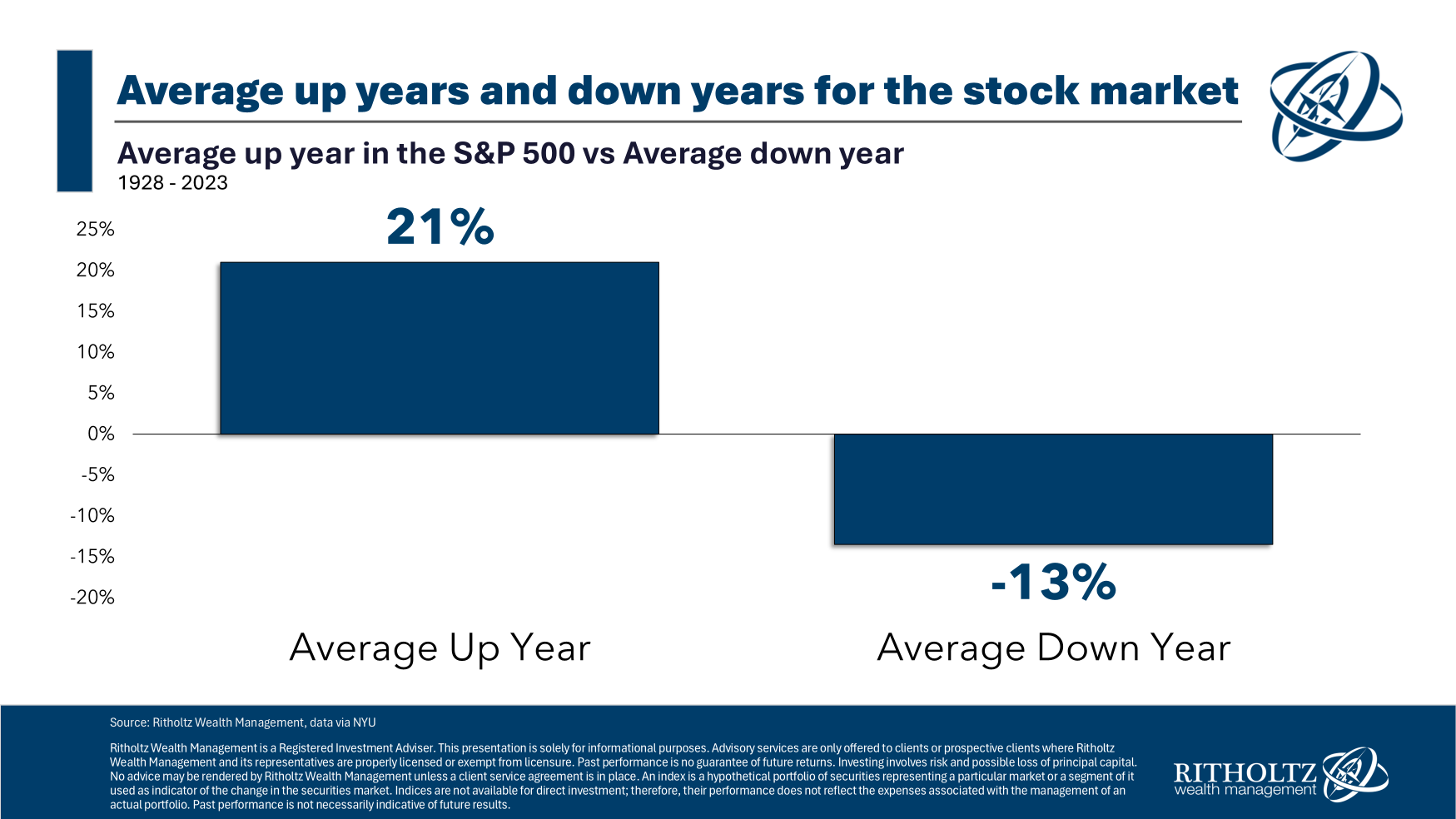
I would expect at least one pullback of 5% to 8% before year-end. Corrections of that size are uncomfortable but entirely compatible with a positive calendar-year return. The market rarely delivers gains in the same calm manner used in financial-planning brochures.
Bull Case: S&P 500 Reaches 8,350
The bull case requires inflation to cool more rapidly, Treasury yields to retreat, and third-quarter earnings to exceed already elevated expectations. It would also benefit from declining geopolitical risk and continued strength in consumer spending.
In that environment, investors could accept a slightly higher valuation multiple while analysts raise 2027 earnings estimates. Small caps, financials, industrials, and consumer discretionary stocks would probably outperform as confidence in the economic expansion improves.
This outcome is not wildly different from Citigroup’s 8,100 year-end target or the constructive 12-month equity expectations published by several major investment firms. Goldman Sachs has been more restrained, previously setting a 7,600 target, illustrating how unusually wide the professional forecasting range has become.
Bear Case: S&P 500 Falls Toward 6,650
The bear case begins with another inflation shock. A sustained increase in oil prices, renewed supply disruptions, stronger wage pressure, or tariff-related cost increases could force markets to price in additional monetary tightening.
If the 10-year Treasury yield rises decisively above 5%, valuation multiples would probably contract. The damage would become more severe if earnings estimates also declined or unemployment rose sharply.
A disappointing return on enormous AI capital expenditures could create another source of weakness. The largest technology companies represent roughly one-third of the S&P 500’s weight, meaning a major reassessment of AI profitability could pull down the entire index even if many smaller companies remained stable.
Sectors I Expect to Lead Into Year-End
Financials
Banks and insurers can benefit from a healthy economy, active capital markets, improving loan demand, and a yield curve that supports lending margins. Credit quality remains the key variable. I prefer well-capitalized institutions with diversified income rather than aggressive lenders dependent on one overheated market.
Industrials and Infrastructure
Industrial companies are positioned to benefit from manufacturing investment, data-center construction, defense spending, grid upgrades, automation, and transportation demand. Electrical equipment and power-management businesses may remain among the quieter winners of the AI boom.
Selective Technology
Technology remains attractive, but selection matters more than exposure. I favor companies with recurring revenue, strong free cash flow, reasonable valuations, and evidence that AI investment is producing commercial returns.
Healthcare
Healthcare offers defensive revenue, reasonable valuations in several industries, and company-specific growth opportunities. It may perform well if economic expectations weaken or investors continue rotating away from expensive momentum stocks.
Profitable Small and Mid-Cap Companies
Smaller companies have already enjoyed a strong 2026, so buying the entire category without analysis may be risky. Nevertheless, profitable businesses with manageable debt and improving earnings could continue benefiting from broader market participation.
How Investors Can Prepare for the Rest of 2026
A market forecast should guide risk management, not encourage dramatic all-or-nothing bets. Even the most carefully researched target can be defeated by a surprise inflation report, geopolitical event, earnings warning, or central-bank sentence containing one unexpected adjective.
- Stay diversified: Avoid concentrating an entire portfolio in one sector, theme, country, or collection of popular tickers.
- Rebalance oversized winners: Trimming a position is not the same as predicting its collapse.
- Favor financial strength: Cash flow, manageable debt, pricing power, and durable margins matter when rates are high.
- Keep some liquidity: A modest cash or short-term bond allocation can provide flexibility during corrections.
- Use gradual purchases: Dollar-cost averaging reduces the pressure to identify the market’s exact low.
- Watch earnings revisions: Prices frequently follow changes in expected profits more reliably than dramatic headlines.
Experience Notes: What Studying Year-End Forecasts Has Taught Me
The most useful experience I can share does not come from pretending that anyone can see December’s closing price with supernatural accuracy. It comes from reviewing how previous market forecasts succeeded, failed, and occasionally wandered into the correct answer for completely incorrect reasons.
A Precise Target Can Create False Confidence
Investors naturally prefer a forecast such as “the S&P 500 will end at 7,950” over a forecast that says “several outcomes remain possible.” The precise number sounds more intelligent. It fits neatly into a headline and looks impressive on television beside a colorful chart.
In practice, the scenario behind the number matters far more than the number itself. A target should explain what must happen to earnings, inflation, interest rates, and valuations. Without those conditions, it is merely a confident-looking guess wearing a necktie.
The Market Can Rise While the News Feels Terrible
One recurring lesson is that markets respond to changes in expectations, not simply to whether the news is good or bad. Stocks may rise after a weak economic report if investors believe it reduces the probability of tighter monetary policy. They may fall after excellent earnings if expectations were even more excellent.
This is why trading entirely from headlines can be frustrating. The market often appears to read the same article and reach the opposite conclusion.
Earnings Usually Matter More Than the Popular Narrative
Every year produces a dominant story: inflation, recession, elections, banking stress, artificial intelligence, trade policy, or geopolitical conflict. Those issues matter, but a market narrative becomes durable only when it affects corporate cash flow.
Reviewing past forecasts repeatedly shows that companies capable of raising earnings estimates can outperform even in an uncomfortable environment. Conversely, a wonderful story cannot protect a stock indefinitely when revenue disappoints and expenses keep arriving with perfect punctuality.
Corrections Feel Obvious Only After They Happen
After a decline, commentators often explain that the warning signs were everywhere. Before the decline, those same signals may have persisted for months while the market continued rising.
This experience argues against selling everything because one valuation measure looks expensive. It also argues against ignoring risk because earnings are currently strong. Rebalancing, diversification, and position sizing are less exciting than heroic market timing, but they are far more repeatable.
A Forecast Should Be Updated, Not Defended
Perhaps the most important lesson is that changing a forecast is not a failure when the underlying evidence changes. Analysts sometimes become emotionally attached to a target and begin searching for facts that protect it. Investors do the same thing with stocks they own.
A better process identifies the evidence that would invalidate the original view. For this forecast, I would become more bullish if inflation declined, bond yields retreated, and earnings estimates continued rising across multiple sectors. I would become more defensive if inflation accelerated, the Fed signaled additional tightening, credit conditions weakened, or earnings revisions turned decisively negative.
The goal is not to remain loyal to a prediction. The goal is to remain responsive to reality. Markets do not award bonus points for stubbornness.
Conclusion: Cautiously Bullish, Definitely Alert
My year-end stock market forecast calls for the S&P 500 to finish 2026 near 7,950. Strong corporate earnings, expanding profit margins, resilient private-sector demand, and broader market participation support additional gains.
At the same time, elevated inflation, restrictive interest rates, high Treasury yields, expensive valuations, geopolitical uncertainty, and dependence on AI-related spending limit the potential upside. The most likely outcome is not a straight-line rally but a volatile advance interrupted by at least one meaningful correction.
Investors should therefore remain constructive without becoming careless. Own quality companies, diversify beyond the most popular names, maintain enough liquidity to handle volatility, and treat every forecastincluding this oneas a working map rather than a legally binding contract with the future.