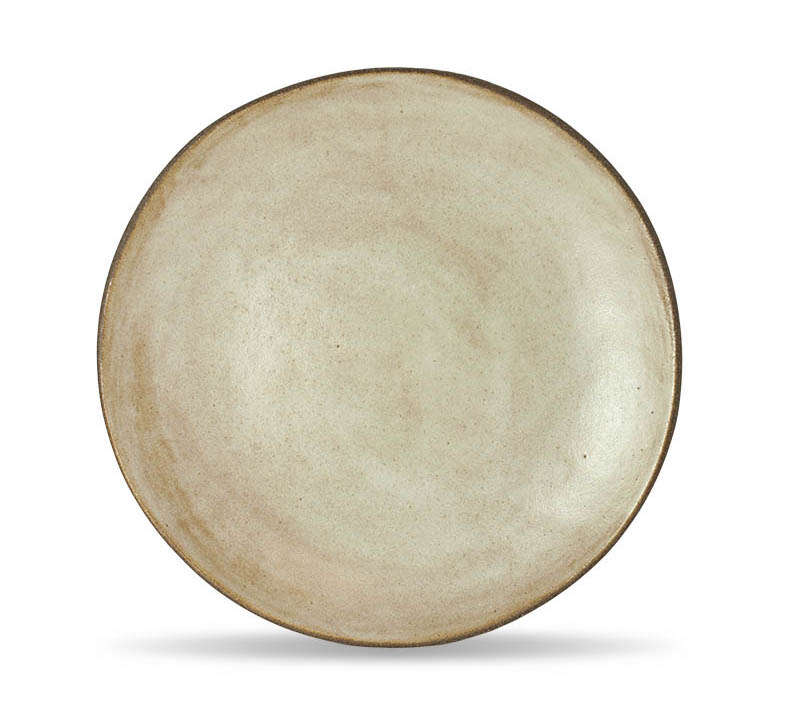
There are dinner plates that politely hold your food, and then there are dinner plates that quietly become part of the meal. The Dinner Plate White Chamois from MMclay belongs firmly in the second category. Handmade in San Francisco and associated with the studio’s Progress Collection, this generously sized stoneware plate combines a softly translucent white glaze, visible traces of its clay body, an earthy edge, and the kind of subtle irregularity that makes factory-perfect dishes suddenly look a little too well behaved.
The plate originally attracted attention through MMclay’s collaboration with San Francisco restaurant The Progress. Rather than designing restaurant ceramics that disappear beneath the food, ceramic artist and designer MaryMar Keenan created pieces intended to participate in the presentation. The result is tableware with enough personality to be noticed without elbowing the roasted carrots out of the spotlight.
Today, MMclay lists the form as the Progress Dinner Plate, with White Chamois among its glaze options. Measuring approximately 11.5 inches in diameter and one inch high, it can work as either a full-size dinner plate or a small serving platter. That versatility, combined with handmade character and restaurant-inspired design, explains why this plate has remained interesting long after its first appearance on design blogs.
What Is the Dinner Plate White Chamois?
The name can be mildly confusing because “White Chamois” is primarily the glaze rather than the shape of the plate. The form belongs to MMclay’s Progress Collection, while White Chamois is one of several finishes that can be applied to it.
MMclay describes White Chamois as a translucent glossy white glaze with subtle iron spotting from the clay. That distinction matters. This is not the sterile, copier-paper white associated with inexpensive institutional china. Because the glaze allows some interaction with the clay beneath it, the surface has visual depth and natural variation.
Think of it as white dinnerware after it spent a weekend at an art school in Northern California.
Key characteristics
- Approximately 11.5 inches in diameter
- Approximately 1 inch high
- Handcrafted stoneware construction
- White Chamois translucent gloss glaze
- Natural iron spotting and glaze variation
- Etched “tick” texture on the reverse
- Suitable as a dinner plate or small serving platter
- Microwave safe
- Dishwasher safe
Older coverage of the collection described an approximately 11-inch version with a raw clay rim, hand-worked decoration on the reverse, and a sanded bottom. As handmade collections evolve, exact dimensions and production details can change, so current manufacturer specifications are the appropriate reference when purchasing.
The Story Behind the Progress Collection
MMclay was founded by artist and designer MaryMar Keenan in San Francisco. The studio says the business began in 2015 and first gained broad attention through the Progress Collection, developed specifically for a San Francisco restaurant.
That restaurant was The Progress, the acclaimed Fillmore Street restaurant from the team behind State Bird Provisions. The restaurant has earned recognition from the Michelin Guide, and its cooking emphasizes colorful, shareable California dishes. That makes the tableware more than an attractive accessory: it was designed in an environment where presentation, durability, stacking, service, sauces, utensils, and repeated washing all matter.
According to early reporting on the collaboration, Keenan experimented with numerous glazes while developing the collection with chef Stuart Brioza. The restaurant ultimately embraced several finishes rather than choosing a single uniform color. Diners could receive different handmade plates across the table, turning the dinnerware itself into part of the conversation.
That restaurant-to-home transition is important. Handmade ceramic dinnerware has become increasingly visible in American restaurants because it adds texture, individuality, and a sense of craftsmanship to food presentation. The Progress Collection is a particularly literal example: these are restaurant-born ceramics that home cooks can use at Tuesday-night dinner without needing tweezers, edible flowers, or a reservation.
What Makes the White Chamois Glaze Special?
It is white without looking generic
White plates have a practical advantage: almost every color of food works against them. Tomatoes become brighter, herbs look greener, roasted vegetables gain contrast, and dark sauces read clearly rather than disappearing into the background.
White Chamois keeps that versatility while avoiding the flat appearance of conventional glossy white dinnerware. The glaze is translucent enough for slight iron freckles and natural tonal shifts to remain visible. From a distance, the plate appears calm and neutral. Up close, it rewards inspection.
Variation is part of the design
MMclay hand-brushes its glazes and specifically notes that handmade pieces will not be identical. Slight differences in form, glaze density, markings, and firing results are normal.
For someone accustomed to mass-produced dinnerware, the first reaction may be, “Wait, these two aren’t exactly the same.” Correct. That is the point.
Handmade ceramics capture small differences introduced by forming, glazing, drying, and firing. Those differences provide the visual rhythm that collectors often value. A set remains coordinated without looking as if twelve plates were cloned by an extremely efficient robot.
Size and Everyday Functionality
At about 11.5 inches across, the Dinner Plate White Chamois is generous by everyday dinnerware standards. The added surface area is useful for composed meals, restaurant-style presentation, shared appetizers, pastries, cheese, vegetables, or a casual serving platter.
The broad surface gives ingredients breathing room. Instead of piling chicken, potatoes, vegetables, and sauce into one crowded mountain, you can visually separate components. A piece of salmon can sit beside roasted asparagus with a streak of puree without the plate looking empty.
The downside is cabinet space. Large handmade plates require more room than compact 10-inch everyday plates, so measure your shelves and dishwasher racks before imagining a twelve-piece collection marching gracefully into the kitchen.
How Food Looks on a White Chamois Plate
One reason chefs care about ceramics is simple: dinnerware changes how a dish is perceived. Form, surface, color, rim height, and contrast all affect presentation before the first bite is taken.
Foods that particularly suit the glaze
- Roasted vegetables: Carrots, beets, squash, peppers, and greens pop against the warm white background.
- Pasta: Tomato sauces, pesto, mushrooms, and grated cheese gain strong contrast.
- Grilled proteins: Brown searing and char marks stand out clearly.
- Salads: Leafy greens and colorful produce keep the plate feeling fresh and light.
- Desserts: Chocolate, berries, caramel, citrus, and powdered sugar photograph especially well against neutral ceramics.
- Shared appetizers: The 11.5-inch format offers enough room for cheese, fruit, crostini, dumplings, or sliced vegetables.
Unlike bright patterned plates, White Chamois rarely competes with the dish. Its personality comes from texture and material rather than graphic decoration.
Styling the Dinner Plate White Chamois
White Chamois works especially well in interiors that combine clean shapes with natural materials. Wood, linen, stone, brushed metal, and handmade glassware complement its tactile appearance.
For a minimalist table
Pair the plates with washed linen napkins, simple stainless flatware, and clear glasses. Skip elaborate centerpieces and use a few branches or seasonal flowers. The slight spotting and raw-clay character provide enough texture to prevent the table from feeling like a laboratory.
For a rustic-modern table
Use a wood table without a tablecloth, add natural linen, and mix White Chamois pieces with darker ceramics. MMclay itself recommends pairing the glaze with finishes such as Moonshadow and Eelskin. A combination of pale plates and dark bowls creates contrast while remaining cohesive.
For colorful entertaining
Neutral dinnerware gives you permission to be louder elsewhere. Try cobalt napkins, amber glassware, brass candlesticks, striped textiles, or dramatic flowers. White Chamois behaves like a good supporting actor: attractive enough to remember, sensible enough not to demand a close-up during every scene.
Handmade Stoneware vs. Mass-Produced Dinnerware
The main reason to buy handmade ceramic dinnerware is not that it performs some secret culinary function. Your scrambled eggs will not acquire a Michelin star simply because their plate has artisanal iron freckles.
The difference is experiential.
Mass-produced dinnerware generally prioritizes consistency, efficiency, affordability, easy replacement, and predictable dimensions. Handmade stoneware emphasizes material, craftsmanship, tactile surfaces, and individual variation.
Neither approach is automatically better. A household with small children, limited storage, and an impressive talent for dropping plates may reasonably prefer inexpensive replaceable dishes. Someone who enjoys craft objects and uses dinnerware as part of their interior design may see greater value in handmade pieces.
Restaurant-quality handmade stoneware sits somewhere between art object and practical tool. It should be appreciated, but it should also meet mashed potatoes occasionally.
Durability and Care
MMclay describes its ceramics as durable stoneware intended for everyday use, but handmade ceramics deserve more thoughtful handling than heavy commercial china.
The manufacturer states that its pottery is dishwasher and microwave safe. Its care guidance also recommends washing with dish soap and a soft scrub brush and notes that hand washing can extend the useful life of the pottery.
Avoid sudden temperature changes
Thermal shock can damage ceramic ware. Do not move a plate directly from a freezer into a hot oven or expose it to similarly extreme temperature changes.
MMclay recommends gradual heating when oven use is necessary and advises against placing its pottery directly into an already-hot oven. It also warns against open flames.
Stack carefully
The company’s restaurant care recommendations are surprisingly useful at home: stack matching shapes together, avoid slamming edges against one another, and do not build enormous towers of handmade pottery.
In other words, treat your plate like a plate rather than a cymbal.
Dealing with utensil marks
Light-colored ceramic surfaces can occasionally show gray marks from metal utensils. MMclay recommends gentle cleaning methods such as baking soda mixed with warm water for stubborn marks. Avoid aggressive treatment unless the manufacturer specifically approves it.
Food Safety and Ceramic Glazes
Food-contact ceramics deserve more consideration than decorative pottery because improperly formulated or fired glazes can potentially release substances such as lead or cadmium.
The U.S. Food and Drug Administration regulates ceramicware concerns involving lead and cadmium, making food-safe glaze formulation particularly important for tableware. MMclay states that its stoneware glazes are food safe and lead free.
For microwave use, general USDA guidance recommends using cookware specifically identified as microwave safe. MMclay explicitly labels the Progress Dinner Plate as microwave safe, eliminating the guesswork that sometimes comes with vintage or unidentified pottery.
Is Dinner Plate White Chamois Worth Buying?
That depends on what you want from dinnerware.
If the goal is simply to obtain something inexpensive that holds lasagna without leaking onto the table, dozens of mass-market options will accomplish the mission for less money.
If you value handmade American ceramics, restaurant design, subtle variation, tactile materials, and tableware that can double as functional art, the White Chamois Progress Dinner Plate becomes much more compelling.
Its strongest qualities are versatility and restraint. The large size accommodates both individual meals and shared food. The white glaze complements almost every cuisine. The iron spotting and handcrafted finish create character without turning every dinner into a themed tablescape.
The biggest considerations are price, availability, lead time, and the reality that handmade stoneware needs somewhat more considerate handling than bargain commercial dishes. MMclay’s current product page also notes limited production or inventory conditions for this particular form, so availability should be checked before building an entire table setting around it.
Who Will Love It Most?
The Dinner Plate White Chamois makes the most sense for people who enjoy objects that reveal how they were made. It is particularly appealing for:
- Home cooks who care about plating and presentation
- Collectors of handmade American ceramics
- Fans of modern California restaurant design
- Minimalist interiors that need subtle texture
- Food photographers and stylists
- Hosts who prefer mix-and-match dinnerware
- Gift buyers looking for functional craft rather than decorative clutter
Living With Dinner Plate White Chamois: A Practical Experience Guide
What is the ownership experience likely to feel like after the beautiful product photography disappears and the plate enters an actual kitchen? This is where handmade tableware either earns its cabinet space or becomes something everyone is afraid to touch.
The first noticeable difference is scale. An 11.5-inch plate feels substantial when placed beside common everyday dinnerware. That extra diameter is delightful when serving a carefully arranged dinner, but it also means checking whether the plate fits comfortably in existing cupboards. In a small apartment kitchen, half an inch can be the difference between “beautiful handmade pottery collection” and “why won’t this cabinet door close?”
At breakfast, the oversized surface can initially seem unnecessary. Two eggs and toast may look like they have rented a loft. Add fruit, avocado, potatoes, or a little salad, however, and the spacious format suddenly makes sense. Ingredients can remain distinct rather than becoming an accidental breakfast casserole.
Dinner is where the format becomes especially satisfying. Imagine roast chicken with crisp skin, charred carrots, a spoonful of creamy polenta, herbs, and pan sauce. Against White Chamois, brown, orange, green, and golden tones all remain visually distinct. The lightly freckled glaze adds interest around the food without creating visual noise.
The handmade variation also changes how a set feels. With conventional dinnerware, you might reject a plate because its glaze differs slightly from its neighbor. Here, those differences are expected. One plate may reveal more iron spotting; another may show a slightly different glaze response. After a while, identifying favorite pieces can become part of the fun.
Cleaning should be pleasantly ordinary. Because the plate is rated for dishwasher use, it does not require ceremonial hand washing after every sandwich. Still, owners who want to maximize longevity may choose hand washing for routine use, especially when only one or two pieces are dirty. The difference between “usable art” and “precious art” is important: a good handmade dinner plate should not create anxiety every time tomato sauce appears.
Stacking deserves slightly more attention. Handmade edges can be more vulnerable to impacts than thick commercial restaurant china, so lowering plates onto one another rather than dropping them into a stack is a sensible habit. No velvet-lined cabinet is required. Just don’t recreate the dish pit from a 300-seat banquet hall.
For entertaining, White Chamois is unusually forgiving. You do not need matching napkins, matching bowls, or an aggressively coordinated centerpiece. Mix it with dark ceramics, vintage glassware, modern flatware, or linen in almost any color. Because the glaze is neutral but not bland, the table can look collected rather than purchased as one giant boxed set.
Perhaps the best experience comes from using it for unremarkable meals. Handmade ceramics are easy to romanticize for holidays and dinner parties, but a plate becomes genuinely valuable when leftover pasta looks appealing on it at 10 p.m. The Dinner Plate White Chamois works because its craftsmanship does not demand a special occasion. It simply gives ordinary food a better stage.
Final Thoughts
The Dinner Plate White Chamois succeeds by balancing opposites. It is refined but rustic, neutral but distinctive, restaurant-worthy but practical enough for home use. Its translucent white glaze keeps food at the visual center while iron spotting, hand-brushed variation, etched details, and exposed clay provide evidence of the human process behind the object.
That combination explains the continuing appeal of handmade ceramic dinnerware. The best pieces do more than survive dinner. They shape the mood of it.
For cooks who believe presentation matters, collectors who value functional craft, or anyone tired of plates possessing roughly the same personality as printer paper, White Chamois offers a quieter and more tactile alternative. Just remember the most important rule of owning beautiful handmade tableware: use it. Dinner deserves better than watching the good plates gather dust.