There are few places on Earth where human patience gets tested quite like the checkout line at a drugstore. It is a strange little arena of modern life: someone is buying cough drops, someone else is comparing candy prices like they are negotiating a peace treaty, and one poor parent is trying to keep a toddler from turning the greeting-card aisle into a confetti factory.
That is why the story of a woman in CVS who cut in line, acted as though everyone else had magically become background furniture, and then received a small but satisfying dose of petty revenge struck such a nerve online. It was not a tale of dramatic courtroom justice or movie-villain punishment. No one called a lawyer. No one flipped a table. No one delivered a speech while thunder rolled in the distance.
Instead, it was the kind of everyday revenge that makes people quietly whisper, “Good for her.” The story involved a nanny, a three-year-old child, a small toy, an impatient customer, and a parking-lot delay so beautifully petty it practically came with a bow on top.
More importantly, the situation reveals why line cutting feels so personal. Waiting in line is not just about time. It is about fairness, respect, social rules, and the shared understanding that your hurry does not automatically outrank someone else’s existence. In other words, the CVS story became viral because everyone has met some version of this woman before.
The CVS Line-Cutting Story: What Happened?
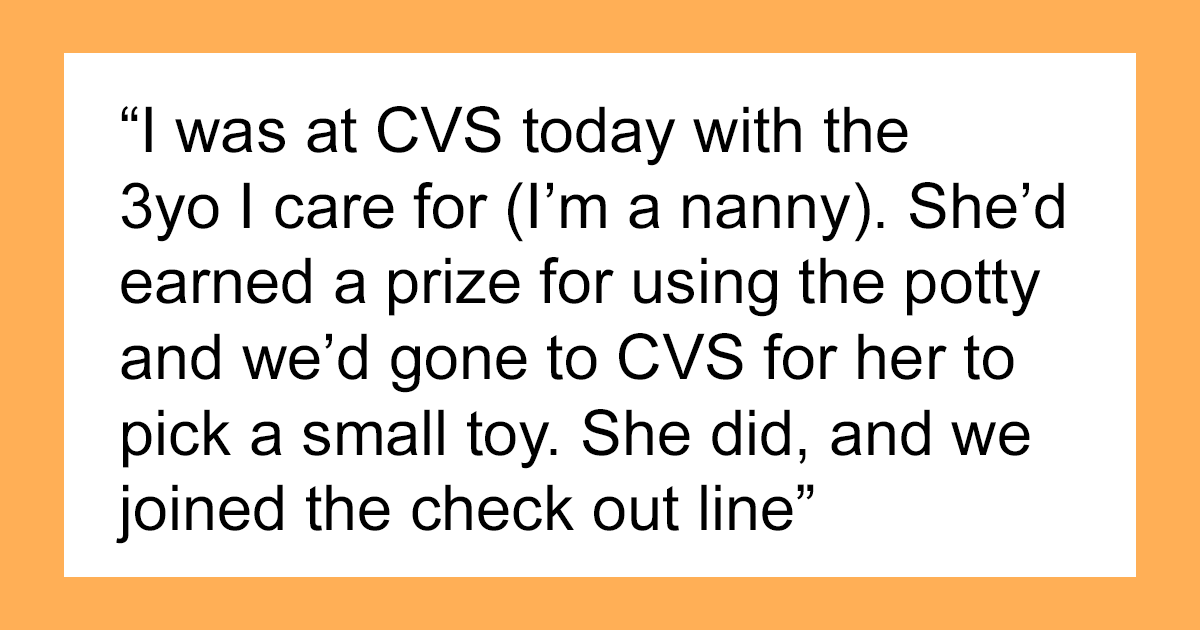
According to the widely shared story, a nanny took the three-year-old child she cared for to CVS to pick out a small toy. The child had earned the reward, which already makes the trip sound sweet enough to require a tiny violin and perhaps a juice box.
Like many normal shoppers, they joined the checkout line. There were a few people ahead of them and only one cashier working, so the wait took a while. Nothing unusual so far. Anyone who has stood in a CVS line knows the experience can feel like watching a printer warm up in 1998. You know progress is happening, but you are not entirely sure where.
Then another shopper arrived behind them carrying several bags of candy. Rather than quietly joining the line like a civilized member of society, she began huffing, tapping her foot, and loudly complaining about there being only one line. Her performance had all the subtlety of a smoke alarm in a library.
When the nanny and child finally reached the counter, the little girl dropped her toy. The nanny bent down to pick it up. That brief moment was apparently all the impatient woman needed. She stepped around them, placed her items on the counter, and told the cashier that the nanny and child were “not ready” and that she was in a hurry.
That move was the emotional equivalent of cutting off a birthday song halfway through because you personally wanted cake sooner.
Why the Nanny Stayed Quiet in the Store
The nanny later explained that she normally might have said something. However, she did not want to start an argument in front of a three-year-old. That decision matters. It shows the difference between being right and choosing the right moment to respond.
Anyone can snap back in public. Sometimes it even feels delicious for about four seconds. But when a child is watching, the situation changes. The nanny had to think about the lesson being taught: Do we scream at rude strangers? Do we escalate in a store? Do we let the cashier become the referee in a checkout-line cage match?
She chose not to turn CVS into a live-action morality play. She waited, paid for the toy, and walked out. On paper, it looked like the rude customer had won. She got to skip ahead. She got to save a few minutes. She got to leave with her candy and her misplaced sense of royal authority intact.
But life, as it sometimes does, had parked a plot twist outside.
The Parking-Lot Petty Revenge
Once outside, the nanny discovered that the impatient woman’s car was parked right next to hers. Better still, the position of the cars created the perfect opportunity for a harmless inconvenience. The nanny opened both doors on her own vehicle, which effectively blocked the other woman from easily reaching her driver’s side door.
Then she took her time helping the child into the car seat. Slowly. Carefully. Safely. With the calm precision of someone assembling furniture while reading every instruction twice.
She buckled the child in, gave her a snack, and allowed her to open the wrapper on the new toy by herself. Anyone who has ever watched a toddler open packaging knows this can take anywhere from thirty seconds to the length of a minor geological period. Toddlers treat plastic wrap like it is a puzzle designed by NASA.
The impatient woman, who had just demonstrated that waiting was apparently her greatest personal tragedy, now had to wait. Not forever. Not cruelly. Just long enough to experience the same tiny inconvenience she had created for someone else.
Before leaving, the nanny reportedly smiled and thanked the woman for waiting. And there it was: the tiny cherry on the petty revenge sundae.
Why This Petty Revenge Felt So Satisfying
The reason this CVS story exploded online is simple: the punishment matched the crime. The woman cut in line because she believed her time mattered more than the nanny’s, the child’s, and everyone else’s. Then she was forced to spend a few extra minutes waiting because someone else moved slowly within the rules.
That is what makes petty revenge stories so popular. They restore balance in a world where rude people often seem to float through life untouched, like shopping carts with one bad wheel that somehow keep moving. The revenge did not harm the woman. It did not involve insults, threats, or damage. It simply gave her a small taste of her own behavior.
There is also a comedic symmetry to the story. She rushed past a child over a dropped toy, only to be delayed while that same child was carefully buckled into a car seat and allowed to open a snack and toy at toddler speed. It is hard to invent a more poetic form of inconvenience.
The Real Issue: Line Cutting Is About Fairness, Not Minutes
Most people dislike waiting, but waiting itself is not always the real problem. People will wait in line for concerts, limited-edition products, amusement-park rides, coffee, tacos, and even the DMV if they must. The difference is whether the wait feels fair.
A line works because everyone silently agrees to the same rule: first come, first served. That rule is simple enough for kindergarten and powerful enough to hold together airports, grocery stores, pharmacies, banks, and school pickup lanes. When someone cuts, they are not just taking a spot. They are breaking the social contract.
That is why even a small violation can spark big feelings. If you have ever watched someone slide into a line ahead of you and pretend they “did not notice,” you know the internal monologue. It starts with, “Surely they are not doing that,” quickly becomes, “Oh, they are absolutely doing that,” and ends somewhere around, “I hope their receipt is seven feet long.”
The woman in CVS did not merely hurry. She made her hurry everyone else’s problem. That is the part people reacted to most strongly.
What the Story Says About Entitled Customers
Entitled customer behavior often begins with one false assumption: “My situation is special, so normal rules do not apply to me.” Maybe the person is late. Maybe they are stressed. Maybe they have convinced themselves that carrying candy grants emergency diplomatic status. Whatever the reason, the result is the same: everyone else becomes an obstacle.
Retail workers see this kind of behavior constantly. A customer sighs loudly enough to qualify as weather. Someone blames a cashier for a company policy. Another person treats a line like a suggestion rather than a structure. The employee is then expected to stay calm, polite, fast, and cheerful, even when the customer is acting like a raccoon trapped in a vending machine.
That does not mean every impatient person is bad. Sometimes people are genuinely dealing with emergencies, pain, anxiety, or time pressure. But being in a rush does not give anyone permission to bulldoze others. If the woman at CVS truly needed to go first, the respectful move would have been simple: ask.
“I’m so sorry, I’m in a serious hurry. Would you mind if I went ahead?”
That one sentence changes everything. It gives the other person dignity. It acknowledges the rule. It creates a choice instead of forcing a takeover. Politeness is not fancy. It is just social oil for the squeaky machinery of public life.
Was the Nanny Right to Get Revenge?
This is where the story becomes more interesting than a simple “rude woman gets what she deserves” headline. Many online commenters celebrated the nanny’s response. Others argued she should have spoken up in the store instead of responding later in the parking lot.
Both sides have a point. The petty revenge was funny because it was harmless, proportional, and oddly elegant. The nanny did not yell. She did not damage property. She did not block traffic. She simply used the ordinary process of loading a child into a car to make the woman wait a little longer.
Still, as a general rule, assertive communication is usually healthier than passive-aggressive payback. A calm statement in the moment“Excuse me, we were next and we are ready to check out”would have protected the boundary without creating lingering resentment. It also would have modeled direct communication for the child.
Of course, real life does not always hand us perfect scripts. Many people freeze when someone behaves rudely in public. They do not want to escalate. They do not want a scene. They do not want to become the next viral video titled “Checkout Line Meltdown Part 14.” In that sense, the nanny’s reaction was human. Not perfect, perhaps, but deeply understandable.
Better Ways to Handle a Line Cutter
If someone cuts in front of you, the best response depends on the situation. Safety comes first. If the person seems aggressive, intoxicated, or unstable, it may be better to let the moment pass and avoid confrontation. A candy purchase is not worth becoming a supporting character in someone else’s bad decision.
But when the situation is safe, a calm and direct response can work well. Try something simple: “Excuse me, the line starts back there.” Or, “Actually, we were next.” Keep your tone steady. Do not insult the person. Do not perform for the crowd. The goal is not to win an Oscar for public outrage. The goal is to restore the boundary.
If the cashier seems unsure, you can politely bring them in: “We were next, and we are ready to check out.” That gives the employee a clear cue without forcing them to guess what happened.
And if you are the person in a hurry? Ask. Do not assume. Most people are surprisingly kind when treated with respect. They may let you go ahead if you explain the situation. But if they say no, accept it. Their time is not less real than yours.
Why Everyone Loves a Small Dose of Karma
Stories like this one become popular because they give readers emotional closure. In daily life, rude people often get away with things. They cut in line, snap at workers, speed through parking lots, and somehow still find the last good rotisserie chicken. Watching someone experience a small consequence feels satisfying because it reassures us that fairness still exists somewhere, even if it occasionally wears sneakers and installs a toddler into a car seat very slowly.
The key word is “small.” Petty revenge is funny when it is safe, legal, and proportional. It loses its charm when it becomes cruel, dangerous, or obsessive. The CVS incident worked as a story because the outcome was mild. The impatient woman was not harmed. She was simply inconvenienced. In fact, she received exactly what she had refused to give others: a chance to wait her turn.
What CVS Shoppers Can Learn From the Story
Everyday public spaces require tiny acts of cooperation. We hold doors. We return carts. We let the person with one item go ahead sometimes. We do not stand in the middle of an aisle staring at toothpaste like it contains the meaning of life while five people try to pass.
Pharmacies like CVS are especially stressful because shoppers are often not there for fun. Some are sick. Some are picking up prescriptions. Some are caring for children or elderly relatives. Some are buying emergency supplies. That makes courtesy even more important. A little patience in a drugstore can do more good than people realize.
The line cutter in the story failed because she treated the checkout line as a personal inconvenience rather than a shared system. The nanny’s revenge became memorable because it restored the basic lesson most people learned as children: wait your turn.
Experiences Related to the CVS Petty Revenge Story
Almost everyone has a “CVS moment,” even if it did not happen inside an actual CVS. It is that tiny public conflict where someone acts like the rules are for everyone else, and you have to decide whether to speak up, stay quiet, or become creatively inconvenient.
Maybe it happened at a grocery store when someone with a full cart rolled into the express lane and pretended the “15 items or fewer” sign was decorative art. Maybe it happened at a coffee shop when a customer loudly complained that their drink was taking too long, even though six people ordered before them. Or maybe it happened at a pharmacy, where the line was slow because the cashier was helping an elderly shopper understand a coupon, and someone behind you began sighing like they were personally carrying the weight of civilization.
These moments feel small, but they stick with us because they test our sense of fairness. One experience many people recognize is the “hovering customer.” This is the person who stands so close behind you in line that you can feel them reading your PIN number with their breath. They may not technically cut, but their body language says, “Please disappear faster.” The polite response is usually to step forward if possible, but the fantasy response is to suddenly discover seven forgotten questions for the cashier.
Another common experience is the parking-lot showdown. Someone speeds into a spot you were clearly waiting for, then refuses to make eye contact because apparently avoiding eye contact erases wrongdoing. These little injustices rarely deserve a major confrontation, but they do create a desire for cosmic balance. That is why the CVS nanny’s slow car-seat routine felt so satisfying. It was not revenge in the dramatic sense. It was a quiet reminder that public behavior has ripple effects.
Parents and caregivers may relate even more strongly. Moving through public spaces with a young child is already a logistical sport. You are managing snacks, toys, shoes, questions, bathroom timing, emotional weather systems, and the mysterious ability of children to drop objects at the exact worst moment. When an adult cuts in front of a child because the child dropped a toy, it feels especially rude because the child is still learning how public life works. The adult should know better.
Retail workers also have their own version of this experience. They often watch customers behave badly while they are expected to remain neutral. A cashier may know exactly who was next, but may hesitate because confronting an angry shopper can create more trouble. That is one reason customers should not make workers carry the full burden of enforcing basic manners. A calm “We were next” from the affected shopper can help without turning the employee into a battlefield referee.
The best lesson from these everyday experiences is not that everyone should seek petty revenge. The better lesson is that respect saves time. If the impatient woman had simply waited, the whole event would have ended faster. If she had asked politely, she might even have been allowed to go first. Instead, she chose entitlement and received inconvenience. That is the kind of public math everyone understands.
So the next time a line moves slowly, take a breath. Check your phone. Smile at the tired cashier. Let the parent wrangle the toddler. Remember that every person in front of you has a life, a schedule, and probably a reason they would also rather be done already. Waiting is annoying, yes. But acting like the main character in a store full of people is usually how you end up starring in someone else’s petty revenge story.
Conclusion: A Tiny Revenge With a Bigger Lesson
The story of the woman in CVS who thought she was above everyone else works because it is funny, relatable, and oddly instructive. It reminds us that manners are not old-fashioned decorations. They are practical tools that keep public life from turning into chaos with fluorescent lighting.
The impatient customer wanted to save a few minutes by cutting ahead of a nanny and a three-year-old. Instead, she lost a few minutes in the parking lot while the nanny moved with all the calm urgency of a Sunday afternoon. Was it petty? Absolutely. Was it understandable? Also yes. Was it a better solution than calmly speaking up? Maybe not. But as a story about everyday karma, it certainly delivered.
The deeper message is simple: your hurry does not make you superior. A checkout line is one of the smallest tests of character, and somehow, people still find ways to fail it spectacularly. Be patient, ask politely, and respect the people around you. Otherwise, you may discover that karma does not always arrive with thunder. Sometimes it arrives with a toddler, a snack wrapper, and a very slowly closing car door.