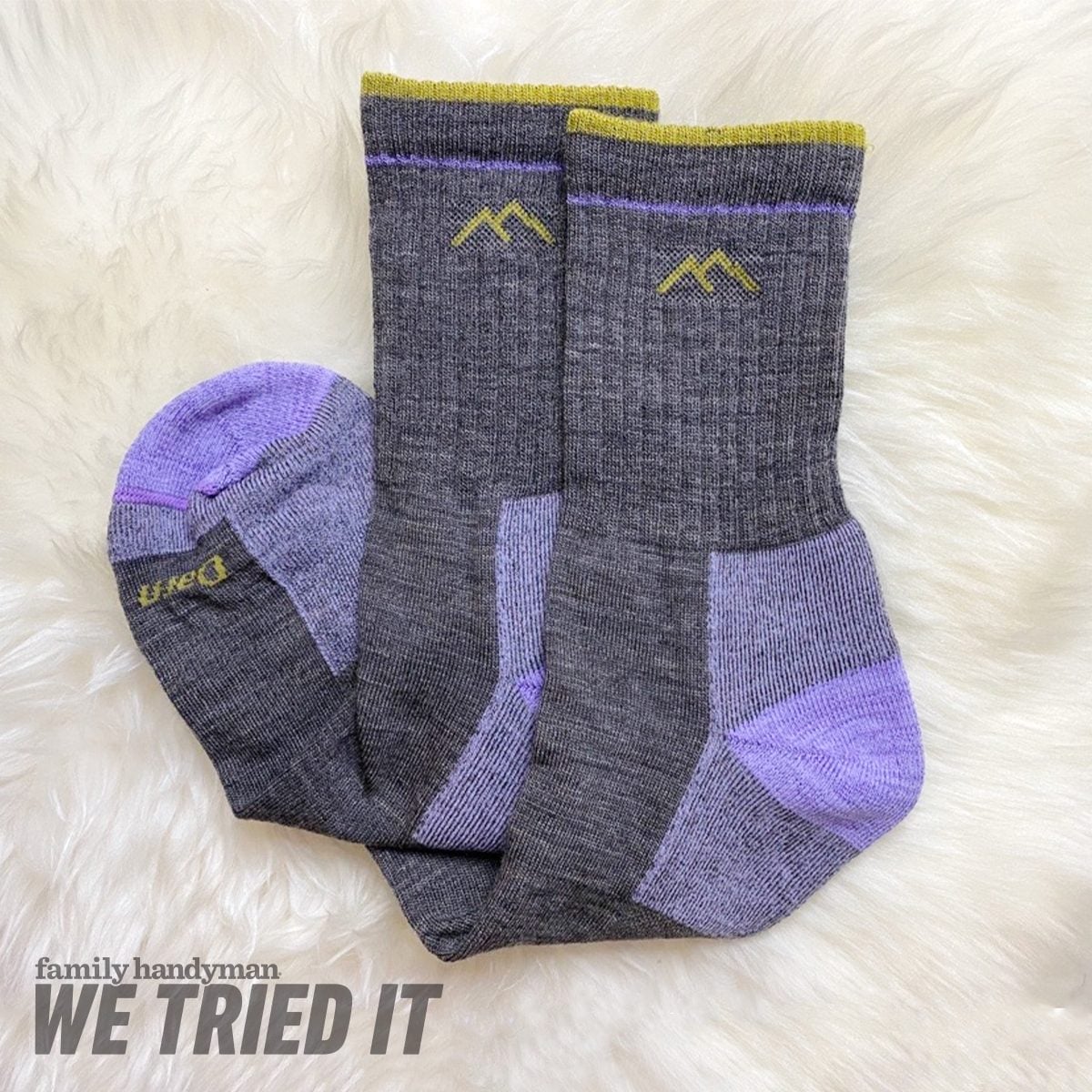
Paying around $20 to $30 for one pair of socks can feel slightly unhinged. For the same money, you could buy an entire multipack of ordinary socks, a decent lunch, or enough gas to watch the fuel gauge move almost imperceptibly. Yet Darn Tough socks have developed a fiercely loyal following among hikers, runners, travelers, tradespeople, and anyone tired of discovering surprise ventilation around their big toe.
The Vermont-based company promises premium merino wool blends, dense knitting, a close performance fit, and an unconditional lifetime guarantee. Those are impressive claims for something that spends most of its life hidden inside a shoe. But do the comfort, durability, and warranty genuinely justify the premium price?
This Darn Tough socks review examines how the brand performs in the areas that matter: fit, cushioning, moisture management, odor control, temperature regulation, blister prevention, durability, and long-term value.
Quick Verdict: Are Darn Tough Socks Worth It?
Yes, Darn Tough socks are worth the price for people who regularly hike, work long shifts, travel, run, or wear through inexpensive socks quickly. Their snug fit, fine-gauge construction, merino wool blends, reinforced high-wear areas, and lifetime replacement program create considerably more long-term value than the price tag initially suggests.
They are not magical, indestructible foot armor. They can eventually thin out, develop holes, or feel too warm when the wrong cushion level is chosen. Some wearers also find the fit tighter than competing hiking socks. Nevertheless, Darn Tough. They can eventually thin out, develop holes, or feel too warm when offers one of the strongest combinations of comfort, durability, warranty protection, and all-season performance in the premium sock market.
- Best for: Hiking, backpacking, work boots, travel, running, cold weather, and long days on your feet
- Main strengths: Excellent durability, secure fit, odor resistance, cushioning, temperature control, and lifetime replacement
- Main weaknesses: High initial cost, relatively snug fit, and heavier models that may feel warm in hot conditions
- Typical price: Approximately $20 to $30 per pair, depending on height and cushioning
- Overall rating:</stron110search11turn109737search1turn109737search26turn109737search13
What Makes Darn Tough Socks Different?
Merino Wool Blended for Better Durability
Many Darn Tough performance socks combine merino wool with nylon and Lycra spandex. The exact percentages vary by style, so shoppers should check the specifications of the individual model rather than assuming every pair contains the same amount of wool.
Merino wool provides much of the comfort and climate control. Its fine fibers can absorb moisture vapor, help regulate temperature, and resist odor better than typical cotton. Nylon increases strength and abrasion resistance, while spandex helps the sock hold its shape and remain securely positioned around the foot.
This blend is important because a sock made entirely from soft wool would generally sacrifice some durability and stretch recovery. Darn Tough is not trying to create a delicate cashmere slipper. It is building a sock that can survive sweaty climbs, gritty trail shoes, repeated washing, and the occasional decision to wear yesterday’s pair “one more day.”
Dense, Fine-Gauge Knitting
Darn Tough socks tend to feel denser and more structured than inexpensive athletic socks. The fabric closely follows the heel, arch, and forefoot instead of hanging loosely around them. Reinforcement is typically concentrated around high-friction areas such as the heel and toe.
The close knit can improve durability and reduce bunching, but it also explains why some first-time buyers describe the socks as tight. They are designed to fit more like technical equipment than fluffy lounge socks. Correct sizing matters, especially for people near the upper end of a size range or those with wide feet and large calves.
Made in Vermont
Darn Tough continues to manufacture its socks in Vermont. Domestic manufacturing does not automatically guarantee a superior product, but controlling the knitting and quality process allows the company to analyze returned socks, identify wear patterns, and adjust future designs.
It also contributes to the price. These are not mass-market socks built to win the lowest-price contest. They are positioned as durable performance apparel produced with skilled labor and backed by an un67632search4turn167632search16turn390997search1turn390997search8
Darn Tough Socks Performance Review
Comfort and Cushioning
Darn Tough offers several cushion levels, including no cushion, light cushion, cushion, and full cushion. Choosing the correct one matters almost as much as choosing the correct size.
Light-cushion models add padding under the foot without taking up much room inside a shoe. They work well with trail-running shoes, everyday sneakers, and snug hiking footwear. Midweight cushion styles, including the popular Hiker Micro Crew Cushion, provide more protection under the heel and forefoot while remaining versatile enough for three-season use.
Full-cushion socks place thicker terry loops around more of the foot and leg. They can be wonderfully comfortable in winter boots but may make fitted footwear feel cramped. More cushion is not always more comfortable; sometimes it is simply more sock attempting to occupy the same limited real estate.
Fit and Stay-Put Performance
One of the brand’s strongest features is its stable fit. Properly sized Darn Tough socks generally resist slipping, twisting, sagging, and gathering under the arch. The heel pocket stays aligned, and the cuff usually remains upright throughout a long day.
That secure fit helps reduce friction. Loose fabric can fold or rub against the skin, especially when feet become damp. Darn Tough’s structured knit minimizes those moving contact points, although no sock can guarantee blister prevention when shoes fit poorly or mileage increases too quickly.
The downside is compression. People who prefer a relaxed sock may find the arch support and cuff firmer than expected. A visible cuff mark after a long day is possible, particularly with boot-height models.
Moisture Management and Drying
Compared with cotton socks, Darn Tough’s merino blends handle perspiration very well. Cotton absorbs moisture and can remain wet, heavy, and chilly. Merino wool continues to insulate when damp and usually feels more comfortable across changing temperatures.
However, merino-blend hiking socks are not always the fastest-drying option. Very thin synthetic running socks can dry faster after complete saturation. For sweaty summer hikes, the Light Hiker, ultralight models, or COOLMAX versions may be more comfortable than a traditional midweight hiking sock.
Temperature Regulation
Merino wool has an unusual talent for remaining useful in both cool and moderately warm weather. It does not actively refrigerate your feet in July, despite what enthusiastic outdoor marketing might imply, but it manages heat and moisture more effectively than thick cotton.
Midweight Darn Tough socks are particularly versatile in spring, fall, and cooler summer conditions. In extreme heat, some users may find them warmer than expected. Choosing a lightweight construction with ventilation panels is smarter than blaming the sheep after wearing a winter sock through a desert.
Odor Control
Darn Tough’s merino socks tend to resist odor impressively well. This is valuable for backpacking, business travel, and any trip where laundry access involves a sink, a tiny bottle of soap, and optimism.
They are not permanently odor-proof. Dirt, skin oils, and bacteria still accumulate. Nevertheless, many wearers can rotate a small number of pairs during multi-day travel without producing the kind of smell that causes hiking partners to 109737search2turn109737search22turn157764search1turn167632news31
How Durable Are Darn Tough Socks?
Durability is where the brand earns its name. Independent testers repeatedly praise Darn Tough socks for maintaining their shape, cushioning, and structural integrity through substantial mileage. The dense knit and nylon content help them resist abrasion better than many soft, loosely constructed wool socks.
Wear still depends on several factors. Rough shoe interiors, toenails, foot shape, grit, frequent pavement use, improper sizing, and high-heat laundering can shorten a sock’s life. A hiker covering thousands of miles should not expect the fabric to emerge spiritually and physically unchanged.
Typical warning signs include thinning beneath the ball of the foot, worn heel fabric, reduced cushioning, stretched cuffs, and holes near pressure points. Darn Tough itself acknowledges that socks eventually wear out. The important difference is what happens afterward.
Even without considering the warranty, the socks generally offer excellent longevity. With the warranty included, their long-term value becomes unusually 737search20turn109737search23turn390997search7turn390997search14
How the Darn Tough Lifetime Guarantee Works
Darn Tough backs its socks with an unconditional lifetime guarantee. According to the company’s current warranty information, customers do not need to register their socks or produce the original receipt. The brand name is knitted into the product, allowing the company to identify it.
If a pair is no longer comfortable, durable, or properly fitting, the owner can submit a warranty claim and return the socks according to the company’s instructions. Approved claims result in replacement value that can be used for another pair.
The guarantee makes the price easier to justify, but it is not completely effortless. Customers may need to complete a claim, package the worn socks, and pay to mail them to the warranty center. Replacement procedures can also vary outside the United States.
In other words, Darn Tough does not dispatch a rescue helicopter the moment a heel becomes thin. There is a process. It is still one of the clearest and most generous warranty programbasis: citeturn390997search0turn390997search1turn167632search17
Best Darn Tough Socks for Different Uses
Best All-Around: Hiker Micro Crew Cushion
The Hiker Micro Crew Cushion is the safest starting point for most shoppers. It sits above the top of many hiking boots, provides useful cushioning underfoot, and works for day hikes, backpacking, travel, and everyday winter wear. It is protective without feeling as bulky as a full-cushion boot sock.
Best for Warm Weather: Light Hiker Micro Crew
The Light Hiker uses a lower-volume construction that fits better inside trail runners and lightweight hiking shoes. It offers enough cushioning for comfort while improving breathability for summer walking and travel.
Best for Winter Boots: Hiker Boot Full Cushion
The full-cushion boot model is warmer and thicker, making it suitable for cold-weather hiking, snow boots, and outdoor work. Buyers should confirm that their boots have enough interior room. Compressing a thick sock inside a tight boot can restrict circulation and make feet colder rather than warmer.
Best for Running: Run No Show or Quarter Socks
Darn Tough’s running collection offers lower profiles and lighter constructions. Runners who prefer minimal material should choose an ultralight model, while those who want impact protection can select light cushioning.
Best Wool-Free Alternative: COOLMAX Hiker
The COOLMAX collection is designed for people who avoid wool or prioritize faster moisture movement in warm conditions. These models use synthetic blends while retaining Darn Tough’s supportive fit and durabi10search11turn656110search14turn109737search13turn109737search24
Potential Drawbacks
The Initial Price Is High
There is no clever way to disguise it: $25 is a lot for one pair of socks. Budget multipacks cost far less and may be perfectly adequate for light everyday use. Darn Tough makes the strongest financial argument for people who frequently wear out socks or rely on performance footwear.
The Fit Can Feel Tight
The supportive arch and dense knit may feel restrictive to wearers accustomed to loose cotton socks. Those with wide feet, sensitive skin, swelling, or large calves should pay particular attention to sizing and sock height.
Some Models Run Warm
A cushioned merino hiking sock can be too warm for humid weather, low-elevation summer hikes, or naturally hot feet. The solution is usually a lighter model rather than abandoning the brand altogether.
They Are Not the Fastest-Drying Socks
Merino blends manage moisture well, but a thin synthetic sock may dry faster after being soaked. Travelers who wash clothing nightly may prefer an ultralight Darn Tough model or a synthetic alternative.
The Warranty Still Requires Effort
Lifetime replacement adds tremendous value only when the owner actually submits a claim. Anyone likely to leave damaged socks in a drawer for three years while repeatedly saying, “I should mail those,” may not receive the full financial benefit.
Are Darn Tough Socks a Good Value?
The answer depends on cost per wear, not cost per pair. A cheap pair that becomes misshapen, uncomfortable, or hole-ridden after limited use may offer worse value than a premium pair worn hundreds of times.
Consider a $26 pair worn twice a week for three years. That represents more than 300 uses, reducing the cost to only a few cents per wear. If the socks then qualify for replacement, their effective lifetime cost falls further.
The equation is less convincing for someone who rarely walks, wears socks gently, or regularly loses one member of every pair to the mysterious domestic portal located behind the dryer. A warranty can replace worn socks, but it cannot guarantee organizational competence.
For hikers, travelers, workers, and runners, Darn Tough’s value is excellent. For occasional wear around the house, the premium is optional rather than essential.
Who Should Buy Darn Tough Socks?
- Hikers and backpackers who need reliable moisture management and blister-reducing fit
- Workers who spend long shifts in boots
- Travelers who want to pack fewer pairs and rewear socks between washes
- People who frequently wear holes through heels or toes
- Runners who prefer a secure, non-slipping sock
- Cold-weather users seeking warmth without bulky cotton
- Shoppers who value products made in the United States
Who Might Prefer Another Brand?
- People who want the lowest possible upfront price
- Wearers who strongly prefer loose, soft-fitting socks
- Anyone sensitive to wool, although COOLMAX options are available
- Hot-weather athletes who prioritize extremely fast-drying synthetic fabric
- People who consistently lose socks before wearing them out
Extended Real-World Experience: What Ownership Is Actually Like
The most noticeable part of switching to Darn Tough is not dramatic. Lightning does not strike, a choir does not sing, and your feet do not immediately demand a more prestigious pair of shoes. Instead, several small improvements become apparent over time.
First, the socks stay where they belong. During a normal day of walking, climbing stairs, driving, and sitting at a desk, the heel remains aligned and the cuff does not slowly collapse toward the ankle. That sounds like a minor achievement until you remember how often ordinary socks require a discreet public adjustment.
On a long hike, the benefit becomes clearer. After several miles, a loose sock can gather under the arch or create a wrinkle near the toes. Darn Tough’s dense knit minimizes that movement. The fabric feels close to the foot, and cushioning remains concentrated beneath high-impact areas instead of wandering around inside the shoe.
Temperature performance is similarly subtle. A midweight model feels warm during a chilly morning but usually remains comfortable as the day becomes milder. When feet sweat, the sock may become damp, but it is less likely to develop the heavy, clammy feeling associated with cotton. During rest stops, feet stay more comfortable instead of cooling rapidly inside wet fabric.
Odor resistance changes packing habits. For a weekend trip, two pairs can often handle the job that once required four or five cheap pairs. One pair can be worn while the other airs out. This reduces luggage volume and lowers the risk of returning home with a plastic bag full of socks capable of making their own travel arrangements.
Washing also reveals the difference in construction. When cared for in cold water and dried on low heat or hung to dry, the socks generally return to their original shape. The cuff remains firm, the heel pocket remains recognizable, and the underfoot cushioning does not immediately flatten into a sad textile memory.
There are annoyances. A new pair can feel tighter than expected, particularly across the arch. A full-cushion model may take longer to air-dry in a hotel room. Midweight socks can also feel excessive during a humid summer hike. Selecting the wrong model can make an excellent sock perform like a poor purchase.
The most practical approach is to begin with one versatile pair rather than replacing an entire sock drawer overnight. The Hiker Micro Crew Cushion works well for boots and cooler conditions, while the Light Hiker is better for trail runners and warmer weather. After several weeks, the wearer can decide whether the fit and fabric justify buying more.
Over months of regular use, the value becomes easier to understand. Cheap socks may rotate through stretching, thinning, and disposal, while the Darn Tough pair continues returning to service. Even when wear eventually appears, the lifetime guarantee changes the normal relationship between customer and clothing. A hole is no longer necessarily the end of the product’s value.
That does not make Darn Tough the perfect sock for every foot. Fit remains personal, and some people prefer the softer initial feel of other merino brands or the airy construction of synthetic running socks. But for users who appreciate a secure fit and durable build, Darn Tough often becomes the pair selected first when the day’s mileage, weather, or workload looks demanding.
How to Make Darn Tough Socks Last Longer
Turn the socks inside out before washing so detergent can reach sweat, skin oils, and debris trapped within the cushioning loops. Use cold water, a gentle cycle, and mild detergent. Avoid bleach and fabric softener. Tumble dry on low heat or hang the socks to dry.
Keep toenails trimmed, remove grit from shoes, and rotate pairs rather than wearing the same socks continuously. Check the interior of older footwear for damaged lining or rough heel counters, which can grind through even durable fabric.
Most importantly, select the correct size. Socks that are too large can wrinkle and rub, while socks that are too small remain under excessive tension. Both c basis: citeturn167632search2turn167632search11turn167632news38
Final Verdict
Darn Tough socks are expensive when judged beside a supermarket multipack. They are much more reasonable when evaluated as technical apparel designed for repeated wear, demanding conditions, and long service life.
The combination of merino-blend comfort, dense construction, secure fit, targeted cushioning, odor resistance, Vermont manufacturing, and lifetime replacement makes them one of the strongest premium sock purchases available. They are especially worthwhile for hiking, backpacking, work boots, travel, and anyone who routinely destroys cheaper socks.
Buy the correct size and cushion level, care for them properly, and the price becomes easier to defend with every wear. Are Darn Tough socks really worth it? For active users, the answer is a confident yes. They cost more because they do moreand because, unlike most socks, their relationship with your feet does not necessarily end at the first hole.
Editorial note: Prices, available styles, material percentages, and warranty procedures may change. Review the current product specifications, sizing chart, care label, and warranty instructions before purchasing or submitting a claim.