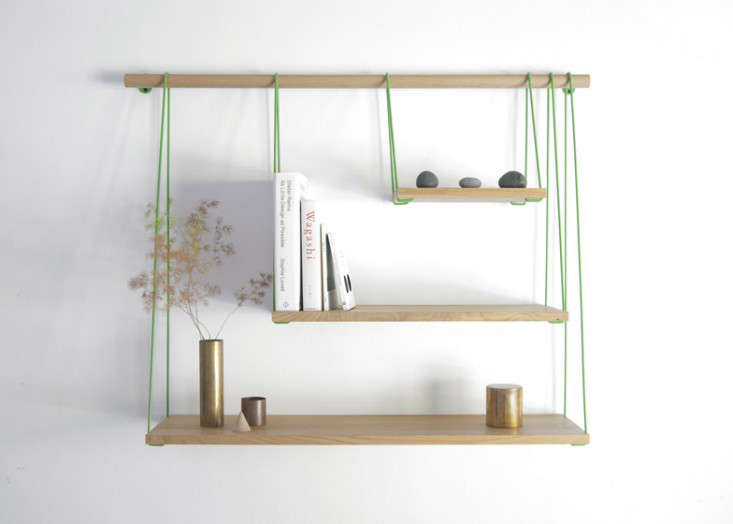
Most shelves are happy to fade into the background. They sit there bravely, carry a few books, and hope nobody notices the mystery mail piled on top. The Bridge Shelves by Outofstock do the opposite. They turn wal, and part polite reminder that a wall can do more than hold a framed print from 2009.
Created by the design collective Outofstock for Bolia, Bridge translates the visual logic of a suspension bridge into a compact wall-mounted shelving unit. Solid-oak shelves appear to hang from a slender wooden rail through powder-coated, bent-steel supports. The components can be repositioned, so the arrangement feels less like a fixed bookcase and more like a practical composition that happens to have excellent posture. Outofstock’s project description, along with Design Milk, Remodelista, and Dornob coverage, identifies the suspension-bridge concept, oak shelves, bent metal supports, and adaptable configuration. Bridge Shelves Feel More Like Architecture Than Furniture
The name is not a decorative metaphor doing overtime. Bridge takes its cue from suspension bridges, the kind that make drivers briefly become amateur engineers. A suspension bridge works because its visible elements have jobs: cables guide force, towers create support, and the deck carries the load. Outofstock distilled that logic into something domestic. The rail, rods, and shelves are visually legible. You can look at the unit and understand, at least intuitively, why it hangs together. That clarity gives the design a rare kind of drama. There is no bulky side panel, no big rectangular cabinet pretending to be invisible, and no fussy ornament. Instead, the shelf uses line, spacing, tension, and negative space. It is a good lesson in minimalist furniture design: restraint is not the absence of personality. It is personality with an indoor voice. Bridge is compelling because it is built from a small cast of materials: warm wood, clean metal, and open wall space. The contrast is doing useful work. Oak adds texture and familiarity; the powder-coated steel creates a crisp, engineered outline. Together, they make the unit feel contemporary without drifting into spaceship territory. The detachable supports let users alter the relationship among the shelves. Rather than forcing every tier into the same height, the system allows room for objects of different scales. That flexibility matters. A shelf that only accepts paperback novels and one nervous-looking succulent is not much of a storage solution. A shelf that can accommodate cookbooks, a small lamp, a vase, and the occasional trophy from a childhood bowling league has a far richer future. The Bridge Shelf looks light because it exposes the wall behind it. This is one reason wall-mounted shelves are so effective in compact rooms: they use vertical territory while keeping the floor visible. Designers regularly use height, open wall area, and vertical elements to make a small room feel less boxed in. Narrow shelves can also capture awkward strips of wall without projecting too far into circulation space. ss is visual, not magical. The shelf still needs an appropriate mounting surface and hardware. The elegance comes from making support feel integrated rather than overbuilt. It is the interior-design equivalent of someone carrying all the grocery bags in one trip without making a speech about it. In a living room, the Bridge Shelf can replace the familiar “one giant bookcase full of everything we own” approach. Install it above a low credenza, a reading chair, or a compact sofa, then give each shelf a job. One tier can hold books, another can display pottery or framed photos, and the third can serve as a soft landing spot for a plant. The staggered arrangement naturally creates rhythm, especially when you vary the heights of the objects. The key is editing. Open shelves are happiest when they are not packed like a moving box. Better Homes & Gardens and Architectural Digest both emphasize layering, varied scale, a controlled palette, and negative space as essential ingredients in shelf styling. In plain English: leave a little empty space. Your favorite vase does not need to stand shoulder-to-shoulder with fourteen tiny souvenirs from an airport gift shop. cessible storage with a design point of view
In a kitchen, the shelf’s adaptable heights are useful for spice jars, coffee tools, cookbooks, serving pieces, and a few objects that make the space feel human rather than purely operational. Open kitchen shelves can offer easy access to everyday items while providing a less visually heavy alternative to upper cabinets. They work best when the displayed items are useful, frequently reached for, or genuinely pleasant to look atpreferably all three. ctical items closest to where they are used. Coffee cups belong near the coffee maker. Salt, oil, and spices belong near the prep zone, not six feet away beside a decorative wooden pineapple. Reserve the highest shelf for lighter, less frequently used pieces. The result is an open shelving idea that supports daily life instead of making every meal feel like a museum tour. The original concept specifically imagines Bridge in a bathroom, and it can bring welcome warmth to a room often dominated by hard, shiny surfaces. Use it for folded hand towels, glass jars, small baskets, and a restrained collection of toiletries. Keep wood protected according to the manufacturer’s care instructions, ensure the room is ventilated, and avoid leaving wet items directly on the shelves. A beautiful oak shelf is not asking to become a long-term rental for drippy bath toys. The best shelf styling is not about collecting the most objects. It is about creating a believable story. The Bridge Shelf already supplies a strong graphic framework, so your accessories should support it rather than compete with it. A large stack of dark books on one end can be balanced by a tall plant or a substantial bowl on another shelf. It does not need to mirror perfectly. In fact, perfect symmetry can make a flexible design look oddly formal. Instead, let the arrangement feel like a conversation: a tall object answers a low stack; a rounded vessel softens a row of square books; an empty patch gives the eye somewhere to rest. Oak looks especially good with matte ceramics, glass, paper-covered books, brushed metal, and small green plants. Choose one accent colordeep green, rust, soft blue, or warm whiteand repeat it in two or three small ways. The result feels cohesive without looking like you hired your color palette from a corporate boardroom. Whenever possible, fasten wall-mounted shelves into studs. This Old House recommends locating framing before attaching shelves, and both it and Family Handyman note that hardware must be chosen for the wall type and the load. For heavy shelving where a stud is unavailable, appropriate heavy-duty anchors or toggle-style hardware may be neededbut the manufacturer’s instructions and a qualified installer should have the final word. the shelf’s airy appearance as permission to overload it. Wood can sag over long unsupported spans, and even strong materials need reasonable weight distribution. Keep heavier books, dense cookware, and bulky objects on lower positions when possible. Wood Magazine’s testing underscores a universal shelf truth: span, material, edge support, and load all matter. <oung children deserve an extra layer of caution. The U.S. Consumer Product Safety Commission advises anchoring furniture with shelves and avoiding the placement of tempting climbing targets on high surfaces. A wall shelf is not a jungle gym, no matter how much it resembles a very elegant bridge. esign Teaches About Modern Storage
The lasting charm of the Bridge Shelf is not simply that it is pretty. Plenty of pretty shelves exist, including some that are roughly as practical as a decorative spoon. Bridge succeeds because its form explains its function. You see the rail, supports, shelves, and gaps. The system makes storage feel active, adjustable, and personal. For anyone planning a modern wall storage project, that is the takeaway: start with how the room needs to work, then use material, spacing, and proportion to make that work visible. A shelf should not just hold things. It should make the things you keep look like they belong in your life. The most revealing “experience” of a Bridge-style shelf happens after the first perfect styling session is over. At the beginning, the shelves may hold a neat trio of books, one plant, and a very confident little vase. Then Monday arrives. Someone drops keys there. A receipt appears. A charging cable attempts to establish permanent residency. This is where the design proves whether it is useful or merely photogenic. A Bridge-inspired layout performs well when each level is given a practical identity. Imagine the lower shelf near an entry door as the landing strip: keys in a small tray, sunglasses in a shallow bowl, and mail that must be handled todaynot someday, not “after this one episode,” but today. The middle shelf can hold the pleasant evidence of a life: a framed photo, a small plant, a travel memento. The top shelf stays deliberately lighter, with a book or two and an object that rewards looking up. That hierarchy keeps daily clutter from marching upward and taking over the whole structure. In a kitchen, the experience is about speed. Morning coffee is less chaotic when the mug, beans, scoop, and favorite cookbook are arranged where hands naturally reach. A shelf’s open design eliminates the tiny pause of opening a cabinet, but it asks for discipline in return. Put only the attractive, washable, frequently used items out in the open. The chipped promotional mug from a software conference can enjoy a quieter career in a closed cabinet. In a living room, a Bridge Shelf changes with the seasons without requiring a new personality. In spring, a ceramic vessel and a clipping of leafy branches may be enough. In autumn, a small stack of art books and a candle create warmth. The structure remains the same while the objects rotate, which makes the room feel refreshed without turning storage into a monthly spending habit. Restyling with items you already own is a practical way to make shelves feel new again. o a quiet emotional benefit to this kind of storage. A closed drawer hides everything equally: useful items, cherished objects, bills, cables, and that mystery instruction manual no one recognizes. Open shelving forces a decision. What deserves to be seen? What needs to be close at hand? What can be stored elsewhere? Those choices make a home feel less generic because they turn possessions into a modest autobiography. Of course, the shelf will occasionally test your commitment. A plant may grow sideways. A stack of books may become a stack of books plus three more books and a pair of reading glasses. Someone will almost certainly put something there “for just a minute.” The answer is not to maintain a showroom. It is to reset the shelf quickly and kindly. Take two minutes at the end of the week, return misplaced items, wipe the surface, and leave one clear area empty on purpose. That little patch of negative space is not wasted capacity. It is the pause that makes the whole arrangement feel balanced. Ultimately, the Bridge Shelf experience is less about owning a particular designer object and more about adopting its logic. Use the wall. Show the structure. Give objects room to breathe. Keep useful things within reach. Let a few beloved items be visible. And when the design asks you to balance function with beauty, remember: that is not a burden. It is the fun part. Outofstock’s Bridge Shelves show how a familiar household need can become something more expressive. By borrowing the language of suspension bridges, the design turns oak, steel, and empty wall space into a flexible storage system with a clear sense of purpose. It can support a living room display, kitchen essentials, bathroom storage, or a hardworking entrywaywhile reminding us that organization does not have to look bossy. Whether you are drawn to the original Bridge Shelf or simply want to create a bridge-inspired wall shelf arrangement at home, the winning formula is the same: mount safely, distribute weight thoughtfully, style with restraint, and leave room for your life to change. The best shelves do not demand perfection. They make everyday objects look a little more consideredand that is a balancing act worth keeping.The Smart Details Behind the Outofstock Bridge Shelf
A modular shelf system with a simple visual language
Lightness without visual weakness
Where Bridge Shelves Work Best
Living room: a small gallery that earns its keep
Bathroom: elegant, but only with a moisture plan
How to Style a Bridge-Inspired Shelf Without Making It Look Staged
Balance visual weight, not perfect symmetry
Mix materials, then repeat one color
Installation and Shelf Safety: Let the Wall Do Its Job
Experience Notes: Living With the Bridge-Shelf Mindset
Conclusion: A Shelf That Makes Room for Real Life