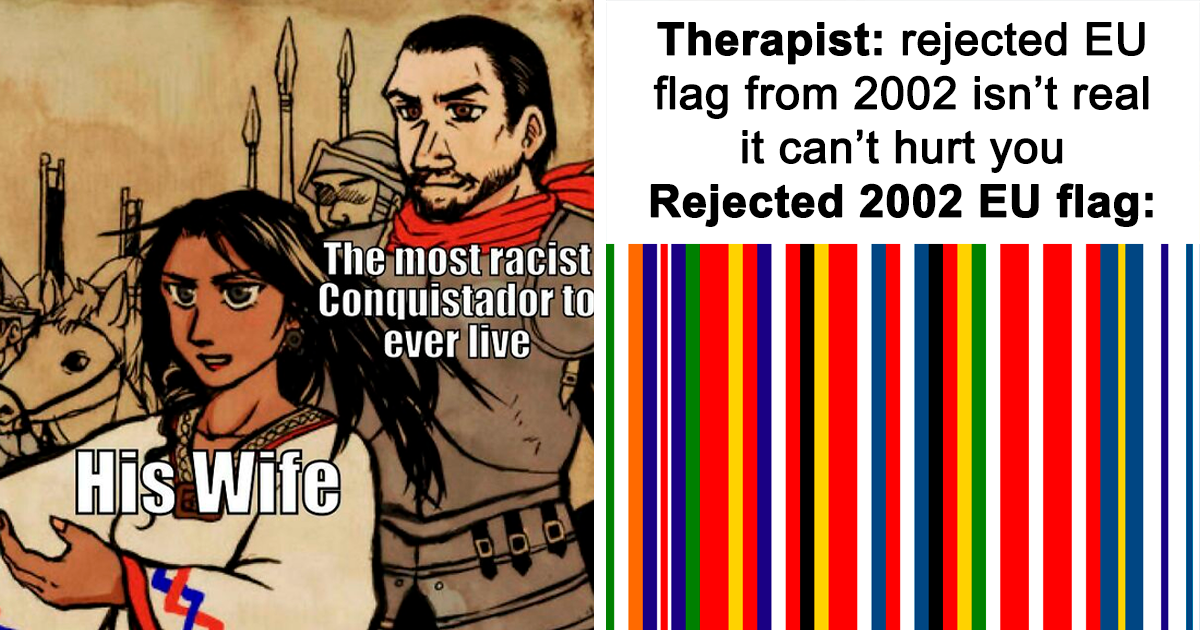
History textbooks are excellent at providing dates, names, treaties, and enough footnotes to make a coffee table collapse. What they do not always capture is the glorious human chaos behind those facts: rulers making wildly confident mistakes, empires discovering that logistics matter, revolutionaries arguing over what happens after the revolution, and societies repeatedly clicking the historical equivalent of “Remind me later.”
That is where clever history memes earn their place. The best examples do more than paste sunglasses onto Napoleon. They compress a complicated relationship, contradiction, or cause-and-effect chain into a joke that sticks in your memory. A funny image cannot replace serious historical research, but it can open the door to itand occasionally kick that door off its hinges.
Here are 50 history meme concepts that explain the past with more personality than the average chapter review.
Ancient History Memes: Civilization’s Original Group Chat
Ancient societies were technologically impressive, politically complicated, and every bit as capable of administrative confusion as modern organizations. Archaeology and museum research also show that popular culture frequently gives us an oversimplified picture of Egypt, Greece, and Rome.
-
1. The Pyramids Were the Ultimate Construction Deadline
Meme format: A project manager asking, “Can we finish this before the pharaoh dies?” Workers stare at several million stone blocks.
What it explains: Monumental architecture required enormous organization, transportation, skilled labor, food supplies, and long-term planningnot mysterious aliens with advanced masonry subscriptions.
-
2. Cleopatra Was Closer to the iPhone Than the Great Pyramid
Meme format: Cleopatra looking backward at the pyramids and forward at a smartphone, visibly confused about which belongs to her era.
What it explains: Ancient Egyptian history lasted so long that its famous figures and monuments were separated by thousands of years.
-
3. Ancient Greek Democracy Had a Very Small Guest List
Meme format: Athens announcing “government by the people,” followed by women, enslaved people, and noncitizens asking, “Which people?”
What it explains: Athenian democracy was influential, but political participation was limited to a specific category of male citizens.
-
4. Alexander the Great Tried to Speedrun the Known World
Meme format: A gaming screen showing Alexander unlocking Persia, Egypt, and Central Asia before the tutorial ends.
What it explains: His conquests were extraordinarily rapid, but maintaining a vast empire proved harder than winning battles.
-
5. Hannibal Chose the Most Difficult Route Possible
Meme format: A navigation app saying “Turn around when possible” while Hannibal leads elephants toward the Alps.
What it explains: Carthage attempted to surprise Rome by attacking through terrain that most commanders would have considered a firm “absolutely not.”
-
6. Caesar Crossed One River and Broke the Republic
Meme format: “It’s just a little river. What could possibly happen?” The next panel shows a civil war.
What it explains: Crossing the Rubicon with an army was not a hiking decision. It openly challenged Roman political authority.
-
7. Roman Gladiators Were Expensive Employees
Meme format: An arena owner watching a valuable gladiator get injured and whispering, “Do you know how much training costs?”
What it explains: Gladiatorial combat was dangerous, but not every match automatically ended in death. Trained fighters represented a financial investment.
-
8. The Vomitorium Was an Exit, Not a Restaurant Feature
Meme format: A Roman architect labeling a stadium passage “vomitorium” while future generations completely misunderstand the assignment.
What it explains: Vomitoria were passageways designed to move crowds efficiently through public venues.
-
9. Classical Statues Originally Had Color
Meme format: A pristine white statue seeing its brightly painted reconstruction and saying, “That was my party outfit.”
What it explains: Many Greek and Roman sculptures were painted. Their familiar white appearance is often the result of pigments fading or being removed.
-
10. The Roman Empire’s Decline Was a Team Project
Meme format: Economics, political instability, military pressure, disease, and administrative division all pointing at one another.
What it explains: Rome did not collapse because of one dramatic mistake. Different pressures accumulated over centuries.
Medieval and Renaissance Memes: More Than Mud and Knights
The Middle Ages were not one continuous thousand-year rainstorm. Medieval communities developed complex institutions, trade networks, legal traditions, entertainment, art, and religious cultures. Renaissance courts were equally sophisticatedand extremely interested in advertising wealth and status.
-
11. Feudalism Was the World’s Most Complicated Organizational Chart
Meme format: A king trying to remember which noble controls which land and who owes military service to whom.
What it explains: Medieval political power often depended on layered personal obligations rather than a modern centralized government.
-
12. Vikings Never Approved the Horned Helmet Branding
Meme format: A Viking looking at a costume shop helmet and demanding to speak with the marketing department.
What it explains: Popular imagery can become more famous than archaeological evidence, especially when theater and illustration repeat it for generations.
-
13. Medieval People Also Enjoyed Games
Meme format: Modern viewers expecting nonstop misery while medieval people play chess, race, dance, and attend festivals.
What it explains: Daily medieval life included leisure and entertainment, not merely warfare, farming, and dramatically staring from castle walls.
-
14. The Black Death Changed the Labor Market
Meme format: Surviving workers arriving at salary negotiations with unexpected confidence.
What it explains: Severe population loss disrupted social and economic relationships, creating labor shortages and challenging established arrangements in parts of Europe.
-
15. The Magna Carta Was Not an Instant Democracy Download
Meme format: Medieval barons presenting a document while ordinary citizens ask when their benefits begin.
What it explains: The charter originally addressed a dispute between King John and powerful nobles, though later generations gave it broader constitutional importance.
-
16. The Hundred Years’ War Needed a Better Name
Meme format: Someone checking the calendar after 116 years and asking whether the title can still be edited.
What it explains: Historical labels are convenient summaries, not always mathematically precise descriptions.
-
17. The Printing Press Invented the Viral Post
Meme format: Gutenberg pressing “publish” while Europe’s information system begins overheating.
What it explains: Printing made texts easier to reproduce and distribute, accelerating religious debate, scholarship, literacy, and political argument.
-
18. Renaissance Artists Had Powerful Sponsors
Meme format: An artist creating a masterpiece, then making the patron noticeably taller and more heroic.
What it explains: Wealthy families, rulers, and religious institutions commissioned art to display prestige, learning, devotion, and authority.
-
19. Leonardo da Vinci Had Too Many Open Tabs
Meme format: Paintings, anatomy, engineering, architecture, and flying machines all marked “project in progress.”
What it explains: Leonardo’s wide-ranging curiosity produced remarkable ideas, though not every concept or commission was completed.
-
20. The Reformation Turned One Debate Into Hundreds
Meme format: Someone posts criticism of church practices. Europe’s comments section immediately catches fire.
What it explains: Religious reform combined with politics, printing, economic interests, and local rivalries to reshape European society.
Exploration and Revolution Memes: Everyone Has a Plan Until the Taxes Arrive
The age of empires and revolutions involved grand language about liberty alongside conquest, exclusion, slavery, displacement, and civil conflict. Primary sources help reveal those contradictions far better than heroic national legends alone.
-
21. Columbus “Discovered” a Place Where Millions Already Lived
Meme format: Someone walks into an occupied house and announces, “Great newsI found this!”
What it explains: European arrival began a new era of sustained contact, but the Americas already contained diverse, populous civilizations.
-
22. Europe Divided the World With a Line on a Map
Meme format: Spain and Portugal drawing a line while everyone living elsewhere asks who invited them.
What it explains: Imperial treaties often treated inhabited territories as possessions to be allocated by distant monarchies.
-
23. Cortés Did Not Conquer the Aztec Empire Alone
Meme format: A tiny Spanish force taking all the credit while thousands of Indigenous allies slowly enter the frame.
What it explains: Local rivalries, alliances, disease, technology, and political upheaval all affected the conquest.
-
24. The Ottoman Empire Outlived Everyone’s Predictions
Meme format: Commentators repeatedly declaring the empire finished while it remains on the map for another century.
What it explains: Large political systems can experience long periods of reform, contraction, recovery, and decline rather than one sudden collapse.
-
25. The Thirty Years’ War Escalated Aggressively
Meme format: “This is a local religious dispute.” The next panel contains most major European powers.
What it explains: Religious tensions became entangled with dynastic and geopolitical competition.
-
26. Versailles Was Louis XIV’s Luxury Surveillance System
Meme format: Nobles enjoying a glamorous palace while the king quietly monitors everyone’s status and access.
What it explains: Court ceremony helped concentrate political life around the monarch and manage elite competition.
-
27. Enlightenment Thinkers Created the Most Influential Group Chat
Meme format: Locke, Montesquieu, Rousseau, and others arguing about rights, power, consent, and who muted the monarch.
What it explains: Enlightenment ideas influenced revolutionary movements, constitutional experiments, and debates that remain unfinished.
-
28. The American Revolution Was Also a Civil War
Meme format: One family dinner with Patriots, Loyalists, neutral relatives, and someone quietly planning to move to Canada.
What it explains: Communities and families divided over independence; the conflict was not simply Americans versus an entirely foreign enemy.
-
29. July 4 Was Not the Day Everyone Signed
Meme format: The Declaration’s adoption date receiving the celebration while August 2 waves from the background.
What it explains: The Continental Congress adopted the Declaration on July 4, 1776, while delegates began signing the engrossed parchment later.
-
30. The French Revolution Kept Installing New Management
Meme format: Monarchy, republic, revolutionary government, Directory, Consulate, and empire rapidly changing the office nameplate.
What it explains: Removing an old regime did not produce immediate stability or agreement about what should replace it.
Industrial and Imperial History Memes: Progress Comes With Fine Print
Industrialization transformed manufacturing, transportation, communication, work, cities, migration, and class structure. It created spectacular wealth while exposing workers and communities to exploitation, dangerous conditions, and deep inequality.
-
31. Napoleon Was Not Actually Cartoonishly Short
Meme format: Napoleon standing near men of average height while British propaganda reaches for a shrinking filter.
What it explains: Political caricature can become accepted as biography when repeated often enough.
-
32. The Congress of Vienna Tried to Restore the Previous Save File
Meme format: European leaders clicking “undo” after the Napoleonic Wars.
What it explains: Diplomats attempted to restore political balance, contain France, and reinforce established monarchies.
-
33. The Industrial Revolution Upgraded Production and Downgraded Air Quality
Meme format: Factory owners celebrating efficiency while workers cough politely in the background.
What it explains: Mechanization increased output but also produced harsh working environments, pollution, crowded cities, and labor conflict.
-
34. The Revolutions of 1848 Were a Continental Notification Storm
Meme format: One European capital receives a revolutionary alert, followed immediately by several more.
What it explains: Demands for constitutional government, nationalism, and social reform spread rapidly across borders.
-
35. The Opium Wars Were Not Really About Free Trade Principles
Meme format: An empire insisting on open markets while using warships to determine what “open” means.
What it explains: Commercial language often concealed coercive imperial power and unequal relationships.
-
36. Railroads Were the Nineteenth Century’s Fast-Travel Feature
Meme format: A map dramatically shrinking as rail lines spread.
What it explains: Railroads accelerated migration, trade, settlement, military movement, industrial growth, and the seizure of Indigenous lands.
-
37. The U.S. Civil War Used New Technology With Old Tactics
Meme format: Rifled weapons and railroads meeting commanders who still enjoy massed frontal assaults.
What it explains: Technological change can outpace military doctrine, with devastating results.
-
38. The Gilded Age Had an Extremely Accurate Name
Meme format: A thin layer of gold covering monopolies, political corruption, unsafe factories, and crowded tenements.
What it explains: Glittering fortunes existed alongside severe economic inequality and labor exploitation.
-
39. Imperial Powers Treated Africa Like an Empty Strategy Board
Meme format: European officials drawing borders while African societies are excluded from the meeting.
What it explains: Colonial borders were often created around imperial interests rather than existing political, cultural, or linguistic realities.
-
40. Mass Immigration Built Industrial America
Meme format: A country asking, “Who will build the railroads, factories, cities, and neighborhoods?” Millions of newcomers raise their hands.
What it explains: Immigrants and internal migrants supplied labor and reshaped American culture, despite discrimination and exclusion.
World War and Cold War Memes: The Timeline Gets Alarmingly Intense
Memes can clarify military alliances, propaganda, economic pressures, and technological competition, but atrocities must never be reduced to disposable punchlines. The rise of Nazi dictatorship, the Holocaust, and the human costs of global warfare require accuracy, context, and respect.
-
41. World War I Was the Worst Group-Chat Escalation
Meme format: Austria-Hungary confronts Serbia. Alliances begin adding participants until the entire continent is typing.
What it explains: The assassination at Sarajevo triggered a broader crisis shaped by alliances, militarism, nationalism, and imperial rivalry.
-
42. Trench Warfare Was a Terrible Loading Screen
Meme format: Armies waiting years for the Western Front to move while artillery continues without pause.
What it explains: Defensive firepower, trenches, barbed wire, and machine guns made breakthroughs extremely costly.
-
43. The Russian Revolution Had Multiple Revolutions Inside It
Meme format: Viewers celebrating the fall of the czar before realizing the political story has several more seasons.
What it explains: The collapse of imperial government was followed by competition, another revolution, civil war, and consolidation of Bolshevik power.
-
44. The Treaty of Versailles Assigned Blame and Sent an Invoice
Meme format: Germany opening the peace settlement and discovering a very long list of penalties.
What it explains: The postwar settlement attempted to reshape Europe but also contributed to resentment and instability.
-
45. The Great Depression Turned “Buy the Dip” Into Terrible Advice
Meme format: A cheerful investor entering 1929 and immediately disappearing behind falling charts and bank failures.
What it explains: The crisis involved financial collapse, declining demand, unemployment, policy failures, and international economic disruption.
-
46. Dictatorships Do Not Always Arrive Through a Dramatic Coup
Meme format: Democracy repeatedly approving “temporary” changes until the settings menu disappears.
What it explains: Hitler was appointed chancellor through Germany’s political system, after which the Nazis rapidly destroyed democratic freedoms.
-
47. World War II Was Won With Logistics as Well as Battles
Meme format: Generals receiving attention while ships, factories, mechanics, farmers, and supply officers carry the entire production.
What it explains: Industrial capacity, transportation, fuel, food, intelligence, and replacement equipment were essential to military success.
-
48. Navajo Code Talkers Gave the Enemy an Impossible Translation Assignment
Meme format: Enemy intelligence repeatedly clicking “language not supported.”
What it explains: Navajo Marines developed and used a secure communications code during Pacific operations in World War II.
-
49. The Cold War Was “Not Fighting” With an Enormous Asterisk
Meme format: The United States and Soviet Union avoiding direct war while proxy conflicts, arms races, espionage, and crises fill the background.
What it explains: Nuclear deterrence limited direct confrontation but did not make the period peaceful.
-
50. The Moon Landing Was the Most Expensive Competitive Flex
Meme format: The United States responds to Soviet space achievements by placing astronauts on the Moon.
What it explains: Apollo combined scientific ambition, engineering, national prestige, and Cold War rivalry. Apollo 11 reached the lunar surface in July 1969, and 12 astronauts eventually walked on the Moon during six successful landing missions.
Why Funny History Memes Can Be Surprisingly Educational
Humor Exposes Contradictions
A strong history meme works because the audience recognizes a contradiction. A government proclaims universal liberty while excluding much of the population. An empire describes conquest as civilization. A peace settlement creates conditions for future resentment. A ruler spends enormous sums demonstrating absolute confidence while the treasury quietly makes distressed noises.
Textbooks explain these contradictions through paragraphs of context. Memes convert them into visual irony. That compression makes the central tension easier to remember, provided the joke points toward the truth rather than replacing it.
Memes Make Cause and Effect Visible
Historical events are often taught as separate boxes: assassination, alliance, declaration of war, mobilization. A meme can put those boxes into one escalating sequence. Suddenly, World War I is not a random list of declarations. It is a system in which one crisis activated military plans, diplomatic obligations, fears, and rivalries.
The same approach works for the Industrial Revolution. One image can connect mechanized production with urban growth, migration, pollution, wealth, unsafe labor, and political reform. The joke becomes a miniature diagram.
The Best Meme Creates a Question
The educational value does not come from laughing and immediately scrolling onward. It comes from asking, “Waitis that accurate?” That question may lead to an archival document, museum collection, historical documentary, oral history, or scholarly article.
Institutions such as the National Archives, Library of Congress, Smithsonian museums, National Park Service, PBS, and specialized museums preserve primary sources and provide the context that short-form media cannot.
Some Subjects Require Restraint
Not every historical event should become a casual punchline. Memes about genocide, slavery, forced removal, famine, colonial violence, or mass death must avoid mocking victims or turning suffering into entertainment.
Humor may expose propaganda, hypocrisy, failed leadership, or the absurd logic of oppressive systems. The joke should aim upward at power and misinformationnot downward at people who endured the consequences.
The Experience of Learning History Through Memes
Encountering history through memes usually begins innocently. You see a painting of several exhausted diplomats sitting around a table. The caption says, “Europe reinstalling the old operating system after Napoleon.” You laugh, keep scrolling, and then pause. What exactly did the Congress of Vienna restore? Why were European leaders so determined to create a balance of power? How long did that settlement last?
That pause is the real experience. The meme supplies just enough information to expose a gap in your knowledge. Unlike a quiz that announces you are wrong, humor makes discovering the gap feel enjoyable. Curiosity replaces embarrassment.
History memes are especially effective in study groups. A student may struggle to remember a dense explanation of the alliance system before World War I, yet instantly understand an image of a small argument attracting increasingly powerful friends. The meme does not provide every cause, but it creates a mental framework. Later, details such as mobilization schedules, nationalism, imperial rivalry, and military planning have somewhere to attach.
They also change classroom conversations. A clever meme invites students to evaluate its accuracy rather than passively accept a summary. Was Napoleon really short? Did gladiators always fight to the death? Was the American Revolution supported by everyone in the colonies? Each question turns the audience into a fact-checker.
There is also a rewarding experience in creating history memes rather than simply consuming them. To build a good one, the creator must identify the event’s central tension. The joke about industrialization is not merely “factories were smoky.” It may contrast increased production with unsafe labor, or technological progress with environmental damage. Choosing the right format requires interpretationthe same basic skill used in historical writing.
However, meme-based learning has a predictable danger: confidence can grow faster than knowledge. A person may remember a joke so clearly that the simplified version becomes the entire story. “One assassination caused World War I” is memorable but incomplete. “Rome fell because people became lazy” is catchy but misleading. “The Middle Ages were backward” erases centuries of cultural, political, scientific, commercial, and artistic change.
The healthiest experience combines formats. Begin with a meme. Use it as a memory hook. Then check a museum, archive, documentary, textbook, or scholarly source. Compare perspectives. Look for what the joke leaves outside the frame.
That approach also makes serious research feel less intimidating. Primary documents no longer appear as random old papers; they become evidence that can confirm, complicate, or destroy the viral claim you encountered. A meme saying the Declaration of Independence was signed on July 4 may send you to the National Archives, where you discover that adoption and signing were not one identical moment. The correction becomes memorable precisely because it overturns something familiar.
Ultimately, the best history memes create a cycle: laughter leads to curiosity, curiosity leads to investigation, and investigation makes the original joke even funnier. Once you understand the politics behind Versailles, the administrative problems of ancient empires, or the logistical scale of Apollo, the humor gains additional layers.
Textbooks remain essential because history needs evidence, chronology, context, and competing interpretations. Memes contribute something different: an accessible entrance. They remind us that the people of the past were not cardboard figures waiting patiently to appear on an exam. They were ambitious, frightened, inventive, stubborn, idealistic, self-interested, occasionally brilliant, and frequently convinced that their questionable plan would definitely work this time.
Conclusion: Come for the Joke, Stay for the Historical Context
Hilariously clever history memes succeed because they translate complicated events into recognizable human behavior. Empires overextend. Governments underestimate consequences. Leaders ignore warnings. Reformers disagree about reform. Powerful people make decisions that everyone else must somehow survive.
A meme cannot explain every cause of a war or represent every voice within a revolution. It can, however, reveal the contradiction that makes a reader curious. Used responsibly, history memes are not enemies of education. They are witty little gateways into archives, museums, biographies, primary sources, and the discovery that the past was much stranger than the simplified version most of us first learned.