Every now and then, a movie or TV show stops telling a story and starts poking the audience with a stick. Not a sharp stick, necessarily. More like a foam pool noodle labeled “plot twist.” These are the moments when creators know exactly what viewers want, what fans are theorizing, or what critics expectand then they take a hard left turn into chaos, comedy, or glorious narrative mischief.
The best examples are not simply “bad endings” or random shock twists. A true creator troll has intention. It plays with expectations. It makes the audience lean forward, then yanks the chair away. Sometimes it is affectionate. Sometimes it is savage. Sometimes it is the storytelling equivalent of putting a “pull” sign on a door that only pushes.
Below are five famous plotlines where creators secretlyor not-so-secretlytrolled people, from animated comedy pranks to prestige-fandom bait. These examples show how fan expectations, cliffhangers, red herrings, retcons, and meta storytelling can become part of the joke.
1. South Park Delayed Cartman’s Father Reveal With a Full April Fools Detour
The setup: a mystery fans actually cared about
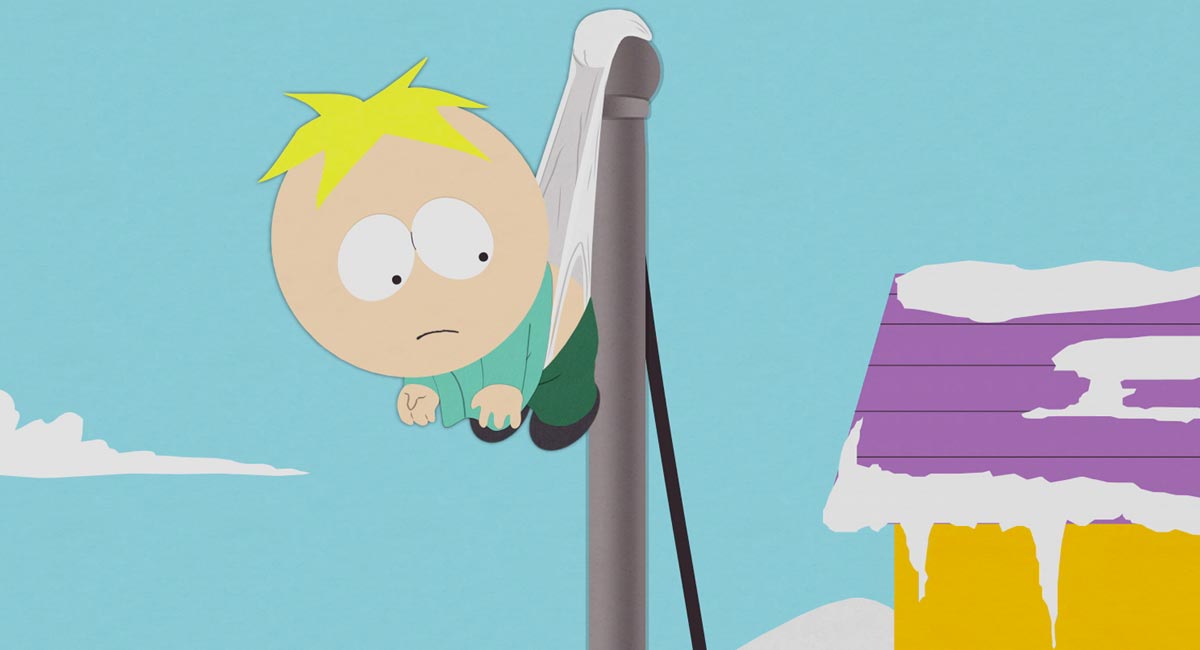
In the early days of South Park, fans were waiting to learn the identity of Eric Cartman’s father after the season one cliffhanger, “Cartman’s Mom Is a Dirty Slut.” It was exactly the kind of crude, ridiculous, tabloid-style mystery that the show specialized in. Viewers expected the next episode to deliver the answer. Instead, Trey Parker and Matt Stone handed them a television whoopee cushion.
On April 1, 1998, the show aired “Terrance and Phillip in Not Without My Anus,” a completely separate episode centered on the flatulent Canadian duo Terrance and Phillip. Rather than resolving the cliffhanger, the episode essentially announced that the answer would not arrive yet. Happy April Fools’ Day, America. Please enjoy twenty minutes of Canada jokes and weaponized gas.
Why it was a troll plotline
This was not accidental misdirection. It was a prank built into the broadcast schedule. The creators knew viewers were waiting for a payoff and deliberately replaced it with a joke episode. The result was one of the clearest examples of creators trolling their own audience: the plotline did not merely delay the reveal; it mocked the very idea that viewers were so invested in the reveal.
The funniest part is that the prank worked too well. Fans were genuinely angry. The show’s rebellious identity became even stronger because Parker and Stone proved they were willing to annoy viewers for the sake of a joke. In normal television, a cliffhanger is a sacred promise. In South Park, it was a banana peel.
As a creator troll, this moment is legendary because it attacked the structure of TV anticipation itself. The message was simple: “You thought we were here to satisfy you? Cute.” It was rude, childish, and perfectly on brand.
2. Dallas Erased an Entire Season With Bobby Ewing’s Shower Scene
The setup: a dead character returns like nothing happened
Few television plot twists have inspired more disbelief than the infamous Dallas dream season. Patrick Duffy’s character Bobby Ewing had been killed off, and the show continued without him. Then, in the 1986 finale, Bobby appeared alive in a shower, shocking viewers and reshaping TV history with one wet, confusing hello.
The explanation was bold: the entire previous season had been a dream. Not one episode. Not one strange subplot. A whole season. Imagine watching months of drama, betrayal, romance, and business warfare, only to learn the writers had effectively hit “undo.” It was like saving a document for a year and then discovering your computer had named it “Just Kidding.”
Why it was a troll plotline
The Dallas twist was not a comedy prank like South Park, but it still functioned as a massive audience fake-out. Viewers had invested emotionally in storylines that no longer counted. Characters had changed, relationships had moved, consequences had piled upand then the show casually tossed everything into the dream bin.
Behind the scenes, the secrecy made the reveal even more intense. The production reportedly used misdirection to keep the twist from leaking, meaning viewers and even some people connected to the show were caught off guard. From a storytelling standpoint, it was a retcon dressed in steam and soap-opera lighting.
Was it effective? Absolutely. Was it fair? That depends on how much you enjoy being narratively pickpocketed. The move helped bring Bobby back and restore a central dynamic, but it also taught TV audiences a permanent lesson: if a show really wants to reverse a decision, it can always blame the pillow.
3. Newhart Turned Its Whole Series Into Someone Else’s Dream
The setup: one sitcom quietly becomes another sitcom
The series finale of Newhart remains one of the most famous endings in sitcom history. After eight seasons of Bob Newhart playing Vermont innkeeper Dick Loudon, the finale suddenly revealed that the entire show had been a dream experienced by Dr. Bob Hartley, Newhart’s character from his earlier sitcom The Bob Newhart Show.
In the final scene, Newhart wakes up in bed next to Suzanne Pleshette, who played Emily Hartley on the earlier series. The joke lands instantly: all of Newhartthe inn, the town, the oddball neighbors, the escalating absurditywas apparently just one strange dream in the mind of Bob’s previous TV character.
Why it was a troll plotline
This was not a mean-spirited troll. It was elegant, affectionate, and devastatingly funny. Where Dallas used the dream device to solve a production problem, Newhart used it as a punchline about television itself. The ending winked at viewers who knew Bob Newhart’s earlier work and rewarded them with a crossover joke no one saw coming.
The brilliance is that it both parodied and perfected the “it was all a dream” twist. Instead of asking the audience to accept the dream as serious canon repair, Newhart made the dream reveal the entire joke. It trolled the audience by collapsing eight seasons into one gag, but it did so with such comic precision that viewers largely applauded rather than rioted.
In modern language, the finale was a meta mic drop. It said, “You have been watching a sitcom. We know. You know. Let’s have one last laugh about how fake all of this is.” That is trolling with a tuxedo on.
4. Sherlock Answered Fan Theories With More Fan Theories
The setup: how did Sherlock survive the fall?
When Sherlock ended its second season with the detective apparently falling to his death, fans spent years theorizing about how he survived. The internet became a giant corkboard of clues, screenshots, rooftop geometry, body doubles, pulse tricks, and arguments delivered with the confidence of someone who owns three magnifying glasses.
So when season three opened with “The Empty Hearse,” many viewers expected a clean answer. Instead, the episode presented multiple possible explanations, including intentionally ridiculous scenarios. Some were framed as fan theories within the show. One leaned into fan-fiction energy. Another seemed more plausible but was still undercut by doubt. The result was less “Here is the solution” and more “Look at all of you adorable detectives.”
Why it was a troll plotline
Sherlock did something unusually bold: it made the fan response part of the story. The episode featured an in-universe group obsessing over Sherlock’s survival, mirroring the real-world fandom. By staging several explanations and refusing to make the answer feel fully satisfying, the creators turned the audience’s own speculation into entertainment.
This was a very modern kind of creator trolling. It did not just fool viewers inside the episode; it responded to years of online analysis. The show knew fans had built elaborate theories, and rather than simply confirm or deny them, it dramatized the whole culture of theorizing. The audience wanted the magic trick explained. Sherlock handed them three explanations and a smirk.
Depending on your tolerance for meta storytelling, this was either brilliant or maddening. But as an example of creators trolling people, it is hard to beat. The show turned the question “How did he do it?” into “Why are we so obsessed with needing the answer?” That is a detective story solving the audience.
5. WandaVision Cast Evan Peters as Fake Pietro, Then Named Him Ralph Bohner
The setup: Marvel fans smelled multiverse chaos
WandaVision arrived at the perfect moment for fan theories. The Marvel Cinematic Universe was moving toward multiverse storytelling, Disney had acquired Fox, and viewers were eager to see how X-Men characters might enter the MCU. Then Evan Peters appeared as Pietro Maximoffthe role he had famously played, in a different version, in the Fox X-Men films.
Marvel fans did what Marvel fans do: they opened spreadsheets in their souls. Was this the beginning of the X-Men crossover? Was Wanda pulling people from another universe? Was this secretly connected to Doctor Strange, Mephisto, mutants, cosmic law, or a 1973 comic panel somebody found at 2 a.m.?
Then the finale revealed that Peters was not the multiverse Quicksilver. He was a Westview resident named Ralph Bohner, manipulated into playing the role of Pietro. That sound you heard was thousands of theory videos aging into dust.
Why it was a troll plotline
The Ralph Bohner reveal is one of the most divisive examples of modern red-herring storytelling. On one hand, it fit the show’s core theme: Wanda was grieving, sitcom reality was unstable, and the fake Pietro forced both Wanda and viewers to confront how badly they wanted the impossible to be true. On the other hand, casting Evan Peters specifically invited a massive outside-text interpretation. The show did not merely introduce a mystery; it borrowed an actor loaded with franchise meaning.
That is why the twist felt like a troll to many viewers. The show used fan knowledge as bait. The audience’s excitement depended on recognizing Peters from another Marvel-adjacent universe. Then the story swerved into a joke name that sounded like it had been written by a middle schooler hiding in a writers’ room snack cabinet.
Whether you loved or hated it, the move proved how powerful casting can be as a plot device. WandaVision did not need to say “multiverse” to make viewers think multiverse. It only had to open the door and let Evan Peters walk in.
What These Troll Plotlines Have in Common
These five examples come from very different genres, but they share a common trick: they weaponize expectation. South Park weaponized the cliffhanger. Dallas weaponized continuity. Newhart weaponized nostalgia. Sherlock weaponized fan theories. WandaVision weaponized casting.
In each case, the audience brought assumptions to the story. The creators saw those assumptions, smiled politely, and then rearranged the furniture while everyone was still sitting down.
That does not mean every troll plotline is equally successful. A prank works best when the audience feels included in the joke after the shock wears off. Newhart is beloved because the twist is funny, clean, and generous. South Park is admired because annoying people is part of its DNA. Sherlock remains debated because some viewers wanted a real answer, not a hall of mirrors. WandaVision still sparks arguments because a red herring can feel clever to one fan and manipulative to another. Dallas remains infamous because erasing a season is the narrative version of returning a half-eaten sandwich.
The difference lies in trust. When creators troll viewers, they spend audience goodwill. If the payoff is funny, meaningful, or emotionally satisfying, the audience may forgive the trick. If the payoff feels like a shortcut, fans may remember the betrayal longer than the plot.
Why Creators Troll Audiences in the First Place
Creators do not usually troll viewers just to be cruel. Most of the time, they are responding to pressure. Fans demand answers. Networks demand ratings. Franchises demand secrecy. Social media demands constant speculation. In that environment, a straightforward story can feel almost too predictable.
A troll plotline gives creators control over the conversation. It lets them surprise viewers who think they have solved everything. It can also remind audiences that stories are not customer-service portals. A viewer may want one outcome, but the writer may be chasing a joke, a theme, or a dramatic reset.
That is especially true now, when fan theories can become louder than the shows themselves. Once viewers build an expected version of a story online, any different outcome can feel like betrayal. But sometimes the problem is not that the creator lied. Sometimes the audience made a promise to itself and then blamed the show for breaking it.
Still, creators should be careful. Teasing is fun. Mocking is risky. If a story builds suspense around a question, viewers naturally expect an answer. If the answer is “ha-ha, you cared,” the joke had better be extremely good. Otherwise, the audience will not laugh; it will start a comment section with the emotional temperature of a volcano.
Viewer Experiences: What It Feels Like to Be Lovingly Trolled
Watching a creator troll unfold in real time is a strangely specific experience. At first, there is confidence. You think you know the rules. A cliffhanger will be solved. A dead character will stay dead. A familiar actor means a familiar role. A detective show will explain the trick. A sitcom finale will wrap up the sitcom you have been watching. Then the story turns around, looks directly at your expectations, and steals your lunch money.
The first reaction is usually disbelief. Not anger yetjust the mental buffering icon. When Bobby Ewing appears in the shower, when South Park refuses to reveal Cartman’s father, or when Ralph Bohner’s name lands like a rubber chicken on the floor, the viewer’s brain needs a second to file the event. Is this real? Is this a fake-out? Did the episode just prank me? Should I rewind, or should I go stand outside and look at a tree?
Then comes the social phase. Troll plotlines are rarely private experiences. They become group events. People talk about them at school, at work, online, in recaps, in forums, in group chats, and in living rooms where one person says, “I knew it,” even though they absolutely did not know it. These plotlines create instant community because confusion is more fun when shared. Nobody wants to be the only person yelling at a television.
There is also a second viewing experience. Once the shock is gone, the question changes from “What happened?” to “Was that fair?” That is where these moments become interesting. On rewatch, Newhart feels like a perfectly timed joke. Sherlock feels like a conversation with fandom. WandaVision feels more thematically defensible, even if the joke still makes some viewers groan. Dallas remains audacious because it asks the audience to accept a giant reset button with a straight face. South Park remains funny precisely because it refuses to apologize for being obnoxious.
The most memorable experience is the bruised affection that follows a good troll. Viewers may complain, but they keep talking. They quote the moment. They rank it. They compare every future twist to it. That is the secret power of a creator troll: it turns frustration into cultural memory. A safe plot can be forgotten in a week. A rude plot twist can live forever.
For writers, marketers, and entertainment fans, these examples are useful reminders that audience expectations are part of the storytelling ecosystem. Viewers are not passive anymore, if they ever were. They predict, decode, argue, meme, and build emotional investments before the story is finished. A creator who understands that can play with anticipation in clever ways. A creator who misunderstands it can accidentally start a fandom kitchen fire.
The best troll plotlines feel like magic tricks where the magician lets you enjoy being fooled. The worst feel like the magician stole your wallet and called it subversion. Either way, they prove one thing: audiences do not just watch stories. They negotiate with them, wrestle with them, and occasionally get pied in the face by them.
Conclusion
Creator trolling works because storytelling is built on expectation. We expect mysteries to resolve, deaths to matter, casting to mean something, and finales to honor the journey. When creators break those expectations with skill, the result can be unforgettable. When they break them carelessly, the result can be infamous. Either way, troll plotlines reveal a fascinating truth about pop culture: fans do not merely consume stories; they develop relationships with them.
From South Park weaponizing April Fools’ Day to WandaVision turning multiverse excitement into a Bohner joke, these five plotlines show how creators can tease, test, and occasionally torment their audiences. Some of these moves were brilliant. Some were controversial. All of them understood one thing: if you can make viewers gasp, laugh, or shout “Are you kidding me?” at the screen, you have probably made television history.
Note: This article is written for entertainment and SEO publication purposes. It discusses documented TV and pop-culture examples while using “trolled” in a playful sense to describe deliberate misdirection, meta-humor, red herrings, and expectation-bending plotlines.