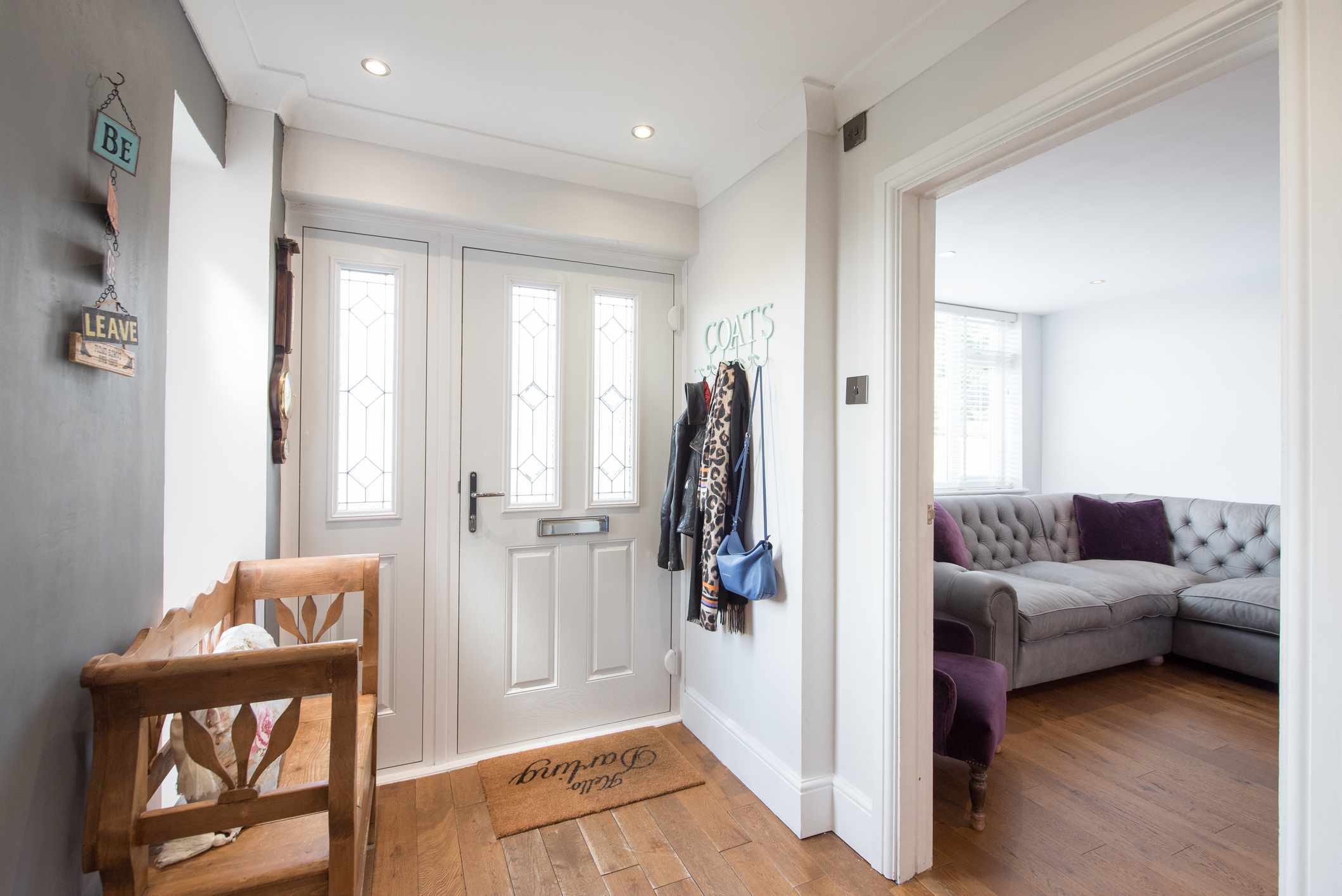
Your entryway has one job: make a great first impression. It is the handshake of your house, the opening scene of your home’s whole personality, and the place where guests quietly decide whether your style is polished, welcoming, and intentional or stuck somewhere between “2014 farmhouse aisle” and “why is there a giant basket bench blocking the door?”
Designers keep coming back to the same point: entryways are small, but they carry outsized visual weight. A dated foyer can make the rest of the home feel older before anyone even sees the living room. The good news is that updating an entryway usually does not require a full renovation. In many cases, the biggest problems are not structural. They are styling habits, scale mistakes, tired finishes, and trends that once felt charming but now read as forced, cluttered, or oddly heavy.
If you have been wondering why your home feels a little less current than it should, your foyer may be dropping clues. Here are five entryway trends designers say are instantly aging your home, plus smarter swaps that make the space feel fresher, warmer, and far more expensive.
Why the Entryway Matters More Than You Think
An entryway is not just a landing zone for keys, shoes, and the occasional mystery receipt. It is a transition space that sets the tone for everything that follows. Because foyers are often small, dark, or awkwardly shaped, homeowners tend to either ignore them or overcompensate by stuffing them with furniture, décor, and “helpful” storage pieces that are doing the absolute most.
The most stylish entryways today feel edited. They are practical, yes, but they are also calm, layered, and connected to the rest of the home. That means better lighting, more thoughtful art, warmer finishes, and fewer pieces that scream, “I was purchased all at once on a Saturday afternoon.”
1. Faux Greenery, Script Signs, and Decor That Feels Like It Came in a Starter Pack
There was a time when a bundle of fake eucalyptus, a wooden sign with a cheerful slogan, and a distressed little accent piece felt like the formula for a cozy home. That time has passed. Designers now see this type of entryway décor as one of the fastest ways to make a space feel flat and dated.
The issue is not that greenery is bad or that words are illegal on walls. It is that mass-produced décor often strips a space of personality instead of adding it. Faux stems collect dust, scripted signs can feel generic, and matching decorative accessories tend to make the foyer look styled by algorithm rather than by a person with taste, memories, and maybe at least one opinion.
A modern entryway should feel personal, not prepackaged. That means swapping plastic branches for real greenery when possible, or choosing sculptural dried branches that look intentional instead of synthetic. It means replacing word art with a framed sketch, a small landscape, a vintage mirror, or a piece of art that actually says something about you without literally saying “Gather.”
What to do instead
Try one meaningful focal point. A vintage bowl on a console, a framed abstract, a textured lamp, or a beautiful ceramic vase can do more for your foyer than five themed accessories ever could. The goal is character, not clutter. Your entryway should whisper “well-styled home,” not yell “live laugh lobby.”
2. Bulky Cubby Benches and Oversized Hall Trees
Storage is important in an entryway. Nobody is arguing for a floor covered in sneakers and rogue tote bags. But one of the biggest entryway design mistakes designers mention right now is relying on bulky cubby benches, oversized hall trees, and dark, heavy furniture that dominates the room before anyone even takes off a shoe.
These pieces became popular because they promised function. In real life, though, they often create visual clutter. Open cubbies invite everyone in the household to toss things anywhere. Baskets start out cute, then turn into mystery bins. Large hutches and chunky benches can make a narrow foyer feel cramped, dark, and oddly old-fashioned.
Scale is the real issue here. Entryways work best when furniture is proportionate and purposeful. A giant bench with ten compartments is not a win if it makes the front door area feel like a crowded mudroom. Even in larger foyers, too much furniture can make the layout feel stiff rather than welcoming.
What to do instead
Choose streamlined storage. A slim console, a narrow shoe cabinet, a floating shelf with hooks, or a bench with clean lines will usually look more current than a bulky all-in-one piece. Closed storage is especially helpful because it hides the daily chaos. If you need a family-friendly drop zone, keep the practical pieces discreet and let one well-scaled item lead the design.
Light wood, painted finishes, open legs, and simpler silhouettes all help an entryway breathe. Think less “furniture fortress,” more “graceful landing pad.”
3. Overly Ornate or Harsh Lighting
Lighting can save an entryway or sabotage it in seconds. Designers consistently call out outdated foyer lighting as one of the biggest reasons a home feels older than it is. On one side of the problem, there is the infamous builder-grade dome light that gives all the charm of a waiting room ceiling. On the other side, there are overly ornate fixtures with frosted glass, heavy scrollwork, or fussy details that drag the whole room backward.
Bad entryway lighting is not only unattractive. It changes how the space feels. Harsh recessed lighting can make a foyer feel sterile. A single dim flush mount can make it gloomy. A dated fixture with yellowed glass can instantly add years to the home, and not in a charming “historic character” kind of way.
Today’s more timeless approach is softer and more architectural. Designers are leaning toward pendants, lanterns, sconces, and small chandeliers with cleaner lines. Warm light matters, too. An entryway should feel inviting and flattering, not like a security camera has just activated.
What to do instead
Start by choosing one light source that fits the scale of the space. If your foyer has height, a pendant or lantern can create drama without looking stuffy. If it is small or lacks wiring options, a console lamp or wireless wall sconce can add warmth. Also pay attention to bulb temperature. Warm, soft illumination tends to make finishes, paint colors, and skin tones look better. That is good news for your home and for everyone who enters it carrying groceries.
4. A Worn Front Door and Tired Hardware
Sometimes the reason an entryway feels dated has nothing to do with décor at all. It is the front door. Designers often point out that a scratched, faded, poorly painted, or weathered front door can age the entire entrance, even when everything inside is otherwise in good shape.
This makes sense. The front door is one of the first things guests see from the curb and one of the last visual moments before they step inside. If the paint is chipped, the finish is dull, or the hardware looks tired, the message is immediate: this area has been overlooked. And entryways, more than most spaces, do not forgive neglect.
Many homeowners focus on furniture and ignore the basics, but a front door refresh is one of the highest-impact updates you can make. Fresh paint, cleaner trim, polished hinges, updated hardware, and a sturdy doormat can change the entire mood of the entrance. This is especially true if your interior entryway is simple. In that case, the door becomes part of the décor story.
What to do instead
Look at your door the way a guest would. Does the color still work with your home? Does the hardware feel current? Is the finish crisp or tired? Rich wood stains, warm neutrals, earthy reds, deep greens, and softened classic tones tend to look more timeless than neglected white paint or a shade that once felt trendy but now feels random. You do not need a dramatic statement. You just need a door that looks cared for.
5. Awkward Wall Treatments, Cold Paint, and Mini Gallery-Wall Chaos
Small spaces tempt people to get experimental, and entryways are no exception. But designers say one of the easiest ways to age a foyer is with wall decisions that feel disconnected from the rest of the home. That might mean paint that stops in awkward places, wallpaper that cuts off abruptly, a cold gray or stark white color that drains the space, or a gallery wall made up of so many tiny pieces that guests do not know where to look first.
Entryways are transition zones, so visual continuity matters. When paint changes in strange spots or wallpaper begins and ends without a logical boundary, the result can feel unfinished. Likewise, while dramatic color can be beautiful, many entryways lack abundant natural light. Cool grays, stark whites, and very dark shades can make the space feel smaller, colder, and more severe than intended.
Then there is the tiny-art problem. Gallery walls can absolutely work in a home, but in an entryway they often read as clutter, especially if the pieces are too small or too numerous. Instead of creating charm, they can make the space feel busy before visitors have even put down their keys.
What to do instead
Aim for flow. Use paint colors that connect naturally to adjacent hallways and rooms. If you love wallpaper, let it feel intentional by carrying it through the right boundary or choosing a placement that makes architectural sense. For color, warmer whites, greige, mushroom tones, soft greens, muted earth tones, and other forgiving shades tend to perform beautifully in entryways.
As for art, go bigger and calmer. One strong piece or a tight cluster of two or three works usually feels more sophisticated than a wall full of tiny frames. The eye should have a place to rest. Your entryway should create a welcome, not a scavenger hunt.
How to Make an Entryway Feel Current Without Starting Over
If reading this made you glance suspiciously at your faux wreath and giant basket bench, do not panic. You do not need to demolish your foyer. Most dated entryway ideas can be fixed with editing, not a full-scale makeover.
- Swap one bulky furniture piece for something slimmer and lighter.
- Replace builder-grade or fussy lighting with a cleaner fixture.
- Edit décor down to a few meaningful pieces.
- Refresh the front door with paint and updated hardware.
- Use warmer, more cohesive paint and fewer, larger wall accents.
The most stylish entryways are usually the ones that feel intentional, not overdone. They offer a place to set things down, enough light to feel welcoming, and just enough personality to hint at the design story unfolding inside the rest of the house.
The Bottom Line
Designers are not saying your entryway has to be trendy. In fact, the spaces that age best tend to avoid trends that are too literal, too bulky, or too eager to prove a point. The goal is not to make your foyer look brand new every year. It is to make it feel warm, functional, and visually connected to the rest of your home.
If your entryway currently features faux greenery, oversized storage furniture, outdated lighting, a neglected front door, or awkward wall styling, you are not doomed. You are just one smart edit away from a much fresher first impression. And that is the beauty of this space: small changes here can make your whole house feel better dressed.
Real-Life Entryway Experiences: What People Notice the Moment They Walk In
In real homes, entryway problems usually reveal themselves in everyday life long before anyone names them as “dated trends.” A homeowner may not wake up and think, My foyer is suffering from decorative fatigue. What they notice instead is that the area feels crowded, dark, messy, or oddly disconnected from the rest of the house. The clues are practical before they are aesthetic.
One common experience is frustration with storage that looked useful in the store but never works gracefully in practice. A big cubby bench seems like a genius idea until each cubby turns into a holding cell for random shoes, tangled dog leashes, reusable shopping bags, sports gear, and one lone mitten from a winter that is emotionally over. Over time, the furniture starts running the room instead of serving it. Homeowners often discover that replacing one oversized piece with a narrow shoe cabinet and a simple bench makes the space feel calmer almost overnight.
Lighting is another area where people notice a change immediately. Many foyers are darker than expected, especially in homes without side windows or a glass-paneled front door. A dated ceiling fixture might technically provide light, but not the kind that makes a home feel welcoming. People often describe the shift in very human terms after an update: the room feels softer, faces look better, mornings feel less rushed, and coming home at night feels more comforting. That is a strong reminder that good design is not just visual. It changes the mood of daily life.
Then there is the front door effect. A freshly painted door with updated hardware does something surprisingly dramatic. Even homeowners who make no other changes often say the entire entrance looks more cared for after this one fix. The door becomes a clear visual anchor, and suddenly the rest of the foyer looks more intentional too. It is the design equivalent of ironing your shirt. Nobody may know exactly why everything looks sharper, but they know it does.
Wall treatments bring their own set of lessons. People frequently realize that their entryway paint felt off not because the color was terrible on its own, but because it stopped in awkward places or fought with nearby rooms. Once the palette becomes more continuous, the house feels larger and more settled. The same thing happens when a busy cluster of tiny frames is replaced with one larger artwork piece. Guests pause, notice it, and move on. There is no visual traffic jam.
What homeowners seem to appreciate most after an entryway refresh is not that the space looks trendy. It is that the area becomes easier to live with. Shoes are easier to hide. Bags have a place to land. Light is more flattering. The entry feels less like a dumping zone and more like a quiet introduction to the home. And that, more than any single trend, is what makes a foyer feel current: it works beautifully without looking like it is trying too hard.