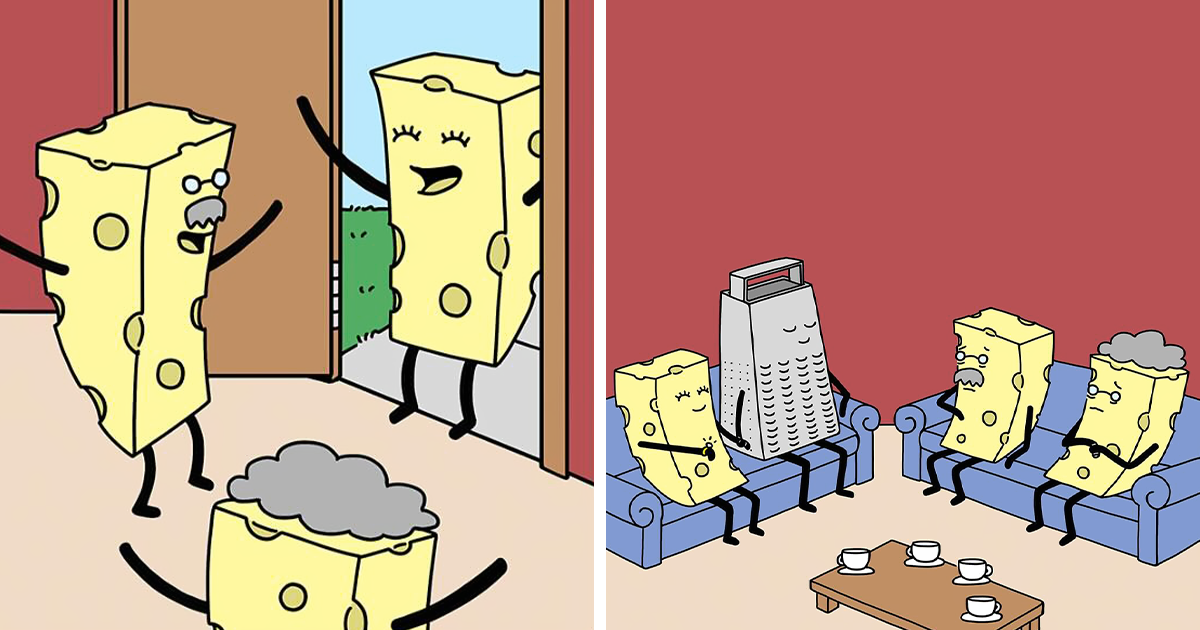
Some comic characters have superpowers. Others possess genius-level intelligence, bottomless bank accounts, or suspiciously convenient plot armor. Buni has optimismand unfortunately, optimism is not accepted as protective equipment.
Created by cartoonist Ryan Pagelow, Buni follows a wide-eyed rabbit wandering through a cheerful-looking world filled with teddy bears, unicorns, food, romance, holidays, monsters, and an alarming number of opportunities for emotional damage. The comic is largely wordless, so its jokes depend on expressive poses, visual clues, carefully timed panels, and final images that can turn an innocent situation upside down.
That contrast is the secret ingredient behind these 41 cute yet twisted Buni comics. One moment, everything looks soft enough to decorate a nursery. The next, a cupcake is facing an existential crisis, a teddy bear appears connected to organized crime, or Buni discovers that love has once again chosen somebody with better hair.
Prepare to laugh, wince, and wonder why adorable cartoon animals are so effective at exposing the cruelty of everyday life.
What Are Buni Comics?
Buni is a dark comedy webcomic about an endlessly hopeful rabbit with consistently terrible luck. According to the comic’s official description, Buni lives in a world that looks cute but frequently behaves as though it has placed a personal bounty on him. The series has appeared on its official website, GoComics, and Webtoon, where its combination of simple visual storytelling and unexpected endings can reach readers without depending heavily on language.
Pagelow did not originally set out to create a permanently wordless strip. The earliest comics happened to contain no dialogue, so he continued experimenting with silent storytelling until it became one of the series’ defining features. Buni’s world also gradually filled with teddy bears, strange creatures, animated objects, and foods that sometimes appear more emotionally complicated than the humans reading them.
The concept began as an entry for a comic-strip competition. Pagelow considered using either a bunny or a panda before settling on a rabbit that retained panda-like black ears and limbs. The result was a character whose appearance communicates sweetness immediatelymaking every approaching disaster considerably funnier.
The series also earned professional recognition. The National Cartoonists Society honored Pagelow’s work in its online short-form comics category, while his career has included work for publications such as Mad magazine. A print collection, Buni: Happiness Is a State of Mind, was published by Andrews McMeel Publishing in 2018.
Why Cute and Twisted Humor Works So Well
Dark humor becomes easier to approach when it arrives wearing bunny ears. Buni comics often begin with familiar experienceshunger, jealousy, exhaustion, dating, technology, pets, holidays, or Monday mornings. These ordinary situations create a sense of safety. Readers understand the setup almost instantly and begin predicting the outcome.
That prediction is usually where the trouble starts.
Pagelow uses the final panel to reveal that the apparent story was incomplete, misunderstood, or much darker than expected. A friendly object may have a secret motive. A romantic gesture may become painfully one-sided. A harmless snack may suddenly gain feelings at the worst possible moment. The joke does not merely arrive; it pulls the floor out from under the reader and politely waves while gravity finishes the job.
Because the strips contain little or no dialogue, the humor depends on visual information. Facial expressions, background details, scale, color, repetition, and panel order carry the narrative. Publications covering Pagelow’s work have repeatedly highlighted this combination of cuteness, sadness, dark comedy, and surprise.
41 Reasons These Buni Comics Are So Funny
The individual strips explore different situations, but a 41-comic Buni binge reveals several recurring comedic patterns. Here is what makes the collection such an enjoyable little parade of adorable misfortune.
-
1. Buni Is Dangerously Optimistic
Buni approaches suspicious situations with the confidence of someone who has never read the previous Buni comic. His hopefulness makes him lovable, but it also makes him extraordinarily easy for the universe to prank.
-
2. The Artwork Creates a False Sense of Security
Rounded shapes, bright colors, wide eyes, and cuddly characters suggest that everything will be fine. This is visual misinformation. Nothing is fine.
-
3. The Final Panel Changes Everything
A strong Buni punchline often forces readers to reinterpret the entire setup. What looked wholesome becomes sinister, and what looked sinister may turn out to be merely embarrassingly awkward.
-
4. Romance Is Practically a Contact Sport
Buni’s romantic life is a long-running experiment designed to discover how many different ways a bunny can have his heart broken without requesting a refund.
-
5. His Crush Is Rarely Impressed
Flowers, heroic gestures, and hopeful smiles cannot compete with the inconvenient fact that the object of Buni’s affection is usually interested in someone else.
-
6. Food Is Never Just Food
Meals, snacks, vegetables, desserts, and kitchen ingredients can become characters, victims, villains, or witnesses. Suddenly, opening the refrigerator feels morally complicated.
-
7. Teddy Bears Are Surprisingly Untrustworthy
In most stories, teddy bears provide comfort. In Buni’s neighborhood, they may be involved in intimidation, suspicious business arrangements, or activities requiring an attorney.
-
8. Everyday Objects Have Secret Lives
Phones, appliances, decorations, and household items often possess motives of their own. This raises an important question: What is your toaster doing while you sleep?
-
9. Background Details Reward Careful Readers
A tiny expression or overlooked object can quietly prepare the twist. The best strips become even funnier on a second reading because the evidence was visible all along.
-
10. The Silence Improves the Timing
Without dialogue explaining the joke, readers control the pace. The eyes move from panel to panel until the final image delivers its tiny emotional explosion.
-
11. Buni’s Face Does Half the Work
His enormous eyes can express hope, confusion, terror, heartbreak, or the precise moment he realizes that buying extended warranty coverage would not have helped.
-
12. Happiness Is Usually Temporary
Whenever Buni experiences joy, seasoned readers become nervous. Happiness in this comic often behaves like a free trial that expires before the final panel.
-
13. Nature Has a Cruel Sense of Humor
Plants, weather, wildlife, and seasonal changes frequently refuse to cooperate. Even the natural world seems eager to participate in the punchline.
-
14. Holidays Become Comic Traps
Valentine’s Day, Halloween, Christmas, and other celebrations provide perfect setups because they arrive with familiar traditionsand traditions are excellent things to ruin.
-
15. Monsters Are Sometimes More Reasonable Than Friends
Zombies and other creatures may look dangerous, yet the truly devastating blow can come from an ordinary social interaction.
-
16. Technology Makes Everything Worse
Phones and digital habits appear convenient until a visual twist exposes loneliness, distraction, vanity, or the horror of an inconvenient notification.
-
17. The Comics Understand Monday
Few characters capture weekday exhaustion as efficiently as a rabbit whose alarm clock appears to have declared war.
-
18. Small Problems Escalate Beautifully
A minor inconvenience can grow panel by panel until it becomes absurdly catastrophic. Buni does not merely spill milk; he enters a dairy-based tragedy.
-
19. Expectations Are Carefully Weaponized
Readers recognize the emotional direction of the setup, so Pagelow can deliberately guide them toward the wrong conclusion.
-
20. Kindness Does Not Guarantee Safety
Buni may act generously and still suffer. It is unfair, but it is also relatable to anyone who has ever helped somebody move and received cold pizza as compensation.
-
21. Self-Improvement Can Backfire
Exercise, grooming, productivity, and ambitious personal goals are ripe for sabotage. Sometimes the better version of yourself is simply more exhausted.
-
22. Jealousy Is Instantly Understandable
A single glance can communicate an entire emotional disaster. No speech bubble is needed when a character’s posture already says, “I am happy for you, unfortunately.”
-
23. Cute Characters Make Dark Jokes Stranger
A grim event looks completely different when everyone involved resembles a plush toy sold near a supermarket checkout.
-
24. The Violence Is Usually Cartoonishly Absurd
When a strip becomes destructive, the exaggeration keeps it within the world of visual comedy rather than realism.
-
25. Buni Rarely Learns the Correct Lesson
His ability to remain hopeful is inspiring. His inability to detect obvious warning signs is less inspiring but much better for the comic.
-
26. Side Characters Have Strong Personalities
Cynical relatives, romantic rivals, animals, food items, and background creatures can communicate a complete personality in only a few panels.
-
27. The Comic Makes Loneliness Funny Without Dismissing It
Some strips are amusing because they recognize a genuine ache. The laughter and sadness coexist instead of canceling each other out.
-
28. Buni’s Father Provides a Darker Counterpoint
Where Buni sees possibility, his cynical father tends to see evidence. Their contrasting outlooks expand the comic beyond repeated bad-luck jokes.
-
29. The Stories Travel Well Across Cultures
Food, fatigue, rejection, pets, weather, and disappointment are internationally recognized dialects of suffering. The wordless format makes the central joke accessible to a broad audience.
-
30. Each Strip Respects the Reader
The comic rarely overexplains. It presents enough visual information for readers to connect the events and experience the discovery themselves.
-
31. The Panel Structure Builds Suspense
Even a three- or four-panel strip can create anticipation. Every image narrows the possibilities until the last one reveals the trapdoor.
-
32. The Punchlines Are Usually Fast
Buni comics do not require a long backstory, three maps, and a family tree. The setup arrives, the twist lands, and the reader is free to laugh during work hours.
-
33. Familiar Situations Become Surreal
Shopping, cooking, sleeping, gardening, and dating begin normally before one impossible detail transforms reality.
-
34. Objects Can Become Emotional Symbols
A gift, meal, flower, or photograph may represent affection, insecurity, or rejection without requiring a paragraph of explanation.
-
35. Buni Is Both a Character and a Mood
He represents the part of us that keeps expecting a pleasant outcome despite possessing an impressive archive of contradictory evidence.
-
36. The Humor Can Be Gently Existential
Behind the cupcakes and teddy bears are questions about happiness, mortality, desire, loneliness, and why the vending machine kept the dollar.
-
37. The Comics Balance Sweetness and Cynicism
Pure cruelty would become exhausting, while pure sweetness would weaken the surprise. Buni works because both qualities remain present.
-
38. The World Feels Consistent Even When It Is Absurd
Talking food and dangerous teddy bears seem normal because the comic applies its strange logic with confidence.
-
39. You Can Read the Same Comic Twice
The first reading delivers the surprise. The second reveals how composition, expressions, and visual clues quietly constructed it.
-
40. The Darkness Rarely Defeats Buni Completely
He may end a strip embarrassed, rejected, or physically flattened, but his essential optimism survives for the next adventure.
-
41. You Begin Expecting a Twist and Still Get Fooled
After dozens of comics, readers know that something terrible is coming. The achievement is that Pagelow can still make the specific form of that disaster surprising.
How Ryan Pagelow Builds Humor Without Dialogue
Writing a wordless comic does not mean removing words from a completed script. It requires constructing the story visually from the beginning. Every important action must be recognizable, every emotional shift must be visible, and each panel must guide readers toward the next one without becoming cluttered.
Pagelow has explained that simple, universal subjects work especially well in this format. Food, tiredness, animals, jealousy, phones, holidays, disappointment, and similar experiences can be recognized almost immediately. That simplicity leaves room for increasingly strange conclusions without losing the audience along the way.
Visual Setup
The opening panel establishes a recognizable goal: Buni wants affection, food, rest, success, or a peaceful afternoon. The scene needs to be understandable within seconds.
Controlled Misdirection
The middle panels encourage a specific interpretation. Expressions and objects appear to confirm what readers already believe is happening.
The Reversal
The final panel introduces missing information. The real victim, motive, scale, or consequence becomes visible, transforming an ordinary situation into a compact piece of dark comedy.
Why Buni Remains So Relatable
Buni is not relatable because readers regularly encounter zombie outbreaks or criminal teddy-bear organizations. He is relatable because his emotional reactions are honest. He wants to be loved. He gets jealous. He becomes excited too quickly, misunderstands situations, makes embarrassing decisions, and keeps hoping tomorrow will work better.
His optimism also gives the comic unexpected warmth. A permanently cynical protagonist would anticipate every disappointment, reducing the power of the twist. Buni keeps believing in good outcomes, which means readers briefly believe in them too.
That is why the darker endings rarely feel empty. Underneath the joke is a character who continues trying. He is less an unlucky rabbit than a fluffy monument to questionable persistence.
The Experience of Reading 41 Buni Comics in One Sitting
Reading one Buni comic feels like discovering a cute greeting card that suddenly insults your life choices. Reading 41 of them in a row is a more elaborate psychological journey.
At first, you trust the artwork. The colors are cheerful, the characters are adorable, and Buni looks incapable of participating in anything more dangerous than a poorly organized picnic. You approach the early panels with the relaxed confidence of someone entering a petting zoo.
Then the first twist arrives.
Perhaps a friendly situation becomes a trap. Maybe a sweet romantic gesture ends in rejection. A meal might reveal an uncomfortable relationship between food and diner. Whatever the details, the final image teaches you an important rule: never assume that a smiling object in Buni’s world has honorable intentions.
After several comics, your reading behavior changes. You begin scanning the background. Is that teddy bear watching too closely? Why is the cupcake nervous? Does the flower understand what is about to happen? Has anyone checked whether the garden gnome possesses the required permits?
This suspicion becomes part of the entertainment. Pagelow trains readers to hunt for the trick, but knowing that a surprise is coming does not necessarily reveal what it will be. One strip may rely on scale, another on an unnoticed character, and another on a sudden shift in perspective. The experience resembles watching a skilled magician after being told that every trick contains deception. Awareness does not make the card appear inside the lemon any less ridiculous.
The collection also creates an interesting emotional rhythm. Several strips produce immediate laughter. Others inspire a slower reaction: first recognition, then discomfort, and finally the guilty chuckle of someone who understands that the situation is terrible but has already admired the punchline.
Buni’s repeated romantic failures can feel especially familiar. Most readers have experienced some form of unreturned affection, social awkwardness, or optimism that arrived before all the relevant facts. The comic exaggerates these moments, but the emotion beneath them remains recognizable. Buni does what many people have done: he constructs an entire happy ending from one promising detail and then watches reality arrive carrying a wrecking ball.
The food-related strips produce a different reaction. Once meals and ingredients gain personalities, ordinary eating becomes surprisingly sinister. You may laugh at an animated vegetable’s misfortune and then feel briefly judged by your lunch. Fortunately, sandwiches are notoriously poor at maintaining grudges.
The wordless format makes the binge unusually smooth. There are no dense captions to slow the sequence, yet the strips do not feel empty. Your brain supplies movement, tone, and imagined sound effects between the panels. A raised eyebrow becomes dialogue. A pause becomes suspense. A tiny change in posture can deliver the equivalent of a dramatic monologue.
By comic number 41, you are no longer an innocent reader. You have become a trained investigator with deep concerns about teddy bears. You expect betrayal from household appliances and view cheerful weather with suspicion. Still, Buni’s optimism remains contagious. No matter how often his plans collapse, he returns with the same open expression and another questionable idea.
That persistence gives the collection its strangely comforting quality. Life can be unfair, romance can be embarrassing, technology can betray us, and dessert may be plotting something. Yet tomorrow offers another chance to step outside, smile confidently, and walk directly into an entirely new disaster.
And honestly, that may be the most relatable joke of all.
Conclusion
The best Buni comics combine three ingredients that should not work together but absolutely do: adorable artwork, recognizable emotions, and conclusions with the moral stability of a raccoon inside an unlocked bakery.
Ryan Pagelow’s mostly wordless storytelling allows the humor to cross language barriers while keeping every strip quick and visually clear. The familiar setups invite readers in, the expressive characters build emotional investment, and the final panels deliver twists ranging from playfully absurd to surprisingly dark.
These 41 cute yet twisted Buni comics are funny because they understand something important about life: optimism does not prevent disaster, but it does make the disaster more entertaining. Buni may lose the meal, the date, the contest, or the last remaining fragment of his dignity. Somehow, he still returns ready to believe that the next situation will end differently.
We know better. We keep reading anyway.