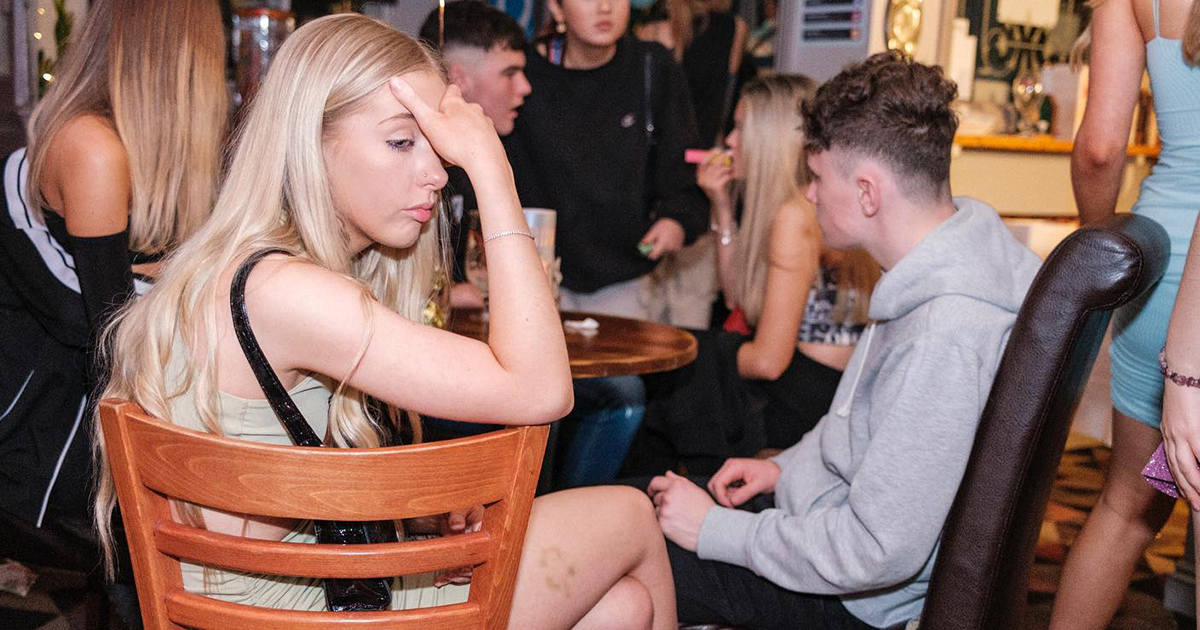
Weddings are often sold to us as a polished parade of perfect smiles, flawless flowers, slow-motion kisses, and table settings that look as if they were arranged by angels with Pinterest accounts. Then Ian Weldon walks in with a camera and politely points it at the real wedding: the sweaty dance floor, the uncle who has fully committed to dad dancing, the bridesmaid eating like nobody is watching, the groom looking emotionally attacked by his own tie, and the tiny disasters that somehow become the best memories.
That is the charm behind 40 honest wedding photos by Ian Weldon: they are funny, chaotic, warm, strange, and beautifully human. Weldon, a photographer from Northern England, is famous for calling himself “not a wedding photographer,” even though weddings are the stage where his documentary eye has become widely recognized. His images do not chase the fantasy of the perfect day. They chase the day itself.
And the day itself? It is usually holding a glass of wine, missing one shoe, laughing too hard, and trying to keep a child away from the cake.
Who Is Ian Weldon?
Ian Weldon is a British photographer known for a documentary approach that treats weddings less like luxury productions and more like social rituals full of comedy, tenderness, nerves, boredom, beauty, bad timing, and excellent facial expressions. His project I Am Not a Wedding Photographer brought him major attention because it challenged almost everything people expect from traditional wedding photography.
Instead of arranging long rows of guests into formal groups, Weldon looks for what happens around the official moments. He photographs people waiting, laughing, adjusting clothes, losing patience, drinking, dancing, staring into space, and becoming themselves when the “big moment” has briefly looked away. In that sense, his wedding photography is not anti-romance. It is anti-fake romance. Big difference.
His work gained fine-art recognition through an exhibition at the Martin Parr Foundation in Bristol and a photobook of the same name, I Am Not a Wedding Photographer. The exhibition was notable because it placed wedding photography in an art photography context, inviting viewers to see the wedding album not merely as a private keepsake but as a sharp, funny document of contemporary life.
Why These Wedding Photos Feel So Different
Most wedding photography is built around control. The photographer finds the good light, fixes the dress, lines everyone up, asks for a smile, and politely removes the evidence of real life. Weldon does the opposite. He notices the evidence. He keeps the crooked tie, the half-eaten food, the tired feet, the awkward pause, and the hilarious split second when dignity takes a brief holiday.
This is why his honest wedding photos feel less like advertising and more like memory. Real memories rarely arrive in perfect lighting. They come with background noise, someone blinking, a child running into the frame, a relative making an expression that deserves its own museum wing, and a dance floor that looks like a small weather event.
He Photographs the Wedding You Actually Had
A classic wedding album may tell you, “Here is the beautiful couple.” Weldon’s photographs say, “Here is the beautiful couple, plus the guests, the chairs, the snacks, the chaos, the auntie with opinions, the shoes under the table, and the strange little drama unfolding near the buffet.” That wider view matters because weddings are never only about two people. They are about families, cultures, habits, nerves, performance, fatigue, joy, and the social magic of everyone pretending they know where to stand.
One of the most interesting things about Weldon’s work is that he gives equal attention to grand emotion and tiny absurdity. A kiss is important, but so is a wrinkled shirt. A first dance matters, but so does the person in the background eating a canapé with the focus of an Olympic athlete. In Weldon’s visual world, everything belongs.
The Comedy of Real Weddings
Weddings are funny because they are overloaded with expectation. Everyone is dressed too nicely for the practical tasks they must perform. People cry in public. Adults become extremely concerned about napkins. Someone always has to carry flowers, a phone, a drink, and the emotional stability of the room at the same time.
Weldon’s photography understands this perfectly. His images are not funny because he mocks people. They are funny because he catches the universal truth that humans are awkward creatures trying very hard to be elegant. That gap between the dream and the reality is where the comedy lives.
Funny Faces, Bad Timing, and Perfect Imperfection
In many wedding photos, people are trying to look their best. In Weldon’s photos, they often look their most real. There are open mouths, tired eyes, wild gestures, dramatic leaning, questionable dance moves, and facial expressions that say, “I have been awake since 6 a.m. and the champagne has started making decisions for me.”
That is not failure. That is the point. A perfect wedding photo may flatter you, but an honest wedding photo remembers you. Years later, the posed portrait may still look lovely, but the chaotic frame of your best friend laughing with cake on her fork may bring the whole day rushing back.
Why Chaos Makes the Photos Better
Chaos gives wedding photography movement. It turns a formal event into a story. Without chaos, a wedding album can become a catalog of outfits. With chaos, it becomes a living record: the preparation, the waiting, the pressure, the release, the food, the speeches, the dance floor, the exhaustion, and finally the moment when everyone’s shoes lose the battle.
Weldon’s images often focus on the in-between: the moments before and after the expected photograph. A bride fixing a shoe. Guests hovering near a doorway. Someone laughing at exactly the wrong second. A group of people gathered in a room where the background is not glamorous but completely true. These details create texture. They remind us that weddings happen in real spaces, with real bodies, real mess, and real weather.
The Anti-Instagram Wedding Album
In the age of social media, many weddings are designed with the camera in mind. The flowers must be shareable. The cake must have a good angle. The couple’s portraits must look like a lifestyle campaign for eternal love and excellent skincare. There is nothing wrong with beauty, of course. Beauty is welcome. Beauty may sit near the guest book and enjoy a signature cocktail.
But Weldon’s work is refreshing because it refuses to treat weddings as personal branding exercises. His photos are not trying to make the day look expensive, cinematic, or influencer-approved. They are trying to show what happened. That honesty is why the images feel so alive.
Documentary Wedding Photography With a Fine-Art Edge
Documentary wedding photography is not simply “candid shots.” It requires timing, patience, visual intelligence, and the ability to understand human behavior without interrupting it. Weldon’s work sits close to street photography and social documentary. Like the best observers of everyday life, he seems interested in gestures, relationships, rituals, and visual jokes hiding in plain sight.
The influence of British documentary photography is easy to sense in his work. There is an affection for the ordinary, a love of social detail, and an understanding that humor can reveal truth more effectively than glamour. A wedding, after all, is one of the rare events where generations, classes, personalities, and private family histories collide in one room while wearing formal clothing. For a documentary photographer, that is not just a job. That is a buffet.
Why Martin Parr’s Support Matters
Martin Parr, one of Britain’s most influential documentary photographers, publicly praised Weldon’s approach, calling him one of the most real wedding photographers he had encountered. That endorsement makes sense. Parr’s own work is famous for finding meaning in ordinary scenes: leisure, food, queues, social habits, awkwardness, and the comedy of everyday life. Weldon brings a similar curiosity to weddings, but with his own rhythm and tone.
The comparison is useful not because Weldon imitates Parr, but because both photographers understand that life becomes interesting when you stop trying to make it behave.
What Makes the 40 Photos So Memorable?
A collection like 40 honest wedding photos by Ian Weldon works because each picture feels like a tiny short story. You do not need to know the couple or the venue to understand the emotional temperature of the room. The comedy is immediate. The awkwardness is recognizable. The affection sneaks up on you.
You might see a bride bent over fixing something practical while everyone else waits. You might see guests mid-bite, mid-laugh, or mid-mistake. You might see children behaving exactly like children at weddings: bored, curious, chaotic, or mysteriously sticky. You might see adults trying to maintain elegance while the reception slowly turns into a small festival of questionable choices.
What ties the images together is not perfection. It is honesty. Weldon’s photographs suggest that the best wedding stories are not always found at the altar or under the floral arch. Sometimes they are near the restroom, at the bar, beside the cake table, or in the strange silent zone where guests wait for the next official instruction.
Why Couples Love This Kind of Wedding Photography
At first, honest wedding photography can sound risky. Who wants unflattering angles on one of the most photographed days of their life? But that question misses the emotional value of Weldon’s work. His photos are not designed to embarrass. They are designed to remember.
Couples who hire this kind of photographer usually do not want a fantasy version of themselves. They want the atmosphere, the humor, the people they love, and the little accidents that made the day theirs. They want proof that the wedding was lived, not merely styled.
The Best Wedding Photos Are Not Always the Prettiest
A pretty photograph can be wonderful. But a meaningful photograph does more. It holds sound, temperature, mood, and personality. It brings back the way someone laughed, the way the room felt after the speeches, the way everyone became louder after dinner, and the way the dance floor turned into a democratic zone where age, rhythm, and common sense were briefly suspended.
Weldon’s work reminds couples that the most valuable images may not be the ones that look best on a mantelpiece. They may be the ones that make you snort-laugh ten years later.
The Art of Not Interfering
One reason Weldon’s photos feel spontaneous is that he does not appear to force the event into a prewritten visual script. Many wedding photographers work from shot lists, and for many couples that is exactly right. But Weldon’s approach depends on freedom. If he spends the day arranging people, he misses the strange and lovely things happening behind him.
This is a crucial lesson in documentary photography: presence matters, but control can kill the moment. The photographer has to be close enough to notice, quick enough to react, and quiet enough not to change the behavior in front of the camera. It is less like directing a movie and more like birdwatching, except the birds are wearing fascinators and arguing about the seating plan.
How Ian Weldon Redefines Wedding Photography
Weldon’s work challenges the idea that wedding photography must be soft, sentimental, and endlessly flattering. His photographs prove that weddings can be documented with humor, intelligence, and artistic seriousness without losing affection. In fact, the affection becomes stronger because the images refuse to lie.
A chaotic wedding photo can be more loving than a perfect one because it accepts people as they are. It says: you were nervous, you were hilarious, you were tired, you danced badly, you ate greedily, you hugged hard, you cried unexpectedly, and all of it mattered.
Experience Section: What These Photos Teach Us About Real Weddings
Anyone who has attended a wedding knows that the official schedule is only part of the story. The invitation may say ceremony at 3 p.m., dinner at 6 p.m., dancing at 8 p.m., but the real wedding begins somewhere in the margins. It begins when someone cannot find the rings, when a child refuses to wear formal shoes, when the best man realizes his speech is either too short, too long, or legally dangerous, and when a bridesmaid becomes the unofficial emergency department for lipstick, tissues, safety pins, and emotional reassurance.
This is why Ian Weldon’s honest wedding photos feel so satisfying. They match the experience of actually being there. Most guests do not remember weddings as a sequence of perfect portraits. They remember the heat in the room, the clatter of glasses, the nervous laughter before the ceremony, the relief afterward, the person who cried during the vows, the person who cried during the bar bill, and the heroic relative who danced as if the entire history of music had been leading to that one moment.
Honest wedding photography also changes how couples think about success. A wedding does not have to be flawless to be unforgettable. In fact, flawless can be a little suspicious. The stories people retell are usually about the unexpected: the rainstorm, the flower girl’s rebellion, the cake incident, the guest who split his trousers, the car that would not start, the DJ who accidentally created a family legend, or the grandparent who became the star of the dance floor. These moments may feel chaotic at the time, but later they become the emotional glue of the day.
Looking at Weldon’s work can also be freeing for couples planning their own celebrations. It gently suggests that you do not need to control every second. You do not need to turn your wedding into a photo shoot with dinner service. You can let the day breathe. You can allow people to be funny, awkward, moved, hungry, loud, quiet, or gloriously overdressed for sitting on a plastic chair. The more room you leave for real life, the more memorable your photos may become.
For photographers, the lesson is just as valuable. The best frame is not always where the schedule says it will be. Sometimes it is behind the couple, beside the bar, at the edge of the dance floor, or in the exhausted pause after everyone has smiled too long. A photographer with Weldon’s instincts watches the whole room. He understands that the wedding is not a stage with two stars, but an ecosystem of relationships, rituals, and tiny comic explosions.
That is the experience these 40 honest wedding photos celebrate: not the fantasy wedding, but the living one. The one with scuffed shoes, loud relatives, weird lighting, half-finished drinks, sudden tenderness, and laughter that arrives before anyone can pose. It is chaotic, yes. But it is also the kind of chaos people spend the rest of their lives remembering.
Conclusion
40 honest wedding photos by Ian Weldon are funny because they are true, and they are moving because they are funny. They strip away the glossy wedding fantasy and replace it with something far more valuable: recognition. We recognize the nervous energy, the social awkwardness, the party madness, the family tenderness, and the small disasters that make a celebration feel real.
Ian Weldon may insist that he is not a wedding photographer, but his work has expanded what wedding photography can be. It can be documentary. It can be art. It can be hilarious. It can be chaotic. And, most importantly, it can be honest enough to last.
SEO Tags
Note: This article is an original SEO-focused rewrite based on publicly available information about Ian Weldon, his documentary wedding photography, his I Am Not a Wedding Photographer project, exhibition coverage, interviews, and recognized photography commentary. No source links or citation placeholders have been inserted into the publishable body copy.