Note: The sample replies below are illustrative. When a message feels threatening, coercive, fraudulent, or unsafe, protecting yourself matters more than being polite.
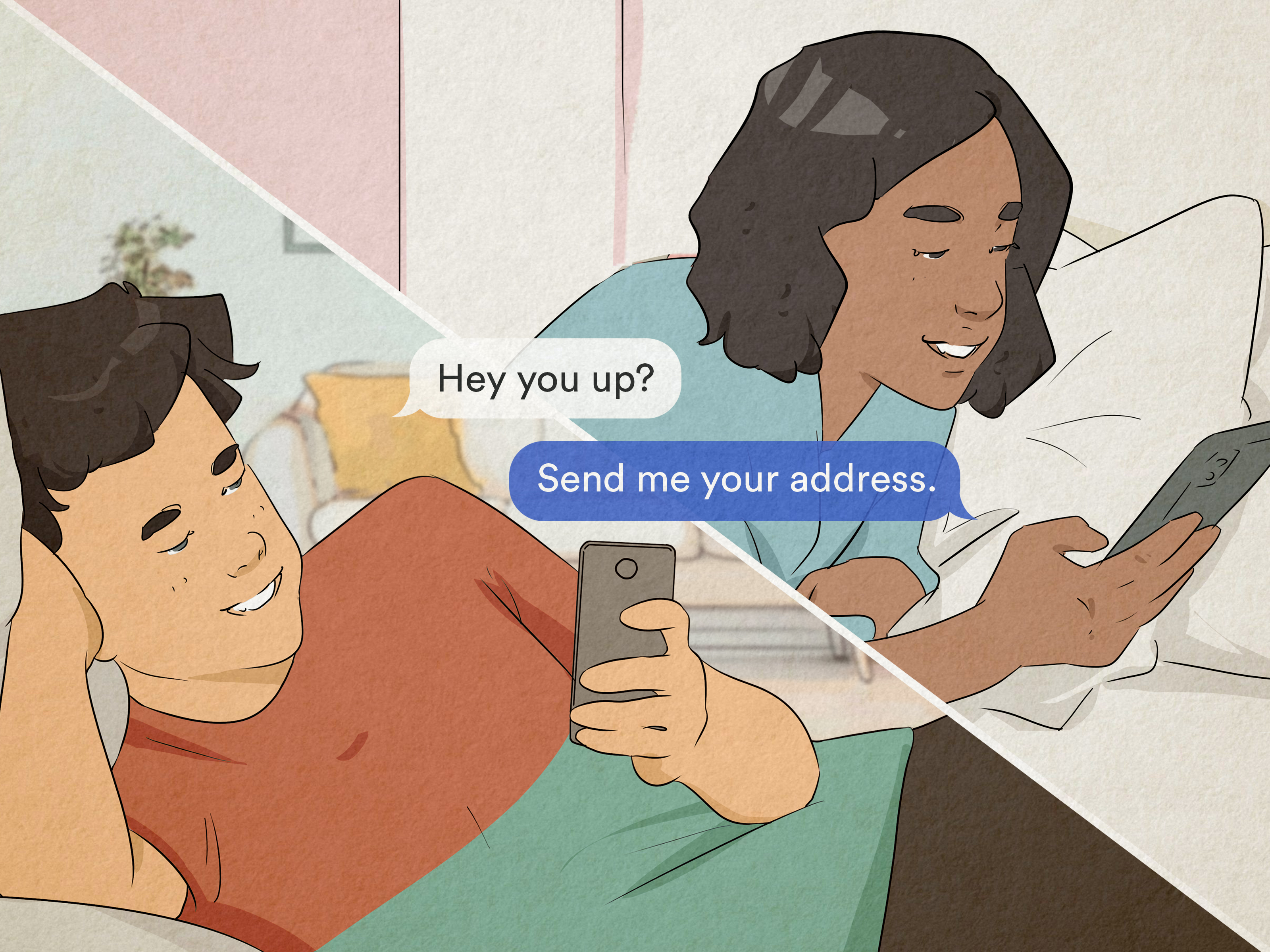
Your phone lights up at 12:47 a.m. It could be a close friend checking whether you are awake, a date testing the romantic waters, an ex performing an unauthorized emotional reboot, or an unknown number claiming that your package is stranded in a warehouse somewhere.
Whatever the message says, receiving a late night text can make an ordinary conversation feel strangely important. The hour adds mystery. A simple “Hey” suddenly appears to require forensic analysis, a panel of trusted friends, and perhaps a corkboard covered in red string.
Fortunately, learning how to respond to a late night text does not require mind-reading. The best reply depends on three practical questions: Who sent it? What do they appear to want? What do you want?
Once you answer those questions, you can choose one of four simple approaches: reply casually, match romantic interest, postpone the conversation, or establish a boundary. The goal is not to write the perfect text. It is to communicate clearly without sacrificing your sleep, dignity, safety, or remaining battery percentage.
Before You Reply, Read the Situation
The time of a message offers context, but it does not prove intent. Some people work late. Others live in different time zones, lose track of time, or remember important information precisely three seconds after getting into bed. A midnight message is not automatically romantic, inappropriate, or urgent.
Look at the actual content and your existing relationship with the sender. A close friend writing, “Are you awake? I need advice,” is different from a casual acquaintance sending only a suggestive emoji. A coworker sharing tomorrow’s meeting location may simply be organized at an unreasonable hour. An unknown number asking you to click a link deserves no conversation at all.
Ask yourself these quick questions
- Do I know and trust this person?
- Does the message seem friendly, romantic, urgent, manipulative, or suspicious?
- Am I comfortable continuing the conversation tonight?
- Would this topic be easier to discuss tomorrow, over the phone, or in person?
- Am I responding because I want to, or because I feel pressured?
You are not required to answer immediately simply because your phone delivered the message immediately. Texting offers access, not ownership of your attention.
1. Send a Friendly, Low-Pressure Reply
When the message comes from someone you like and the topic seems harmless, a brief, friendly response is usually the easiest option. You can acknowledge the person without accidentally beginning a two-hour discussion about childhood dreams, office politics, or whether hot dogs qualify as sandwiches.
A low-pressure reply works especially well for friends, relatives, classmates, and people you have recently started getting to know. It communicates warmth while leaving room to end the conversation naturally.
Simple responses you can use
- “Hey! I’m still awake. What’s up?”
- “Just about to call it a night, but everything okay?”
- “I saw your message. How’s your evening going?”
- “Hello, fellow member of the no-sleep club.”
- “I’m awake for another few minutes. What did you need?”
The phrase “for another few minutes” is particularly useful because it quietly establishes a time limit. You are available, but you have not volunteered to host a digital talk show until sunrise.
If the sender asks a straightforward question, answer it directly. Avoid inventing hidden meanings when the message itself is clear. “Did you finish the presentation?” usually means the person wants to know whether you finished the presentation. It does not necessarily mean they have secretly admired you since orientation.
Keep your tone easy to read
Text messages lack facial expressions and vocal tone, which makes short replies easier to misinterpret. A bare “What?” may sound irritated even when you merely meant, “What fascinating subject would you like to discuss?” Adding a few words can soften the message:
Instead of: “What?”
Try: “Hey, what’s going on?”
Instead of: “Why are you texting?”
Try: “You’re up late. Is everything okay?”
Clear language is usually better than a maze of abbreviations, mysterious punctuation, or an emoji combination that requires specialist interpretation.
2. Match the Flirty Energy Without Overcommitting
If the text is clearly flirtatious and you are interested, you can respond playfully. The secret is to match the sender’s energy rather than immediately launching the conversation into another galaxy.
Suppose someone you have been dating writes, “Can’t stop thinking about you.” You do not have to reply with wedding vows, but “That makes two of us” communicates interest. A confident, proportionate response keeps the exchange fun without creating promises neither of you intended to make at 1:00 a.m.
Flirty late night text responses
- “Well, this is a pleasant notification.”
- “I was wondering when you’d text me.”
- “You always become charming after midnight, apparently.”
- “I’m thinking about you too, but I expect the daytime version of this conversation.”
- “Bold message for someone who still owes me coffee.”
- “I like where this is going. Let’s continue tomorrow when I can form complete sentences.”
If you want the connection to progress, move it toward a concrete daytime plan. Endless late-night flirting can feel exciting while producing absolutely no actual relationship, much like repeatedly watching a movie trailer without seeing the movie.
You might write, “I’d rather hear that in person. Are you free Saturday?” This response shows interest and tests whether the sender is willing to make a real effort outside the midnight messaging window.
Pay attention to patterns, not one message
A single late text may be spontaneous. A pattern of contacting you only after midnight can reveal different priorities. Perhaps the person works unusual hours. Perhaps they are nervous about expressing interest. Or perhaps they want convenience without responsibility.
You do not need to diagnose the sender through your screen. Simply notice whether their behavior matches what you want. Someone genuinely interested in building a relationship should generally be capable of communicating when the sun is also participating.
If the conversation becomes sexual, share only what you genuinely want to share. Do not let the late hour, flirting, or fear of disappointing someone override your boundaries. Once a private image or message is sent, you may lose control over where it goes. Consent still matters after midnight, and pressure is not romance wearing pajamas.
3. Acknowledge the Message and Continue Tomorrow
Sometimes you like the sender, care about the topic, and still do not want a late-night conversation. That is completely reasonable. Sleep is not an act of hostility.
A brief acknowledgment prevents unnecessary worry while protecting your evening. This approach is useful when the message involves work, complicated feelings, conflict, detailed planning, or any subject that deserves more attention than your exhausted brain can provide.
Polite ways to postpone the conversation
- “I saw this, but I’m heading to sleep. I’ll reply properly tomorrow.”
- “I want to give this the attention it deserves. Can we talk in the morning?”
- “Long day over here. Let’s pick this up tomorrow.”
- “I’m too tired to answer thoughtfully, and this deserves a thoughtful answer.”
- “Nothing is wrong; I’m just signing off for the night. Talk tomorrow.”
These messages are warm, direct, and difficult to misunderstand. They also reduce the chance that you will send something careless while half asleep and discover it the next morning like an archaeological artifact from a less responsible civilization.
Do not conduct major arguments by midnight text
If the sender introduces a sensitive subject, resist the temptation to resolve everything immediately. Texting removes much of the tone, pacing, and feedback that help people understand one another. Fatigue can make both sides more reactive, while delayed responses may appear colder than intended.
Try a message such as: “I want to discuss this, but I don’t think texting late tonight will help us understand each other. Can we call tomorrow?”
This is not avoidance. It is choosing a communication method that better fits the conversation. Serious relationship concerns, apologies, breakups, family conflicts, and emotionally loaded decisions often deserve a call or face-to-face discussion.
Create a nighttime phone routine
If late messages regularly interrupt your sleep, use your phone’s Do Not Disturb, Focus, or Bedtime settings. Most devices allow calls from selected contacts to come through in an emergency while silencing routine notifications.
You can also tell frequent contacts, “I usually stop checking messages around 10:30, so I may answer the next morning.” Clear expectations prevent people from interpreting a delayed reply as anger or rejection.
A healthy texting boundary does not have to sound dramatic. It can be as simple as deciding that your pillow gets priority after a certain hour.
4. Set a Clear Boundary or Do Not Respond
Not every message deserves friendliness, flirtation, or even a reply. When a late night text is intrusive, repeatedly disrespectful, sexually unwanted, manipulative, threatening, or suspicious, you are allowed to protect your space.
A clear boundary is usually more effective than a long explanation. Lengthy justifications can create the impression that your limit is open for debate. It is not.
Direct boundary-setting responses
- “Please don’t text me this late unless it’s an emergency.”
- “I’m not comfortable with messages like this.”
- “I don’t want to continue this conversation.”
- “Late-night hookups are not what I’m looking for.”
- “Please contact me during work hours about work-related matters.”
- “I’ve asked you not to contact me. Do not message me again.”
Use a calm tone and focus on your decision. You do not need to accuse the sender of having terrible motives to say that their behavior does not work for you.
When silence is the better response
Do not reply to an unknown sender merely to ask who they are, especially when the message contains a suspicious link, an unexpected financial request, a fake delivery notice, or a vague greeting designed to start a conversation. Responding may confirm that your number is active.
Use your messaging app’s block and report features instead. Never provide passwords, verification codes, banking details, or personal information in response to an unexpected text.
If someone you know sends threats, repeatedly ignores your request for no contact, or makes you fear for your safety, save screenshots and relevant records. Block the sender when appropriate, tell a trusted person, and contact local authorities or a qualified support service if the situation may be dangerous.
Common Late Night Texting Mistakes to Avoid
Replying while emotional
When a message makes you angry, excited, anxious, or suspicious, pause before answering. Write a draft without sending it, put the phone down, and reread the message after your nervous system has stopped playing the drums.
Assuming a delayed reply is a strategy
You do not need to calculate a response time based on how long the other person waited. Healthy communication is not a competitive sport. Reply when you are comfortable and available.
Sending multiple follow-up messages
If the other person stops responding, resist sending “Hello?” followed by “Are you mad?” followed by a dramatic farewell speech. They may have fallen asleep, lost service, or simply put their phone down. Give the conversation room to breathe.
Reading too much into punctuation
A period can look serious. A missing emoji can look cold. “Okay” may feel different from “okayyy,” but trying to decode every character can create anxiety that the sender never intended. When meaning matters, ask directly.
Ignoring your own preferences
The right response is not the one that makes you seem maximally available, mysterious, relaxed, or desirable. It is the one that honestly reflects your interest and limits.
Experiences With Responding to Late Night Texts
The following composite scenarios reflect common texting experiences. They show how a small change in wording can turn an awkward midnight interruption into a clear, manageable conversation.
The friend who genuinely needed support
Maya received a message from a close friend shortly after midnight: “Are you awake?” Her first reaction was annoyance because she had an early meeting. Instead of ignoring the text or committing to a lengthy conversation, she replied, “I’m about to sleep, but is this urgent?”
Her friend explained that she had just received upsetting family news and did not want to be alone. Maya called her for ten minutes, confirmed that she was safe, and arranged to meet her the next afternoon. The response worked because Maya identified the need without pretending she had unlimited energy. She offered meaningful support and still preserved most of her night.
The date who only appeared after midnight
Jordan had gone on two enjoyable dates with someone who rarely communicated during the day. Around 1:00 a.m., however, the messages reliably appeared: “You up?” “Come over?” “Miss me?”
At first, Jordan replied because the attention felt flattering. After several weeks, the pattern became frustrating. Jordan finally wrote, “I like spending time with you, but I’m not interested in being someone you contact only late at night. Ask me on an actual date if you want to see me.”
The sender disappeared for several days and then proposed dinner. Whether the connection ultimately succeeded mattered less than the result of the boundary: Jordan stopped participating in a dynamic that felt one-sided.
The coworker with no sense of office hours
Elena’s manager frequently sent nonurgent messages around 11:30 p.m. None explicitly demanded an immediate response, but the notifications made Elena feel as though work had followed her into bed carrying a laptop and a clipboard.
She began answering the following morning rather than responding instantly. She also said, “I check messages until 7:00 p.m. For anything urgent after that, please call me. Otherwise, I’ll respond the next business day.”
The manager adjusted quickly. Elena discovered that some pressure had come from the notifications themselves rather than an actual workplace requirement. Setting a communication rule made her evenings calmer without creating conflict.
The message from an ex
After several months without contact, Marcus received “I’ve been thinking about us” from an ex at 2:14 a.m. The message activated curiosity, nostalgia, and several memories his brain had edited to remove the difficult parts.
Instead of replying immediately, Marcus waited until morning. After considering why the relationship had ended, he wrote, “I appreciate you reaching out, but reconnecting isn’t healthy for me. I wish you well.” He then muted the conversation.
The delay gave him time to respond according to his long-term interests instead of the emotional atmosphere of the moment. Midnight encouraged a romantic interpretation; daylight restored the missing context.
The mysterious unknown number
Tasha received a late message reading, “Hi, are you free to talk?” The number was unfamiliar. She almost replied to ask who it was, but noticed that the next message contained a shortened link and claimed to concern a delayed payment.
She did not click or respond. She reported the text as junk, blocked the number, and checked the relevant account through its official app. Nothing was wrong.
This experience illustrates an important rule: curiosity is not a security procedure. An unexpected late-night message can feel urgent because scammers often manufacture urgency. Verification should happen through trusted channels, not through links supplied by strangers.
Across all five experiences, the most useful response came from slowing down. A late night text may require compassion, flirtation, a tomorrow-morning promise, a firm boundary, or complete silence. The hour creates atmosphere, but your judgment should create the answer.
Conclusion
Responding to a late night text becomes easier when you stop searching for one universal line. A friendly message can receive a warm, brief answer. Mutual romantic interest can be met with playful confidence. A complicated conversation can wait until morning. An intrusive or suspicious message can receive a boundary, a block, or no response at all.
Remember that replying late is a choice, not a social requirement. You can care about someone without being permanently on call. You can show interest without accepting crumbs of attention. You can postpone a serious conversation without avoiding it. You can protect yourself without apologizing for being “rude.”
The best late night text response is clear, proportionate, and consistent with what you actually want. Then put the phone down. Nothing improves a conversation quite like two people who have slept.