Makeup transfer is one of those tiny beauty disasters that waits until the exact wrong moment to make its grand entrance. You leave the house glowing like a magazine cover, then glance down and discover your white collar has become a modern art exhibit titled Foundation at 8:07 A.M. The good news? You do not need to give up makeup, burn your blazers, or start wearing only turtlenecks in suspiciously foundation-colored shades.
Preventing makeup transfer on clothes is mostly about three things: applying less product in smarter layers, setting your makeup where fabric actually touches your skin, and dressing in a way that reduces rubbing. Foundation, concealer, bronzer, lipstick, body makeup, and even tinted sunscreen can move when oil, heat, sweat, and friction get involved. Your shirt collar, jacket neckline, scarf, hat brim, and sleeves are not attacking you personally. They are simply doing what fabric does: touching your face and collecting whatever is not fully locked down.
This guide breaks the solution into three practical methods you can use every day. Whether you are protecting a white blouse, a wedding dress, a work uniform, or your favorite hoodie, these makeup transfer prevention tips will help your glam stay on your face instead of joining your laundry pile uninvited.
Why Makeup Transfers Onto Clothes in the First Place
Before fixing the problem, it helps to understand the beauty science behind the smudge. Makeup transfers when pigment, oil, wax, or emollient ingredients sit on top of the skin and get disturbed by touch. Dewy foundations, creamy concealers, rich moisturizers, lip glosses, and body shimmers are especially likely to move because they are designed to stay flexible and luminous. That glow looks beautiful in the mirror, but it can behave like wet paint when a collar gets too friendly.
Skin type also matters. Oily skin may break down foundation faster, especially around the T-zone, jawline, and chin. Dry skin can cause makeup to cling unevenly, leading people to apply more product than necessary. Humidity, sweat, sunscreen, and long wear time can also loosen makeup. Then friction finishes the job. A scarf rubbing under your chin for 20 minutes can remove more foundation than a makeup wipe with ambition.
The goal is not to create a cement mask. Your skin should still look like skin. The goal is to build a flexible, transfer-resistant makeup routine that survives normal movement, light touching, and the occasional dramatic outfit change.
1. Prep Skin and Choose Transfer-Resistant Makeup Formulas
The first way to prevent makeup transfer on clothes is to start with a base that grips well. Think of makeup like paint on a wall: if the wall is oily, dusty, or overloaded with primer, the paint will slide. Your face is much cuter than a wall, obviously, but the principle still works.
Start With Clean, Balanced Skin
Apply makeup to clean skin, not skin already coated with yesterday’s moisturizer, sweat, or sunscreen residue. Use a gentle cleanser, then apply lightweight moisturizer based on your skin type. Oily skin usually does better with gel creams or oil-free moisturizers. Dry skin often needs hydration, but not so much richness that foundation floats on top like a tiny beige boat.
After moisturizer and sunscreen, wait a few minutes before applying foundation. This small pause matters. If you layer foundation onto wet skin care, everything can mix together and stay slippery. Letting each layer settle gives makeup a better chance of staying put.
Use Primer Where You Actually Need It
A primer can help reduce makeup transfer, but it should be chosen strategically. Mattifying primer can help oily areas such as the nose, chin, and forehead. Gripping primer can help foundation adhere better. Smoothing primer can reduce texture and help makeup spread evenly. You do not always need primer everywhere; sometimes applying it only to the jawline, around the mouth, or near areas that touch clothing is enough.
One practical rule: match the texture of your products. Water-based foundations often behave best with water-based primers, while silicone-rich foundations usually layer better over silicone-style primers. When formulas clash, makeup can pill, separate, or slide. That is not a “you” problem; that is chemistry wearing tap shoes.
Choose Long-Wear, Matte, or Soft-Matte Makeup
If makeup transfer is a constant problem, check your foundation label. Words like “long-wear,” “transfer-resistant,” “water-resistant,” “soft matte,” “natural matte,” and “oil-free” are useful clues. Dewy foundations are gorgeous, but they often contain more emollient ingredients, which can make them more likely to rub off on clothes.
You do not have to abandon glow completely. A smart approach is to use a transfer-resistant base around the lower face and jawline, then add glow to safer areas such as the tops of cheekbones. Keep heavy cream bronzer, cream blush, and highlighter away from collars, scarves, and necklines unless you plan to set them thoroughly.
Apply Thin Layers Instead of One Thick Coat
Heavy foundation is one of the biggest reasons makeup ends up on clothes. Thick layers take longer to dry, remain more movable, and transfer more easily. Apply a thin layer first, blend it well, then add coverage only where needed. Around the jaw, neck, and chin, use the least amount of product you can while still feeling polished.
A damp sponge can help pick up extra foundation after blending. Lightly bounce it over areas that tend to transfer. This removes excess product without erasing your makeup. The result is smoother skin and fewer beige fingerprints on your outfit.
2. Set Makeup Strategically With Powder and Setting Spray
The second way to stop makeup from transferring to clothes is setting. But here is the key: you do not need to powder your entire face until you look like a powdered donut who made questionable life choices. You need to set the areas most likely to touch fabric.
Press Setting Powder Into Transfer Zones
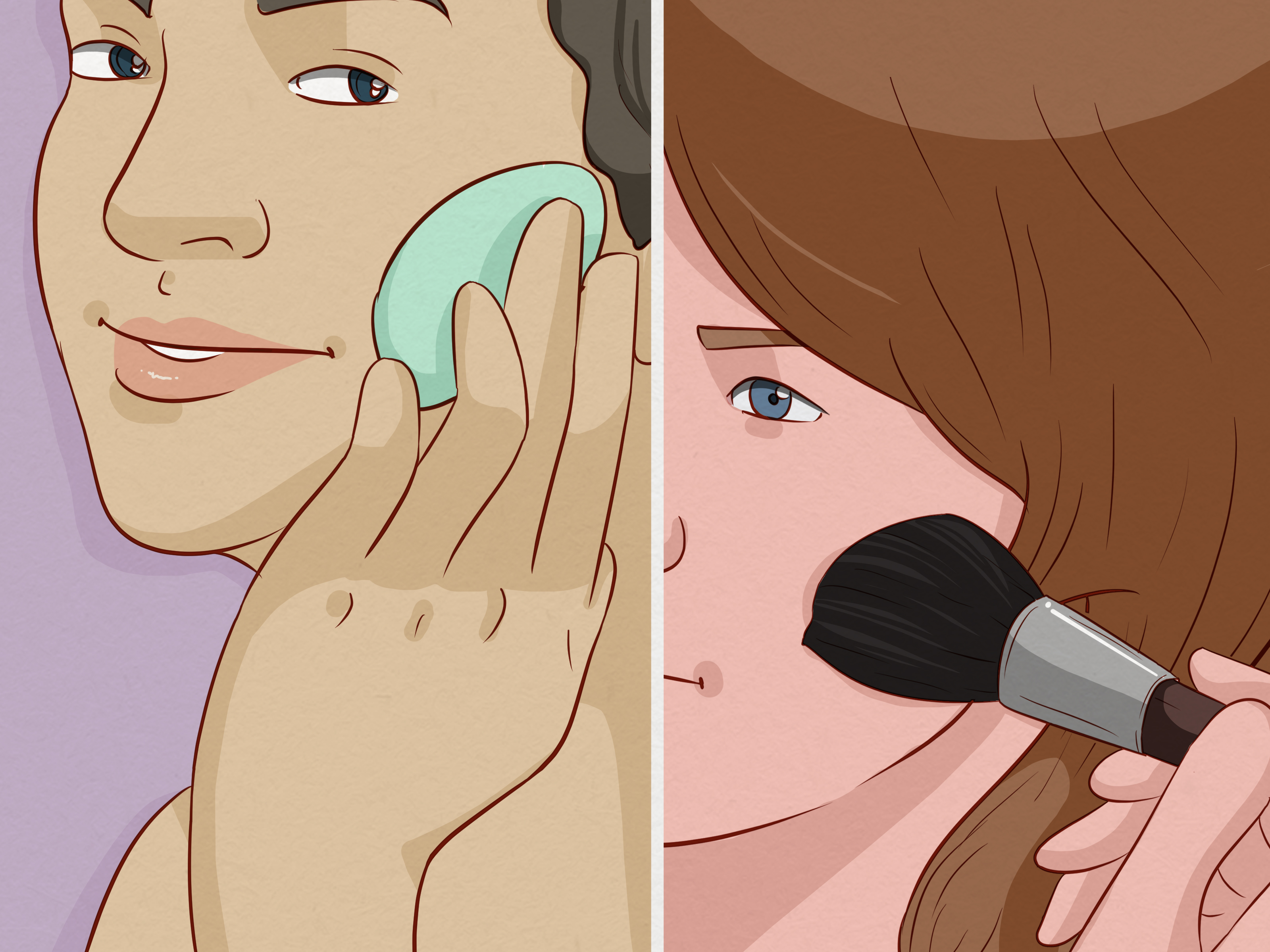
Use a finely milled translucent setting powder and a powder puff, sponge, or soft brush. Press the powder into the skin instead of sweeping aggressively. Pressing helps lock foundation in place without moving the product underneath.
Focus on these high-transfer areas:
- Jawline
- Under the chin
- Sides of the face
- Around the mouth
- Neck, if you apply makeup there
- Bridge of the nose if you wear sunglasses
- Any area that touches a collar, scarf, mask, or hat
For extra hold, try a mini baking technique only on contact points. Press a small amount of powder onto the jawline or under the chin, leave it for a few minutes, then dust away the excess. This can be helpful for weddings, photo shoots, stage performances, summer events, or any situation where your clothes cost more than your confidence can afford to stain.
Blot Before You Powder
If your skin is oily, blot before adding powder. Pressing powder directly on top of oil can create a thick, patchy layer that still transfers. Use blotting paper, tissue, or a clean sponge to lift shine first, then apply powder. This keeps the finish smoother and helps the powder do its job.
Finish With Setting Spray
Setting spray helps melt layers together and reduce the powdery look. It can also improve makeup wear, especially in heat or humidity. Hold the bottle about 8 to 12 inches from your face and mist in an “X” and “T” pattern, or simply spray evenly across the face. Then let it dry completely before touching your skin or putting on clothing.
For makeup transfer prevention, a matte or long-wear setting spray is usually better than a very dewy one. Dewy sprays can look fresh, but some formulas add slip. If your main enemy is a white shirt collar, choose hold over glow in the areas that rub.
Do Not Forget Lipstick Transfer
Lipstick is another frequent offender, especially on scarves, collars, napkins, and sleeves. To prevent lipstick transfer on clothes, line and fill the lips with lip liner, apply lipstick in thin layers, blot with tissue, then apply a second light layer. For extra staying power, place a single-ply tissue over your lips and lightly tap translucent powder over the tissue. This sets the color without dumping powder directly into your mouth, which is both unpleasant and not the snack anyone asked for.
Liquid matte lipsticks and lip stains usually transfer less than creamy bullets or glosses. If you love gloss, wear it proudly, but know that it is more likely to travel. Gloss has vacation energy.
3. Dress Smart and Protect Your Clothes From Friction
The third way to prevent makeup transfer on clothes is not about makeup at all. It is about reducing contact. Even perfectly set makeup can move if fabric repeatedly rubs against it. Your outfit strategy matters just as much as your setting spray.
Get Dressed Before Applying Makeup When Possible
The easiest prevention method is also the most overlooked: put on your outfit before doing your makeup. This works especially well with tight necklines, white shirts, turtlenecks, dresses, and anything that requires a small wrestling match to pull over your head.
If you must apply makeup first, protect your outfit while dressing. Use a clean silk scarf, satin scarf, or makeup hood over your face when pulling garments over your head. A button-down shirt, robe, zip-front hoodie, or wrap dress can also save you from the dreaded neckline smear.
Let Makeup Dry Before Fabric Touches It
After applying foundation, powder, and setting spray, give everything time to dry. This is not the moment to immediately bury your chin into a scarf and sprint out the door. Let your setting spray fully evaporate. If your skin still feels tacky, wait a little longer or lightly press powder onto transfer-prone spots.
Use Barriers for Special Outfits
For formalwear, bridal gowns, uniforms, costumes, or expensive jackets, create a barrier while getting ready. Place a towel or cape around your shoulders. Keep a robe on until the last possible moment. If you apply body makeup to your chest, shoulders, arms, or legs, use a generous amount of setting powder, allow it to sit, buff away the excess, and finish with setting spray if the formula allows.
Body makeup deserves extra caution because it touches clothing more directly than face makeup. Let it dry fully before dressing. If the product instructions recommend powder, follow them. Do not apply body shimmer five minutes before sliding into a satin dress unless you enjoy suspense.
Handle Makeup Stains Quickly
Even with great prevention, accidents happen. When makeup gets on clothes, act quickly. Do not rub the stain aggressively; rubbing can push pigment deeper into the fabric. Instead, lift excess foundation with the edge of a spoon or card. For powder makeup, try blowing or lifting away loose powder before adding liquid, because wetting powder pigment can turn it into paste.
Use a prewash stain remover, heavy-duty liquid detergent, or a small amount of grease-fighting dish soap on washable fabrics. Let it sit according to the product directions, then launder using the warmest water safe for the garment. Always check the stain before using the dryer. Heat can set leftover makeup stains and make them much harder to remove. If the item is delicate, silk, wool, vintage, embellished, or labeled dry-clean only, take it to a professional cleaner instead of conducting chemistry experiments in your bathroom sink.
Common Mistakes That Make Makeup Transfer Worse
Some habits accidentally increase makeup transfer. The first is applying too much moisturizer immediately before foundation. Hydrated skin is good; slippery skin is not. The second mistake is using thick foundation to cover areas that only need spot concealing. More product usually means more product available to move.
Another mistake is setting only the center of the face while ignoring the jawline and neck. Many people powder the nose but forget the exact place where collars touch. If your shirt is stained under the chin, your powder placement needs to move south.
Finally, avoid using random household hacks on expensive clothing without testing first. Some internet tricks may work on one fabric and ruin another. Hairspray, rubbing alcohol, micellar water, and dish soap can all behave differently depending on dye, fiber, and finish. When in doubt, test an inside seam or consult a cleaner.
A Simple No-Transfer Makeup Routine You Can Try Tomorrow
Here is a practical routine for everyday wear:
- Cleanse and moisturize lightly.
- Apply sunscreen and let it settle.
- Use primer only where needed.
- Apply thin foundation layers, keeping the jawline light.
- Blend with a sponge to remove excess product.
- Press translucent powder into the jawline, chin, sides of the face, and neck.
- Apply setting spray and let it dry completely.
- Put on scarves, jackets, or collars carefully after the makeup has set.
This routine is not complicated, but it is intentional. Instead of throwing more product at the problem, it uses smarter placement. That is the difference between makeup that lasts and makeup that files a transfer request to your blouse.
Real-Life Experiences and Practical Lessons From Makeup Transfer Battles
Anyone who wears makeup regularly has probably had at least one “how did foundation get there?” moment. The funny thing about makeup transfer is that it often appears in places you do not expect. A collar stain makes sense. A foundation mark on the inside of a handbag? Less logical, but somehow still possible. Over time, a few real-world lessons become clear.
The first lesson is that white clothing requires a different level of planning. A white button-down shirt can look crisp, elegant, and expensive until the neckline meets bronzer. For white tops, the safest approach is to get dressed first, apply makeup second, and keep foundation away from the neck unless absolutely necessary. If the face and neck need to match, use the thinnest possible layer and set it thoroughly. A little powder under the jaw can save a lot of laundry regret later.
The second lesson is that scarves are beautiful but sneaky. In cold weather, people often blame foundation when the real issue is repeated friction. A scarf wrapped tightly around the chin will rub away almost anything, especially creamy foundation or tinted moisturizer. A better approach is to use a soft scarf, avoid pressing it directly into the lower face, and powder the chin area before leaving home. If you are wearing a dark scarf, check whether it sheds fibers too; sometimes the scarf is transferring onto the makeup, not just the other way around.
The third lesson is that “more setting spray” is not always the answer. Setting spray helps, but drowning the face can re-wet makeup and make it sticky. A fine, even mist works better than a facial thunderstorm. Let the first mist dry before deciding whether you need more. If your makeup still transfers after setting spray, the problem may be too much foundation, not too little spray.
The fourth lesson is that touch-ups should be gentle. When makeup starts to separate, piling on powder can create texture and still stain clothing. Blot first, then powder lightly. If the lower face has already rubbed off, it is often better to smooth the edge with a sponge than to rebuild a full layer in public. Nobody needs a jawline renovation in the office bathroom.
The fifth lesson is that body makeup must be treated like a special event product, not a casual lotion. If you use body foundation on legs, shoulders, or chest, give it serious drying time. Set it with powder if recommended, then test it by pressing a tissue against the skin. If pigment appears on the tissue, it will probably appear on your dress, chair, or car seat too. Better to find out with a tissue than with someone else’s beige sofa.
The final lesson is that prevention feels fussy only until it saves your outfit. Once the routine becomes automaticthin layers, targeted powder, setting spray, careful dressingit adds only a few minutes. And those few minutes can be the difference between walking into a meeting looking polished and walking in with a collar that says, “I hugged my foundation this morning.”
Conclusion
Preventing makeup transfer on clothes does not require a professional glam squad or a suitcase full of products. It comes down to three reliable habits: prep your skin and choose long-wear formulas, set makeup strategically with powder and setting spray, and reduce friction when dressing. The best routine is not the heaviest one; it is the one that uses the right product in the right place.
For everyday wear, keep foundation thin near the jawline, powder the areas that touch clothing, let setting spray dry fully, and protect your outfit while getting dressed. For special events, test your makeup with a tissue before leaving the house. If pigment transfers during the test, add powder, wait longer, or rethink the formula. Your clothes deserve to stay clean, and your makeup deserves to stay on your face where it worked very hard to be cute.