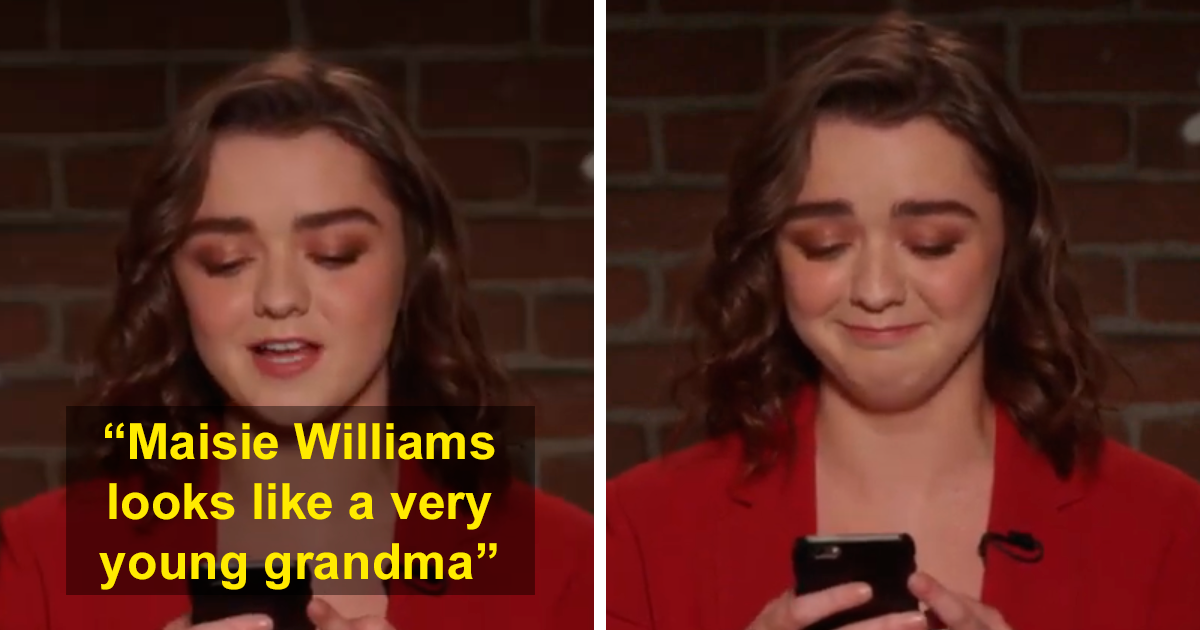
Fame brings red carpets, luxury dressing rooms, enthusiastic fans, and apparently thousands of strangers with strong opinions about your face. On Jimmy Kimmel Live!, the long-running “Celebrities Read Mean Tweets” segment turns that strange side effect of stardom into comedy by asking famous people to read cruel, ridiculous, and occasionally creative social media insults aloud.
The concept could not be simpler. A celebrity holds a phone, reads an unfiltered comment about themselves, and reacts while the camera keeps rolling. Some stars laugh until they can barely finish the sentence. Others answer with a perfectly timed comeback. A few simply stare into the camera as though reconsidering humanity’s access to Wi-Fi.
What makes these viral celebrity moments so entertaining is not merely the insult. The magic comes from watching a carefully polished public figure respond without a script. Here are 15 celebrities whose Mean Tweets reactions transformed online negativity into comedy gold.
Why Jimmy Kimmel’s Mean Tweets Became a Viral Phenomenon
“Celebrities Read Mean Tweets” first succeeded because it reversed the usual relationship between famous people and anonymous critics. Social media users normally throw insults from a comfortable distance. The segment suddenly places their words in the celebrity’s hands and lets millions of viewers watch the consequences.
That reversal creates several layers of comedy. The tweet may be absurd, the celebrity’s delivery may improve it, and the reaction can deliver an entirely new punchline. A five-second pause from Bill Murray or a raised eyebrow from Julia Louis-Dreyfus can accomplish more than a carefully rehearsed monologue.
The series also gently punctures the mythology surrounding fame. Movie stars may have personal trainers and award-winning lighting teams, but they still recognize a bizarre insult when they see one. Their willingness to laugh at themselves makes them more relatable while making the original trolls look considerably less powerful.
15 Priceless Celebrity Mean Tweets Reactions
“`
1. Ryan Gosling Answered Like a Gentleman
Ryan Gosling received an unusually specific observation claiming that he always appeared to be silently struggling with an embarrassing bodily function. Instead of protesting, looking offended, or calling his publicist, Gosling calmly replied, “Because I’m a gentleman.”
The comeback worked because he refused to fight the premise. He accepted the ridiculous image, added old-fashioned manners, and turned the insult into a character trait. Somewhere, a troll realized they had accidentally written the setup for Gosling’s joke.
2. Chris Evans Could Not Stop Laughing
One user described Chris Evans as a stupid, bearded, sweater-wearing dork in an aggressively capitalized message. Evans immediately burst into laughter. There was no defensive speech and no attempt to remind viewers that he had played Captain America. He simply enjoyed the magnificent overcommitment of the insult.
His reaction demonstrated an important Mean Tweets principle: when an attack sounds like an angry child describing a substitute teacher, laughter may be the only reasonable response.
3. Daniel Radcliffe Survived the Aardvark Comparison
Daniel Radcliffe was labeled one of God’s least attractive creations since the aardvark. That is a remarkably ambitious comparison. It combines theology, zoology, and celebrity criticism in a sentence that probably took longer to write than expected.
Radcliffe handled the comment with amused composure. Rather than acting wounded, he seemed entertained by its weirdness. After spending much of his childhood fighting fictional dark magic, being compared with a harmless burrowing mammal apparently did not qualify as a crisis.
4. Michael B. Jordan Appreciated the Mustache Critique
A tweet targeting Michael B. Jordan focused on his mustache, suggesting that the facial hair was not helping his otherwise celebrated appearance. Jordan cracked up while reading it.
That laugh made the moment more charming than any polished comeback could have been. He appeared to understand that even extremely attractive movie stars sometimes make questionable grooming decisions. The rest of us finally had representation.
5. Julia Louis-Dreyfus Shrugged Off Retirement Advice
Julia Louis-Dreyfus encountered a viewer who had decided it was time for her to retire. She was not especially troubled by this unsolicited career consultation.
Her composed response carried the confidence of someone with a legendary comedy résumé and no urgent need to impress a stranger typing from a couch. The contrast was delicious: one person offered a grand declaration, while Louis-Dreyfus treated it like a coupon that had already expired.
6. Jennifer Lawrence Asked the Only Logical Question
Jennifer Lawrence read a sexually suggestive tweet speculating about her enthusiasm in private situations. Her response was immediate: “How do they know?”
The line was perfectly suited to Lawrence’s famously unfiltered public personality. Instead of being embarrassed, she pretended the anonymous writer had somehow obtained classified intelligence. The joke redirected attention away from the insult and toward the deeply strange confidence required to post it.
7. Gal Gadot Looked Genuinely Confused
Gal Gadot received a grammatically adventurous critique of her appearance. Her reaction was less anger than visible confusion, as though she were attempting to determine whether she had been insulted, complimented, or handed an unfinished word puzzle.
That puzzled expression became the punchline. Some online insults are so poorly assembled that responding to them would require technical support. Gadot’s face seemed to ask what millions of viewers were thinking: “Is there a second draft of this tweet?”
8. Benedict Cumberbatch Chose Theatrical Defiance
Benedict Cumberbatch has been compared with everything from an elegant aristocrat to a suspiciously intelligent otter, so he entered Mean Tweets with useful experience. When confronted with a particularly hostile comment, he responded with theatrical confidence, borrowing a Beyoncé-inspired attitude and adding a defiant gesture.
It was not merely a comeback. It was a tiny performance, complete with timing, physical comedy, and the unmistakable energy of a man who knew the camera was still running.
9. Bill Murray Cracked Up Before Viewers Did
Bill Murray’s Mean Tweets appearance proved that sometimes the celebrity’s laugh is funnier than the original comment. Rather than treating the insult as a threat to his dignity, Murray appeared delighted by its absurdity.
His reaction felt spontaneous and generous. He did not crush the commenter with a superior joke; he simply found amusement in the situation. When Bill Murray laughs at an insult aimed at Bill Murray, everyone temporarily becomes part of Bill Murray’s private comedy club.
10. John Stamos Investigated the Belly-Button Allegation
John Stamos read a tweet criticizing his belly button and effectively conceded that the observation had some merit. It was a wonderfully low-stakes scandal.
The moment worked because Stamos approached the accusation as though the internet had uncovered a minor but legitimate irregularity. He did not deny the evidence. He did not demand an investigation. He accepted that even television’s most photogenic uncle may possess one imperfect piece of anatomy.
11. Sofia Vergara Refused to Be Outdone
Sofia Vergara was handed an explicit personal insult, but the original writer underestimated both her timing and her willingness to respond. She fired back with an adult comeback that was sharper, faster, and much more memorable than the tweet itself.
Her reaction illustrates why attacking a professional comic performer is risky. A troll may spend ten minutes constructing a nasty line, only to watch Vergara dismantle it in two seconds with better delivery.
12. Eminem Turned Criticism Into a Concert Setup
During a Coachella variation of the segment, Eminem heard comments suggesting that his best years were behind him. Instead of launching a furious defense, he admitted that one critic “kinda” had a point.
He then asked the audience whether he could take them back to the period when he was supposedly good and launched into classic material. It was an unusually effective response: accept the joke, control the narrative, and answer criticism with a stadium performance. Most people do not have that third option available.
13. Lizzo Converted Body-Shaming Into a Tour-Bus Flex
A troll attempted to body-shame Lizzo by associating her with fast food and public transportation. She laughed, acknowledged that she was a large woman, and pointed out that the bus she rode was a tour bus. She then challenged the commenter to produce their own.
The response was powerful because it did not seek approval. Lizzo took every intended insult, removed its sting, and replaced it with evidence of her success. The troll brought a plastic spoon to a verbal sword fight.
14. Dakota Johnson Delivered One Perfectly Flat Word
Dakota Johnson struggled to contain her laughter while reading a crude comparison involving her nose. After absorbing the comment, she replied with a dry, one-word “Cool.”
That minimalist response was funnier than an elaborate counterattack. Johnson’s delivery suggested that the information had been received, processed, and filed in a cabinet labeled “Things I Will Never Think About Again.” Deadpan comedy rarely requires additional paperwork.
15. Tom Holland Remembered He Was Spider-Man
Tom Holland read a blunt British insult calling him an “absolute wanker.” His comeback was equally simple: the target of the insult was also Spider-Man.
It was the celebrity equivalent of playing an unbeatable card. The troll had an opinion; Holland had web-shooters, blockbuster movies, and membership in the Marvel universe. The exchange ended before it technically became an exchange.
“`
What Makes These Celebrity Reactions So Satisfying?
“`
They Remove the Troll’s Power
An online insult depends heavily on the target treating it seriously. When a celebrity laughs, agrees, or produces a better punchline, the original comment loses its authority. The words remain mean, but they no longer control the emotional direction of the moment.
They Reveal Different Comedy Styles
The reactions also function as miniature personality tests. Ryan Gosling uses polished understatement. Jennifer Lawrence embraces chaotic honesty. Dakota Johnson prefers dry minimalism. Lizzo turns an attack into self-celebration, while Chris Evans simply allows genuine laughter to carry the scene.
They Humanize Famous People
Celebrity culture often presents stars as distant products assembled from stylists, interviews, and carefully selected photographs. Mean Tweets removes much of that protection. A spontaneous laugh, uncomfortable pause, or confused expression reminds viewers that public figures still experience words as people do.
They Expose the Absurdity of Online Cruelty
The format also makes anonymous hostility look ridiculous. A nasty sentence may feel powerful when posted into a feed, but it sounds different when read slowly by its intended target under studio lighting. Many comments collapse under that attention because they contain more confidence than wit.
“`
The Serious Side of a Very Funny Segment
It is possible to enjoy celebrity comebacks while recognizing that online abuse is not harmless. Research on internet behavior has repeatedly found that name-calling, humiliation, threats, and sustained harassment affect ordinary users as well as public figures. Fame may provide access to publicists and supportive fans, but it does not make a person emotionally bulletproof.
The Mean Tweets production has generally selected comments that can function as jokes rather than credible threats. That distinction matters. Playful roasting between willing participants is entertainment; repeated abuse directed at someone who did not agree to participate is harassment.
The healthiest lesson is therefore not that cruel comments are acceptable when the target is famous. It is that humor can sometimes neutralize an insult, and that everyone posting online should remember a real person may eventually read what they write.
A Viewer’s Experience: What Mean Tweets Feels Like Beyond the Punchlines
Watching a compilation of celebrity Mean Tweets creates an unusual mixture of secondhand embarrassment and anticipation. The phone appears, the celebrity looks down, and the viewer immediately prepares for impact. There is a tiny pause before the insult is read aloud, and that pause often becomes as important as the words. We are waiting to discover whether the star will laugh, freeze, retaliate, or quietly wonder why their agent agreed to this.
The most enjoyable viewing experience comes from reactions that feel unplanned. A polished comeback can be impressive, but uncontrolled laughter is often better. Chris Evans breaking into a grin or Michael B. Jordan cracking up makes the audience feel included in an authentic moment. The celebrity is not presenting a carefully managed image; they are responding the way a friend might respond after discovering an especially strange comment in a group chat.
There is also something oddly comforting about seeing highly successful people confronted with petty criticism. It does not diminish their achievements. Instead, it reminds viewers that no level of beauty, talent, wealth, or popularity produces universal approval. Ryan Gosling can possess famous bone structure and still encounter someone determined to analyze his facial expressions. Gal Gadot can play a superhero and still receive a comment that barely survives its own grammar.
That realization can be useful for anyone who has felt overly affected by a negative comment. The segment demonstrates several possible responses. You can laugh at the exaggeration. You can agree with the harmless part. You can answer with a clever line, or you can give the insult no more than a flat “Cool.” Not every criticism deserves a defense, and not every stranger deserves access to your emotional energy.
At the same time, the experience becomes uncomfortable when an insult stops being inventive and becomes purely cruel. The weakest tweets are often those attacking bodies, age, gender, or personal characteristics without offering any actual joke. In those moments, the celebrity’s reaction may still be funny, but the viewer becomes more aware of the ugly behavior beneath the format. Humor can transform cruelty, yet it does not magically make every cruel statement acceptable.
The best Mean Tweets moments therefore operate on two levels. They deliver immediate entertainment, but they also demonstrate perspective. The celebrities cannot prevent strangers from posting nonsense. They can, however, decide what the nonsense means. By laughing, shrugging, or responding on their own terms, they reclaim control of the scene.
That may be the most valuable experience the segment offers. Social media encourages instant reactions, endless arguments, and the belief that every opinion requires an answer. Mean Tweets suggests another possibility: read the comment, recognize its absurdity, make the better joke, and continue with your day. Having Spider-Man on your résumé is helpful but not strictly required.