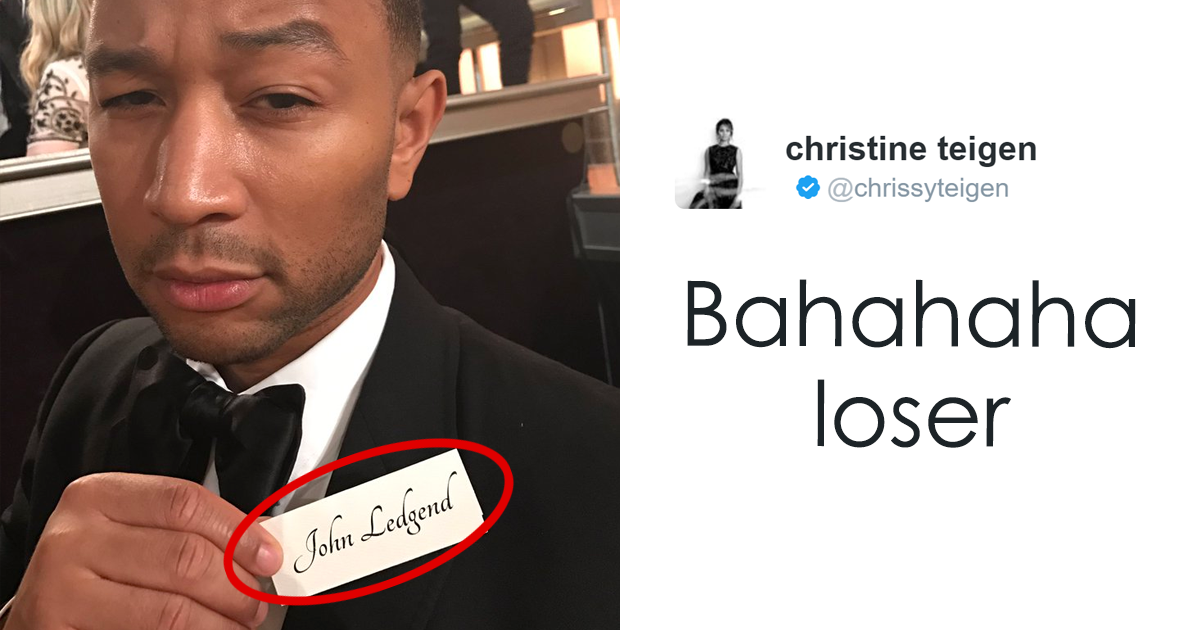
Long before every celebrity had a carefully calibrated social strategy, a brand voice guide, and three people checking whether a joke might anger somebody in Nebraska, Chrissy Teigen treated Twitter like the world’s loudest group chat.
She tweeted about food. She tweeted about terrible television. She roasted her husband, John Legend, with the relaxed confidence of someone who knew he would still be downstairs making breakfast the next morning. She shared parenting disasters, random observations, awkward celebrity moments, political opinions, and thoughts that probably should have stayed inside her headwhich, naturally, was precisely why millions of people wanted to read them.
At the height of her Twitter fame, Teigen’s feed inspired enormous collections of memorable posts, including roundups containing dozens or even more than a hundred examples. Entertainment outlets repeatedly described her as a social-media powerhouse because her account mixed everyday observations with unusually fast, conversational humor. Vogue noted that Twitter and Instagram helped turn her from an already recognizable model into a much larger pop-culture personality, while publications including BuzzFeed, E! News, Glamour, TIME, Vanity Fair, and others regularly cataloged her funniest online moments.
So what made Chrissy Teigen’s Twitter so entertaining? It wasn’t simply that she told jokes. Plenty of celebrities tell jokes. Teigen’s secret was making fame look temporarily irrelevant. For a few sentences at a time, she sounded less like somebody attending the Grammys and more like the funniest person complaining from the other end of your couch.
Why Chrissy Teigen’s Twitter Humor Worked So Well
Most celebrity social accounts traditionally do one of three things: promote a project, display an immaculate vacation, or post a photograph so professionally lit that you start wondering why your own breakfast never has cinematic depth of field.
Teigen went in another direction.
Her Twitter persona was deliberately messy. She could move from an observation about fast food to a complaint about her husband, then discuss a television show, motherhood, politics, or a weird question that suddenly seemed extremely important at 1:14 a.m.
The jokes often worked because they felt unfinished in a good way. They weren’t stand-up routines. They were thoughts caught while escaping.
She Made Tiny Problems Sound Monumental
One of Teigen’s most reliable comedy techniques was taking a microscopic inconvenience and giving it the emotional weight of an international crisis.
A dog looking disappointed became an existential question. Accidentally becoming a kombucha-and-yogurt person became evidence that life had defeated her younger self. Being unable to distinguish a Kidz Bop recording from the original song became a full intellectual emergency.
BuzzFeed’s collections of her posts repeatedly highlighted this style: ordinary confusion delivered with complete seriousness. The subject barely mattered. The joke came from the gap between how trivial the problem actually was and how urgently Teigen appeared to need answers.
That is extremely reusable comedy. Everyone has experienced the moment when a minor annoyance becomes, for approximately 45 seconds, the most important issue facing civilization.
John Legend Was Her Favorite Recurring Character
If Teigen’s Twitter account was a sitcom, John Legend had the hardest job in Hollywood: playing himself.
Legend may be an EGOT-winning musician capable of writing romantic songs heard at approximately 87 percent of American weddings, but on his wife’s timeline he was frequently just John, the guy doing something mildly ridiculous in the next room.
She joked about being angry with the real John because of something dream-John had done. She teased him for getting pop-culture references wrong. She mocked overly protective Legend fans who seemed convinced that she had somehow stolen him from them personally.
One famous running style involved undermining the very idea that they were an impossibly glamorous celebrity couple. In Teigen’s version of domestic bliss, true romance might involve laziness, television, food, teasing, and privately blaming your spouse for hypothetical crimes.
E! News and BuzzFeed both devoted entire features to Teigen trolling Legend, while Vanity Fair frequently highlighted the couple’s ability to make fun of themselves and one another. Legend himself has acknowledged that Teigen’s online personality reflects her genuine sense of humor rather than an invented social-media character.
The Joke Was Usually Affection, Wearing a Fake Mustache
The reason those jokes rarely felt cruel was simple: the affection underneath them was obvious.
Teigen could spend all week making Legend the punch line and then openly share a story about him changing travel plans simply to spend a few hours with her when she was having a difficult time. ABC News documented one such moment in 2019, when she explained that Legend rerouted an exhausting trip so they could have dinner and watch television together.
That contrast made the teasing better. The audience knew the joke wasn’t “my husband is terrible.” It was “my husband is wonderful, which unfortunately means I have excellent material.”
Food Was Practically a Supporting Cast Member
Before the Cravings brand grew into a major food and lifestyle business, food was already one of the central characters in Teigen’s online universe.
She could discuss an old fast-food egg roll with the level of analysis normally reserved for Michelin-starred restaurants. Chicken pot pie deserved cultural reconsideration. Snacks could be emotional support systems. Refrigerator trips could become tiny adventures.
Her food humor worked because she clearly liked food rather than treating eating as an embarrassing celebrity secret. The pleasure was part of the joke.
E! News repeatedly featured Teigen’s fast-food observations among her funniest posts, while media profiles emphasized how naturally her cooking identity and social-media personality overlapped.
There was something refreshing about watching a celebrity discuss leftover takeout with more enthusiasm than a red-carpet outfit.
Motherhood Gave Her an Entire New Comedy Department
When Teigen became a parent, her feed gained a seemingly unlimited source of new material: children.
And children, as every parent knows, are unpaid comedy writers with no respect for deadlines, privacy, clean clothing, or sleep.
Teigen shared the unglamorous parts of pregnancy and motherhood rather than presenting parenting as an endless montage of coordinated pajamas. One much-discussed post joked about discovering an unexpected postpartum reality after returning home from giving birth. Other posts covered crying children, breastfeeding, pumping, sleep deprivation, parental judgment, and the endless confusion of keeping tiny humans functioning.
Glamour assembled collections of Teigen’s funniest motherhood posts, while ABC News reported on a viral observation in which she admitted that after becoming a parent, hearing somebody else’s child crying in public could actually feel strangely reassuring because at least the noise wasn’t coming from her own kid.
She Found Humor Without Pretending Parenting Was Easy
Some of her strongest parenting posts weren’t simply jokes. They mixed comedy with candor.
When breast milk spilled, she documented the absurd rescue operation. She later discussed breastfeeding pressure and advocated normalizing formula feeding for parents who needed it. That combinationlaughing at the logistical chaos while acknowledging the emotional difficultymade many posts resonate beyond celebrity entertainment.
Years later, the same style continued on other social platforms. In 2025, People reported that Teigen jokingly asked Legend to confirm their son Miles’s age, blaming the confusion on having too many children. The platform may have changed, but the basic formula remained wonderfully intact: family chaos arrives, Teigen reports from the scene.
She Was an Elite Live-Tweeter
Watching television is enjoyable. Watching television while somebody funny narrates the ridiculous parts can be better.
Teigen understood this.
Reality television, awards shows, celebrity events, and major broadcasts became raw material. She watched shows such as Love Island with the curiosity of an anthropologist who had just encountered an unfamiliar civilization populated entirely by extremely attractive people.
When Legend starred in Jesus Christ Superstar Live in Concert, Teigen turned the broadcast into a family commentary event. E! News later highlighted her television observations as a major part of her social-media appeal.
Even when Teigen wasn’t tweeting, her reactions could become jokes. TIME reported that a facial expression she made during the 2018 Emmys quickly became a meme after cameras caught her visibly reacting to the opening monologue.
Some people attend award shows.
Chrissy Teigen attended award shows and somehow became supplementary programming.
Then There Were the Clapbacks
No retrospective of Chrissy Teigen’s funniest tweets can ignore the clapbacks.
Teigen rarely approached criticism with the traditional celebrity strategy of pretending she had never seen it. She saw it. Sometimes she responded. Sometimes the response arrived carrying a flamethrower.
Her online arguments ranged from random critics to celebrities and political figures. One particularly famous chapter involved Donald Trump, who blocked Teigen on Twitter in 2017 after years of criticism from her. ABC News and CBS News reported that the immediate trigger appeared to be an extraordinarily simple dismissal: “lol no one likes you.”
In 2019, another exchange involving Trump, Teigen, and Legend generated international attention after Trump complained about the couple on Twitter. Teigen’s profane response immediately went viral and became one of the defining examples of her refusal to adopt cautious celebrity language.
Subtle? Absolutely not.
Memorable? Extremely.
Why 148 Funny Moments Never Felt Like 148 Versions of the Same Joke
A giant collection of celebrity tweets could easily become exhausting. What helped Teigen’s archive remain entertaining was variety.
One post might be domestic comedy. The next could involve food. Then politics. Then an award show. Then a dog. Then motherhood. Then a strange interaction with a stranger. Then John Legend misunderstanding something obvious.
The connecting thread wasn’t subject matter. It was perspective.
Teigen tended to write from the position that almost everythingincluding herselfwas potentially ridiculous.
That self-deprecation mattered. Without it, relentless clapbacks could have made her timeline feel combative. Instead, she regularly made herself the joke too. She could ridicule glamorous celebrity culture while being part of glamorous celebrity culture, which allowed followers to enjoy the contradiction rather than pretend it didn’t exist.
The Funniest Feed Wasn’t Always an Easy Place to Live
The mythology around Teigen’s Twitter presence sometimes made it appear effortless, but the relationship between celebrity and social media became increasingly complicated.
She temporarily made her account private years before eventually deactivating it in March 2021. At that point, she had more than 13 million followers and explained that the negative side of the platform had begun outweighing the positive side. The Los Angeles Times, Washington Post, CBS News, and others covered her departure. She returned roughly three weeks later, saying she missed interacting with people and laughing throughout the day.
That history adds useful perspective to the classic funny-tweet collections. An account capable of making millions laugh can also expose its owner to millions of opinions simultaneously.
Not every joke landed, either. In 2019, Teigen apologized after a joke about her mother’s habit of repeatedly losing expensive wireless earbuds was criticized as insensitive to people struggling financially.
That’s part of the reality of rapid-fire social media: immediacy creates spontaneity, but spontaneity occasionally produces a joke that should have spent another five minutes in the oven.
The Comedy Formula Behind Chrissy Teigen’s Best Tweets
1. Write Like You’re Talking to One Friend
Teigen’s most memorable posts rarely sounded like celebrity announcements. They sounded conversational. Lower stakes made the jokes feel closer.
2. Be Specific
“Marriage is funny” is not particularly funny.
Your husband calling a famous movie by the wrong name? Now we have a scene.
3. Admit the Embarrassing Part
Social media encourages people to edit themselves into superheroes. Teigen often went in the opposite direction, volunteering the lazy thought, questionable snack, confused question, or parenting failure.
4. Don’t Over-Explain the Punch Line
Many of her strongest posts ended exactly when the reader understood the absurdity. No paragraph explaining why everyone should laugh. No inspirational conclusion. Just the joke and an exit.
5. Let Familiar People Become Characters
John, the kids, pets, relatives, famous friends, and random internet strangers created continuity. Followers weren’t simply reading individual jokes; they gradually learned the cast.
What Revisiting 148 Chrissy Teigen Twitter Moments Feels Like Today
Going through a huge archive of old celebrity tweets is a surprisingly strange experience because social media moves faster than almost any other form of pop culture. A television episode from 2016 still looks like a television episode. A tweet from 2016 can feel like an artifact recovered from an archaeological dig where everyone used hashtags differently and brands were still saying things like “on fleek.”
Yet the strongest Teigen jokes haven’t aged because of Twitter mechanics. They survive because the situations are still familiar.
You may not be married to John Legend, but you have probably been annoyed at somebody you love for an objectively stupid reason. You may not be sitting courtside at an NBA game or attending the Oscars, but you know the sensation of realizing a camera caught your worst facial expression. You may not own a cookbook empire, but you have almost certainly stared into a refrigerator expecting new possibilities to magically appear since the last time you opened it 11 minutes earlier.
That relatability becomes more noticeable when dozens of posts are viewed together. The celebrity details start looking like decoration around extremely ordinary emotions: boredom, embarrassment, hunger, exhaustion, jealousy, affection, confusion, parental panic, and the powerful desire to remain horizontal on a couch.
Another interesting experience is noticing how much Teigen’s funniest material depended on timing. Many jokes are tiny reactions rather than carefully constructed stories. Somebody says something ridiculous; Teigen responds before the moment cools down. A television scene happens; the observation appears while everyone else is watching it. A domestic inconvenience occurs; instead of turning it into a polished anecdote six months later, she reports directly from the disaster zone.
That immediacy is difficult to reproduce deliberately. The second someone tries too hard to “sound relatable,” audiences can usually smell the marketing meeting.
Teigen’s classic feed often felt funny because the posts seemed unnecessary. Nobody required an update about an old egg roll. Humanity could have survived without knowing that John Legend got a movie title wrong. The republic would have continued functioning even if Teigen had kept an odd dog thought to herself.
But that was precisely the pleasure.
Twitter at its funniest wasn’t always about delivering valuable information. Sometimes it was simply a place where another human being noticed something ridiculous five seconds before you did.
Revisiting these moments also reveals why celebrity social media became so influential during that era. Before feeds became increasingly professionalized, monetized, optimized, and algorithmically engineered, a famous person’s timeline could create an unusual illusion of proximity. Fans weren’t only seeing photo shoots and press releases. They were seeing half-formed thoughts.
Of course, that intimacy had consequences. Teigen’s eventual breaks from Twitter demonstrated the uncomfortable bargain behind the entertainment: giving millions of people direct access to your thoughts also gives millions of people direct access to you.
That makes the old funny posts more interesting in retrospect. They’re not simply evidence that Chrissy Teigen knew how to make Twitter laugh. They’re snapshots from an era when posting frequently, impulsively, and personally could transform a celebrity’s entire public identity.
And somewhere inside those snapshots, John Legend is probably still being blamed for something.
Conclusion: Why Chrissy Teigen Became a Twitter Comedy Institution
The best explanation for Teigen’s Twitter success is also the simplest: she was willing to look ridiculous.
She didn’t always behave like a celebrity protecting an image. She behaved like a person with internet access and a thought that needed to leave her brain immediately.
Across food jokes, parenting disasters, reality-TV commentary, celebrity encounters, political fights, marriage banter, awkward questions, and spectacularly unnecessary observations, Chrissy Teigen’s Twitter humor worked because it combined confidence with self-mockery.
The famous collections of dozensand even 148memorable moments weren’t really celebrating 148 perfectly crafted jokes. They were documenting a voice. Teigen could turn a couch, a crying baby, fast food, John Legend, an awards-show camera, or an annoying stranger into a miniature comedy scene.
Twitter itself has since become X, internet culture has changed dramatically, and Teigen’s relationship with social media has evolved. But the classic posts still explain why she became one of the defining celebrity personalities of the platform’s golden age.
She was famous enough to attend the Oscars, relatable enough to fall asleep there, and online enough to understand that the internet would never let her forget it.
Note: This retrospective is newly written and synthesizes publicly documented reporting and entertainment coverage from U.S. outlets including BuzzFeed, Glamour, Vanity Fair, Vogue, TIME, E! News, People, the Los Angeles Times, The Washington Post, ABC News, CBS News, and Rolling Stone. Representative moments are paraphrased where appropriate rather than reproducing lengthy original social-media posts.