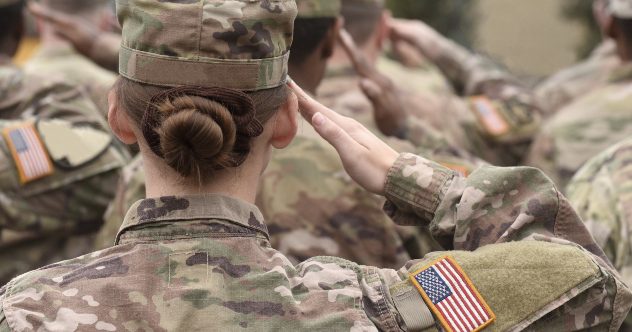
When people hear the word “military,” they often picture tanks, fighter jets, stern uniforms, and someone shouting at 5 a.m. because a sock was folded incorrectly. Fair enough. Militaries exist to defend nations, and their history is not exactly made of marshmallows. But the same systems that move armies can also move food, doctors, engineers, helicopters, clean water, vaccines, field hospitals, and hope at a speed few civilian agencies can match.
That is why some of the most powerful examples of military service are not battlefield victories, but humanitarian operations. In floods, earthquakes, epidemics, refugee crises, and remote island emergencies, armed forces have sometimes become the world’s largest emergency delivery servicewith better boots, louder aircraft, and a frighteningly intense relationship with logistics spreadsheets.
This article looks at 10 times militaries were used for good: moments when soldiers, sailors, airmen, marines, coast guardsmen, and multinational forces used their training and equipment to rescue civilians, deliver aid, restore order, and reduce suffering. These examples do not erase the complicated history of military power, but they do show something important: when disciplined force is placed under humanitarian purpose, it can become a lifeline.
1. The Berlin Airlift: Feeding a City by Air
One of the most famous examples of military humanitarian aid is the Berlin Airlift of 1948–1949. After World War II, West Berlin was surrounded by Soviet-controlled territory. When the Soviet Union blocked road, rail, and canal access to the city, millions of civilians faced a terrifying question: how do you keep a city alive when trucks and trains cannot get in?
The answer came from the sky. The United States, the United Kingdom, and allied partners launched a massive airlift to deliver food, coal, medicine, and basic supplies into West Berlin. Planes landed around the clock, often in terrible weather, turning military air transport into a flying grocery chain with wings and nerves of steel.
Why it mattered
The Berlin Airlift proved that military logistics could be used to protect civilians without firing a shot. It kept West Berlin supplied, helped prevent a broader war, and became a symbol of resolve through restraint. The mission also showed the world that aircraft could do more than bomb targets; they could keep families warm, bakeries running, and hospitals alive. Not bad for a fleet of cargo planes that probably deserved a very long nap afterward.
2. Operation Sea Angel: Relief After the 1991 Bangladesh Cyclone
In 1991, a devastating cyclone struck Bangladesh, killing tens of thousands and leaving millions affected, homeless, or cut off from help. The country’s coastal geography made relief especially difficult. Roads were damaged, islands were isolated, and ordinary delivery routes were overwhelmed.
The U.S. military joined an international response known as Operation Sea Angel. Marines, sailors, helicopters, aircraft, and landing craft helped move food, water, medical supplies, and relief teams into areas that were nearly impossible to reach by normal means.
Why it mattered
Operation Sea Angel became a model for military disaster relief. It demonstrated that amphibious forces, often designed for combat landings, could be just as valuable for reaching storm-damaged coastlines and remote islands. The operation was not glamorous in the movie-trailer sense. It was muddy, exhausting, and logistically brutal. But that is exactly the point: humanitarian work often needs people who can function when everything else has broken.
3. Operation Provide Comfort: Protecting Kurdish Refugees
After the 1991 Gulf War, hundreds of thousands of Iraqi Kurds fled toward the mountains and borders of Turkey and Iran. Many were trapped in harsh conditions with little food, shelter, or medical care. The crisis became a humanitarian emergency, with vulnerable families exposed to cold, disease, and hunger.
A multinational military operation called Operation Provide Comfort was organized to deliver aid and help create safer conditions for refugees. The mission involved air drops, relief distribution, medical support, security, and coordination among several allied forces.
Why it mattered
This was one of the clearest examples of military power used to protect displaced civilians. The operation helped stabilize a crisis in which food alone was not enough; people also needed safety. It showed that humanitarian assistance sometimes requires more than supplies. It may require transportation, protection, communication, and the ability to organize chaos before chaos starts organizing everyone else.
4. Operation Christmas Drop: The Long-Running Pacific Lifeline
Not every good military mission begins with catastrophe. Some begin with a simple act of kindness. Operation Christmas Drop started in 1952 when an Air Force crew flying near remote Pacific islands dropped supplies to islanders below. That small gesture grew into one of the longest-running humanitarian airlift traditions in the world.
Each year, U.S. and partner air forces deliver bundles of food, tools, school supplies, fishing gear, clothing, and other essentials to remote islands across the Pacific. The deliveries also help aircrews train for low-cost, low-altitude humanitarian airdrops, which can be critical when disasters strike areas without ports or usable runways.
Why it mattered
Operation Christmas Drop is proof that military humanitarian work does not always need a dramatic headline. Sometimes “good” looks like a parachute bundle landing near a small island community that depends on outside supplies. It also shows how training and generosity can overlap. Pilots practice precision drops; island communities receive useful goods. That is the rare kind of multitasking everyone can support.
5. Hurricane Katrina: Coast Guard and National Guard Rescues
When Hurricane Katrina struck the Gulf Coast in 2005, the disaster overwhelmed local systems and exposed deep failures in emergency planning. Floodwaters trapped thousands of people in homes, hospitals, rooftops, and neighborhoods that had become dangerous overnight.
The U.S. Coast Guard, National Guard, and other military elements became central to rescue and relief operations. Coast Guard helicopter crews and boat teams saved tens of thousands of people, while National Guard units helped with evacuations, security, supply distribution, medical support, and recovery operations.
Why it mattered
Katrina remains a painful chapter, but it also showed how military and quasi-military services can save lives when civilian infrastructure collapses. Rescue swimmers, pilots, medics, engineers, and guardsmen worked in extreme conditions, often improvising as they went. In plain English: they did not wait for perfect conditions, because perfect conditions had clearly evacuated the area first.
6. Operation Unified Response: Haiti Earthquake Relief
In January 2010, a powerful earthquake devastated Haiti, especially the capital, Port-au-Prince. The disaster destroyed buildings, damaged ports and roads, overwhelmed hospitals, and left enormous numbers of people injured, homeless, or searching for loved ones.
The U.S. military launched Operation Unified Response in support of the broader U.S. and international humanitarian effort. Ships, aircraft, helicopters, medical teams, engineers, and logistics specialists helped move supplies, evacuate injured people, restore airport operations, and support relief organizations on the ground.
Why it mattered
Haiti showed why military logistics can be so valuable after a major earthquake. Relief supplies are only helpful if they can actually reach people. When ports, roads, airports, and communications are damaged, military transport and engineering units can reopen pathways for everyone else. The military did not solve every problem in Haitino single organization couldbut it provided speed, lift capacity, and coordination during the critical early phase.
7. Operation Tomodachi: Japan Earthquake and Tsunami Relief
In March 2011, Japan suffered a catastrophic earthquake, tsunami, and nuclear crisis. Entire coastal communities were destroyed, infrastructure was severely damaged, and the emergency quickly became one of the most complex disasters in modern history.
The U.S. military responded with Operation Tomodachi, named after the Japanese word for “friend.” U.S. forces worked alongside Japan’s Self-Defense Forces to deliver food, water, fuel, medical supplies, transportation, search-and-rescue support, and logistical help. Ships, aircraft, and bases in Japan became hubs for relief operations.
Why it mattered
Operation Tomodachi was not just a disaster response; it was also a powerful example of alliance cooperation. The operation showed how military partnerships built during peacetime can become lifesaving networks during emergencies. It also proved that friendship, when properly organized, may involve helicopters, forklifts, fuel bladders, and someone in a command center drinking coffee that has long since surrendered.
8. Operation Damayan: Typhoon Haiyan Relief in the Philippines
In November 2013, Super Typhoon Haiyanknown locally as Yolandaslammed into the Philippines with catastrophic force. Communities were flattened, airports were damaged, roads were blocked, and survivors urgently needed food, clean water, shelter, and medical care.
The U.S. military joined the relief effort through Operation Damayan, working with the Philippine government, U.S. disaster experts, and international organizations. Marines, sailors, aircraft crews, and logistics teams helped reopen airfields, transport supplies, move displaced civilians, and support relief distribution in hard-hit areas.
Why it mattered
Operation Damayan highlighted the importance of speed. In a disaster zone, the first few days can determine whether injuries become deaths and whether temporary shortages become long-term crises. Military aircraft and forward-deployed forces helped bridge the gap between urgent need and large-scale civilian relief. The mission was a reminder that sometimes the most heroic sentence in the world is: “The runway is open again.”
9. Operation United Assistance: Fighting Ebola in West Africa
During the 2014 Ebola outbreak in West Africa, the crisis became more than a medical emergency. It threatened health systems, economies, public trust, and regional stability. Liberia, Sierra Leone, and Guinea faced severe pressure as cases rose and health workers were placed at enormous risk.
The U.S. military supported the response through Operation United Assistance, focused largely on Liberia. Service members helped build treatment units, establish command-and-control systems, train health workers, support logistics, and deploy mobile laboratory capacity. Importantly, the military’s role was not to replace doctors and nurses, but to create the infrastructure that allowed medical professionals to work more safely and effectively.
Why it mattered
This operation showed that militaries can contribute to public health without turning hospitals into barracks. Epidemic response requires movement, planning, construction, laboratory support, and disciplined protocolsareas where military systems can help. Ebola was a reminder that not every enemy has a flag. Some are microscopic, rude, and completely uninterested in ceasefires.
10. Operation Sahayogi Haat: Nepal Earthquake Relief
In April 2015, a major earthquake struck Nepal, damaging villages, roads, homes, historic sites, and mountain communities. A second strong quake followed in May, worsening the destruction and complicating relief efforts. Rugged terrain made the emergency especially difficult because many affected communities were far from easy road access.
The U.S. military supported Nepal through Operation Sahayogi Haat, meaning “Helping Hand.” Working with the government of Nepal and other partners, U.S. military personnel, aircraft, and logistics teams helped transport relief supplies, move personnel, support rescue efforts, and reach difficult areas.
Why it mattered
Nepal demonstrated one of the strongest reasons militaries are useful in disaster relief: mobility. Helicopters, cargo aircraft, and trained crews can reach places where trucks cannot. In mountainous terrain, that can be the difference between “aid is on the way” and “aid is actually here.” The operation also came with sacrifice, including the loss of service members during relief work, reminding us that humanitarian military missions can still be dangerous.
What These Good Military Missions Have in Common
These 10 examples are different in geography, time period, and mission type, but they share several important themes. First, militaries are unusually good at logistics. They can move people and supplies quickly, often with their own fuel, communications, transportation, medical support, and security. In disaster response, that matters because the clock is not polite. Hunger, infection, exposure, and injury do not wait for paperwork to stretch, yawn, and find a stapler.
Second, good military missions usually happen in support of civilian goals. The most successful humanitarian operations are not about soldiers taking over. They are about military assets helping governments, aid agencies, medical teams, and local communities do their work. The best military response is often the one that creates enough stability for civilian systems to function again.
Third, cooperation is everything. Whether in Japan, Haiti, Bangladesh, Liberia, or the Philippines, militaries performed best when they worked with local authorities and international partners. Disaster zones are crowded, confusing, emotional places. Without coordination, even generous help can become a traffic jam with helicopters.
Finally, these cases remind us that “used for good” does not mean “perfect.” Humanitarian military operations can face criticism, delays, cultural misunderstandings, political complications, and logistical mistakes. Good intent does not magically install clean water systems or rebuild trust overnight. But when measured by lives saved, supplies delivered, hospitals supported, and communities reached, these missions show that disciplined force can serve humane ends.
Experiences and Reflections: What It Feels Like When Militaries Are Used for Good
To understand why these stories matter, imagine the experience from the ground rather than from a policy briefing. You are a parent in a flooded city, standing on a roof with your children because the stairs disappeared under brown water. You hear a helicopter before you see it. To someone far away, that aircraft is a military asset. To you, it is the sound of another chance.
Or imagine living on a remote Pacific island where supply lines are fragile even in normal times. A military cargo plane appears overhead, and soon bundles drift down by parachute. Inside are tools, food, school supplies, fishing equipment, and practical items that make daily life easier. There is no parade, no dramatic speech, and no movie soundtrack unless someone brought a very determined ukulele. But there is usefulness. There is connection. There is the feeling that the outside world remembered you.
For service members, these missions can also be deeply meaningful. Many people join the military expecting discipline, training, travel, and service. Humanitarian operations give that service a visible human face. Instead of measuring success by territory taken or targets destroyed, success may look like a reopened runway, a repaired pier, a child evacuated from danger, or a clinic receiving supplies before nightfall. The work is still hard. The hours are long. The conditions are often miserable. But the purpose is unmistakable.
There is also a humbling lesson for civilians watching from a distance. We often debate military spending in terms of weapons, strategy, and national defense. Those debates are necessary. But disaster response reveals another side of preparedness. Cargo aircraft, helicopters, engineers, medics, communications teams, and disciplined command structures can become tools of public good when crises strike. The same capabilities that seem abstract in peacetime can become very real when roads are gone, hospitals are full, and people need help immediately.
At the same time, these experiences teach caution. Militaries should not be treated as a universal fix for every emergency. Soldiers are not a substitute for strong public health systems, resilient infrastructure, local leadership, or well-funded civilian disaster agencies. A helicopter can deliver water, but it cannot replace years of flood planning. A field hospital can treat patients, but it cannot rebuild an entire health system. The best outcome is not a world where militaries are constantly needed for relief; it is a world where communities are strong enough that military help becomes a bridge, not a crutch.
Still, when the bridge is needed, it matters. The history of military humanitarian aid is full of imperfect but powerful examples of people using extraordinary tools to reduce suffering. These missions remind us that courage is not only found in combat. It is also found in landing a cargo plane in bad weather, loading supplies at 3 a.m., flying into a disaster zone, building a treatment center during an epidemic, or pulling strangers from floodwater because they are strangers no longer.
Conclusion
The phrase “10 times militaries were used for good” is not a fairy-tale claim that military power is always noble or simple. History is far too complicated for that, and anyone pretending otherwise is probably selling commemorative coins on late-night television. But these examples show that armed forces can do extraordinary good when their discipline, equipment, speed, and organization are directed toward humanitarian goals.
From the Berlin Airlift to Operation Tomodachi, from Ebola response to hurricane rescue, militaries have fed cities, protected refugees, reached isolated communities, reopened lifelines, and supported doctors, aid workers, and local governments. Their best humanitarian work happens when they serve rather than dominate, coordinate rather than compete, and use strength to protect life.
In the end, the most inspiring military missions are not always the loudest. Sometimes they sound like rotor blades over floodwater, cargo doors opening over islands, engineers clearing a runway, or a relief convoy finally reaching a village. In those moments, military power becomes something beautifully practical: help that arrives when help is needed most.