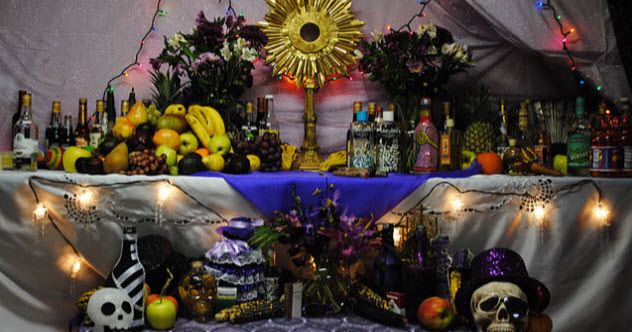
Few phrases can send a newspaper headline sprinting toward the dramatic quite like “Voodoo murder.” Add an unsolved killing, a mysterna road, and suddenly facts begin competing with folklore for elbow room.
Yet the real history behind so-called Voodoo murders is stranger than the horror-movie version. Some crimes involved people who genuinely believed supernatural protection would help them escape justice. Others were ordinary murders wrapped in occult rumors by frightened communities, ambitious reporters, or investigators searching for a motive. And in several cases, the word “Voodoo” was applied to traditions that were not Vodou or Louisiana Voodoo at all.
That distinction matters. Haitian Vodou and Louisiana Voodoo are complex religious and spiritual traditions with roots in the African diaspora. They should not be treated as synonyms for murder, black magic, or anything involving a suspiciously bubbling cauldron. Historically, however, popular culture and sensational journalism often ignored those differences. The result was a collection of bizarre crime stories in which belief, fear, racism, rumor, and genuine violence became almost impossible to separate. hat warning firmly nailed to the door, here are ten strange tales connected to the history of “Voodoo murder”including documented killings, disputed confessions, ritual panics, and crimes that were inaccurately thrown into the Voodoo basket because apparently one mysterious basket was easier than understanding several different religions.
1. The Andrus Family Murders and the Birth of a Louisiana Panic
In February 1911, Alexander and Meme Andrus and their two young children were killed in their home near Lafayette, Louisiana. The crime became part of a disturbing series of nighttime attacks on families across Louisiana and Texas. Victims were commonly attacked in their homes, often with an axe or hatchet taken from the property.
At first, the killings presented investigators with a brutally practical mystery: Who was moving from community to community and attacking entire households?
Then the story began acquiring supernatural decorations.
Newspapers connected the murders to alleged secret societies, charms, sacrifice, and “Voodooism.” The combination was irresistible to an early-20th-century press already comfortable publishing racial stereotypes about Black communities in the South. Soon, a difficult murder investigation was transforming into something much largera regional panic about an alleged occult conspiracy. drus killings would eventually become central to the case against a young woman named Clementine Barnabet. But as later historians have emphasized, the evidence, timelines, and newspaper accounts surrounding the entire series were far messier than the legend suggests.
2. Clementine Barnabet and the Confession That Became a Legend
Clementine Barnabet may be the most famous person associated with America’s so-called Voodoo axe murders. A young Black woman living in Louisiana, she was arrested in 1911 and later confessed to participating in multiple killings.
Her statements grew increasingly sensational. Reports credited her with an astonishing number of murders and linked her to an organization supposedly known as the Church of Sacrifice. Depending on which newspaper readers opened, Barnabet could appear as a follower, a mastermind, a priestess, a serial killer, or the leader of a shadowy religious cult.
There was just one problem. The story kept changing.
Some killings occurred while Barnabet was already in custody. Certain crimes she allegedly confessed to could not be reliably matched to documented victims. Details about the supposed Church of Sacrifice expanded dramatically as the story circulated. Modern scholarship has therefore questioned how much of the familiar narrative came from Barnabet herself and how much was built by police assumptions, coercive circumstances, racial prejudice, and reporters competing for the most shocking headline. et was convicted of one murder and sentenced to life imprisonment. She was later released. What happened to her afterward remains uncertain, adding another unresolved chapter to an already murky case.
3. The Murders That Continued While the Suspect Was Behind Bars
Nothing makes a supposedly solved murder mystery more inconvenient than another murder occurring while the accused killer is sitting in jail.
That is exactly what complicated the Barnabet narrative.
After Clementine and other suspects had been detained, additional families were attacked. In January 1912, Marie Warner and her children were found murdered near Crowley, Louisiana. Around the same period, another family was killed in Lake Charles.
Authorities responded by looking for accomplices, relatives, conspirators, cult members, and practically anyone who could keep the original theory alive. Arrests multiplied. The alleged secret organization seemed to grow whenever the existing explanation encountered a problem.
Of course, the continuation of the killings did not automatically prove Barnabet innocent of every earlier crime. Multiple killers could have been operating. Copycat crimes were possible. Some cases may never have been connected at all.
But the timeline seriously undermined the neat version of the story in which one “Voodoo priestess” personally traveled through the region murdering family after family. The historical reality appears much less tidyand therefore, in a way, even more unsettling. e Broussard Murders and the Mysterious “Human Five” Message
Among the strangest episodes linked to the Louisiana axe-murder panic was the killing of the Broussard family near Lake Charles.
Reports described a family murdered in its home and a bizarre message discovered at the scene. Contemporary accounts connected the words “HUMAN FIVE” with a biblical passage about blood and judgment. Newspapers quickly treated the writing as evidence of ritual significance.
This was exactly the kind of detail that could turn a criminal investigation into national Gothic theater.
Was the message written by the killer? Was it connected to religion? Was it intended to mislead police? Did journalists reproduce it accurately? More than a century later, certainty is difficult.
The phrase also fed claims that families of five were being deliberately selected for sacrifice. Yet researchers examining the broader case have found that such patterns were often exaggerated or imposed after the fact. Not every victim group contained five people, and the supposed numerical symbolism became much more impressive in newspaper columns than it was in the actual evidence. an early lesson in true crime mathematics: with enough selective counting, almost any number can begin looking haunted.
5. The Conjure Bags That Supposedly Made Killers Invisible
One of the most memorable elements of the Barnabet story involved small protective objects commonly described in reports as conjure bags.
Barnabet was said to have claimed that charms could protect their owners from detection or arrest. Accounts described small packets containing objects such as needles, cloth, and other materials. The alleged belief was simple and terrifying: commit a crime while protected by the charm, and supernatural forces would keep the law away.
The idea became central to the “Voodoo murder” legend. Yet the terminology was often hopelessly scrambled. Newspapers used “Voodoo,” “hoodoo,” conjure, folk magic, and organized religion as though they were interchangeable labels.
They are not.
Hoodoo and related African American folk practices may involve charms, roots, protective objects, and spiritual work, but that does not make murder part of the tradition. A criminal believing an object will prevent arrest says something about that criminal’s beliefnot about millions of people connected to a broad cultural or religious heritage.
Still, the possibility that some suspects genuinely believed in supernatural immunity adds a chilling psychological dimension. A person convinced that ordinary consequences no longer apply can become exceptionally dangerous. e Hunt for the “Hoodoo Doctor”
As fear spread across Louisiana, authorities searched not only for murderers but also for people accused of supplying charms and supernatural advice.
One man was reportedly detained after being identified as a supposed “hoodoo doctor” connected to the protective objects mentioned in the Barnabet investigation. Other people associatedsometimes very looselywith folk healing or spiritual practices were questioned during the wider crackdown.
The panic created a strange secondary economy. When people become frightened of supernatural killers, someone will eventually appear offering supernatural burglar alarms.
Historical reports describe heightened demand for protective charms during the axe-murder scare. That response makes psychological sense. Police had not stopped the killings. Families did not know whether their homes were safe. In an atmosphere where official explanations seemed inadequate, people sought protection wherever they believed they could find it.
Unfortunately, fear also made innocent practitioners convenient suspects. The presence of herbs, charms, prayer objects, or folk-healing materials could be interpreted as evidence of a murderous conspiracy rather than ordinary cultural practice.
The result was a classic moral panic: real crimes occurred, uncertainty spread, and then unrelated people and traditions were pulled into the expanding story. w Newspapers Created a “Voodoo High Priestess”
Perhaps the strangest tale is not a single murder at all. It is the story of how a murder suspect became a myth.
Modern scholars examining the Clementine Barnabet case have argued that contemporary reporting used racialized and sensational language to portray her as a participant in a terrifying Voodoo cult. Details that were uncertain became facts through repetition. The alleged Church of Sacrifice became larger and more organized. Barnabet acquired increasingly dramatic religious titles. Ritual motives were supplied even when the evidence for them was weak.
This transformation matters because people often encounter historical crimes through the stories told about them rather than through court records or archival research.
A headline saying “complicated investigation involving disputed statements and uncertain connections between several crimes” is historically responsible but admittedly terrible at selling newspapers.
“Voodoo High Priestess Leads Murder Cult,” on the other hand? That headline practically leaps off the newsstand wearing a cape.
The Barnabet case demonstrates how true crime can become folklore almost immediately. Once a supernatural explanation becomes popular, later writers may copy earlier writers, creating the illusion that ten independent sources confirm the same story when all ten are repeating one questionable newspaper account. e Matamoros Murders That Were Called “Voodoo”
In 1989, the disappearance of American college student Mark Kilroy led investigators to a ranch outside Matamoros, Mexico, where multiple bodies were discovered. Authorities linked the killings to a group led by Adolfo de Jesús Constanzo.
The crimes were real, horrific, and connected to beliefs about ritual power and supernatural protection. Constanzo reportedly convinced followers that violent ceremonies could protect their criminal activities.
American headlines frequently reached for familiar terms such as “Voodoo cult” or loosely associated the group with Santería. More careful reporting identified Constanzo’s practices with a distorted form of Palo Mayombe, a religious tradition with Central African roots that is distinct from Haitian Vodou.
That difference is not a minor vocabulary quiz. Calling every Afro-diasporic religion “Voodoo” is like calling every European religion “Vatican.” It erases enormous differences while making an already sensational crime sound even more exotic.
The Matamoros case remains one of the clearest examples of a murderer manipulating spiritual beliefs for power, intimidation, and control. It is also a warning that the actions of one violent leader should not be treated as a definition of an entire religious tradition. Contemporary reporting itself noted that Constanzo had altered religious ideas to serve his own criminal purposes. e Hex Hollow Murder: Not Voodoo, but Often Thrown Into the Same Cauldron
In 1928, Pennsylvania farmer and folk practitioner Nelson Rehmeyer was murdered by men who believed he had placed a harmful curse on them.
The case became known as the Hex Hollow murder.
Rehmeyer practiced a Pennsylvania Dutch folk-healing tradition commonly called powwow or Braucherei. His killers reportedly sought objects they believed were necessary to break the supposed curse, including a book associated with folk remedies and spiritual practices.
The murder became a national sensation. Like the Louisiana cases, it featured the perfect ingredients for sensational reporting: rural isolation, magical beliefs, a mysterious book, alleged curses, and a brutal death.
Yet it had nothing to do with Haitian Vodou or Louisiana Voodoo.
Its inclusion in the broader history of “Voodoo murder” stories is useful precisely because it demonstrates how the label operates. In popular culture, completely different traditions have often been blended into one imaginary category called “dark magic.” The Hex Hollow murder was a killing driven by fear of a supposed curse, but understanding it requires examining Pennsylvania Dutch folk culturenot importing Caribbean religion into rural Pennsylvania because the story feels spooky enough. hen Vodou Practitioners Became the Murder Victims
The final tale turns the familiar stereotype upside down.
After Haitian dictator Jean-Claude Duvalier left power in 1986, violence spread against people associated with the former regime. Vodou priests and practitioners were among those attacked. Some were accused of supporting the Duvalier system; others were targeted because neighbors considered them sorcerers or “evildoers.” Temples were damaged or destroyed, and practitioners were killed.
In other words, belief in the supposed danger of “Voodoo” did not merely create scary stories. It could help create victims.
Contemporary reporting documented dozens of killings of practitioners during the upheaval, while noting that political revenge, religious hostility, local accusations, and long-standing fears often overlapped. ay be the most important story on the list. For generations, Vodou has often been represented in foreign entertainment as a religion of curses and murder. Historically, however, practitioners themselves have repeatedly faced persecution because outsiders believed those stereotypes.
Sometimes the most dangerous “curse” is a rumor believed by an angry crowd.
Why “Voodoo Murder” Became Such a Powerful Phrase
Fear Likes Simple Explanations
Unsolved murder is frightening because it creates uncertainty. A supernatural explanation can feel strangely satisfying because it provides a motive, a villain, and a story structure all at once.
Someone was not simply murdered. They were “sacrificed.”
A suspect did not merely carry a personal object. It was a “mystical charm.”
A group of criminals was not simply manipulated by a violent leader. It became a “Voodoo cult.”
Each label makes the story more dramatic while potentially making it less accurate.
Different Traditions Were Blended Together
Haitian Vodou, Louisiana Voodoo, hoodoo, Santería, Palo traditions, Pennsylvania Dutch powwow, and numerous other systems of religion or folk practice have different histories and communities. Popular crime reporting has frequently blurred those boundaries.
That habit survives today. When an unfamiliar object appears at a crime scene, speculation can race ahead of evidence. Investigators and journalists may search for ritual meaning where the object has an ordinary explanationor misunderstand a genuine religious symbol because no knowledgeable practitioner was consulted.
Sensationalism Is Hard to Kill
Once a colorful version of a crime enters popular culture, correcting it is difficult. The dramatic version appears in books, documentaries, websites, podcasts, and social media posts. Each repetition makes it feel older and more authoritative.
Meanwhile, the cautious historian arrives carrying seventeen footnotes and the deeply unpopular sentence, “Actually, the evidence is complicated.”
History rarely rewards the person who ruins a perfectly good ghost story.
Experiences Around the Dark History of So-Called Voodoo Murder
One of the strangest experiences for a modern reader exploring these cases is realizing how quickly a familiar story begins to fall apart.
You may start with the image popular culture has already supplied: a secret ritual, a mysterious priestess, forbidden charms, and a murderer convinced that supernatural forces will protect the guilty. Then you move closer to the historical record. Suddenly, dates conflict. Confessions change. Supposed cult members have alibis. Murders continue after suspects are jailed. A terrifying religious title turns out to have been popularized by newspapers rather than established by evidence.
The experience resembles walking toward a haunted house and discovering that the ghost is realbut it is standing in a completely different building.
The murders remain horrifying. What changes is the explanation.
For readers of historical true crime, that shift can be surprisingly powerful. The easiest version of the story asks, “What strange ritual caused this murder?” The harder questions are usually better: Who benefited from calling it a ritual? Which details came from witnesses? Which came from police? Which appeared only after newspapers began competing for readers? Were unfamiliar religious practices actually connected to the crime, or were they simply convenient symbols of fear?
Visiting places associated with this history can produce a similar tension. New Orleans, for example, is filled with layers of authentic African American spiritual history, commercialized “Voodoo” imagery, ghost-tour storytelling, religious practice, folklore, tourism, and entertainment. A visitor can easily move from meaningful cultural history to plastic skulls and theatrical curses in the space of one block.
That does not mean every spooky story must be thrown away. Folklore has value. Legends reveal what communities fear, remember, exaggerate, and sometimes prefer not to discuss directly. The key is knowing when the legend ends and the documented crime begins.
Another valuable experience is reading the same historical case from different eras. A newspaper report written during a panic may present absolute certainty: a murderous cult exists, a priestess controls it, and charms explain everything. A modern historian may examine the same evidence and find racial bias, contradictory testimony, impossible timelines, and invented details.
That contrast is a reminder that true crime is never merely about the criminal. It is also about the people telling the story.
The experience can even change how we consume modern crime news. Ritual explanations remain attractive because they are dramatic. Yet an unusual symbol at a crime scene does not automatically reveal motive. A defendant’s religious belief does not automatically explain a killing. And one criminal’s distorted interpretation of a tradition should not define everyone who practices it.
The best way to explore these strange tales, then, is with two instincts operating at the same time: curiosity and skepticism.
Let the locked rooms, whispered curses, strange confessions, and historical mysteries pull you into the story. They are fascinating. But keep asking where each detail originated. Look for the moment when a documented fact becomes a rumor, when a rumor becomes a headline, and when the headline becomes “history.”
That is where many of the most revealing experiences are found.
Because after spending enough time with the history of so-called Voodoo murder, the supernatural may no longer be the strangest part. The strangest part may be how eagerly ordinary people can create extraordinary legends around real human violence.
Conclusion: The Truth Is Stranger Than the Curse
The ten tales surrounding the history of Voodoo murder are disturbing not because they prove the existence of a single hidden tradition of ritual killing. They do the opposite.
They reveal how dramatically different crimes can be connected by fear and storytelling. The Louisiana axe murders became entangled with allegations of sacrifice and a mysterious church. Clementine Barnabet was transformed into a legendary “high priestess” even as important parts of the case remained disputed. The Matamoros murders were often labeled Voodoo despite involving a different religious background. The Hex Hollow murder arose from Pennsylvania Dutch folk belief. In Haiti, practitioners of Vodou themselves became victims of deadly persecution.
The common thread is therefore not one religion. It is the human tendency to reach for supernatural explanations when violence feels too frightening, chaotic, or incomprehensible.
Real murder does not need a curse to be terrifying. Real history does not need invented rituals to be strange. And the most responsible way to tell these stories is to preserve their mystery without turning living religions and cultural traditions into horror-movie props.
That may make the truth less convenient than the legend. Fortunately for lovers of strange history, it does not make the truth any less fascinating.
Note: This article uses “Voodoo murder” as a historical and popular-culture label. Haitian Vodou, Louisiana Voodoo, hoodoo, Palo traditions, Santería, and Pennsylvania Dutch folk practices are distinct traditions and should not be treated as synonyms for criminal violence.