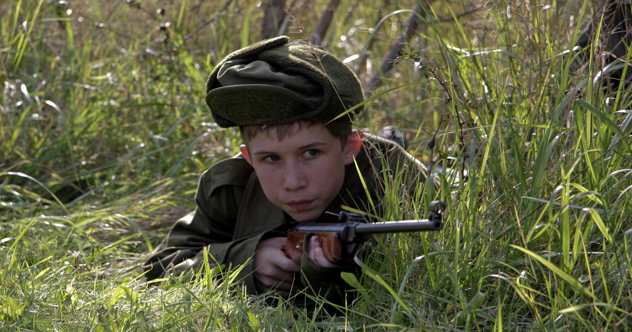
The Holocaust is often remembered through images of loss: ghettos sealed by walls, trains moving east, families torn apart, and a continent swallowed by Nazi brutality. Yet that picture is incomplete if it leaves out Jewish resistance. Across Nazi-occupied Europe, Jewish men, women, teenagers, rabbis, writers, workers, smugglers, and prisoners fought back in every way available to them. Some carried pistols. Some carried messages. Some carried children through forests. Some carried notebooks and buried the truth in milk cans.
Jewish resistance during the Holocaust was not a single event. It was a network of armed uprisings, sabotage missions, escapes, underground archives, spiritual defiance, clandestine schools, and rescue operations. The odds were usually terrible. Weapons were scarce. Food was scarcer. Betrayal could mean death. And still, resistance happened again and again.
This article explores 10 incredible cases of Jewish resistance during the Holocaust, focusing on real events that prove one thing clearly: the victims of Nazi genocide were never simply passive. They resisted with courage, intelligence, stubbornness, and sometimes with a level of planning that would make a military strategist quietly put down his clipboard.
What Did Jewish Resistance Look Like During the Holocaust?
Jewish resistance took many forms. Armed revolt was the most dramatic, but not the only kind. In ghettos, underground groups smuggled weapons, printed illegal newspapers, organized escapes, and prepared bunkers. In forests, Jewish partisans attacked German supply lines, destroyed bridges, cut telephone wires, and rescued civilians. In camps, prisoners plotted uprisings under conditions designed to crush even the idea of hope.
Spiritual and cultural resistance mattered too. Jews held secret religious services, taught children, documented Nazi crimes, protected memory, and preserved dignity. When an enemy is trying not only to murder people but also erase their names, language, faith, and testimony, writing things down becomes an act of rebellion.
1. The Warsaw Ghetto Uprising: A Small Army Against a War Machine
The Warsaw Ghetto Uprising remains the most famous example of Jewish armed resistance during the Holocaust. After the massive deportations of 1942, when hundreds of thousands of Jews from Warsaw were sent to Treblinka, the remaining ghetto residents understood that “resettlement” was a lie with polished boots.
Jewish fighters, especially members of the Jewish Fighting Organization and the Jewish Military Union, began preparing for the next German action. They smuggled in weapons, built bunkers, collected Molotov cocktails, and trained under nearly impossible conditions. On April 19, 1943, German forces entered the ghetto to liquidate it. They expected fear and submission. Instead, they met gunfire, grenades, mines, and fierce street-by-street resistance.
The fighters were badly outnumbered and poorly armed, but they held out for weeks. German forces burned buildings, pumped gas into bunkers, and destroyed the ghetto block by block. The uprising could not save Warsaw’s Jewish community from destruction, but it changed the moral meaning of the moment. The fighters chose how they would face death, and in doing so, created one of the most powerful symbols of Holocaust resistance.
2. The Bielski Partisans: Building a Family Camp in the Forest
Not all resistance looked like a battlefield charge. Sometimes it looked like cooking soup in the woods while German patrols searched nearby. The Bielski partisans, led by brothers Tuvia, Zus, Asael, and Aharon Bielski, formed one of the most remarkable Jewish rescue-and-resistance communities of World War II.
Operating in the forests of Western Belorussia between 1942 and 1944, the Bielski group did fight Germans and collaborators, but its central mission was rescue. Tuvia Bielski famously prioritized saving Jewish lives over purely military action. The group accepted women, children, the elderly, and people who could not fight. In many partisan units, that would have been considered a burden. In the Bielski camp, it was the point.
The forest community built workshops, kitchens, shelters, a school, a synagogue area, and defense systems. They faced hunger, winter, disease, antisemitism from some surrounding groups, and constant threat of attack. By the end of the war, more than 1,200 Jews survived under Bielski protection. That number is not just a statistic; it is an entire village of descendants, memories, and futures that Nazi Germany intended to erase.
3. The Sobibor Uprising: A Death Camp Breaks Open
Sobibor was not designed as a prison camp where survival was difficult. It was designed as a killing center where survival was almost impossible. Yet on October 14, 1943, Jewish prisoners organized one of the most successful uprisings in any Nazi extermination camp.
The revolt was led by figures including Alexander “Sasha” Pechersky, a Jewish Soviet prisoner of war, and Leon Feldhendler, a Polish Jewish prisoner. Their plan was bold: lure SS officers one by one into workshops, kill them quietly, seize weapons, and launch a mass escape before the alarm could spread.
The plan partially succeeded. Prisoners killed several SS men, including deputy commandant Johann Niemann. Then chaos erupted. Hundreds of prisoners rushed the fences, barbed wire, and minefields. About 300 escaped the camp area, though only around 50 survived the war.
Still, the Sobibor uprising mattered enormously. The camp was soon dismantled by the Nazis, who tried to hide evidence of what had happened there. The prisoners did not merely run; they forced history to leave a trace.
4. The Treblinka Uprising: Fire in the Killing Center
Treblinka was one of the deadliest places of the Holocaust. Most people deported there were murdered shortly after arrival. A small group of Jewish prisoners was kept alive temporarily to sort belongings, maintain the camp, and perform forced labor connected to mass murder.
On August 2, 1943, these prisoners revolted. They had spent months preparing. They copied keys, gathered tools, arranged groups, and planned to seize weapons from the camp arsenal. When the uprising began, prisoners set buildings on fire, attacked guards, and broke through the camp perimeter.
Several hundred prisoners escaped, though many were recaptured and killed. A small number survived to testify after the war. Their survival was historically vital because the Nazis attempted to dismantle Treblinka and destroy evidence of the murders committed there.
The Treblinka uprising shows how resistance could serve two purposes at once: a fight for immediate freedom and a fight for future truth. Every survivor who escaped became a witness against a system built on both murder and concealment.
5. The Auschwitz-Birkenau Sonderkommando Revolt
At Auschwitz-Birkenau, the Sonderkommando were mostly Jewish prisoners forced to work in and around the gas chambers and crematoria. The Nazis placed them in a situation of almost unimaginable horror, then planned to kill them periodically to remove witnesses.
On October 7, 1944, members of the Sonderkommando at Crematorium IV rose in revolt after learning that many of them were about to be murdered. They attacked SS personnel, set Crematorium IV on fire, and attempted escape. The uprising was crushed, and hundreds of prisoners were killed during or after the revolt.
The revolt also depended on Jewish women who smuggled gunpowder from a munitions factory. Regina Safirsztajn, Estera Wajcblum, Ala Gertner, and Róża Robota were later identified, tortured, and executed. They did not betray the network.
This case is incredible not because it ended in military victory, but because it happened at all. In the center of a killing system, prisoners planned, coordinated, smuggled explosives, attacked, documented crimes, and left evidence behind. That is resistance in its starkest form.
6. The Vilna Ghetto Resistance and the Avengers
Vilna, often called the “Jerusalem of Lithuania” before the war, became a center of Jewish underground activity after Nazi occupation. In the Vilna ghetto, Abba Kovner helped organize the United Partisan Organization, known as the FPO. His warning that Hitler intended to destroy the Jews of Europe became one of the most famous calls to Jewish resistance.
The FPO trained fighters, manufactured bombs, acquired weapons, and smuggled arms through sewers and false-bottomed coffins. Vitka Kempner, one of the most remarkable women in the resistance, carried out sabotage missions, including an attack on a Nazi train line.
When a full uprising inside the ghetto became impossible, many fighters escaped to the forests. There, Kovner, Kempner, and others helped form the Avengers, an all-Jewish partisan unit that carried out sabotage against German infrastructure. Their missions included destroying railroad tracks, bridges, power systems, and other targets.
The Vilna resistance is a reminder that Jewish resistance was not improvised panic. It involved ideology, organization, logistics, intelligence, and fierce debate about survival versus armed struggle.
7. The Kovno Ghetto Underground: Training Fighters Behind the Fence
In the Kovno ghetto in Lithuania, underground resistance developed under intense surveillance. Jewish council members, Jewish police commanders, Zionist underground organizers, and communist activists became involved in resistance activities. This was complicated, dangerous, and morally tense. Ghettos were places where every decision could save or endanger lives.
Young fighters were secretly trained to use firearms. Chaim Yellin, a Yiddish writer and activist, helped lead the communist underground and connect with Soviet partisans in the forests. Other underground groups worked to move people out of the ghetto and into partisan units.
Kovno’s resistance reveals a quieter but crucial side of the struggle: preparation. Not every underground group could stage a spectacular uprising. Some focused on training, contacts, escape routes, and survival beyond the ghetto walls. In Holocaust history, these less cinematic efforts matter deeply. A smuggled pistol, a forged document, or a trusted contact in the forest could mean life.
8. The Białystok Ghetto Uprising: Fighting to Break Out
In August 1943, German forces began liquidating the Białystok ghetto. The Jewish underground understood what deportation meant. Rather than submit to roundups, fighters launched an uprising and tried to break through the German encirclement to reach nearby forests and join partisan groups.
The battle lasted several days. Armed Jews attacked German forces near the ghetto fence, especially around Smolna Street. The uprising was ultimately crushed, and many fighters and civilians were killed. Others were deported to camps including Treblinka and Majdanek.
Although less famous than Warsaw, the Białystok Ghetto Uprising stands as one of the largest acts of Jewish armed resistance in the ghettos. Its goal was not symbolic theater. It was practical: break out, reach the forest, keep fighting, and keep someone alive to remember.
9. The Kraków Jewish Fighting Organization and the Cyganeria Attack
Kraków’s Jewish resistance grew from youth movements and underground networks. Unlike Warsaw, where fighters eventually battled inside the ghetto, Kraków resistance members often chose to strike outside the ghetto, targeting places used by German officers and personnel.
One of the best-known actions was the December 1942 attack on the Cyganeria Café, a gathering place associated with German soldiers and officers. Members of the Jewish Fighting Organization helped plan and carry out attacks on German-frequented sites in the city.
The Kraków case is important because it challenges a narrow view of ghetto resistance. Jewish fighters did not only defend enclosed neighborhoods. They also operated in cities, coordinated with broader underground networks, and chose targets that carried political and psychological weight. Their message was simple: even in occupied urban space, the occupier was not untouchable.
10. The Oneg Shabbat Archive: Resistance With Paper, Ink, and Milk Cans
Not every resistance fighter held a gun. Emanuel Ringelblum and the Oneg Shabbat group in the Warsaw ghetto fought with documentation. Beginning as a personal chronicle in 1939, the project grew into a secret archive with dozens of contributors after the ghetto was sealed.
The group collected diaries, reports, posters, ration cards, testimonies, underground newspapers, poems, drawings, and everyday objects. They documented hunger, deportations, forced labor, religious life, children’s experiences, smuggling, underground schools, and armed resistance. They buried parts of the archive in metal boxes and milk cans.
This was spiritual and intellectual resistance of the highest order. The Nazis wanted to control not only Jewish bodies but also the story of what happened to them. Oneg Shabbat refused. The archive’s hidden message to the future was essentially: “Do not let the murderers be the only narrators.”
Why These Cases Still Matter
These 10 cases of Jewish resistance during the Holocaust matter because they correct a dangerous misunderstanding. The question “Why didn’t Jews resist?” is based on a false premise. Jews did resist. They resisted in ghettos, forests, camps, cities, schools, synagogues, workshops, kitchens, bunkers, and archives.
Resistance did not always mean victory in the conventional sense. Most uprisings were crushed. Many partisans died. Many couriers were caught. Many archivists were murdered. But measuring resistance only by military success misses the point. Under Nazi rule, survival itself could be resistance. Preserving evidence could be resistance. Teaching a child could be resistance. Saying a prayer, smuggling a weapon, refusing to board a train, or choosing to fight back with almost no chance of survival could all be acts of defiance.
Experiences and Lessons Connected to Jewish Resistance During the Holocaust
Learning about Jewish resistance during the Holocaust is not a casual reading experience. It is not the kind of history you skim while half-watching a cooking show and wondering whether the refrigerator is making a suspicious noise. These stories ask the reader to slow down. They demand attention because they involve people making impossible choices in conditions most of us can barely imagine.
One experience many readers have when encountering these stories is surprise. Popular culture often presents Holocaust victims mainly as people to whom things were done. That is true, but incomplete. When readers learn about the Warsaw fighters storing grenades in bunkers, the Bielski brothers building a forest community, or the Sonderkommando smuggling explosives inside Auschwitz-Birkenau, the image changes. Victims remain victims, but they also become strategists, rescuers, fighters, organizers, witnesses, and leaders.
Another powerful experience is discomfort. These stories do not offer easy moral lessons wrapped in neat packaging. Jewish resistance groups argued among themselves. Should they fight now or wait? Should they focus on revenge, rescue, survival, testimony, or escape? Should scarce weapons go to trained fighters or be saved for a final revolt? These were not classroom debate questions. They were life-and-death decisions made under starvation, terror, and deception.
There is also a deep lesson in the diversity of resistance. The Bielski partisans saved lives by accepting people other units might reject. Oneg Shabbat saved memory by writing things down. Vilna’s partisans sabotaged infrastructure. Sobibor and Treblinka prisoners turned forced labor positions into opportunities for revolt. These examples teach that resistance is not one-size-fits-all. It adapts to circumstances. Sometimes it is loud. Sometimes it is hidden. Sometimes it burns a crematorium. Sometimes it buries a notebook.
For modern readers, these stories also raise questions about responsibility. What does it mean to preserve truth when lies are convenient? What does it mean to defend human dignity when institutions collapse? What does courage look like when there is no applause, no guarantee, and no rescue on the horizon? The people in these cases did not know they would become historical examples. They were not posing for bronze statues. They were trying to live, fight, protect others, and leave evidence that they had existed.
Teachers, students, writers, and families can approach these stories as more than tragic history. They can use them as a framework for discussing agency under oppression. The Holocaust was a genocide carried out by Nazi Germany and its collaborators, but within that catastrophe were countless Jewish decisions to resist erasure. That matters because memory is not passive either. To remember accurately is to resist distortion.
Perhaps the most important experience is humility. These stories do not invite us to say, “I would have done the same.” None of us can know that. A better response is: “They did this, and I must remember it honestly.” That kind of remembrance honors both the dead and the survivors. It also keeps the history sharp enough to cut through myths, denial, and lazy assumptions.
Conclusion
The history of Jewish resistance during the Holocaust is vast, complex, and deeply human. From the Warsaw Ghetto Uprising to the Sobibor escape, from the Bielski forest camp to the buried Oneg Shabbat Archive, these stories prove that resistance took many forms. Some people fought with guns. Others fought with paper, memory, faith, rescue, sabotage, and stubborn refusal.
The Nazis tried to create a world in which Jews had no future and no voice. Jewish resistance answered with action. It said: we are here, we will fight, we will save who we can, and the world will know what happened. That answer still echoes.