Note: This article is written for web publication and synthesizes historical, literary, and public-domain information from reputable cultural, library, and literature sources without inserting external source links.
Christmas has a reputation for being cozy, cheerful, and aggressively scented with cinnamon. But before the holiday became a parade of matching pajamas, peppermint lattes, and inflatable lawn reindeer, it had a deliciously spooky side. For centuries, the darkest nights of the year were considered perfect for telling ghost stories. Families gathered around fires, wind rattled the windows, candles made every shadow look suspicious, and someone inevitably said, “This reminds me of a dreadful thing that happened to my cousin’s landlord.” Merry Christmas, everyone.
Most readers know Charles Dickens’s A Christmas Carol, the ultimate holiday ghost story. But Scrooge is not the only spectral guest at the Christmas table. Victorian and Edwardian writers produced a rich tradition of Christmas ghost stories, haunted-house tales, eerie winter mysteries, and classic scary stories that feel tailor-made for reading under a blanket while pretending the noise in the hallway is “just the pipes.”
Below are ten classic scary stories to read for Christmas that are not A Christmas Carol. Some are directly set during the holiday season; others simply belong to the long, shadowy tradition of winter ghost stories. All of them pair beautifully with hot chocolate, a locked door, and a healthy distrust of antique furniture.
Why Scary Stories Belong at Christmas
The Christmas ghost story tradition makes more sense than it first appears. Winter nights are long, cold, and naturally theatrical. Before electric lights and streaming services, storytelling was entertainment, social bonding, and a low-budget way to terrify your relatives. In Britain especially, Christmas became associated with tales of spirits, warnings, haunted rooms, strange visitors, and sins that refused to stay buried.
Classic Christmas horror also works because the holiday is built on contrast. Warm rooms feel warmer when the world outside is freezing. Family gatherings feel more fragile when the past starts knocking. A cheerful party becomes much more interesting when someone in the corner may or may not be alive. That tension is exactly what makes these stories so satisfying: the best spooky Christmas stories mix comfort and dread until you are both charmed and mildly afraid to refill your cocoa.
10 Classic Scary Stories to Read for Christmas
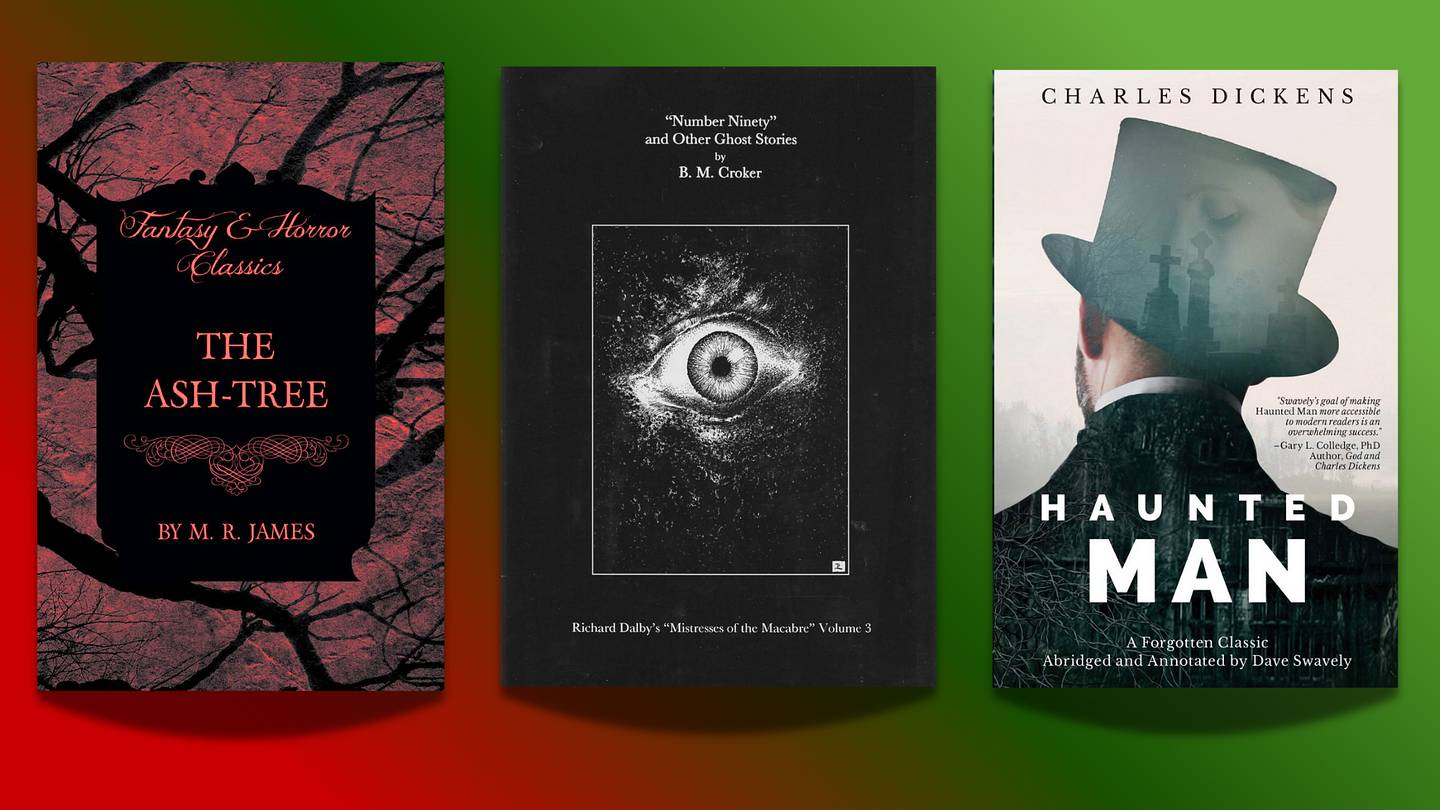
1. “The Ash Tree” by M.R. James
M.R. James is one of the great masters of the English ghost story, and his work is practically required reading for anyone interested in classic supernatural fiction. “The Ash Tree,” first collected in Ghost Stories of an Antiquary, is not a jolly Christmas tale with bells and plum pudding. It is something better: a slow, scholarly nightmare involving an old family estate, a witchcraft accusation, a suspicious tree, and one of the most skin-crawling reveals in early twentieth-century horror.
What makes it ideal for Christmas reading is the atmosphere. James’s stories were famously suited to fireside telling, and “The Ash Tree” has that perfect old-house energy. It starts politely, almost academically, and then quietly slides a cold hand down the back of your neck. If your holiday taste runs less “Santa baby” and more “why is the tree watching me?” this one is your festive nightmare.
Read it for: ancestral curses, sinister nature, and a finale that may permanently damage your relationship with trees.
2. “The Kit-Bag” by Algernon Blackwood
Algernon Blackwood’s “The Kit-Bag” is one of the best classic scary stories for readers who like their Christmas horror compact, clever, and deeply unpleasant in the best possible way. The story begins shortly before Christmas, when a young legal clerk named Johnson prepares for a holiday trip after helping with a gruesome murder trial. He borrows a kit-bag for packing. Unfortunately, this is not the sort of bag that politely holds socks and shaving supplies.
Blackwood turns an ordinary object into a source of pure dread. The kit-bag is canvas, stained, oddly suggestive, and far too connected to the recent murder case for anyone’s comfort. The genius of the story is how it transforms the act of packing for Christmas vacation into a claustrophobic haunting. Suddenly, the cheerful idea of travel becomes a nightmare of guilt, violence, and something moving in the room when it absolutely should not be moving.
Read it for: holiday travel anxiety, haunted luggage, and the comforting reminder that your suitcase could always be worse.
3. “Between the Lights” by E.F. Benson
E.F. Benson, best known by many readers for the comic Mapp and Lucia novels, also wrote excellent ghost stories. “Between the Lights” is a strange, elegant, Christmas-adjacent tale with a reflective mood rather than a jump-scare approach. Set around Christmas Eve, it has the feeling of a story told after dinner when the room is warm, the candles are low, and someone suddenly becomes much too serious.
The phrase “between the lights” refers to twilight, that uncertain hour when day has not fully gone and night has not fully arrived. Benson uses that in-between state beautifully. The story is about memory, perception, and the way the past can appear with unnerving clarity when the year is closing. It is less about a sheet-wearing ghost and more about the terrifying possibility that time itself has a loose hinge.
Read it for: subtle unease, reflective holiday melancholy, and proof that daylight can be just as creepy as midnight.
4. “Smee” by A.M. Burrage
If you have ever played hide-and-seek in a large house, “Smee” may ruin that innocent memory forever. A.M. Burrage’s Christmas ghost story is set during a holiday house party, where guests decide to play a game in the dark. The rules are simple: hide, seek, whisper, laugh nervously, and try not to discover that one of the players is not supposed to be there.
“Smee” is a perfect example of how Christmas ghost stories use social fun as bait. The holiday setting is lively and playful, but the darkness changes the rules. Hallways become traps. Bedrooms become hiding places for more than guests. The story understands that group games are funny until the group is no longer certain how many people are playing.
Read it for: haunted party games, British manor-house chills, and the fastest way to make your family cancel game night.
5. The Haunted Man and the Ghost’s Bargain by Charles Dickens
Yes, Dickens is still invited, but Scrooge is staying home. The Haunted Man and the Ghost’s Bargain was the last of Dickens’s Christmas books, published after his better-known holiday classics. It follows Professor Redlaw, a gloomy chemist haunted by painful memories. A ghostly double offers him a disturbing gift: the power to forget sorrow, wrong, and suffering.
At first glance, that sounds wonderful. Who would not want to delete a few emotional browser tabs? But Dickens turns the bargain into a moral horror story. Memory, even painful memory, is tied to compassion. Remove grief, and you may also remove tenderness. The supernatural element is quieter than in A Christmas Carol, but the central idea is deeply haunting: what if forgetting your pain made you less human?
Read it for: moral ghosts, psychological dread, and a reminder that your holiday baggage may be part of your heart.
6. “A Strange Christmas Game” by J.H. Riddell
Charlotte Riddell, who often published as J.H. Riddell, was one of the important writers of Victorian supernatural fiction. “A Strange Christmas Game” delivers exactly what the title promises: inheritance, an old house, odd noises, a mystery from the past, and Christmas atmosphere thick enough to frost a window.
The story follows siblings who inherit a country property and soon discover that the house has secrets. What begins like a domestic holiday mystery turns into a ghostly puzzle. Riddell’s great strength is structure. She does not simply throw a ghost into the room and yell “Boo!” She lets the mystery gather slowly, like snow piling against a locked door.
Read it for: Victorian suspense, family inheritance drama, and a heroine with more sense than half the men around her.
7. “Number Ninety” by B.M. Croker
B.M. Croker’s “Number Ninety” is a classic haunted-house wager story, and those are always a terrible idea, which is why they are so much fun. A skeptic accepts the challenge to spend the night in a notorious empty house. This being a ghost story, the house does not respond by saying, “Welcome, here are fresh towels.”
The Christmas connection comes through the seasonal gathering and the storytelling mood. Friends talk, boast, debate, and dare one another. Then one man’s confidence is tested by a building with a reputation. Croker’s tale has the satisfying machinery of old-fashioned horror: a challenge, a forbidden space, a night watch, and the gradual collapse of skepticism. It is a reminder that the most dangerous sentence in ghost fiction is, “I don’t believe in any of that nonsense.”
Read it for: haunted real estate, reckless bravado, and the pleasure of watching a skeptic learn architectural humility.
8. “All Souls’” by Edith Wharton
Edith Wharton’s “All Souls’” is not a conventional Christmas story, but it belongs on any winter ghost-story list because it understands the terror of isolation. Written late in Wharton’s life, the story follows an older woman who injures herself and becomes trapped in a large, silent house after the household staff seem to vanish. Snow, silence, age, and helplessness become more frightening than any rattling chain.
Wharton’s horror is psychological and social. She does not need a monster under the bed; she has empty rooms, unanswered calls, and the awful possibility that the world has withdrawn without explanation. For readers who prefer subtle supernatural fiction, “All Souls’” is devastating. It is a ghost story where the scariest presence may be absence itself.
Read it for: snowbound dread, elegant prose, and the kind of silence that makes a ticking clock sound judgmental.
9. “The Ghost’s Summons” by Ada Buisson
Ada Buisson’s “The Ghost’s Summons” is a compact Victorian ghost story with a grimly irresistible premise. A young doctor is called to attend a wealthy man under strange circumstances. The request soon becomes less medical and more supernatural, involving death, duty, money, and a deeply uncomfortable vigil.
This story works beautifully as a Christmas read because it captures the old fireside-tale feeling: a professional man, a mysterious summons, a cold night, and a situation that becomes stranger with each page. Buisson also brings a sharp sense of moral pressure. The doctor is not simply frightened; he is tempted, confused, and forced into a role he does not fully understand.
Read it for: eerie summonses, deathbed tension, and a reminder that house calls used to be much more dramatic.
10. “The Shadow” by E. Nesbit
E. Nesbit is beloved for children’s classics such as The Railway Children, but her ghost stories prove she could also turn a cheerful domestic setting into a room full of dread. “The Shadow,” first published as “The Portent of the Shadow,” is framed around a Christmas gathering where young women tell ghost stories in an old house. Then the story-within-a-story structure becomes more unsettling than anyone expected.
Nesbit’s genius is her refusal to over-explain. “The Shadow” feels like one of those real-life spooky anecdotes people tell with absolute seriousness: no neat logic, no tidy conclusion, just an image that remains in the mind after the room has gone quiet. Its Christmas setting makes the unease sharper. The girls should be safe, warm, and festive. Instead, the house seems to open onto something colder.
Read it for: unexplained apparitions, Christmas-house atmosphere, and a final effect that lingers like a shadow in candlelight.
How to Choose the Right Scary Christmas Story
If you want a quick scare, start with “The Kit-Bag” or “Smee.” Both are short, accessible, and immediately gripping. If you want literary atmosphere, try “Between the Lights,” “All Souls’,” or “The Shadow.” If you want classic Gothic machinery, “A Strange Christmas Game” and “Number Ninety” offer old houses, secrets, and the comforting foolishness of people entering rooms they should avoid.
For readers who love traditional ghost stories, M.R. James is essential. “The Ash Tree” may not hand you Christmas ribbons and roasted chestnuts, but it delivers the exact sort of refined terror that made winter ghost storytelling famous. And for those who still want Dickens without revisiting Scrooge for the hundredth time, The Haunted Man offers a darker, more psychological version of the holiday spirit.
Experience: How to Make a Christmas Ghost Story Night Feel Unforgettable
Reading classic scary stories at Christmas is not only about the stories themselves. It is about the setup. A ghost story read at 2 p.m. beside a dishwasher has its charms, but a ghost story read at night beside a glowing tree is a completely different creature. The experience matters. Atmosphere is half the haunting.
The best way to enjoy these stories is to create a small ritual around them. Turn off the overhead lights. Leave on the Christmas tree, a lamp, or a few candles if you can do so safely. Put your phone away, because nothing murders Gothic suspense faster than a notification from a food delivery app. Choose one story, not five. Classic ghost stories work best when you let them breathe. They were often designed to be read aloud or absorbed slowly, with pauses where the imagination can wander into dangerous corners.
If you are reading with friends or family, assign one person as the narrator. Pick someone who can resist the urge to perform every character like a community theater goblin. A calm voice is scarier than an exaggerated one. The secret is seriousness. The more politely the narrator describes the horror, the more effective it becomes. That is why writers like M.R. James and Edith Wharton still work: they do not chase you down the hallway screaming. They simply open a door and allow you to notice what is standing there.
Food helps, too. Tea, cocoa, cookies, roasted nuts, or a slice of fruitcake all belong on the table. The contrast between sweetness and fear is part of the pleasure. You take a bite of something buttery, then read about a haunted kit-bag that may contain evidence of murder. This is balance. This is wellness, probably.
For solo readers, Christmas ghost stories can feel especially powerful. The house is quiet, the season encourages reflection, and old stories often stir old memories. That is why they fit the holiday so well. Christmas is joyful, but it is also nostalgic. It makes people think about childhood, absent relatives, past mistakes, and rooms that no longer exist. Ghost stories give those feelings a shape. They turn memory into footsteps, grief into a closed door, and loneliness into a figure glimpsed at the edge of firelight.
You can also build a reading order for the days leading up to Christmas. Begin with lighter, more entertaining tales like “Smee” or “A Strange Christmas Game.” Move into darker pieces like “The Kit-Bag” and “The Ash Tree.” Save “All Souls’” or “Between the Lights” for a quiet night when you want something reflective rather than merely frightening. By Christmas Eve, finish with “The Shadow,” because nothing says “peace on Earth” quite like wondering whether the darkness in the corner has opinions.
The real pleasure of Christmas ghost stories is that they restore mystery to a season that can become overly scheduled. Shopping lists, travel plans, office parties, and gift receipts can make December feel practical to the point of exhaustion. A classic scary story interrupts all that. It asks you to sit still, listen closely, and imagine that the world is stranger than your calendar admits. That is a gift worth unwrapping.
Conclusion
A Christmas Carol deserves its fame, but it is only one candle in a much larger haunted room. The tradition of Christmas ghost stories is packed with eerie mansions, doomed skeptics, mysterious summonses, uncanny shadows, and objects that should really learn to mind their own business. From M.R. James’s scholarly terror to E. Nesbit’s unexplained apparitions, these classic scary stories prove that Christmas reading can be cozy and creepy at the same time.
So this year, after the gifts are wrapped and the house finally goes quiet, skip another rerun and open one of these tales instead. Keep the lights low. Let the wind do its dramatic little performance outside. And if someone suggests a friendly game of hide-and-seek in the dark, politely decline. You have read “Smee.” You know better now.