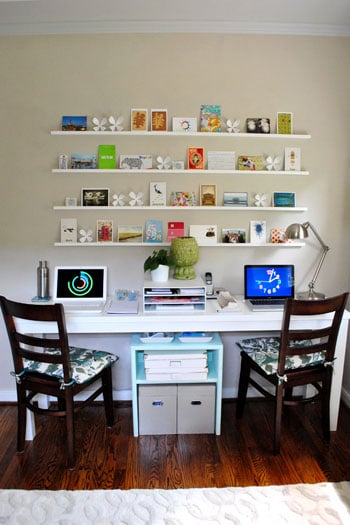
There are few sentences more satisfying than “the makeover is done.” It lands somewhere between “the laundry folded itself” and “your package arrived early.” After weeks of measuring, moving, second-guessing, repainting, rearranging, and asking, “Do we really need this many baskets?” our home office / guest room makeover is officially finished.
And yes, this room now has range. By day, it is a productive home office where emails get answered, video calls look intentional, and the desk no longer resembles a paper-based avalanche. By night, it transforms into a cozy guest room with a real place to sleep, a spot to set luggage, soft lighting, and enough personality to make visitors feel welcome without wondering if they accidentally checked into a storage closet.
The biggest goal was simple: create a multifunctional room that works hard without looking like it is working hard. A home office guest room combo can easily become a tug-of-war between productivity and hospitality. Too much office, and guests feel like they are sleeping inside a tax folder. Too much bedroom, and workdays feel like a pajama trap. The sweet spot is a room that supports focus, comfort, storage, and style without letting any single function bully the others.
Why a Home Office / Guest Room Combo Makes So Much Sense
In many homes, the guest room is the most underused room in the house. It waits patiently for holidays, in-laws, college friends, and that one cousin who says, “I’ll only stay two nights,” then starts browsing local gyms. Meanwhile, the home office has become essential for remote work, side hustles, school projects, bill paying, creative work, and the occasional emergency search for “how to unjam printer without crying.”
Combining the two rooms is not just practical; it is smart space planning. Instead of dedicating an entire room to occasional overnight guests, the space can support everyday life first and overnight comfort when needed. The makeover works because every piece has a job. The desk supports work. The sleep zone welcomes guests. The storage hides clutter. The lighting changes the mood. The decor makes the room feel finished instead of “we put furniture here and hoped for the best.”
The Before: A Room With Potential and Mild Chaos
Before the makeover, the room had good bones but confused energy. It had natural light, decent square footage, and enough wall space to do something useful. Unfortunately, it also had the classic spare-room problem: random furniture, mystery cords, office supplies, extra bedding, half-used notebooks, and objects that had migrated there because no one knew where else to put them.
The room was technically functional, in the same way a folding chair is technically a dining room. We could work there, but it did not feel inspiring. Guests could sleep there, but the setup felt temporary. Nothing had a clear zone, and the room looked like it was constantly apologizing for itself.
The makeover began with a basic question: what does this room need to do every week? The answer shaped every decision. It needed a comfortable workstation, a flexible sleeping option, storage for office supplies and guest items, flattering light for video calls, soft light for reading, and a calm design that would not feel too corporate or too precious.
The Layout: Creating Zones Without Building Walls
The winning layout divided the room into three invisible zones: the work zone, the guest zone, and the storage zone. No walls were added, no construction drama occurred, and no one had to learn how to use a nail gun while watching a video titled “Easy Beginner Project” that somehow includes twelve tools and a safety waiver.
The Work Zone
The desk became the anchor of the office side. It was placed where natural light could help the room feel bright without creating harsh glare on the monitor. A good office layout should make work feel easier, not like a daily wrestling match with cords, posture, and bad lighting. The chair is comfortable enough for long stretches, the monitor is positioned at a healthy viewing height, and the desktop has only the items used every day.
The biggest improvement was editing. A home office does not need every pen you have owned since 2016. It needs the right tools within reach and everything else stored neatly nearby. A small tray holds daily essentials, a drawer keeps paper clutter contained, and vertical storage makes use of wall space instead of letting piles expand across the desk like an ambitious little paper city.
The Guest Zone
For the guest area, the goal was comfort without sacrificing floor space. Depending on the room, a sleeper sofa, daybed, trundle, or Murphy bed can work beautifully. In this makeover, the sleeping area was styled to look intentional even when no one is staying over. That matters because a guest bed should not dominate the room every day if guests only visit occasionally.
Layered bedding, a few supportive pillows, and a throw blanket make the space feel inviting. A side table gives guests a place for water, a phone, glasses, or a book. A small lamp creates a soft bedtime glow. These details seem simple, but they are the difference between “Here is where you can crash” and “We are genuinely happy you are here.”
The Storage Zone
Storage is the secret hero of every multifunctional room. Without it, the entire makeover collapses into decorative clutter. We used a mix of closed storage and open display so the room could hide the boring stuff and show off the pretty stuff. Office supplies, chargers, printer paper, extra linens, and guest towels need homes. If they do not have homes, they will form committees on every available surface.
Closed cabinets and lidded baskets handle the visual noise. Open shelves hold books, a plant, framed art, and a few meaningful objects. The result feels personal but not crowded. It also makes cleaning much faster, which is important because no one wants to spend forty minutes panic-cleaning before guests arrive.
The Color Palette: Calm, Bright, and Not Boring
The color palette was chosen to support both focus and rest. That is a tricky balance. Bright, high-energy colors can feel fun during the day but too loud at night. Very dark colors can feel dramatic and cozy but may shrink a small room if not balanced with light. The final palette leans warm, neutral, and layered, with enough contrast to keep the space from looking flat.
Soft wall color creates a clean backdrop. Wood tones add warmth. Textiles bring texture. Small accents add personality. The room now feels calm enough for work and restful enough for sleep. It does not scream “corporate office,” and it does not whisper “forgotten spare bedroom.” It says, “A responsible adult lives here, but they still enjoy a cute lamp.”
One practical tip: test paint samples in the room before committing. Light changes everything. A white that looks crisp in the store can turn icy blue at home. A beige that seems cozy online can become peanut butter on the wall. Paint samples are cheaper than repainting while muttering things about undertones.
Furniture That Works Twice as Hard
Multifunctional rooms need multifunctional furniture. Every piece should earn its footprint. A slim desk provides workspace without overwhelming the room. A sleeper option handles guests without turning the office into a full-time bedroom. A storage bench can hold linens while giving guests a spot to sit. A small side table can serve as a nightstand during visits and a printer stand or plant perch the rest of the time.
The trick is to avoid oversized furniture. A huge desk might seem luxurious until it swallows the room. A bulky bed might be comfortable but leave no space for actual living. In a home office guest room combo, scale is everything. Choose pieces that leave breathing room around them. When furniture fits properly, the room feels larger, calmer, and more expensive, even when the budget says otherwise.
Lighting: The Makeover Detail That Changes Everything
Lighting can make or break a room. One overhead light in the center of the ceiling is rarely enough, especially in a space that has to support work, reading, relaxing, and sleeping. The finished room uses layered lighting: ambient light for overall brightness, task lighting for the desk, and accent lighting for warmth.
The desk lamp is practical, adjustable, and bright enough for focused work. The guest-side lamp is softer and warmer, perfect for reading before bed. A small accent light adds glow in the evening, making the room feel cozy instead of stark. Dimmable bulbs are especially useful because the room can shift from “finish the report” to “wind down and pretend email does not exist.”
Lighting temperature also matters. Cooler light can help with daytime tasks, while warmer light feels more relaxing at night. In a dual-purpose room, flexibility is the goal. A bulb that works for spreadsheets at 10 a.m. may feel like an interrogation lamp at 10 p.m.
Ergonomics: Because Cute Should Not Hurt Your Back
A beautiful home office is wonderful, but a beautiful home office that causes neck pain is just a very stylish mistake. The work zone was set up with comfort in mind. The chair supports the lower back, the feet can rest flat, and the monitor is positioned at a comfortable distance and height. The keyboard and mouse sit where the arms can stay relaxed instead of reaching forward all day like a zombie approaching a laptop.
Good ergonomics do not have to look clinical. A supportive chair can still be attractive. A monitor riser can be simple and stylish. Cord management can be tidy without requiring an engineering degree. The point is to create a workspace that helps the body feel good after hours of use.
This is especially important in a room that also serves as a guest room. When the desk setup is compact and organized, it can visually fade into the background when guests arrive. That way, the room does not feel like someone is sleeping next to a productivity command center.
Decor: Personality Without Clutter
Decor is where the room finally starts to feel like home. The key is choosing pieces that bring warmth without stealing function. Art adds color and gives the video-call background a little dignity. A rug defines the room and softens the floor. Plants bring life and texture. A mirror can bounce light around and help the room feel bigger.
But restraint matters. A multifunctional room already has a lot to do, so decor should support the design rather than compete with it. Instead of filling every surface, we chose a few thoughtful items: framed prints, a plant, a small stack of books, a decorative box, and cozy textiles. The result feels styled but livable.
The best decor tells a story. Maybe it is a framed photo from a trip, a vintage piece from a flea market, a handmade bowl, or artwork that makes you smile. A guest room should feel welcoming, but it should still feel like it belongs to the people who live there.
How We Made the Room Guest-Ready
A guest-ready room is not just about having a place to sleep. It is about anticipating the small things visitors need. Fresh sheets, extra blankets, a visible outlet, a luggage spot, and a bedside light make a big difference. A few empty hangers or a small hook give guests somewhere to put clothes. A carafe or bottle of water is a thoughtful touch. A small basket with towels, tissues, and basic toiletries turns the room into a tiny hospitality station.
The office supplies are tucked away before guests arrive, and the desk surface is cleared so the room feels peaceful. No one wants to sleep beside yesterday’s sticky note that says “call insurance???” with three question marks. A quick reset transforms the room from work mode to guest mode in minutes.
Budget-Friendly Ideas That Made a Big Impact
Not every makeover needs custom built-ins and a budget that requires a moment of silence. Some of the best upgrades were simple and affordable. Rearranging the layout improved flow. Paint refreshed the room. Matching storage bins reduced visual clutter. New pillow covers changed the mood without replacing all the bedding. A better lamp made the workspace more functional. Cord clips made the desk area look cleaner instantly.
One of the biggest budget wins was shopping the house first. Before buying anything new, we pulled items from other rooms: a framed print, an extra basket, a throw blanket, and a small side table. Sometimes the perfect finishing touch is already in your home, quietly waiting under a pile of mail.
What Makes the Finished Room Work
The finished home office / guest room works because it has clarity. Every area has a purpose. The desk is not buried in guest pillows. The bed area is not covered in office supplies. The storage is not pretending to be decor. The lighting supports different moods. The color palette connects everything. The room feels flexible but not chaotic.
It also feels finished because the small details were not skipped. The art is hung. The cords are hidden. The bedding is layered. The shelves are styled. The chair is comfortable. The trash can is not an afterthought. These little choices add up to a room that feels complete.
Experience Notes: What This Makeover Taught Us
The biggest lesson from this home office / guest room makeover is that a room does not have to be large to be useful. It just has to be honest. At the beginning, we kept trying to make the room act like three separate rooms: a serious office, a full guest bedroom, and a storage area. That was too much pressure for one modest space. Once we accepted that the room needed to be flexible instead of perfect, the design became easier.
We learned to measure everything. Not casually. Not with the confidence of someone who says, “I think it’ll fit.” Actually measure. Measure the wall, the furniture, the door swing, the walkway, the drawer clearance, and the distance between the desk chair and the bed. A room can look generous in your imagination and then become a furniture traffic jam in real life. Measuring saved us from buying pieces that would have looked great online and ridiculous in the room.
We also learned that storage should be planned before decor. It is tempting to start with the fun pieces: art, pillows, rugs, lamps, and the tiny ceramic object that serves no purpose except being adorable. But if storage is not solved first, the room will never stay clean. Once we created homes for printer paper, chargers, office tools, guest linens, and extra blankets, decorating became much easier. The pretty things finally had space to breathe.
Another experience worth sharing: lighting deserves more attention than people give it. At first, we thought one desk lamp and an overhead fixture would be enough. It was not. The room needed different lighting for different moments. Work lighting had to be clear and focused. Guest lighting had to feel soft and cozy. Evening lighting had to make the room feel warm instead of washed out. Adding layered lamps changed the entire mood.
We also discovered that a guest room does not need to look like a hotel to feel welcoming. In fact, it is better when it does not. A few personal touches make visitors feel like they are staying in a real home, not a furniture showroom with Wi-Fi. The key is leaving enough empty space for them. Empty hooks, an open drawer, a cleared nightstand, and a place for luggage say, “We thought about you,” louder than any decorative pillow ever could.
Finally, this makeover reminded us that done is better than endlessly almost done. There is always one more thing you could add, paint, replace, upgrade, or adjust. But at some point, the room is working. The desk is useful. The bed is comfortable. The storage is organized. The lighting is pleasant. The guests have a place to sleep. That is the finish line. Maybe we will swap a pillow someday or change the art later, but for now, the room is done, and we are celebrating that with the mature adult ritual of standing in the doorway and admiring it for no reason.
Conclusion: A Room That Finally Earns Its Keep
Our home office / guest room makeover is done, and the room finally feels like it belongs in the house. It is practical, comfortable, warm, and flexible. It supports productive workdays without feeling sterile, and it welcomes overnight guests without feeling like an afterthought.
The best part is that the makeover did not require making the room bigger. It required making better decisions. A smarter layout, hardworking furniture, layered lighting, thoughtful storage, comfortable bedding, and personal decor turned an awkward spare room into one of the most useful spaces in the home.
If you are planning your own home office guest room combo, start with function. Decide what the room needs to do most often, then build around that. Choose furniture that can multitask. Use vertical storage. Keep the desk ergonomic. Make the bed genuinely comfortable. Add lighting that can shift from work mode to guest mode. And most importantly, give yourself permission to finish. Your future guests, your workday posture, and your clutter-free desk will thank you.