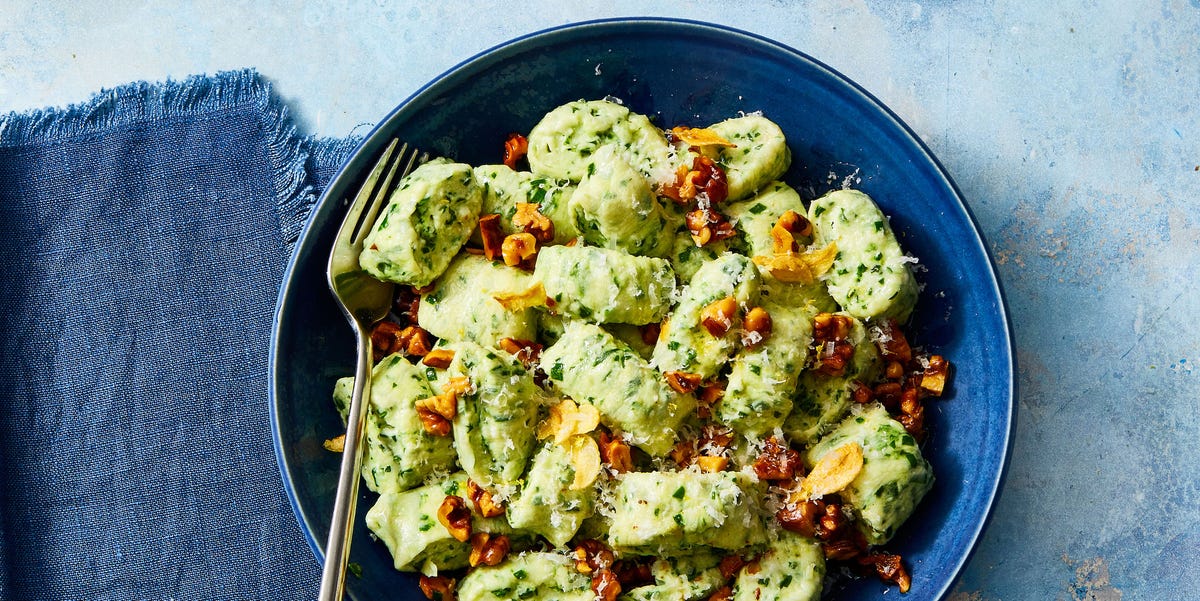
Homemade gnocchi sounds like the sort of project that requires an Italian grandmother, a marble countertop, and an afternoon cleared of all responsibilities. Ricotta gnocchi politely disagrees. These tender cheese dumplings skip the potato boiling, peeling, ricing, and emotional negotiations associated with traditional potato gnocchi. Instead, the dough comes together with creamy ricotta, Parmesan, egg yolk, flour, spinach, and basil.
The finished gnocchi are light, delicately chewy, and full of fresh herb flavor. They are tossed with olive oil, golden garlic, and toasted walnuts, creating a sauce that is savory, nutty, and pleasantly crunchy without smothering the dumplings. Ricotta gnocchi generally require less preparation than their potato-based relatives, but they still reward careful draining and a light hand with the flour.
This recipe includes a test-dumpling method, flexible flour guidance, and several rescue strategies. In other words, even slightly unpredictable ricotta has been invited to the partybut it will be supervised.
Ricotta Gnocchi Recipe at a Glance
- Prep time: 30 minutes
- Chilling time: 30 minutes
- Cooking time: 10 minutes
- Total time: About 1 hour 10 minutes
- Yield: 4 main-course servings or 6 appetizer servings
- Difficulty: Approachable, provided you do not attack the dough with unnecessary enthusiasm
Why This Ricotta Gnocchi Recipe Works
Drained ricotta keeps the dough light
Ricotta moisture varies considerably among brands. Wet cheese requires extra flour, and extra flour can turn soft gnocchi into tiny edible doorstops. Draining the ricotta removes excess whey before the dough is mixed, allowing the cheesenot the flourto remain the main ingredient.
An overnight drain works beautifully, but a shorter drain in a fine-mesh strainer is usually sufficient for firm supermarket ricotta. Another practical method is spreading the ricotta between clean kitchen towels and gently pressing out moisture. Established ricotta gnocchi techniques consistently emphasize draining as one of the most important steps.
A small amount of flour prevents heaviness
The dough should be soft and slightly tacky rather than smooth, firm, and bread-like. Flour is added gradually because the exact amount depends on the ricotta, egg yolk, chopped greens, humidity, and even the enthusiasm with which the measuring cup was filled.
Handling the dough gently and stopping once it holds together produces a tender bite. Adding flour in stages also makes it easier to avoid an overly dense result.
Spinach and basil add freshness without a heavy sauce
Baby spinach gives the gnocchi color and a mild earthy flavor, while basil adds a fragrant, summery note. Both should be finely chopped and thoroughly dried. Large wet leaves can weaken the dough and create cracks during shaping.
Walnuts and garlic provide contrasting texture
The soft dumplings benefit from something crunchy. Walnuts contribute richness and a pleasantly earthy flavor, while thinly sliced garlic becomes crisp and sweet as it turns golden in olive oil. Because both ingredients can burn quickly, they are cooked over moderate heat and removed before the garlic becomes dark brown.
Ingredients for Ricotta Gnocchi With Toasted Garlic and Walnuts
For the spinach-ricotta gnocchi
- 1 container (15 ounces) whole-milk ricotta cheese
- 1 large egg yolk
- 1 cup all-purpose flour, plus 2 to 6 tablespoons as needed
- Additional flour for the work surface and baking sheet
- 1/4 cup finely grated Parmesan cheese, plus more for serving
- 2 packed cups baby spinach, finely chopped and patted dry
- 1 packed cup fresh basil leaves, finely chopped and patted dry
- 3/4 teaspoon kosher salt
- 1/4 teaspoon freshly ground black pepper
- Pinch of freshly grated nutmeg, optional
For the toasted garlic and walnut sauce
- 3 tablespoons extra-virgin olive oil
- 1/3 cup raw walnuts, roughly chopped
- 2 large garlic cloves, thinly sliced
- 1/4 teaspoon red pepper flakes, optional
- 1 tablespoon unsalted butter, optional
- 1/3 cup reserved gnocchi cooking water, as needed
- 1 teaspoon finely grated lemon zest
- 1 to 2 teaspoons fresh lemon juice
- Kosher salt and black pepper, to taste
- Grated Parmesan and small basil leaves, for serving
The foundational ingredient proportions are inspired by the classic combination of spinach-ricotta gnocchi with walnuts and sliced garlic, with lemon, cooking water, and optional butter added here to improve balance and help the oil cling to the dumplings.
How to Make Ricotta Gnocchi With Toasted Garlic and Walnuts
Step 1: Drain the ricotta
Place the ricotta in a fine-mesh strainer set over a bowl. Refrigerate for at least 30 minutes. If the ricotta appears loose or watery, let it drain for several hours or overnight.
For faster draining, spread the ricotta over two layers of clean, lint-free kitchen towels. Cover it with another towel and press gently for about 5 minutes. The goal is dry, creamy ricottanot cheese that has been squeezed into submission.
Step 2: Prepare the greens
Finely chop the spinach and basil. Place the chopped greens on a clean towel or several paper towels and press firmly to remove surface moisture. This small step helps the dough stay manageable and prevents surprise green puddles.
Step 3: Mix the dough
Transfer the drained ricotta to a large bowl. Add the egg yolk, Parmesan, spinach, basil, salt, pepper, and nutmeg. Stir until evenly combined.
Add 1 cup of flour and fold gently with a flexible spatula. Stop mixing as soon as no large pockets of dry flour remain. The dough should be soft and tacky but capable of holding a rough shape. Ricotta gnocchi require very little kneading, and excessive mixing can produce a tougher texture.
Step 4: Cook a test gnoccho
Bring a large pot of generously salted water to a gentle boil. Pinch off about 1 teaspoon of dough and shape it into a small dumpling. Drop it into the water.
If it holds together and rises to the surface, the dough is ready. Taste it. If it is tender but not raw or gummy in the center, celebrate quietly and continue.
If the test dumpling breaks apart, fold 1 tablespoon of flour into the dough and test again. Repeat only as necessary. This is far more reliable than dumping in extra flour based on fear, instinct, or something a distant relative once said.
Step 5: Shape the gnocchi
Lightly flour a large baking sheet and the work surface. Divide the dough into four portions. Working with one portion at a time, gently roll it into a rope approximately 3/4 to 1 inch thick.
Cut each rope into 3/4- to 1-inch pieces with a bench scraper or sharp knife. Transfer the pieces to the floured baking sheet without allowing them to touch. Traditional ridges are optional; these delicate gnocchi hold sauce perfectly well without a trip down the back of a fork.
Similar shaping methods use thumb-width ropes and small nugget-shaped pieces, while semolina or flour on the resting surface helps prevent sticking.
Step 6: Chill the gnocchi
Cover the baking sheet loosely and refrigerate the shaped gnocchi for 30 minutes. Chilling firms the dough, improves handling, and reduces the chance that the dumplings will become misshapen when they enter the water. Even a shorter 15-minute rest can be helpful.
Step 7: Toast the walnuts and garlic
While the gnocchi chill, heat the olive oil in a large skillet over medium heat. Add the walnuts and cook for about 2 minutes, stirring frequently.
Add the sliced garlic and optional red pepper flakes. Continue cooking for 30 to 60 seconds, stirring constantly, until the garlic is pale golden and the walnuts smell toasted. Immediately remove the skillet from the heat. Garlic continues to darken in hot oil, so “almost ready” is ready.
Nuts can move from toasted to burned rapidly. Keeping them moving and transferring them away from intense heat as soon as they are fragrant helps prevent scorched flavors.
Step 8: Boil the gnocchi
Return the water to a gentle boil. Cook the gnocchi in two or three batches so the pot is not crowded. Stir once, very gently, to prevent sticking.
When the gnocchi float, continue cooking for approximately 30 to 60 seconds. Cut one open or taste it before removing the entire batch. Floating is an excellent visual signal, but tasting remains the most persuasive form of evidence.
Use a spider strainer or slotted spoon to transfer the gnocchi directly to the skillet. Avoid pouring delicate ricotta gnocchi into a colander, where they may collide, flatten, and reconsider their career choices. Floating is commonly used as the doneness indicator for fresh gnocchi, followed by gentle removal from the water.
Step 9: Finish the sauce
Return the skillet to low heat. Add the optional butter, lemon zest, and 2 tablespoons of reserved cooking water. Gently shake the skillet or fold the gnocchi through the sauce with a silicone spatula.
Add more cooking water a tablespoon at a time until the oil and cheese form a light, glossy coating. Finish with lemon juice, black pepper, and additional salt if needed.
Step 10: Serve immediately
Divide the gnocchi among warm bowls. Spoon the toasted walnuts, garlic, and remaining pan sauce over each serving. Finish with grated Parmesan and small basil leaves.
Ricotta gnocchi are at their best immediately after cooking, particularly when served with a simple sauce that allows their delicate cheese flavor to remain noticeable.
How to Prevent Ricotta Gnocchi From Falling Apart
Use whole-milk ricotta
Whole-milk ricotta provides better flavor and body than thin, watery reduced-fat varieties. Look for a short ingredient list containing milk, salt, and an acid or enzyme. Stabilizers and gums can make the texture less predictable.
Dry the ricotta and greens
Excess moisture is the most common reason the dough demands too much flour. Drain the cheese and pat the chopped spinach and basil dry before mixing.
Accept a slightly sticky dough
Ricotta gnocchi dough should not resemble firm bread dough. A soft, slightly sticky mixture usually produces lighter dumplings. Keep your hands and work surface lightly floured rather than forcing large quantities of flour into the dough.
Keep the water at a controlled boil
A violently bubbling pot can batter tender dumplings apart. Use a steady but gentle boil and work in batches. Frozen gnocchi should also be cooked in smaller batches so they do not dramatically reduce the water temperature.
Test before shaping the entire batch
A single test dumpling tells you whether the dough needs more flour. It also provides the cook with a legitimate reason to begin eating before everyone else.
Recipe Variations
Brown-butter walnut gnocchi
Replace 1 tablespoon of the olive oil with 3 tablespoons of butter. Cook until the milk solids turn amber, then add the walnuts, garlic, and a few sage leaves.
Crispy ricotta gnocchi
After boiling, let the gnocchi dry briefly on a lightly oiled sheet pan. Sear them in a wide skillet with butter and olive oil until golden. Pan-browning provides crisp edges while preserving the creamy center.
Ricotta gnocchi with mushrooms
Brown sliced cremini, oyster, or wild mushrooms before cooking the walnuts. Return the mushrooms to the pan when the gnocchi are added.
Nut-free variation
Replace the walnuts with toasted breadcrumbs. Cook the crumbs in olive oil until golden, season with salt, and sprinkle them over the finished dish.
Different herbs
Replace some or all of the basil with parsley, chives, marjoram, or tender thyme leaves. Strong rosemary should be used sparingly unless you want the gnocchi to taste as though they spent the afternoon beneath a pine tree.
What to Serve With Ricotta Gnocchi
This dish is rich but not excessively heavy, making it easy to pair with vegetables and crisp salads. Try it with roasted asparagus, sautéed green beans, lemony arugula, roasted broccoli, or a tomato and cucumber salad.
For a more substantial meal, serve smaller portions beside roasted chicken, salmon, Italian sausage, or seared mushrooms. Warm crusty bread is optional, although very few people have ever looked at garlicky olive oil and complained that bread was available.
Make-Ahead, Storage, and Freezing Instructions
Making the gnocchi ahead
Shape the gnocchi, arrange them on a floured baking sheet, cover loosely, and refrigerate for up to 8 hours. Longer refrigeration can cause the flour coating to absorb moisture and become sticky.
Freezing uncooked gnocchi
Freeze the shaped gnocchi in a single layer until solid, then transfer them to a freezer-safe container. Cook them directly from frozen in small batches rather than thawing first. Fresh gnocchi maintain their best quality for approximately one month in the freezer.
Storing leftovers
Refrigerate cooked gnocchi in an airtight container for up to 3 days. Reheat them gently in a skillet with a splash of water and a little olive oil or butter. Microwaving works, but the texture will be softer.
Practical Kitchen Experience: What Making Ricotta Gnocchi Is Really Like
The first surprise for many home cooks is that the dough does not look especially promising. It is pale, soft, green-speckled, and considerably stickier than ordinary pasta dough. At this stage, the natural reaction is to add flour until everything feels neat and manageable. That reaction must be politely escorted out of the kitchen.
A successful ricotta gnocchi dough remains a little untidy. The work surface needs flour, the bench scraper earns its keep, and the ropes may not resemble those perfectly even specimens seen in restaurant photographs. None of this matters. Once the pieces enter the water, they expand slightly and become plump, tender dumplings. Rustic shaping is not a defect; it is proof that dinner was made by a person rather than a pasta-calibrating robot.
The test gnoccho is the point at which anxiety usually disappears. Watching one small piece hold together, rise to the surface, and remain intact gives far more confidence than staring suspiciously at a bowl of dough. If the tester dissolves, the situation is not a disaster. Another tablespoon of flour is folded in, and the experiment is repeated. The process is adjustment, not failure.
Another noticeable moment occurs when the garlic hits the walnut-scented oil. The aroma changes almost immediately from mild olive oil to something that causes people in other rooms to appear in the kitchen asking casual questions. This is also the most dangerous minute of the recipe. Thin garlic slices can travel from golden to bitter while the cook is searching for a serving spoon. Having the lemon, butter, and utensils ready before cooking the garlic makes the process much calmer.
The texture contrast is what makes the finished dish memorable. Ricotta gnocchi are softer and more delicate than many potato versions. The toasted walnuts interrupt that softness with a crisp bite, while the fried garlic adds savory intensity. Lemon prevents the cheese and olive oil from becoming overly rich, and Parmesan adds enough saltiness to connect the individual flavors.
Serving the gnocchi directly from the skillet is usually the best approach. Excessive stirring can damage the dumplings, so gentle shaking, folding, and spooning work better than aggressive tossing. A broad silicone spatula is particularly helpful because it moves several gnocchi without crushing them.
The recipe also becomes easier with repetition. During the first batch, every piece may be measured as though it is applying for admission to an elite dumpling academy. By the second or third attempt, the ropes are rolled quickly, the pieces are cut by eye, and the cook recognizes the dough’s proper texture almost immediately.
Most importantly, ricotta gnocchi deliver the satisfaction of homemade pasta without requiring specialized equipment. No pasta machine, potato ricer, gnocchi board, or ceremonial Italian rolling pin is necessary. A bowl, a knife, a skillet, and a willingness to tolerate slightly sticky fingers are enough.
The resulting dinner feels special but remains realistic for a weeknight. It is elegant enough for guests, forgiving enough for an ordinary kitchen, and comforting enough to inspire immediate silence at the tablethe most reliable five-star review available.
Final Thoughts
The best ricotta gnocchi with toasted garlic and walnuts begin with properly drained cheese, restrained flour, and gentle handling. Once those fundamentals are in place, the rest of the recipe is refreshingly simple. Shape the dough, chill the pieces, boil them in batches, and coat them with golden garlic, fragrant walnuts, lemon, olive oil, and Parmesan.
The dish balances creamy, crunchy, fresh, salty, and nutty flavors without relying on a complicated sauce. It proves that homemade gnocchi can be both impressive and practicaland that a bowl of cheese dumplings is occasionally the most responsible possible dinner decision.
Note: Ricotta moisture differs by brand, so use the test-dumpling resultnot a rigid flour measurementas your final guide. This recipe contains milk, egg, wheat, and tree nuts.