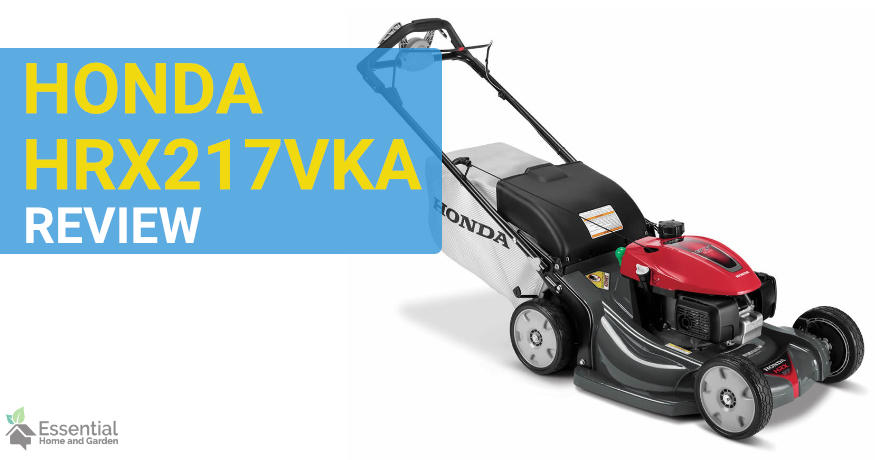
The Honda HRX217VKA earned a loyal following by doing something surprisingly uncommon in the lawn mower world: starting without a theatrical argument, cutting grass cleanly, and feeling as though it was built for more than three summers of suburban combat. With a powerful Honda engine, self-propelled rear-wheel drive, twin cutting blades, and a rust-resistant composite deck, it was positioned as a premium residential mower for homeowners who cared about cut quality.
There is one important update before we roll onto the lawn. Honda has discontinued its gas-powered lawn mower lineup in North America, and the HRX217VKA is now listed as discontinued with limited availability. New-old-stock machines may occasionally appear, but most shoppers will encounter this model on the used market. Honda has since shifted its mower lineup toward battery-powered alternatives.
That raises the obvious question: Is the Honda HRX217VKA still worth buying? For the right homeownerand especially as a well-maintained used purchasethe answer can still be yes.
Honda HRX217VKA Review: Quick Verdict
The Honda HRX217VKA is an excellent premium gas lawn mower for medium-size and larger residential lawns. Its strongest qualities are cut consistency, mulching performance, bagging efficiency, engine power, and durable construction. It feels more substantial than an entry-level mower, and its rear-wheel-drive Select Drive system takes much of the effort out of mowing thick turf or gently sloped yards.
Its disadvantages are equally clear. At approximately 89 pounds dry, it is heavy when the drive system is not engaged. Cutting height must be adjusted at all four wheels. The VKA uses a pull starter and lacks the Roto-Stop blade-stop system found on some more expensive HRX versions. It also requires the fuel, oil, air-filter, and storage maintenance that comes with gas equipment.
Overall Rating
4.5 out of 5 stars
- Cut quality: 4.8/5
- Mulching and bagging: 4.8/5
- Power: 4.7/5
- Handling: 4.3/5
- Ease of maintenance: 4.0/5
- Used-market value: 4.4/5, depending heavily on condition
Pros
- Excellent mulching and bagging performance
- Powerful GCV200 engine on the final K6 version
- Smooth variable-speed rear-wheel drive
- Rust-resistant NeXite composite deck
- Wide cutting-height range
- Large grass bag and fine clippings
- Strong build quality and proven parts support
Cons
- Heavy for a 21-inch walk-behind mower
- Four separate cutting-height levers
- No electric start
- No blade-stop feature on the VKA
- Requires seasonal gas-engine maintenance
- Discontinued and increasingly difficult to find new
An Important Note About HRX217VKA Versions
The HRX217VKA name was used across several generations. This review focuses primarily on the final HRX217K6VKA, which uses Honda’s 201cc GCV200 engine and Select Drive control. Older HRX217VKA machines may have a GCV190 engine, Smart Drive or an earlier Select Drive configuration, and slightly different weight or maintenance specifications.
This distinction matters when shopping used. Do not rely only on the red deck, Honda badge, or a seller saying, “I think it is about five years old.” Check the complete model designation and frame serial number. Honda’s documentation shows meaningful differences between earlier GCV190 versions and the final GCV200 model.
Honda HRX217VKA Specifications
| Feature | Specification |
|---|---|
| Full model | HRX217K6VKA |
| Engine | Honda GCV200 |
| Engine displacement | 201cc |
| Cutting width | 21 inches |
| Drive system | Variable-speed rear-wheel drive |
| Ground speed | 0 to 4 mph |
| Deck material | NeXite composite |
| Cutting heights | Seven positions, 0.75 to 4 inches |
| Blades | MicroCut twin-blade system |
| Grass bag capacity | 2.5 bushels |
| Wheels | 9-inch wheels with ball bearings |
| Starting system | Recoil pull start with automatic choke |
| Dry weight | 89 pounds |
| Operating weight | Approximately 91 pounds |
| Original listed MSRP | $879 |
These specifications apply to the final K6 version. Earlier machines carrying the HRX217VKA name may differ, particularly in engine displacement, deck weight, and drive-control design.
Engine Performance: More Than Enough Muscle
The final HRX217VKA is powered by Honda’s air-cooled, four-stroke GCV200 engine. Honda rates the general-purpose GCV200 platform at 201cc, with a net output of 5.6 horsepower at 3,600 rpm and 9.4 pound-feet of torque at 2,500 rpm. Lawn mower operating speed is governed for safe blade operation, but those engine figures help explain why the HRX feels confident in dense grass.
In practical terms, the mower is less likely to sound panicked when it enters a thick patch of tall fescue, damp spring growth, or an area that missed last week’s mowing. No residential walk-behind mower is immune to clogging when asked to swallow a miniature hayfield, but the HRX217VKA handles challenging conditions better than many basic 21-inch machines.
The automatic choke eliminates a separate choke lever. Turn on the fuel valve, hold the blade-control bar, and pull the starter cord. A properly maintained machine should start easily, although carburetor contamination, old gasoline, a dirty air filter, and neglected spark plugs can turn even a Honda into an expensive arm workout.
Cut Quality and the MicroCut Twin-Blade System
The HRX217VKA’s greatest strength is its cutting system. Instead of one conventional blade, Honda uses two stacked MicroCut blades, creating four cutting surfaces. Grass is cut into smaller pieces before leaving the deck, which improves both mulching and bagging performance. Honda states that the finer clippings allow more material to fit in the bag, while independent reviewers have repeatedly highlighted the HRX217VKA’s fine clippings and strong overall cut quality.
Mulching Performance
When the lawn is reasonably dry and the mower is not removing an excessive amount of growth, the HRX217VKA produces small clippings that settle into the turf rather than sitting on top like green confetti. The strong airflow and twin blades also reduce the number of visible clumps.
The adjustable Clip Director is especially useful when conditions are less than perfect. Instead of choosing only full mulch or full bag, the operator can select one of 10 positions and send part of the clippings into the bag while returning the rest to the lawn. This partial-mulching feature is genuinely practical during fast spring growth, when full mulching may leave clumps but full bagging would require constant stops.
Bagging Performance
Bagging is another strong point. Fine clippings pack efficiently into the 2.5-bushel bag, and the deck generates enough airflow to collect grass cleanly under normal conditions. The bag is large enough to reduce interruptions without becoming absurdly bulky when full.
Performance decreases once the bag is packed close to capacity, particularly with damp material. Honda’s operating guidance recommends emptying the bag before it is completely full because airflow and collection efficiency decline as the fabric fills. That is good advice unless your favorite hobby is wrestling a compressed cube of wet grass into a yard-waste bin.
Rear Discharge and Leaf Shredding
The Versamow system also supports rear discharge and leaf shredding without requiring a separate side-discharge chute. Rear discharge keeps the mower relatively narrow around gates, trees, and flower beds. During fall cleanup, the twin blades can shred leaves into much smaller pieces for collection or mulching.
Select Drive and Handling
The HRX217VKA uses Honda’s infinitely variable Select Drive system. A dial sets the maximum pace, while the control lever determines how much drive is applied. Ground speed ranges from zero to approximately 4 mph, allowing the mower to crawl through heavy grass or move briskly across easier sections.
Once adjusted, the system feels natural. It does not force the operator to march at one predetermined speed. The rear-wheel-drive layout provides useful traction when the grass bag gains weight or when mowing gentle inclines. The 9-inch ball-bearing wheels roll smoothly over ordinary lawn imperfections.
The mower’s weight becomes noticeable when turning sharply, pulling backward, maneuvering around tightly spaced landscaping, or moving it with the engine off. The self-propel system does the hard work in straight lines, but it cannot repeal gravity. Owners with small, highly landscaped lawns may prefer a lighter mower that is easier to pivot repeatedly.
Deck Durability and Build Quality
Honda’s 21-inch NeXite deck is made from an impact-resistant polymer composite rather than stamped steel. It does not rust or dent, and Honda paired it with a limited lifetime deck warranty when the mower was sold new. The material can initially look like “plastic” to shoppers accustomed to steel decks, but the HRX deck feels thick and structurally substantial rather than flimsy.
The absence of deck rust is especially valuable in humid climates or for owners who regularly mow damp grass. However, rust resistance does not mean maintenance resistance. Grass can still build up around the discharge door and underside, while stones, roots, and hidden metal objects can damage blades or other components.
The handle has three operating positions and folds for more compact storage. It does not become a tiny suitcase, but folding the handle makes the 89-pound mower much easier to fit along a garage wall.
What Could Be Better?
The Mower Is Heavy
At 89 pounds dry, this is not the mower to carry casually up basement stairs. The drive system disguises the weight while mowing, but pushing it with the engine off or loading it into a vehicle is a different story.
Height Adjustment Requires Four Levers
Each wheel has its own height-adjustment lever. The seven-position range from 0.75 to 4 inches is excellent, but changing all four wheels takes longer than using a modern single-lever system. It is not a major problem for owners who maintain one consistent height, but frequent adjusters may find it tedious.
No Roto-Stop Blade Clutch
The VKA uses a flywheel brake. Releasing the blade-control lever stops both the blade and engine. More expensive HRX217VYA, HYA, and HZA versions included Roto-Stop, which allowed the engine to continue running while the blade stopped. With the VKA, moving a toy, emptying the bag, or opening a gate generally means restarting the engine.
Gas Equipment Still Needs Attention
A battery mower can sit quietly until the battery is charged. A gas mower prefers a relationship. It wants fresh fuel, proper oil, a clean air filter, sharp blades, and sensible winter storage. Ignore those needs and it may express its feelings through hard starting, surging, smoke, or a repair bill.
Maintenance Requirements
Honda’s maintenance schedule calls for checking the oil, blades, blade bolts, air filter, grass bag, rear shield, and controls regularly. The oil should be changed after the first five hours or first month and then every 50 operating hours or six months under normal conditions. Under heavy loads or high temperatures, Honda recommends changing it every 25 hours. The air filter should be cleaned after the first 25 hours and then every 50 hours or six months, with more frequent attention in dusty environments.
Use the oil grade and quantity specified in the manual for the exact model and serial range. For documented Select Drive versions, Honda generally recommends SAE 10W-30 meeting API SJ or later requirements, while emphasizing that the dipsticknot a blindly poured bottleshould determine the final level.
Fuel deserves equal attention. Honda manuals approve regular unleaded gasoline containing no more than 10 percent ethanol for documented versions and warn that deteriorated gasoline can create starting and fuel-system problems. Shut off the fuel valve during transport and follow the correct storage procedure when the mower will sit for an extended period.
Before cleaning the deck, changing blades, or performing repairs, stop the engine, let hot components cool, turn off the fuel valve, and disconnect the spark-plug cap. The U.S. Consumer Product Safety Commission also advises clearing stones and debris before mowing, wearing eye protection, and ensuring that the blade has stopped before clearing a discharge area.
Who Should Buy a Honda HRX217VKA?
The HRX217VKA Is a Good Fit For:
- Homeowners with medium-size or large lawns
- People who prioritize a clean, even cut
- Users who regularly mulch or bag clippings
- Lawns with thick seasonal growth
- Properties with gentle slopes
- Owners comfortable maintaining a gas engine
- Used-equipment shoppers who can inspect a mower carefully
Consider Another Mower If:
- You need a lightweight machine for many tight turns
- You have steps between mowing areas
- You strongly prefer low-maintenance battery equipment
- You need electric start
- You want a blade-stop clutch
- Your lawn is so small that premium gas power would be unnecessary
Used Honda HRX217VKA Buying Checklist
Because the mower has been discontinued, condition matters more than the logo on the deck. A neglected Honda can be a worse purchase than a well-maintained mower from a less celebrated brand.
- Confirm the exact model: Look for HRX217K6VKA if you specifically want the GCV200 version.
- Request a cold start: A mower that was warmed before your arrival may be hiding hard-starting behavior.
- Listen for surging: Uneven engine speed can indicate dirty fuel-system components or airflow problems.
- Test the drive: Make sure it accelerates smoothly and releases completely when the control is released.
- Inspect the deck: Look for cracks, impact damage, damaged mounting points, and heavy scraping.
- Check both blades: Bent, mismatched, or badly damaged blades may signal a severe impact.
- Inspect the rear wheels: Confirm that the drive gears engage properly and that the wheels do not wobble excessively.
- Move the Clip Director: It should travel through its range without being frozen by packed grass.
- Examine the bag: Tears and clogged fabric reduce collection performance.
- Ask about maintenance: Oil-change records, seasonal fuel practices, and blade service are more useful than a freshly polished engine cover.
Honda HRX217VKA Real-World Ownership Experience
Experience note: The following section synthesizes recurring owner observations, operating characteristics, retailer feedback, official documentation, and independent reviews. It is intended to describe a representative ownership experience rather than pretend that every lawn, machine, and operator will have identical results.
A typical mowing session with a properly maintained HRX217VKA begins with one of the mower’s most appreciated characteristics: uncomplicated starting. Open the fuel valve, hold the control bar, and pull the recoil handle. When the fuel is fresh and the air filter, carburetor, and spark plug are in good condition, the engine generally comes to life without an extended negotiation. The automatic choke means there is no separate cold-start routine to remember.
The first few passes reveal how substantial the machine feels. The deck does not rattle like a thin metal pan, and the handle assembly feels solid. Before engaging Select Drive, however, the mower’s weight is obvious. It can be pushed manually, but nobody will confuse it with a featherweight cordless model.
Once the drive lever is engaged, that weight becomes far less important. The speed dial works best when adjusted before the mower reaches a complicated part of the yard. Set it too high near a flower bed and the mower may feel eager to begin a landscaping career. Set it correctly, and it moves at a comfortable walking pace with minimal pushing.
On an ordinary weekly cut, the twin-blade system leaves a tidy surface with finely processed clippings. Full mulching works well when the lawn is dry and only a moderate amount of grass is being removed. The clippings tend to disappear between the grass blades instead of forming visible rows. This is where the HRX feels meaningfully different from a cheap mower that technically “mulches” but leaves enough evidence to reconstruct its route.
After several days of rain, the experience changes. Tall, damp grass increases the cutting load and can eventually overwhelm any 21-inch deck. The Honda’s engine generally maintains useful power, but slowing the drive speed is essential. Taking a narrower pass also helps. When full mulching begins leaving clumps, moving the Clip Director toward partial bagging provides a practical solution without stopping to install a plug or separate attachment.
Bagging emphasizes another advantage of the MicroCut system. Because the clippings are small, the bag fills densely and fewer trips to the compost pile may be required. The trade-off arrives when the bag is truly full: wet, compressed grass becomes heavy, and the mower’s rear end gains even more weight. Emptying slightly early is usually more pleasant than trying to prove how many pounds of grass one fabric bag can hold.
Around trees, patio corners, play equipment, and narrow landscape beds, the HRX217VKA requires a little technique. Releasing the drive allows tighter manual control, but pivoting an 89-pound mower repeatedly can become tiring. Open lawns are where it feels most at home. The rear-wheel drive provides reassuring traction, and the fast maximum pace is useful for long, uncomplicated passes.
The absence of Roto-Stop becomes noticeable during interruption-heavy mowing. When a branch appears, the bag needs emptying, or a garden hose has somehow migrated into the mower’s path, releasing the control stops the engine. Restarting is usually easy, but owners with obstacle-filled yards may eventually envy HRX models that can stop the blade without shutting down the engine.
Cleanup is straightforward if performed regularly. Allowing damp grass to harden around the Clip Director and discharge area makes the next cleaning less entertaining. The composite deck removes rust anxiety, but the mower should still be kept clean, dry, and protected from impacts. A quick post-mowing inspection also provides an opportunity to notice a loose wheel, damaged bag, dull blade, or oil leak before a small issue becomes an expensive personality trait.
Over a full season, the ownership experience is rewarding for people willing to perform basic maintenance. The machine delivers premium cut quality, strong power, and useful versatility. It is less satisfying for owners who dislike handling gasoline or expect outdoor equipment to survive indefinitely on motivational speeches alone. Treat it properly, and the HRX217VKA can still feel like a high-quality tool rather than a disposable appliance.
Final Verdict: Is the Honda HRX217VKA Still Worth It?
The Honda HRX217VKA remains one of the most capable premium residential gas mowers from its era. Its GCV200 engine, MicroCut twin blades, Versamow system, Select Drive transmission, and rust-resistant deck form a package that excels at the tasks that matter most: cutting grass evenly, mulching cleanly, collecting efficiently, and moving through thick turf without constant drama.
It is not perfect. The mower is heavy, the four-point height adjustment feels dated, and the lack of Roto-Stop is noticeable on obstacle-filled lawns. Discontinuation also means buyers must be cautious about availability, condition, pricing, parts, and warranty coverage.
A clean, properly maintained HRX217VKA can nevertheless be an excellent used purchase. Prioritize mechanical condition over cosmetic shine, verify the exact model generation, and avoid paying an inflated “Honda legend” premium for a mower that has spent five winters digesting stale gasoline.
For homeowners who want gas power and exceptional cut quality, the HRX217VKA still deserves serious consideration. For buyers who value lower weight, quiet operation, and minimal engine maintenance, a modern battery-powered mower will probably be the better long-term match.
Note: Honda currently identifies the gas-powered HRX217VKA as discontinued with limited availability and recommends a battery-powered HRX alternative. Product availability, dealer support, used prices, and warranty eligibility may vary, so buyers should verify current conditions before purchasing. This article synthesizes official Honda specifications and manuals, U.S. retailer records, independent mower reviews, engine documentation, and federal safety guidance.