Editorial note: The examples below are original, non-verbatim composites inspired by recurring themes in public parenting forums. No private individual or child is identified, and genuinely dangerous health claims are discussed critically rather than presented as advice.
Online mom groups can be wonderful places. At their best, they connect an exhausted parent with someone who knows why a baby refuses to nap anywhere except on a human chest. They help families exchange strollers, locate pediatric specialists, survive school fundraisers, and confirm that yes, every toddler eventually attempts to eat something that is not legally classified as food.
Research has consistently shown that parents use social media for practical information, emotional support, and reassurance. Mothers are especially active in seeking and providing parenting advice online, while newer research on parenting communities shows that technology use, household responsibilities, discipline, and health remain frequent discussion topics.
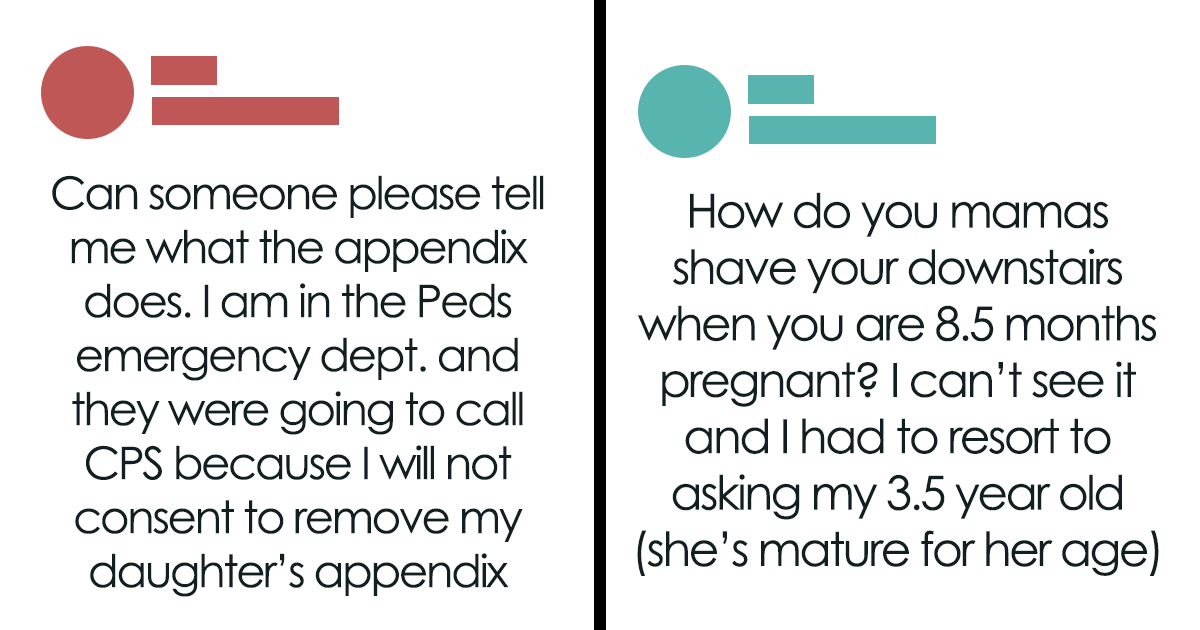
But occasionally, the helpful neighborhood village transforms into a digital town square where everyone has a megaphone, three hours of sleep, and a cousin who allegedly knows more than the entire medical profession. That is when ordinary parenting questions become unhinged mom group posts: oversharing, conspiracy theories, neighborhood feuds, dangerous remedies, and requests for validation after decisions that should probably have remained inside the family group chat.
Stress helps explain part of the chaos. Parents and caregivers face substantial pressure, isolation, financial worries, time demands, and fear of making the wrong choice. Online support can reduce loneliness, but anxious users may also encounter misinformation, judgment, hidden advertising, and echo chambers that repeatedly reinforce the same questionable claims.
With that contextand a respectful salute to every parent who has typed “Is this normal?” at 2:14 a.m.here are 50 fictionalized examples of the wildest patterns found in online parenting communities.
When Parenting Advice Escapes the Laboratory
Medical misinformation is the least amusing category because children can be harmed when anecdotes replace professional care. The American Academy of Pediatrics, FDA, and CDC repeatedly advise parents to rely on qualified clinicians and evidence-based guidance for vaccines, infant feeding, food safety, and urgent symptoms.
-
1. The Onion-Sock Emergency Department
A parent asks whether sliced onions placed inside a child’s socks can cure a high fever. Anyone recommending an actual thermometer is accused of being “closed-minded.”
-
2. Essential Oils Meet the Humidifier
Someone pours a mystery blend into a nursery humidifier and asks why everyone’s eyes are burning. The sales representative arrives in the comments before the pediatrician does.
-
3. The Raw-Milk Infant Experiment
A post recommends unpasteurized milk for a baby because it is “how nature intended.” Nature, apparently, never read an FDA food-safety warning.
-
4. Honey, the Baby Is Only Four Months Old
A grandmother suggests putting honey on a pacifier. When informed that honey is unsafe for babies younger than one, she responds with history’s least scientific sentence: “You survived.”
-
5. The Fever Is Apparently a “Detox”
A child develops worsening symptoms, but the parent insists the illness proves a herbal spray is removing toxins. Several commenters urge immediate medical care. One person recommends more spray.
-
6. Sunscreen Is the Real Sunburn
A group member claims sunscreen causes sunburn because her child burned after she applied it once at breakfast and then spent nine hours at the beach.
-
7. The Amber Necklace That Can Do Everything
A teething necklace is credited with treating drooling, fussiness, sleep regression, diaper rash, bad weather, and possibly the national debt.
-
8. Chiropractic Care for the Lunchbox
A parent asks whether a spinal adjustment might solve her child’s refusal to eat broccoli. Nobody suggests that broccoli occasionally tastes like a tiny tree filled with disappointment.
-
9. Vaccines and Refrigerator Magnets
A blurry photograph of a spoon stuck to someone’s arm is offered as proof of a vaccine conspiracy. The comment section forgets that moisture, pressure, and basic physics exist.
-
10. “Should We Go to the ER?”
The post describes alarming symptoms in twelve paragraphs but rejects every recommendation to seek urgent care because the emergency room has “bad energy.” This is not a group-poll situation.
Household Conflicts That Somehow Became Public Hearings
-
11. The Husband Chore Chart
A color-coded chart awards a grown man one sticker for loading the dishwasher. Ten stickers can be exchanged for choosing a movie, assuming he remembers where the remote lives.
-
12. The Sibling Gift Tax
A mother announces that every birthday-party guest must bring gifts for the birthday child’s siblings so nobody experiences “present inequality.”
-
13. Grandparents Must Submit Applications
Relatives hoping to meet a newborn receive a questionnaire covering vaccination history, fragrance use, political opinions, sock cleanliness, and whether they can provide three references.
-
14. The Emergency Haircut Tribunal
A preschooler cuts her own bangs. The parent demands to know which teacher will be held legally responsible for allowing scissors to exist within the same zip code.
-
15. The Beige Birthday Mandate
Guests are told to wear cream, oatmeal, or “soft mushroom” so the party photographs remain aesthetically cohesive. A five-year-old wearing a red superhero shirt triggers a diplomatic crisis.
-
16. Divorce by Group Poll
A spouse forgets to buy diapers, so 18,000 strangers are asked whether the marriage can be saved. The options are “leave immediately” and “make him call his mother.”
-
17. The Neighborhood Leaf Lawsuit
A parent wants compensation because leaves from a neighbor’s tree landed in her yard. The tree has declined to comment.
-
18. Grandma Used the Wrong Onesie
A grandparent dresses the baby in a shirt featuring a cartoon dinosaur. The parent calls it a “serious boundary violation” because the family’s visual identity is woodland animals.
-
19. The Babysitter Surveillance Command Center
A family installs enough indoor cameras to film a prestige television series, then complains that the babysitter seems uncomfortable being watched while folding towels.
-
20. The Potluck With a Legal Department
A casual neighborhood dinner requires ingredient declarations, preparation photographs, kitchen-inspection records, and notarized confirmation that nobody owns a cat.
School Drama With the Energy of a Political Campaign
-
21. The Michelin Lunchbox Review
A parent complains that her child’s school lunch lacked “plating intention.” The entrée was a grilled-cheese sandwich served to a seven-year-old, not a food critic.
-
22. Tooth Fairy Inflation
A mother demands that other local parents cap tooth-fairy payments at two dollars because another child received twenty and destabilized the neighborhood economy.
-
23. The Pickup-Line Manifesto
A 1,400-word post identifies every driver who merged incorrectly during afternoon pickup. Maps are included. Arrows are red. Justice will apparently be swift.
-
24. Teacher Gift Registry Season
One class parent creates a mandatory holiday registry with minimum spending requirements and becomes confused when “mandatory generosity” proves unpopular.
-
25. The Cupcake Investigation
A student receives a cupcake at school. The parent demands the names, motives, and nutritional credentials of everyone connected to the frosting.
-
26. Allergies Are Not a Lifestyle Choice
A parent insists another child’s serious food allergy should not interfere with her homemade snack tradition because “kids need to build resilience.” That is not how allergies work.
-
27. Homework Is a Personal Attack
A ten-minute reading assignment is described as an effort to destroy family bonding. The child finished it while the post was still being typed.
-
28. The Sleepover Background Investigation
Before approving a sleepover, one mother requests tax returns, home blueprints, employment histories, internet speeds, pet records, and a photograph of the household smoke detectors.
-
29. Participation Trophy for the Parent
A mother asks why she did not receive recognition at her child’s awards ceremony despite spending “at least six hours” reminding him to complete the project.
-
30. The Classroom Group Chat Coup
A disagreement about paper towels ends with two competing parent chats, an anonymous survey, three resignations, and somebody creating a logo for the resistance.
Sharenting: When a Child’s Privacy Leaves the Chat
Posting family moments can build connection, but children also have privacy interests and developing digital identities. Pediatric and psychological guidance recommends asking why a post is necessary, whether it could embarrass the child, who might see it, and whether an older child has consented.
-
31. The Public Potty-Training Documentary
A toddler’s most private milestone becomes a daily photo series complete with captions, progress charts, and updates for several hundred acquaintances.
-
32. The Medical Record Screenshot
A parent uploads an uncensored document showing the child’s full name, birth date, address, medical history, and insurance information to ask whether one number “looks weird.”
-
33. Tantrum Livestreaming
Instead of helping an overwhelmed child regulate, someone starts filming and asks followers to rate the behavior. The child’s hardest moment becomes entertainment.
-
34. Location Services Say Hello
A first-day-of-school photograph reveals the child’s name, school, teacher, grade, schedule, bus number, and exact front-door location. Privacy has left the building.
-
35. Report Cards for the Entire Internet
A proud parent posts every grade alongside the child’s photograph. Strangers begin debating whether one mathematics score indicates laziness.
-
36. The Discipline Poll
Thousands of users are asked to choose a punishment for a child whose mistake, photograph, age, and full explanation are publicly available.
-
37. Babysitter Accusations Without Evidence
A vague misunderstanding leads to a post naming a teenage babysitter, her school, her parents, and her employer before anyone has asked what actually happened.
-
38. The Public Birthday Invitation
A party invitation containing a child’s full name, home address, date, and time is shared publicly. The caption cheerfully says, “Everyone is welcome!”
-
39. The Child Influencer Negotiation
A parent asks how to make a preschooler appear more enthusiastic in sponsored videos. Perhaps the preschooler is not enthusiastic about having a job.
-
40. Embarrassment as Engagement
A child’s awkward question becomes a viral anecdote. When the child later asks for its removal, the parent refuses because the post is “doing numbers.”
Conspiracies, Sales Pitches, and Other Group-Chat Wildlife
Parenting communities are attractive markets for supplements, courses, coaching programs, and household products. The FTC requires truthful advertising and clear disclosure of material relationships, yet recommendations can still look like friendly advice when a seller or influencer benefits financially.
-
41. The Supplement That Fixes Childhood
A powder is promoted as the solution to picky eating, poor sleep, shyness, excessive talking, insufficient talking, math homework, and socks disappearing in the dryer.
-
42. The Crystal Under the Crib
A baby finally sleeps after six months of unpredictable nights. The parent credits a crystal placed under the mattress rather than developmental change or random luck.
-
43. Daycare Detox Baths
A parent claims daycare exposure must be removed nightly through an elaborate bath ritual. It is unclear whether she means germs, socialization, or finger paint.
-
44. Wi-Fi Ruined the Handwriting
A child’s messy penmanship is blamed on the school router. Nobody considers that the writer is six and holding the pencil like a tiny garden shovel.
-
45. Mercury Retrograde Ate the Bedtime Routine
A toddler refuses sleep during a planetary event, proving that celestial mechanicsand not the three-hour afternoon napcaused bedtime chaos.
-
46. The “Chemical-Free” Cleaning Recipe
A homemade cleaner is described as chemical-free despite being composed entirely of chemicals. Ingredients are mixed randomly because the bottle “looks natural.”
-
47. Friendship With a Minimum Order
A supportive reply gradually becomes a product pitch, followed by a private message, a discount code, and an invitation to “join the business family.”
-
48. Doctors Are Banned From Commenting
A pediatrician politely corrects a dangerous claim and is removed for “creating negativity.” The original poster selling detox patches remains an administrator.
-
49. The Screenshot From an Unknown Source
A cropped image featuring six spelling errors is treated as more credible than government agencies, medical associations, and licensed professionals because it says “WAKE UP.”
-
50. The Banana-Length Civil War
A harmless question about slicing bananas for toddlers produces 600 comments, accusations of neglect, competing diagrams, and one departure announcement from a member who “can no longer support this community.”
Why Mom Group Posts Become So Unhinged
Parenting Turns Uncertainty Into an Everyday Companion
Children do not arrive with customer support, predictable operating systems, or a reset button. A choice that works beautifully on Monday may produce complete chaos on Tuesday. Online parenting communities promise immediate certainty: post a question and receive fifty answers before the pediatric office reopens.
The problem is that confidence and accuracy are not the same thing. A stranger may sound authoritative because she uses capital letters, owns a ring light, and begins every sentence with “As a mama who has done her research.” None of those things is a professional credential.
Algorithms Prefer Conflict Over Calm
Balanced advice rarely generates dramatic engagement. “Ask your pediatrician and monitor the symptoms” is useful, but it is not as clickable as “Your doctor will NEVER tell you this.” Social platforms can amplify emotional, surprising, and polarizing material, while personalized feeds may surround users with increasingly similar opinions.
Parenting Choices Become Personal Identities
Breastfeeding, formula feeding, sleep training, screen time, schooling, discipline, food, and medical decisions are often discussed as moral identities rather than practical choices. Once a decision becomes part of someone’s identity, disagreement feels like an attack. A conversation about snacks can escalate into a referendum on whether a stranger loves her children.
Moderation Determines the Culture
A well-run group distinguishes emotional support from medical advice, removes identifying information, discloses commercial conflicts, and stops harassment. A poorly moderated group rewards outrage and treats correction as hostility. Over time, knowledgeable members leave while the loudest participants become the unofficial experts.
Experiences and Lessons From the Wild World of Mom Groups
Spending time in parenting forums teaches you that the strangest posts rarely begin with bad intentions. They usually begin with fatigue. A parent is awake in the middle of the night, holding a coughing child, worrying about money, and searching for reassurance. A mom group responds instantly when a doctor’s office, school administrator, or family member may not. That speed can feel like rescue.
The first important experience is discovering the difference between support and expertise. A commenter can sincerely understand your fear without being qualified to diagnose a rash, interpret a laboratory result, or recommend a substance for an infant. The best groups recognize this boundary. Members offer comfort, help parents prepare questions, and encourage professional care when appropriate. The worst groups turn personal anecdotes into universal laws.
The second lesson is that online parenting judgment is usually a no-win game. A parent who works is accused of missing childhood. A parent who stays home is accused of wasting her potential. Pack a homemade lunch and someone calls you controlling; pack a convenient snack and someone produces a lecture on ingredients. The pressure to perform perfect parenting can make users defensive before a discussion even starts.
The healthiest response is curiosity. Before criticizing a stranger, ask what information may be missing. Is the family dealing with disability, financial stress, limited childcare, cultural differences, postpartum anxiety, or a difficult medical situation? Context does not make every decision wise, but it frequently makes behavior more understandable.
The third experience involves privacy. Oversharing often feels harmless when children are young. Babies cannot object to bathtub pictures, toddlers cannot read embarrassing captions, and elementary students may not understand how widely a post can travel. Years later, however, the child may inherit a searchable archive of health problems, punishments, awkward stories, school records, and emotional moments that someone else chose to publish.
A useful rule is to imagine that the child is sixteen and standing beside you before you press “post.” Would you still share the photograph? Would you include the medical details? Would you tell thousands of people about the tantrum? When possible, ask permission, remove identifying details, restrict the audience, and preserve vulnerable moments for private family memory.
The fourth lesson is to follow the money. When someone recommends the same oil, powder, coaching course, cleaning system, sleep consultant, or educational program under every post, check whether that person sells it. Friendly language does not eliminate a financial conflict. A testimonial is not clinical evidence, and a discount code is not a medical license.
Finally, good digital judgment can be reduced to five questions. Is the situation urgent? Is the advice supported by a qualified source? Is the commenter selling something? Does the post expose a child’s identity or dignity? Would the claim still sound reasonable if spoken aloud in a pediatrician’s waiting room?
Mom groups do not need to disappear. Many provide real companionship, practical knowledge, donated supplies, local recommendations, and the priceless realization that other families are improvising too. They simply work better when empathy is generous, personal information is limited, medical claims are verified, and the phrase “delete this before your child learns to Google” is treated as a public service.
Conclusion
The most unhinged mom group posts are funny because they exaggerate familiar human habits: seeking validation, defending our choices, distrusting inconvenient facts, oversharing when emotional, and turning small disagreements into constitutional crises.
Yet behind the entertainment is a serious reminder. Parents deserve trustworthy information and compassionate support, while children deserve safety, dignity, and privacy. The smartest parenting community is not the one with an answer for everything. It is the one that knows when to offer encouragement, when to verify a claim, and when to say, “Please stop typing and call a qualified professional.”