A barn door is one of those home upgrades that looks expensive, feels custom, and quietly whispers, “Yes, I own a tape measure.” The best part? You do not need a designer budget or a full workshop to make one work in your home. With smart planning, reclaimed materials, basic lumber, paint, trim, and the right sliding barn door hardware, you can create a door that adds charm, saves floor space, and gives a boring doorway a dramatic little personality upgrade.
Whether your style is modern farmhouse, rustic cabin, coastal cottage, industrial loft, or “I found this wood behind the garage and now I’m emotionally attached,” these free DIY barn door design ideas will help you turn ordinary rooms into spaces with character. Barn doors work beautifully for pantries, closets, laundry rooms, bathrooms, offices, mudrooms, bedrooms, entertainment centers, and awkward openings where a swinging door eats up too much space.
Before you grab a saw and start feeling powerful, remember a few practical basics. A sliding barn door usually needs to be wider than the opening so it covers gaps on both sides. The track should generally be about twice the width of the door so the panel can slide fully open. You also need solid wall support, enough side clearance, and a small floor gap so the door glides smoothly instead of scraping like a tired shopping cart.
Before You Build: Simple DIY Barn Door Planning Tips
A gorgeous barn door starts with measuring, not guessing. Measure the width and height of the opening, then add enough overlap to cover the doorway. For many interior projects, adding a couple of inches on each side helps improve privacy and gives the door a finished look. Check nearby switches, outlets, vents, artwork, trim, and furniture before choosing which direction the door will slide.
Next, think about weight. A solid wood barn door looks beautiful, but it can be heavy. Lightweight plywood, MDF, hollow-core doors, or thinner tongue-and-groove boards may be better for renters, beginners, or anyone who wants style without accidentally building a medieval drawbridge. Use a mounting board when needed, fasten hardware into studs or structural blocking, and install a floor guide to keep the door from swinging away from the wall.
16 Free DIY Barn Door Design Ideas for Your Home
1. Classic X-Brace Farmhouse Barn Door
The X-brace barn door is the little black dress of rustic DIY doors: simple, reliable, and somehow appropriate almost everywhere. Start with vertical boards or a plywood base, then add trim in an X pattern across the front. Paint it white for a clean farmhouse look, stain it walnut for warmth, or leave it distressed if you want the door to look like it has charming stories and maybe once knew a horse.
This design works well for bedrooms, bathrooms, laundry rooms, and pantry entrances. Use 1x boards for the face trim, wood glue for stability, and brad nails or screws for a secure hold. Keep the trim balanced so the door looks intentional rather than “I had extra wood and a dream.”
2. Modern Chevron Barn Door
A chevron barn door is ideal when you want movement, texture, and a modern custom look. The angled boards create a clean V-shaped pattern that draws the eye upward and makes the door feel like a design feature instead of just a privacy panel.
You can build this style with a plywood backing and thin wood strips cut at 45-degree angles. Dry-fit everything first, because chevron patterns are beautiful but unforgiving. One wrong angle and the whole door starts looking like it failed geometry class. Use contrasting wood tones for drama or paint everything one color for a more refined finish.
3. Reclaimed Wood Barn Door
Reclaimed wood brings instant character to a DIY barn door. Old fence boards, pallet wood, salvaged planks, or leftover flooring can create a textured, lived-in look that new lumber often struggles to imitate. The knots, nail holes, color variation, and scratches all become part of the design.
Clean the wood thoroughly, remove old nails, sand rough edges, and seal the surface to prevent splinters. This idea is especially strong for rustic living rooms, cozy dens, mudrooms, and cabins. Just make sure reclaimed boards are dry, straight enough to use, and not carrying unwanted guests. Termites are not part of the farmhouse aesthetic.
4. Sleek Flat-Panel Barn Door
If rustic is not your thing, a flat-panel barn door offers a clean, modern alternative. Use a smooth plywood or MDF slab and finish it with matte paint, a minimalist pull, and simple black or brushed metal hardware. The result feels crisp and architectural.
This design is great for home offices, modern bedrooms, small apartments, and contemporary closets. Choose soft white, charcoal, sage green, navy, or greige for a designer-style finish. For an extra polished look, run the door color onto nearby trim or match it to the wall for a subtle built-in effect.
5. Chalkboard Barn Door for Kitchens or Kids’ Rooms
A chalkboard barn door is functional, fun, and extremely useful for anyone who forgets groceries until they are already in the checkout line. Paint a flat barn door with chalkboard paint and use it for meal plans, family notes, chore charts, doodles, reminders, or dramatic grocery lists that begin with “coffee” and end with “more coffee.”
This idea works beautifully for pantry doors, playrooms, homeschool spaces, and mudrooms. Use smooth hardboard, MDF, or plywood for the writing surface. Frame it with stained wood for contrast, and season the chalkboard surface before regular use so it erases more evenly.
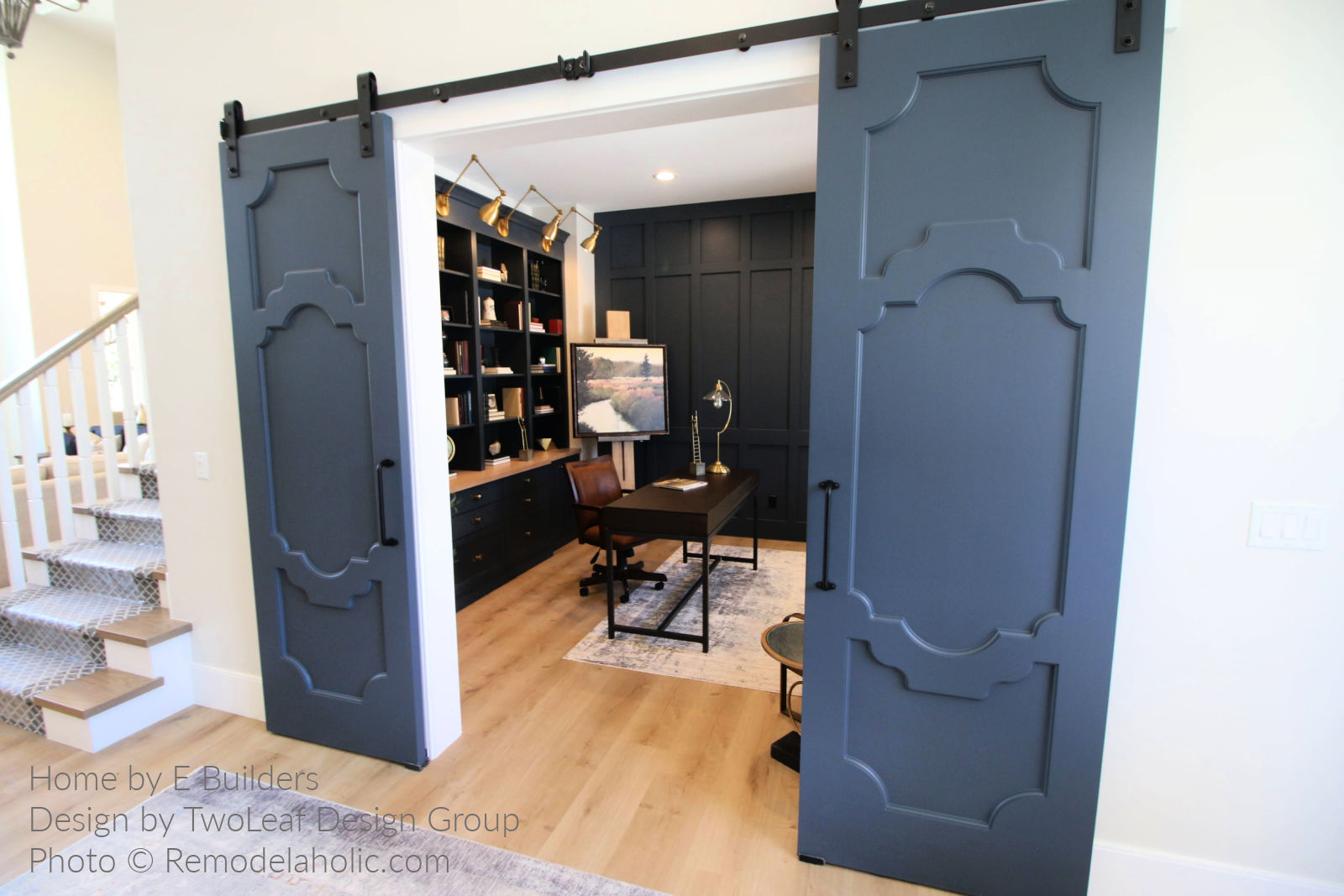
6. Double Barn Doors for Wide Openings
Double barn doors add symmetry and drama to dining rooms, offices, media rooms, and large closets. Instead of one large heavy panel, two smaller panels meet in the center. This can make installation easier and create a more balanced look for wide openings.
You can build matching X-brace doors, simple shaker panels, or modern slabs. Use a track long enough for both doors to open fully, and make sure each side has enough wall clearance. Add door stops so the panels do not roll away like they have somewhere better to be.
7. Glass Panel Barn Door
A glass barn door lets light move between rooms while still creating separation. It is a smart choice for offices, dining rooms, laundry areas, and pantries where full privacy is not essential. Clear glass feels open and airy, while frosted, reeded, or seeded glass adds privacy and texture.
For a DIY approach, you can retrofit an old French door with barn door hardware or build a wood frame around a glass insert. Always use appropriate safety glass when possible, especially in busy homes with kids, pets, or adults who walk while texting.
8. Mirror Barn Door for Bedrooms and Closets
A mirrored barn door is a space-saving multitasker. It covers a closet, reflects light, makes a room feel larger, and gives you a full-length mirror without taking up wall space. That is efficiency with a little sparkle.
Start with a lightweight door slab and attach a mirror securely with mirror adhesive and trim, or repurpose a mirrored closet panel if it is structurally suitable. This design works especially well in bedrooms, dressing areas, laundry rooms, and small apartments. Use soft-close hardware if possible to protect the mirror from enthusiastic sliding.
9. Cane or Rattan Insert Barn Door
Cane webbing and rattan panels bring warmth, texture, and a breezy natural look to a barn door. This style fits coastal, boho, Scandinavian, and organic modern interiors. It is especially attractive for closets, linen storage, laundry rooms, or areas where a little airflow is helpful.
Build a simple frame, then staple or sandwich cane webbing into the center panel. Paint the frame white, black, or natural wood depending on your room. The finished door looks boutique, but the method is beginner-friendly if you measure carefully and stretch the cane evenly.
10. Half-Painted Color Block Barn Door
Color blocking is a budget-friendly way to make a plain barn door feel playful and modern. Paint the bottom half one color and the top half another, or create a diagonal split for a more energetic design. This is a great way to use leftover paint from other projects.
Try cream and terracotta for a warm look, navy and white for a coastal feel, black and natural wood for modern contrast, or sage green and beige for a calming effect. Use painter’s tape, a level, and patience. Peeling tape too early is thrilling; peeling it too late is heartbreak.
11. Shaker-Style Barn Door
Shaker-style barn doors are clean, timeless, and versatile. They feature a flat center panel with simple rails and stiles around the edges. The result is less rustic than an X-brace door and more refined than a plain slab.
This design works in traditional homes, transitional interiors, modern farmhouse spaces, and almost any room where you want architectural detail without visual chaos. Paint it the same color as your trim for a built-in look, or go bold with deep green, black, or navy for a statement door.
12. Vertical Plank Barn Door
A vertical plank barn door is one of the easiest DIY styles to build. Attach tongue-and-groove boards, shiplap, or simple vertical planks to a backing panel, then frame the edges. The vertical lines make ceilings feel taller and give the door a relaxed cottage or farmhouse character.
This option is excellent for beginners because it requires fewer angled cuts than chevron or herringbone designs. Use a light stain for a Scandinavian look, whitewash it for coastal charm, or paint it black for a dramatic modern twist.
13. Herringbone Barn Door
Herringbone is chevron’s slightly fancier cousin. Instead of meeting in sharp V shapes, the pieces overlap in a staggered pattern that creates rich texture and movement. It is a striking choice for entryways, offices, and primary bedroom suites.
This project requires more cutting and patience, so label your pieces and dry-fit the pattern before attaching anything permanently. Use thin wood strips over plywood to control weight. The final look can feel high-end, especially with a clear matte finish or deep stain.
14. Industrial Pipe-Style Barn Door
If you love industrial design, pair a simple wood barn door with black metal hardware, pipe-style handles, and a darker stain. You can create the door from plywood and trim, then let the hardware bring the attitude.
This idea works well in lofts, basements, workshops, masculine offices, and modern rustic spaces. Keep the design simple so the metal details can stand out. A charcoal or espresso finish with black hardware gives the door a strong, grounded look without making the room feel like a factory break room.
15. Mini Barn Doors for Cabinets or Media Centers
Barn doors are not just for rooms. Mini barn doors can hide open shelving, TV consoles, bathroom storage, coffee bars, or kitchen cabinets. They are a smart way to cover clutter while adding charm to furniture you already own.
Use thin plywood panels, small trim, and mini sliding door hardware. This project is less intimidating than a full-size door and is perfect for practicing techniques before tackling a larger opening. It also gives you a stylish excuse to hide board games, router cables, or the mysterious drawer full of batteries that may or may not work.
16. Painted Statement Barn Door
Sometimes the easiest design idea is also the most powerful: paint the barn door a bold color. A red, green, blue, black, mustard, or dusty rose barn door can become a room’s focal point without complicated carpentry.
This works especially well with simple shaker, slab, or plank doors. Match the color to throw pillows, artwork, tile, or cabinet hardware for a cohesive look. If you are nervous, test a sample first. Paint is cheaper than regret, and significantly easier to sand.
Best Rooms for DIY Barn Doors
Barn doors are especially useful in tight spaces where a traditional hinged door gets in the way. A pantry barn door can save space in a busy kitchen and hide snack chaos with one satisfying slide. A laundry room barn door can reduce visual clutter, especially if your laundry area is in a hallway or near the kitchen.
Bedrooms and closets are also popular places for sliding barn doors, but privacy matters. Because barn doors hang outside the opening, they may leave small gaps at the sides or bottom. For bathrooms, choose wider overlap, privacy seals, or soft-close hardware. For offices, glass or frosted panels can separate work zones while keeping the home feeling open.
Materials You Can Use for a Budget-Friendly Barn Door
You do not need rare lumber from a mountain cabin to build a good barn door. Common materials include plywood, MDF, pine boards, tongue-and-groove planks, reclaimed wood, old interior doors, bifold doors, pallet boards, and leftover trim. The best choice depends on your budget, skill level, and how heavy the door can safely be.
Plywood is affordable and stable. MDF paints beautifully but can be heavy. Pine is easy to cut and stain. Reclaimed wood adds personality but may require more prep. Hollow-core doors are lightweight and can be upgraded with trim for a faux custom look. For beginners, a plywood base with decorative trim is often the sweet spot: simple, strong, and forgiving.
Common DIY Barn Door Mistakes to Avoid
The first mistake is building the door before buying or choosing hardware. Hardware affects door thickness, weight limits, track length, clearance, and mounting height. The second mistake is forgetting wall clearance. A sliding door needs room to travel, so check for light switches, outlets, artwork, vents, and adjacent walls.
The third mistake is skipping structural support. Barn doors can be heavy, and drywall alone is not enough to hold the track. Secure hardware into studs or a properly mounted header board. The fourth mistake is ignoring the floor guide. Without one, the door can swing outward, wobble, or feel unstable. Finally, do not forget the handle placement. A beautiful handle installed at an awkward height will annoy you every day with quiet determination.
DIY Experience Notes: What Actually Helps When Building a Barn Door
After looking at many DIY barn door projects, one lesson stands out: the best barn doors are not always the most complicated ones. They are the ones that fit the opening, slide smoothly, match the room, and do not require three emotional support coffees to install. A simple plank door painted beautifully can look more expensive than a complex pattern built in a rush.
One practical experience is to lay the entire door design on the floor before fastening the trim. This helps you see proportions, check angles, and catch mistakes early. It is much easier to move a loose board than to remove a glued and nailed one while questioning your life choices. For chevron and herringbone designs, dry-fitting is not optional; it is the difference between custom craftsmanship and decorative chaos.
Another useful tip is to finish the door before hanging it. Sand both sides, seal or paint all edges, and let everything dry fully. If only one side is finished, wood can absorb moisture unevenly and may warp. Even interior doors benefit from a complete finish, especially in bathrooms, laundry rooms, and kitchens where humidity likes to appear uninvited.
Weight matters more than beginners expect. A thick solid-wood barn door may look impressive, but it also needs stronger hardware, better wall support, and at least one helpful person who will not disappear when lifting time arrives. Lightweight doors are easier to install, safer for many interiors, and still look great when finished with smart trim and paint.
Privacy is another real-world concern. Barn doors are stylish, but they are not always as sealed as traditional doors. For bedrooms, closets, and offices, this may be fine. For bathrooms, you may want extra overlap, side seals, a better latch, or a design that reduces gaps. Nobody wants a beautiful bathroom door that provides the privacy level of a polite suggestion.
Hardware quality also changes the entire experience. Cheap rollers can squeak, wobble, or feel rough. A smooth track, solid stops, spacers, and a reliable floor guide make the door feel intentional and durable. Soft-close hardware is a luxury, but in homes with kids, pets, or enthusiastic door sliders, it can be worth every penny.
Finally, choose a design that belongs in the room. A rustic reclaimed wood door may look amazing in a farmhouse hallway but feel out of place in a sleek modern condo. A flat black slab may look elegant in an office but too severe for a sunny cottage kitchen. The door should feel like part of the home, not like it wandered in from another renovation and decided to stay.
Conclusion
DIY barn doors are popular because they solve real problems while adding personality. They save swing space, hide clutter, define rooms, and create a custom focal point without requiring a full remodel. From classic X-brace farmhouse doors to modern flat panels, chevron patterns, glass inserts, mirrored closet doors, cane panels, and mini cabinet sliders, there is a barn door idea for nearly every home and skill level.
The secret is planning before building. Measure carefully, choose the right materials, make sure the wall can support the hardware, and select a design that fits your room’s style. Do that, and your DIY barn door will look less like a weekend experiment and more like a smart design decision. And yes, you are absolutely allowed to slide it open dramatically the first few times. That is part of the installation process.