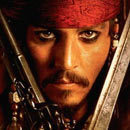
Movie heroes survive through courage, skill, sacrifice, and, occasionally, a screenwriter quietly escorting logic out of the building. When the action gets intense, even a carefully constructed film may bend its own rules to keep the protagonist alive, move the story forward, or deliver an ending audiences will remember.
That does not automatically make the movie bad. Some of cinema’s most entertaining classics contain enormous film logic errors. Viewers accept them because the characters are compelling, the action is thrilling, and nobody wants a lecture on temporal mechanics while Marty McFly is fleeing a casino-owning bully.
The best movie plot holes are not merely unrealistic moments. Movies are allowed to be unrealistic. A genuine cinematic inconsistency appears when a story establishes a rule, treats that rule as important, and then forgets it precisely when remembering it would kill the hero. Here are six memorable cases in which Hollywood continuity mistakes functioned like invisible emergency airbags.
Research support:
6. Hugo Stiglitz Becomes Temporarily Unrecognizable in Inglourious Basterds
The rule established by the movie
Quentin Tarantino introduces Hugo Stiglitz as a German soldier who murdered numerous Gestapo officers before joining Aldo Raine’s Nazi-hunting squad. He is not presented as an obscure deserter hiding behind an unfamiliar haircut. The film explicitly establishes that his crimes have made him famous throughout the German military.
That reputation is useful when the movie wants Stiglitz to feel dangerous. His name arrives with dramatic editing, newspaper imagery, and enough menace to suggest that German soldiers probably trade nervous stories about him during lunch.
The convenient lapse in recognition
The Basterds later send Stiglitz on an undercover assignment in a tavern filled with German soldiers. He sits close to Major Dieter Hellstrom, an intelligent Gestapo officer who detects unusual accents, notices tiny cultural errors, and eventually exposes the group because a British officer signals the number three with the wrong fingers.
Yet Hellstrom never recognizes Stiglitz, the notorious Gestapo killer whose face had reportedly circulated through the German press. The officer can identify foreign finger choreography from across a table but apparently cannot identify the celebrity assassin sitting beside him.
Had Stiglitz been recognized immediately, the undercover operation would have ended before the Basterds could continue their mission against the Nazi leadership. Their survival depends on the German military collectively developing facial blindness at the most helpful possible moment.
Research support:
5. Old Biff Returns to the Wrong Future in Back to the Future Part II
The rule established by the movie
In Back to the Future Part II, elderly Biff steals the DeLorean in 2015, travels to 1955, and gives his younger self a sports almanac containing decades of winning results. Young Biff uses the information to become wealthy and powerful, creating the nightmarish alternate reality known as 1985-A.
Doc Brown explains the branching timeline with a chalkboard. Once history has been changed, traveling forward should lead into the future produced by that alteration. The original future effectively becomes inaccessible until Marty and Doc repair the past.
The convenient trip back
After changing 1955, Old Biff somehow returns the DeLorean to the apparently unchanged 2015 where Marty and Doc are waiting. That allows the heroes to retrieve their time machine and discover the altered 1985. Under Doc’s own explanation, Biff should have arrived in a future shaped by his younger self’s wealth and influence.
Had the car gone to that alternate 2015, Marty and Doc would have been stranded in the original future without a DeLorean. The sequel would have become a moving drama about two men waiting 70 years for the calendar to catch up.
The filmmakers have offered a defense. According to the franchise’s official FAQ, Old Biff did enter an altered 2015, but the changes had not yet visibly spread through the environment. A deleted scene also showed him disappearing, suggesting that the revised timeline was erasing him. It is a workable explanation, although the finished movie leaves the mechanism ambiguous. Viewers are asked to accept that temporal consequences move at exactly the speed required by the screenplay.
Research support:
4. Asteroid Fields Change Difficulty Levels in Star Wars
The rule established by the movie
During The Empire Strikes Back, Han Solo pilots the Millennium Falcon into a densely packed asteroid field while Imperial fighters pursue him. C-3PO calculates the odds of successfully navigating the field at approximately 3,720 to one. The danger is immediately demonstrated as pursuing TIE fighters collide with the rocks.
Han survives because he is an exceptional pilot, Chewbacca is an exceptional copilot, and the Falcon is apparently held together by equal portions of engineering and denial. Even so, the sequence establishes asteroid navigation as nearly suicidal.
The rule becomes optional
In Attack of the Clones, Obi-Wan Kenobi and Jango Fett race through another crowded asteroid environment. Both pilots intentionally enter it, perform complicated maneuvers, exchange weapons fire, and emerge without treating their survival as a statistical miracle.
A reasonable defense is that C-3PO calculated the odds for Han’s specific situation rather than issuing a universal safety rating for every rock in the galaxy. Different fields may have different densities, speeds, and gravitational conditions. That explanation makes scientific sense.
Cinematically, however, both sequences present tumbling walls of stone that should turn spacecraft into expensive confetti. The danger level changes according to which scene the filmmakers want. Han needs an almost impossible obstacle to escape the Empire, while Obi-Wan and Jango need a visually exciting racetrack. Space geology is apparently controlled by genre.
Research support:
3. Tank Physics Protect the Jones Family in Indiana Jones and the Last Crusade
The rule established by the movie
One of the film’s greatest action sequences follows Indiana Jones as he tries to rescue his father and Marcus Brody from a German tank. Inside the vehicle, a handgun is accidentally fired upward. The bullet ricochets around the armored interior before striking the driver.
The joke works because the tank’s metal walls prevent the bullet from escaping. Once fired, the projectile becomes a tiny, furious tourist searching the cabin for a human destination.
The shrapnel that politely behaves
Earlier in the chase, Indy blocks one of the tank’s gun barrels. When the weapon fires, the explosion blasts backward into the vehicle. The gunner is killed, and fragments appear to scatter through the compartment. Somehow, Henry Jones and Marcus survive without suffering the kind of ricochet damage the later handgun scene says should be unavoidable.
If one pistol bullet can bounce through the cabin and strike the driver, an internal cannon explosion should create a storm of metal fragments capable of injuring nearly everyone inside. Instead, the shrapnel follows a strict “villains only” workplace policy.
The sequence is intentionally modeled after old adventure serials, where physical plausibility was less important than momentum. It succeeds because Steven Spielberg directs the chase with such speed and clarity that viewers have no time to conduct an armored-vehicle safety inspection. Nevertheless, Indy’s rescue works because the tank briefly decides that explosive debris is harmless to supporting characters.
Research support:
2. The Cursed Pirates Forget Their Most Useful Powers in The Curse of the Black Pearl
The rule established by the movie
Captain Barbossa and his crew are cursed after stealing Aztec gold. Moonlight reveals their skeletal forms, food gives them no satisfaction, and ordinary injuries cannot kill them. The curse can be broken only by returning every stolen coin with the blood of those responsible.
The pirates can also detect the missing medallion when it touches the water. That supernatural signal helps them locate Elizabeth Swann in Port Royal. These are not subtle powers. The crew possesses immortality and magical treasure-tracking, a benefit package considerably better than dental insurance.
Elizabeth’s surprisingly empty threat
After being captured, Elizabeth threatens to drop the medallion into the sea. Barbossa’s crew reacts as though she is holding the last parachute on a crashing airplane. Her threat gives her leverage and helps protect her from immediate violence.
But why should the pirates care? They cannot drown. If the coin sinks, they can walk along the harbor floor and retrieve it. If mud or darkness hides it, their established ability to sense the treasure should guide them. The same medallion called to them from inside a building across Port Royal.
Later films complicate the franchise’s magical rules, but the first movie’s problem exists within its own setup. The pirates temporarily forget that they are immortal treasure detectors because Elizabeth needs bargaining power. Without that lapse, she loses control of the situation, Will Turner loses his opportunity to attempt a rescue, and Jack Sparrow’s complicated plan becomes much shorter and significantly more depressing.
Research support:
1. Twenty Years of Alien Fuel Survive a Major Spill in District 9
The rule established by the movie
Christopher Johnson has spent approximately 20 years collecting and processing alien material into a small canister of fuel. The liquid is essential to activating alien technology and reaching the command module above Johannesburg.
The movie emphasizes the difficulty of collecting it. Christopher extracts tiny quantities from discarded equipment, gradually accumulating enough to power his escape plan. When the final amount is added, the container appears ready for use.
The fuel supply that ignores subtraction
Wikus van de Merwe discovers the canister and accidentally sprays a noticeable amount of its contents onto his face. The exposure begins transforming him into an alien-human hybrid. The spill is not decorative moisture; it contains enough active material to rewrite his biology and turn his arm into a universal adapter for alien weapons.
Despite the loss, Christopher later uses the remaining liquid to activate the command module and reach the mothership. If every tiny contribution mattered after two decades of work, losing a meaningful portion should have left the vehicle underpowered.
Perhaps Christopher collected a safety margin. Perhaps the liquid acts more like a catalyst than conventional fuel. The movie never gives a technical explanation, so the audience has to supply one. What matters dramatically is that Wikus must be exposed to begin his transformation, while Christopher still needs enough material to leave Earth. The same canister therefore contains exactly one face spray more than the plot previously suggested.
Research support:
Why These Movie Plot Holes Do Not Ruin the Films
A plot hole becomes distracting when it damages the emotional logic of a story. None of these examples completely destroys its movie because the characters, performances, pacing, and spectacle remain stronger than the inconsistency.
Audiences understand that films compress time, simplify physics, and withhold information. The real test is whether the convenient event feels emotionally appropriate. Han Solo surviving an asteroid field feels right because reckless piloting defines him. Indiana Jones escaping impossible danger feels right because the franchise is built like a Saturday matinee serial. Jack Sparrow benefiting from magical confusion feels right because confusion may be his most reliable weapon.
These heroes are protected by plot armor, but the armor is usually polished so brightly that viewers admire the shine before noticing the dents.
The Viewer Experience: Spotting Plot Holes Without Ruining Movie Night
The first viewing is about momentum
Most movie plot holes are nearly invisible during an effective first viewing. The audience is processing character goals, dialogue, music, editing, and visual information at the same time. When a scene creates enough suspense, the brain rarely pauses to calculate whether Old Biff entered the correct version of 2015.
This is why pacing is one of a filmmaker’s greatest defensive tools. A fast-moving sequence limits the time viewers have to question it. The tank chase in The Last Crusade moves from horses to gunfire, collapsing machinery, dangling heroes, and a cliff. By the time someone wonders about ricocheting shrapnel, John Williams has already carried the movie into the next emotional beat.
The rewatch changes the assignment
A second or third viewing creates a different experience. The viewer already knows who survives, so attention shifts toward construction. Background details become clearer. Rules stated in earlier scenes become easier to compare with later events. What once felt like a miracle may begin to look like the screenwriter quietly moving a chess piece while everyone watches the fireworks.
Group rewatches are especially dangerous for movie logic. One person notices that the pirates can walk underwater. Another remembers that they can sense the medallion. Within minutes, the room has formed an unpaid investigative committee specializing in supernatural maritime law.
Debating explanations is part of the entertainment
Plot-hole discussions often produce creative repairs. Fans invent missing scenes, technical distinctions, and character motivations that could reconcile apparent contradictions. Sometimes filmmakers provide explanations of their own, as the Back to the Future creators did with the idea that timeline changes spread gradually.
A useful explanation does not always erase the original problem. If essential information exists only in a deleted scene, interview, novelization, or official FAQ, the theatrical movie may still feel incomplete. The audience can accept the repair while recognizing that the film itself did not clearly install it.
Not every unrealistic moment is a plot hole
Viewers also gain a better experience by separating genuine contradictions from ordinary improbability. A hero surviving a dangerous jump is not automatically a plot hole. Neither is a villain making a bad decision. Human beings make poor decisions with impressive regularity, often without the benefit of dramatic music.
A stronger example occurs when the story violates information it previously treated as reliable. If a magical object can be tracked across a city but becomes impossible to locate in shallow water, the internal rule has changed. If altering history creates a new future except when the villain needs to return a time machine, the mechanics deserve examination.
The best response is usually affectionate skepticism
Finding a cinematic inconsistency does not require declaring the entire film worthless. In many cases, identifying the gap makes the movie more enjoyable. It reveals how storytelling works: setup, distraction, emotional payoff, and selective enforcement of rules.
Great movies are not flawless machines. They are guided experiences designed to make audiences feel something at a particular moment. Sometimes the director lands the emotional payoff so successfully that logic misses the train, calls a cab, and arrives during the end credits.
So laugh at the missing explanation, debate it with friends, and then continue enjoying the film. A gaping plot hole may be large enough to drive a DeLorean through, but it can still lead to a terrific scene on the other side.
Research synthesis includes official studio materials, franchise resources, screenplay references, major U.S. entertainment publications, reviews, and film databases.