Shopping for a convertible car seat can feel like selecting life-support equipment while simultaneously solving a geometry problem in your back seat. The seat must fit your child, fit your vehicle, install securely, remain manageable during the morning rush, and survive spilled milk without becoming a dairy-based science experiment.
The best convertible car seats of 2025 combine useful height and weight limits with practical installation systems, comfortable harnesses, washable fabrics, and dimensions that make sense in real family vehicles. However, no model is automatically the “safest” for every family. A properly installed seat that fits your child and vehicleand that you can use correctly on every rideis more valuable than a feature-packed throne that never sits securely.
This guide highlights seven strong choices for different situations, including extended rear-facing, three-across seating, rotating access, long-term use, premium construction, travel, and budget-conscious shopping.
The Best Convertible Car Seats of 2025 at a Glance
| Car Seat | Best For | Rear-Facing Limit | Forward-Facing Limit | Standout Feature |
|---|---|---|---|---|
| Graco 4Ever DLX 4-in-1 | Best overall | 4–40 lb | Harness to 65 lb | Converts through backless booster mode |
| Graco Extend2Fit 3-in-1 | Extended rear-facing value | 4–50 lb | Harness to 65 lb | Adjustable legroom extension panel |
| Britax Poplar S | Small cars and easy installation | 5–50 lb | Harness to 65 lb | 17-inch width and ClickTight installation |
| Chicco Fit360 ClearTex | Best rotating seat | 4–40 lb | Harness to 65 lb | 360-degree rotation |
| Clek Foonf | Premium three-across setups | Up to 50 lb | Harness to 65 lb | Approximately 16.9 inches wide |
| Chicco NextFit Max ClearTex | Comfort and extended rear-facing | 4–50 lb | Harness to 65 lb | Extra rear-facing legroom |
| Cosco Scenera Extend | Budget, travel, and backup cars | 5–40 lb | Harness to 50 lb | Lightweight, simple design |
Important: Limits can vary by model version and manufacture date. The label and manual attached to your specific seat always take priority over a comparison chart.
How We Chose These Convertible Car Seats
Our picks emphasize factors that affect safety in everyday use rather than flashy marketing claims. We considered rear-facing capacity, installation design, harness adjustment, seat width, front-to-back footprint, cleaning requirements, construction quality, and usefulness across different stages.
We also compared independent hands-on evaluations with official specifications. Ease of use matters because even an excellent restraint can underperform when the belt path is misunderstood, the harness remains loose, or caregivers avoid adjusting the seat because doing so feels like wrestling an octopus in a parking lot.
1. Graco 4Ever DLX 4-in-1: Best Convertible Car Seat Overall
The Graco 4Ever DLX earns the top overall position because it balances longevity, usability, and relatively accessible pricing. It begins as a rear-facing harness seat for children from 4 to 40 pounds, changes to a forward-facing harness seat, and later converts into both high-back and backless booster modes.
That four-stage design is appealing to families who would prefer not to research a new restraint every time their child grows another inch. The no-rethread harness lets the headrest and harness height move together, while multiple recline settings help accommodate different vehicle seats.
What We Like
The controls are familiar, replacement parts and instructions are widely available, and the seat provides booster capability up to 120 pounds in its backless configuration. Independent reviewers have also praised its combination of crash-test performance, everyday usability, and value.
What to Consider
It is not particularly narrow or lightweight. Families attempting a three-across installation should measure carefully, and frequent transfers between vehicles may quickly become an upper-body workout.
2. Graco Extend2Fit 3-in-1: Best for Extended Rear-Facing on a Budget
The Graco Extend2Fit is one of the most practical choices for parents who want to keep a child rear-facing longer without moving into premium pricing. It supports rear-facing use from 4 to 50 pounds and includes a four-position extension panel that provides up to five additional inches of legroom.
That panel addresses a common parental concern: bent toddler legs. Children are generally comfortable sitting cross-legged or with bent knees, and visible leg bending alone is not a reason to turn a child forward-facing. The seat’s higher rear-facing limit can be particularly useful for children who reach 40 pounds before they are developmentally ready for the next stage.
What We Like
It offers excellent long-term value, a no-rethread harness, two cupholders, and a high-back booster mode on the 3-in-1 version. The extension panel is not decorative fluff; it gives growing legs genuinely useful space.
What to Consider
The installation process is less effortless than premium lock-off systems, particularly with a vehicle belt. Read the manual closely, check the lower-anchor weight limit, and switch installation methods when required.
3. Britax Poplar S: Best Slim Convertible Car Seat
At approximately 17 inches wide, the Britax Poplar S is an excellent candidate for compact cars, narrow rear benches, and some three-across arrangements. Its appeal is not limited to width, however. Britax’s ClickTight system opens the seating area so the vehicle belt can be routed and tensioned with less tugging through hidden tunnels.
The Poplar S accommodates rear-facing children from 5 to 50 pounds and forward-facing children up to 65 pounds. An anti-rebound bar adds a structural element behind the seat when used rear-facing, and the removable fabrics simplify cleanup after snack-related incidents.
What We Like
The combination of a narrow shell, high rear-facing limit, and approachable seat-belt installation makes this one of the most versatile options in the group. It also offers multiple recline positions, which can help balance child comfort with front-passenger space.
What to Consider
A stated width does not guarantee that three seats will fit together. Cupholder placement, vehicle contours, door armrests, belt buckles, and neighboring car-seat shapes all influence the final puzzle.
4. Chicco Fit360 ClearTex: Best Rotating Convertible Car Seat
The Chicco Fit360 ClearTex rotates toward the vehicle door, allowing caregivers to buckle a child while facing them. This can reduce bending and twisting, particularly in taller SUVs or for adults with back, shoulder, or mobility limitations.
The seat supports rear-facing use from 4 to 40 pounds and forward-facing harness use up to 65 pounds. Chicco’s LeverLock self-tensioning system is designed to create a secure vehicle-belt installation, while the rotating carrier clicks into its base in either travel orientation.
What We Like
The rotation is useful rather than gimmicky. Magnetic buckle holders keep hardware out of the seating area, the no-rethread harness adjusts easily, and ClearTex materials are made without added flame-retardant chemical treatments.
What to Consider
At more than 31 pounds, this is not a travel seat. It also occupies more front-to-back room than many nonrotating models. Measure your vehicle, confirm that the rotation remains accessible next to the door, and make sure every caregiver understands when the seat is locked for travel.
5. Clek Foonf: Best Premium Seat for Three-Across Arrangements
The Clek Foonf is built more like a permanent piece of vehicle equipment than something you casually move between Grandma’s sedan and the family SUV. Its shell is approximately 16.9 inches wide, making it one of the narrowest premium convertible seats available.
U.S. versions support rear-facing use up to 50 pounds when installed according to the applicable belt requirements, followed by forward-facing harness use up to 65 pounds. The seat includes an anti-rebound bar for rear-facing installation and rigid lower-anchor connectors for eligible forward-facing installations.
What We Like
The narrow profile is valuable for three-across planning, while the tall, upright design can give children a good view out the window. Fabric options emphasize durability and easier cleaning, and the construction feels impressively substantial.
What to Consider
The Foonf can weigh roughly 38 pounds in its rear-facing configuration. It is expensive, heavy, and not the simplest choice for a tiny newborn without the appropriate approved accessory. Think of it as a seat that moves into your car and begins receiving mail there.
6. Chicco NextFit Max ClearTex: Best for Comfort and Straightforward Daily Use
The Chicco NextFit Max ClearTex is a traditional nonrotating convertible seat with an emphasis on rear-facing space, supportive padding, and manageable installation. It accommodates rear-facing children from 4 to 50 pounds and offers more legroom than standard versions of the NextFit.
Multiple recline positions help the seat fit vehicle benches with different slopes. Chicco’s tightening and belt-management features also reduce the amount of force and improvisation required to achieve a stable installation.
What We Like
The deep shell, adjustable headrest, padded harness, and extended-use dimensions work well for families who take frequent road trips. ClearTex fabric provides a flame-retardant-free material option, and the cover is designed with real-world cleaning in mind.
What to Consider
At about 19 inches wide and more than 26 pounds, the NextFit Max is not ideal for three-across seating or air travel. Its generous padding may also feel warm in hot climates, so vehicle ventilation deserves consideration.
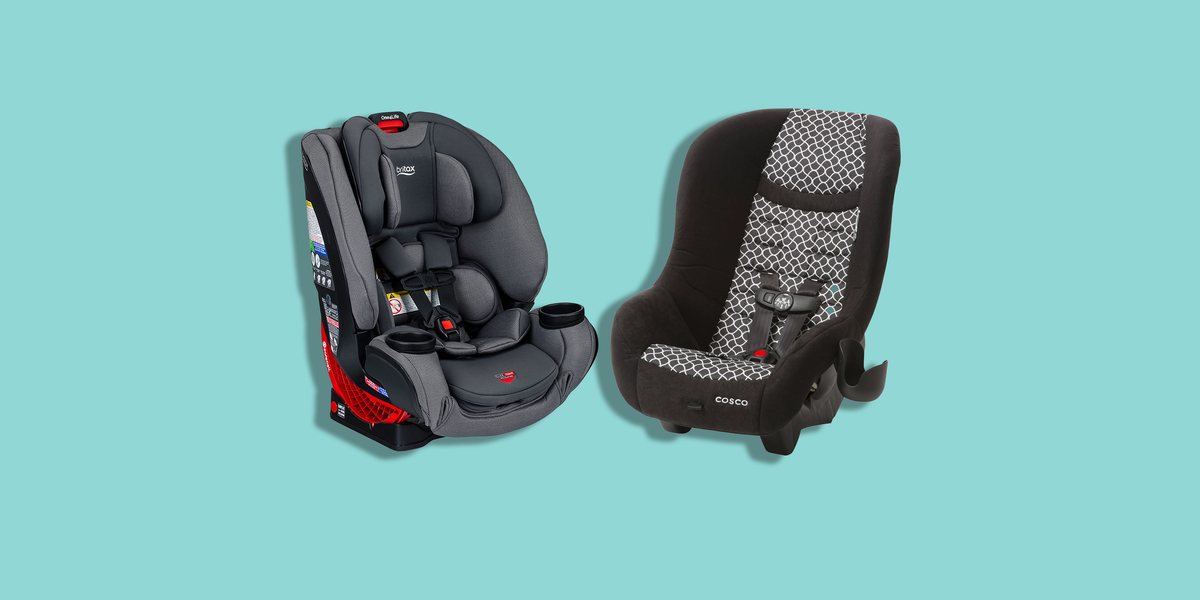
7. Cosco Scenera Extend: Best Budget and Travel Convertible Car Seat
The Cosco Scenera Extend proves that a functional car seat does not need a touchscreen, a rotating platform, or a cupholder with stronger opinions than the toddler using it. This straightforward two-mode seat supports rear-facing children from 5 to 40 pounds and forward-facing children from 30 to 50 pounds.
Its low weight makes it attractive for flights, rental cars, taxis, grandparents’ vehicles, and families who regularly transfer a seat. The cover is machine washable, the harness adjusts from the front, and the uncomplicated shell is easier to carry through an airport than most premium seats.
What We Like
It is inexpensive, portable, and useful as a secondary restraint. For occasional travel, a light seat that caregivers can carry and install correctly may be more practical than checking a 30-pound rotating model.
What to Consider
The Scenera Extend lacks a no-rethread harness, premium padding, and booster mode. Its lower height limits may cause some children to outgrow it sooner than heavier long-term models. Verify aircraft approval on the exact seat label before flying.
How to Choose the Right Convertible Car Seat
Prioritize Rear-Facing Capacity
Infants and young children should remain rear-facing until they reach the maximum rear-facing height or weight permitted by their seat. A 50-pound rear-facing limit can provide additional time for larger toddlers, but shell height and child proportions matter too. A long-torsoed child may reach a height-based fit rule before reaching the weight maximum.
Measure Both Width and Front-to-Back Space
Narrow seats help with multiple-child arrangements, but width is only half the equation. A deeply reclined rear-facing seat may reduce front-passenger legroom. Measure the vehicle bench and review both manuals before buying, especially when the front passenger is tall.
Choose an Installation You Understand
Lower anchors are not inherently safer than a correctly installed vehicle belt. Use the method permitted by the seat and vehicle manuals, never combine methods unless the manufacturer specifically allows it, and follow stated anchor-weight limits.
Look Beyond the Maximum Weight
Harness height, seated shoulder height, head-clearance rules, and total child height can determine when a seat is outgrown. The largest number printed on the box rarely tells the whole story.
Plan for Cleaning
Children bring crumbs, sunscreen, mysterious stickiness, and occasionally an entire digestive emergency into the back seat. Check whether the cover is machine washable, whether harness pads can be removed, and how complicated reassembly is before choosing a seat.
Convertible Car Seat Safety Tips
- Install the seat in the back seat and keep children rear-facing to the model’s stated limit.
- Check movement only at the correct belt path; a properly installed seat should generally move less than one inch from side to side or front to back there.
- Position rear-facing harness straps at or below the shoulders and forward-facing straps at or above them, unless the manual specifies otherwise.
- Place the chest clip at armpit level and tighten the harness until excess webbing cannot be pinched at the shoulder.
- Always use the top tether in forward-facing mode when required and permitted.
- Avoid bulky winter coats beneath the harness. Use thin layers and place blankets over the secured child instead.
- Register the seat with its manufacturer so you receive recall and safety notices.
- Do not use aftermarket inserts, head supports, toys, or strap covers unless approved for that exact seat.
- Seek help from a certified Child Passenger Safety Technician when an installation remains uncertain.
Final Verdict
The Graco 4Ever DLX is the most balanced option for families seeking long-term versatility, while the Graco Extend2Fit stands out for affordable extended rear-facing. The Britax Poplar S is especially compelling in small vehicles, and the Chicco Fit360 ClearTex offers meaningful rotating convenience.
Families building a narrow three-across arrangement should examine the Clek Foonf, comfort-focused shoppers may prefer the Chicco NextFit Max, and frequent travelers can save moneyand several pulled muscleswith the Cosco Scenera Extend.
The winning seat is ultimately the one that fits your child, installs securely in your vehicle, and remains easy enough that every caregiver uses it properly on every trip.
Real-World Experience: What Living With a Convertible Car Seat Is Actually Like
Specification sheets are useful, but daily life exposes details that rarely appear in a product description. Across caregiver experiences and hands-on testing, one lesson appears repeatedly: the easiest seat to use correctly often becomes the family favorite, even when another model has more features.
Installation is the first reality check. A car seat may look perfectly reasonable on the kitchen floor, then become a three-dimensional logic puzzle once placed on a sloped vehicle bench. Belt buckles disappear beneath the shell, lower anchors sit deep between cushions, and the front passenger suddenly discovers that their knees have become part of the dashboard. Seats with built-in tensioning panels or accessible lock-offs can dramatically reduce this frustration.
Rotating seats create one of the most noticeable improvements in daily loading. Turning the seat toward the door makes it easier to lower a toddler into place, untwist the harness, and check buckle positioning. The benefit is especially obvious when parking spaces are narrow or when a child has entered the “rigid banana” phase and objects to sitting down on principle. The trade-off is bulk. Rotating models are heavy, take up more room, and are better treated as permanent installations.
Narrow seats solve a different problem. A 17-inch shell may preserve space for another car seat or an adult passenger, but successful three-across arrangements depend on how neighboring seats fit together. Sometimes two wider seats puzzle together because their widest points occur at different heights. Sometimes three supposedly slim seats refuse to cooperate because their cupholders collide like tiny plastic bumper cars. Trial installation is far more informative than comparing width numbers alone.
Extended rear-facing seats also change expectations. Parents often worry that a toddler’s bent legs indicate discomfort. In practice, many children happily cross their legs, rest their feet on the vehicle seat, or fold themselves into positions that would send an adult directly to physical therapy. Leg position is less important than staying within the seat’s complete rear-facing fit requirements.
Cleaning becomes another major dividing line after several months. Easily removable covers are worth appreciating before the first spill, not after it. A machine-washable pad can turn a major mess into a manageable laundry task, while a complicated cover with hidden clips may require photographs during removal so reassembly does not become an archaeological reconstruction.
Finally, premium materials do not automatically guarantee better day-to-day satisfaction. Some families happily pay more for refined fabrics, narrow construction, or a smoother installation mechanism. Others discover that a simple midpriced seat fits their car and routine perfectly. The most successful purchase is not necessarily the fanciest model; it is the restraint that remains correctly installed, properly adjusted, and consistently used through ordinary commutes, road trips, grocery runs, and every snack crumb in between.