Note: This article is written for general educational purposes and is based on established public-health data and historical outbreak records. Disease numbers can change as surveillance systems update, especially for COVID-19 and other infections still being monitored.
Introduction: The Pandemic That Turned Everyone Into an Amateur Epidemiologist
Before 2020, most people did not casually use phrases like “community transmission,” “viral load,” “R number,” or “flatten the curve” while standing six feet apart in a grocery line. Then COVID-19 arrived, and suddenly the world had opinions about aerosols, variants, masks, vaccine platforms, and whether sourdough starter counted as a household pet. But when people ask how COVID-19 compares to past outbreaks, the answer is more interesting than “it was big.”
COVID-19 was not the deadliest disease by case-fatality rate. Ebola is far more lethal. It was not the most contagious virus known to public health. Measles still wears that crown with the confidence of a champion who never misses leg day. It was not the first global respiratory pandemic, either; the 1918 influenza pandemic remains one of history’s most devastating public-health catastrophes. Yet COVID-19 became uniquely disruptive because it combined several dangerous features: efficient respiratory spread, transmission before symptoms, global travel, vulnerable aging populations, uneven public trust, and a world economy wired together like a holiday light stringone bad bulb, and the whole thing flickers.
To understand COVID-19 in historical context, we need to compare it with past outbreaks not only by death toll, but also by speed, visibility, medical response, social impact, and long-term consequences. Numbers matter, but so do the human behaviors around them. Viruses do not read policy memos. They do not care whether a city is tired, whether a family has a wedding planned, or whether a small business just ordered 400 pounds of coffee beans. Outbreaks become disasters when biology meets society.
COVID-19 in One Sentence: Less Lethal Than Some, More Disruptive Than Most
COVID-19, caused by SARS-CoV-2, spread globally because it found a sweet spot that public-health officials dread. It was serious enough to overwhelm hospitals and kill millions, but often mild enough that infected people could move around before realizing they were contagious. That is a very inconvenient personality trait for a virus. SARS in 2003 was more deadly by percentage, but easier to contain because many people became most infectious after symptoms appeared. COVID-19, by contrast, could spread from people who felt fine, felt “a little off,” or insisted it was “just allergies” while unknowingly sharing more than awkward small talk.
Official global COVID-19 records have counted hundreds of millions of confirmed cases and more than seven million confirmed deaths, while experts widely agree that confirmed totals understate the real burden because testing, reporting, and death certification varied by country and over time. In the United States, COVID-19 became one of the deadliest events in national history, with more than one million deaths attributed to the disease. Even after the emergency phase ended, COVID-19 did not vanish. It shifted into ongoing respiratory-virus surveillance alongside influenza and RSV, which is a less dramatic headline but still a major public-health reality.
COVID-19 vs. the 1918 Flu Pandemic
Scale and mortality
The 1918 influenza pandemic remains the benchmark for modern pandemic horror. It infected an estimated one-third of the world’s population and killed at least 50 million people globally, including about 675,000 in the United States. Those figures are staggering even before remembering that the world population was far smaller than it is today. The 1918 flu also had a haunting feature: it killed many healthy young adults, not just infants, older adults, and medically fragile people.
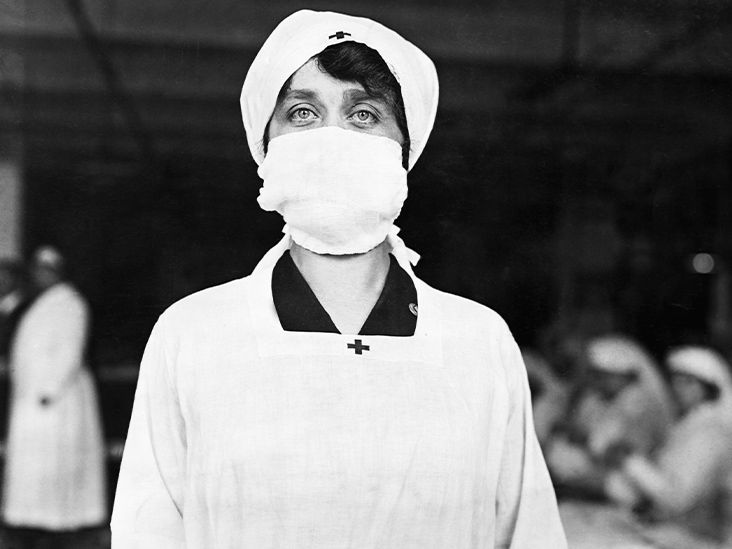
COVID-19 caused a larger recorded U.S. death toll than the 1918 flu, but direct comparisons require caution. The United States population today is much larger, medical care is more advanced, and death reporting is more systematic. In 1918, there were no antibiotics to treat secondary bacterial pneumonia, no intensive care units, no ventilators as we know them, no antivirals, and certainly no mRNA vaccine sprint. Public-health tools were blunt: isolation, masks, school closures, bans on gatherings, and a lot of desperate hoping.
Medical response
The biggest difference between 1918 and COVID-19 is scientific speed. During the 1918 pandemic, scientists did not even know influenza was caused by a virus. During COVID-19, researchers identified the virus, sequenced its genome, developed diagnostic tests, launched vaccine trials, and began rolling out vaccines in less than a year. That pace would have sounded like science fiction to physicians in 1918, who were often treating patients with little more than thermometers, bed rest, and professional grimness.
Still, COVID-19 showed that scientific capacity is only part of pandemic control. Public trust matters. Communication matters. Supply chains matter. A vaccine sitting in a freezer helps no one unless people can access it, understand it, and trust it enough to receive it.
COVID-19 vs. SARS: Cousins With Very Different Careers
SARS, caused by SARS-CoV, emerged in 2002 and spread internationally in 2003. It caused more than 8,000 probable cases and 774 deaths worldwide. That made SARS frightening, especially because it hit hospitals hard and had a case-fatality rate far higher than early COVID-19 estimates. Yet SARS was contained within months, while COVID-19 became a global pandemic that reshaped daily life for years.
The key difference was timing of transmission. SARS patients were generally most infectious after they were noticeably ill. That gave public-health teams a fighting chance: identify the sick, isolate them, trace contacts, and stop chains of spread. COVID-19 was sneakier. People could transmit SARS-CoV-2 before symptoms appeared or without ever developing obvious symptoms. It is difficult to stop a fire when some of the sparks are invisible.
SARS was like a loud burglar who trips the alarm. COVID-19 was the quiet one who already copied the house key.
COVID-19 vs. MERS: Deadlier, But Less Contagious
Middle East respiratory syndrome, or MERS, is another coronavirus disease. Since it was first identified in 2012, it has caused more than 2,600 laboratory-confirmed cases globally, with a high proportion of deaths. On paper, MERS looks terrifying because its case-fatality rate is much higher than COVID-19’s. But outbreaks are not judged by fatality rate alone.
MERS has not spread as efficiently from person to person as COVID-19. Many cases have been linked to healthcare settings or contact with infected camels, and sustained global community transmission has not occurred. COVID-19’s danger came from its ability to move through ordinary social life: family dinners, offices, buses, choir practices, restaurants, gyms, and crowded indoor events. MERS may be more lethal to an infected individual, but COVID-19 was far better at getting invited everywhere.
COVID-19 vs. the 2009 H1N1 Swine Flu Pandemic
The 2009 H1N1 influenza pandemic spread quickly around the world and caused an estimated 151,700 to 575,400 deaths globally during its first year. Compared with COVID-19, H1N1 generally caused less severe disease at the population level, although it had an unusual age pattern: a large share of deaths occurred among people younger than 65, unlike typical seasonal flu patterns.
H1N1 benefited from an important advantage in public-health response: influenza was already a familiar enemy. Scientists had existing flu-vaccine systems, antiviral drugs, surveillance networks, and decades of experience with seasonal flu. SARS-CoV-2, by contrast, was new. Early in 2020, doctors were learning in real time which treatments helped, which did not, and why some patients developed severe inflammatory and clotting complications. The learning curve was not a curve so much as a cliff with a clipboard.
COVID-19 also produced larger waves of hospitalization and death, especially before vaccines and treatments reduced severe outcomes. H1N1 disrupted life, but COVID-19 shut down borders, schools, offices, entertainment venues, and entire sectors of the economy on a scale few living people had seen.
COVID-19 vs. Ebola: The Difference Between Lethality and Spread
Ebola outbreaks are among the most frightening infectious-disease events because Ebola can be extremely deadly, especially without treatment. The 2014–2016 West Africa Ebola outbreak was the largest Ebola outbreak recorded, with more than 28,600 cases and more than 11,000 deaths. Those numbers are tragic, but far smaller than COVID-19’s global burden.
The reason is transmission. Ebola spreads through direct contact with bodily fluids from someone who is sick or has died from the disease. That is horrifying and dangerous, especially for caregivers, healthcare workers, and families participating in burial rituals. But it is not the same as a respiratory virus that can drift through indoor air from someone who feels well enough to attend a meeting.
Ebola is like a wildfire in dry brush: intensely destructive where conditions allow it to burn. COVID-19 was more like smoke spreading through connected rooms. Less deadly per infection, but much harder to keep contained once it entered normal daily life.
COVID-19 vs. Smallpox: A Reminder That Vaccines Can Change History
Smallpox was one of humanity’s greatest infectious killers for centuries. It caused fever, rash, scarring, blindness, and death on a massive scale. Unlike COVID-19, smallpox has been eradicated. The last natural case occurred in 1977, and the World Health Assembly declared smallpox eradicated in 1980. That achievement remains one of the greatest victories in public-health history.
Smallpox and COVID-19 differ in several important ways. Smallpox symptoms were usually visible, which helped with detection and isolation. It had no animal reservoir maintaining constant spillover into humans. The vaccine was highly effective and durable. COVID-19, meanwhile, spreads through respiratory particles, evolves into new variants, and can transmit before symptoms. Eradicating COVID-19 was never as realistic as controlling it, reducing severe disease, and protecting high-risk groups.
The smallpox story matters because it proves that coordinated global action can defeat a disease. It also reminds us that success requires persistence. Public health is rarely glamorous. It is forms, freezers, field teams, trust-building, and people doing uncelebrated work until the miracle looks inevitable in hindsight.
COVID-19 vs. Measles: Contagion Is Not the Same as Pandemic Impact
Measles is far more contagious than COVID-19. Before widespread vaccination, measles infected huge numbers of children, and outbreaks remain a threat where vaccination rates fall. The United States declared measles eliminated in 2000, meaning continuous domestic spread had stopped, but imported cases and undervaccinated communities can still spark outbreaks.
So why did COVID-19 cause a larger global crisis than measles in recent decades? Vaccination is the main reason. Measles has an excellent vaccine with long-lasting protection. When communities maintain high coverage, measles struggles to spread. COVID-19 vaccines greatly reduced severe disease and death, but they did not provide the same level of sterilizing, long-term population immunity against infection, especially as variants evolved.
In plain English: measles is a faster runner, but we built a better fence. COVID-19 was not the fastest runner, but it kept finding new gates.
What Made COVID-19 So Disruptive?
1. Silent and presymptomatic transmission
Many past outbreaks became easier to control once symptoms appeared before peak contagiousness. COVID-19 did not play by that rule. People could spread the virus before feeling sick, which made temperature checks and symptom screening useful but incomplete. A person with no fever could still be infectious. That fact turned ordinary interactions into risk calculations and made public-health messaging more complicated.
2. Global travel and dense networks
In 1918, the virus traveled with troops, ships, and crowded wartime conditions. In 2020, SARS-CoV-2 moved through international air travel, business networks, tourism, conferences, and family mobility. The modern world is beautifully connected until a respiratory virus decides to use the same network.
3. Hospitals under pressure
COVID-19’s danger was not only the percentage of infected people who died. It was also the concentration of severe cases during surges. When too many people needed oxygen, ICU beds, or specialized staff at the same time, hospitals strained. Mortality can rise when health systems are overwhelmed, and routine care for other conditions can be delayed.
4. Variants changed the game repeatedly
Public-health plans would have been simpler if SARS-CoV-2 had remained genetically polite. Instead, variants altered transmissibility, immune escape, and wave timing. Alpha, Delta, Omicron, and later descendants reminded everyone that viruses evolve. Apparently, they did not receive the memo asking them to be considerate.
5. The information pandemic
COVID-19 unfolded in the age of social media, group chats, livestreams, and algorithmic outrage. Accurate guidance competed with rumors, conspiracy theories, miracle cures, and screenshots from someone’s cousin’s neighbor’s podcast. Past outbreaks had misinformation too, but COVID-19 gave misinformation broadband speed.
What COVID-19 Revealed About Public Health
COVID-19 exposed both brilliance and weakness. The brilliance was real: rapid genomic sequencing, vaccine development, wastewater surveillance, telehealth expansion, international data sharing, and improved treatments. The weaknesses were also real: fragmented data systems, unequal access to care, nursing home vulnerability, supply shortages, burnout among healthcare workers, and deep public mistrust.
Compared with past outbreaks, COVID-19 showed that a wealthy country can still struggle if its public-health infrastructure is underfunded, its messaging is inconsistent, and its communities are divided. Science can build a vaccine in record time, but it cannot personally drive every dose to every arm while also explaining immunology at Thanksgiving dinner.
Lessons From Past Outbreaks That Still Matter
Early action saves time later
One lesson from SARS, Ebola, influenza, and COVID-19 is that delay is expensive. Early testing, transparent communication, isolation support, and rapid response can prevent small outbreaks from becoming national emergencies. Waiting for certainty may feel cautious, but pathogens interpret hesitation as a welcome mat.
Trust is outbreak infrastructure
Public trust is as important as laboratory capacity. Communities are more likely to follow guidance when officials communicate clearly, admit uncertainty, correct mistakes, and respect local realities. “Because we said so” is not a durable pandemic strategy.
Vaccines work best before the crisis peaks
Smallpox eradication, measles control, influenza planning, and COVID-19 vaccination all point to the same truth: vaccines are most powerful when systems are ready before panic begins. Distribution planning, community outreach, safety monitoring, and clear education are not extras. They are the road the vaccine travels on.
Equity is not a slogan; it is disease control
Outbreaks exploit gaps. Crowded housing, unstable work, lack of paid sick leave, limited healthcare access, and language barriers can all increase risk. Protecting vulnerable communities protects everyone because infectious diseases do not respect neighborhood boundaries, job titles, or inspirational wall art.
Personal and Community Experiences: What COVID-19 Taught Us Up Close
Beyond statistics, COVID-19 became personal in ways past outbreaks often did not for people in the modern United States. Many Americans had read about Ebola, SARS, or the 1918 flu as distant eventsterrible, important, but not part of daily routine. COVID-19 changed that. It walked into kitchens, classrooms, nursing homes, offices, churches, airports, and birthday parties. It turned ordinary decisions into moral puzzles. Should you visit your parents? Cancel the wedding? Keep the shop open? Send the child to school? Wear a mask when everyone else stopped? Suddenly, public health was not an abstract government function; it was the air in the room.
One of the most common experiences was uncertainty fatigue. Early in the pandemic, guidance changed as scientists learned more. To researchers, changing guidance is normal when evidence improves. To the public, it sometimes felt like trying to assemble furniture while the instructions rewrote themselves every fifteen minutes. Masks went from debated to recommended. Surface cleaning went from obsessive theater to more balanced hygiene. Isolation periods shifted. Boosters arrived. Variants changed risk calculations. Many people were not rejecting science; they were exhausted by the speed at which reality updated.
Another shared experience was grief without normal rituals. Funerals were delayed, livestreamed, shortened, or held with painful restrictions. Families said goodbye through phones and tablets. Healthcare workers became intermediaries between patients and loved ones, carrying emotional burdens that no job description could fully explain. Past outbreaks also produced grief, of course, but COVID-19 created a strange modern loneliness: surrounded by digital connection, yet physically separated when presence mattered most.
COVID-19 also changed work. Remote work became normal for some and impossible for others. Office workers discovered that meetings could, in fact, have been emails. Essential workers discovered that society’s applause did not always come with enough protection, pay, or flexibility. Teachers became technology troubleshooters, counselors, curriculum designers, and amateur lighting technicians overnight. Parents became substitute teachers while pretending to understand third-grade math methods that looked suspiciously more advanced than their college coursework.
At the community level, the pandemic revealed both generosity and fracture. Neighbors delivered groceries. Volunteers sewed masks. Restaurants fed hospital staff. Mutual-aid groups helped strangers find medicine, diapers, and appointments. At the same time, public-health measures became cultural flashpoints. A mask could be interpreted as caution, fear, politics, kindness, control, or common sense depending on who was looking at it. That social tension was one of COVID-19’s defining differences from many past outbreaks: the virus spread biologically, but the response fractured socially.
For many people, the lasting lesson is humility. Modern medicine is powerful, but not magical. Data is essential, but messy. Individual choices matter, but so do ventilation, sick leave, hospital staffing, and public trust. COVID-19 compared to past outbreaks is not just a story of one virus versus another. It is a story about how preparedor unpreparedsocieties are when history stops being something in a textbook and starts coughing in the next room.
Conclusion: COVID-19’s Place in Outbreak History
COVID-19 was not history’s most lethal infection by case-fatality rate, nor was it the most contagious disease humanity has faced. But it was one of the most disruptive pandemics of the modern era because it combined moderate severity, efficient respiratory transmission, silent spread, global mobility, evolving variants, and uneven trust in institutions. Compared with SARS, it spread more quietly and widely. Compared with MERS and Ebola, it was less deadly per infection but far more transmissible in everyday settings. Compared with the 1918 flu, it met a world with better science but also larger, faster networks of movement and information. Compared with smallpox and measles, it reminded us that vaccines are powerful, but disease control depends on biology, behavior, and public cooperation.
The main lesson is not that COVID-19 was exactly like any past outbreak. It was not. Every outbreak has its own fingerprint. The lesson is that preparedness must be broad: strong surveillance, clear communication, fast research, resilient hospitals, trusted vaccines, community support, and honest leadership. The next outbreak may not look like COVID-19. It may be more lethal, more contagious, slower, faster, easier to detect, or harder to treat. But the memory of COVID-19 gives us a sharper mapprovided we are willing to read it before the next alarm rings.