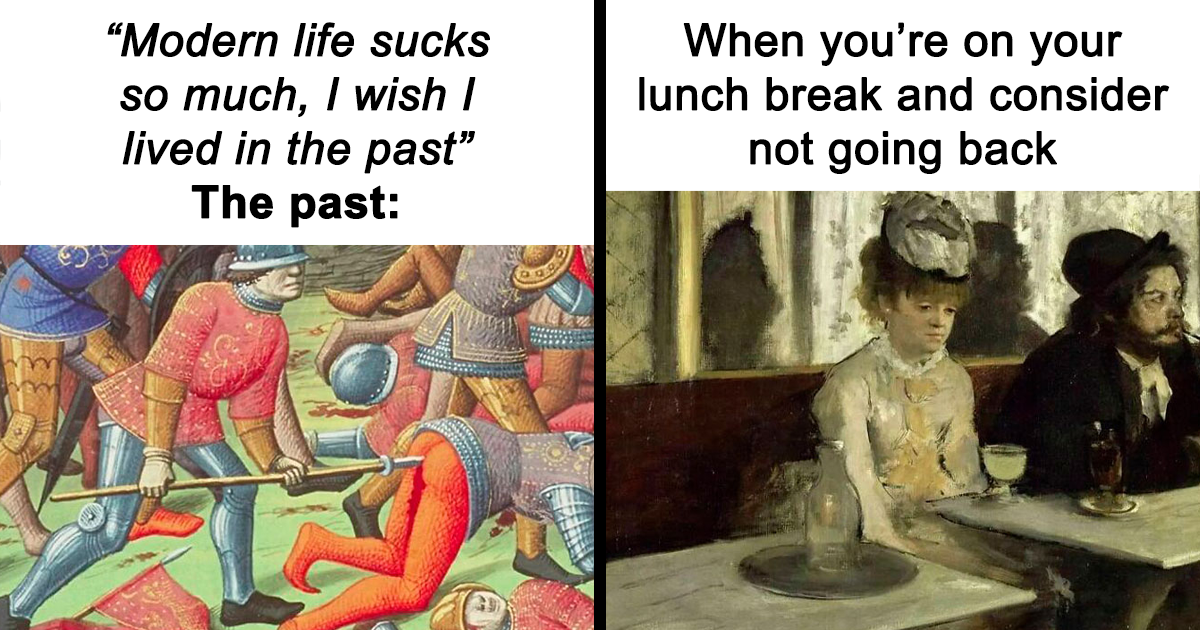
Classical art was never really “quiet” or “serious” in the way people imagine. Greek sculptors chased ideal beauty, Roman artists borrowed, copied, and reinvented, and later Western art kept returning to myths, marble, mosaics, and the same old human dramas: vanity, romance, ego, awkward poses, and the universal need to look important in public. That is exactly why classical art memes work so well today. The faces may be carved in stone, but the mood is painfully modern.
Sources synthesized for this article: Merriam-Webster on “classical” as related to ancient Greek and Roman world; Art Institute of Chicago on ancient Greek/Roman art periods; Smarthistory on Greek/Roman art and idealization; National Gallery of Art on classical mythology in later art; Getty on Roman mosaics; Cleveland Museum of Art on Greek/Roman collections; Smithsonian on classical architecture; Metropolitan Museum on caricature and classical references.
Why Classical Art Is Basically Meme Fuel
Classical art has all the ingredients the internet loves: dramatic expressions, impossible confidence, exaggerated ideals, symbolic props, and a cast of gods, heroes, emperors, and mortals who seem to be one bad decision away from a scandal. Ancient Greek art is often divided into major periods, and its Classical phase is known for a more realistic but still highly idealized look. Roman art inherited that world, loved Greek influence, and kept remixing it into portraits, sculpture, and mosaics that still feel strangely recognizable. In other words, humans were already being humans a long time ago.
The joke lands because the old problems never left: beauty standards, status anxiety, workplace politics, public performance, and that deep ancient fear of looking embarrassing in front of everyone. Classical mythology also kept echoing through later Western art, which means the same stories of envy, temptation, and chaos kept getting retold for centuries. If a meme can survive from a marble bust to a timeline full of screenshots, it is doing something right.
The 30 Memes
1. “When your ancient friend says, ‘I’m not dramatic,’ and then becomes a tragedy sculpture.”
Some classical figures look one sentence away from a full emotional collapse. The stone is calm, but the face is giving “this meeting could have been an email.”
2. “Greek gods: immortal, beautiful, and somehow still in everybody’s business.”
The mythology memes write themselves because the divine world is basically a giant family group chat with lightning bolts.
3. “Roman portrait mode: let me show you my jawline and my authority.”
Roman elites loved power portraits, and the message was clear: stare at this nose and respect my governance.
4. “When the statue has better abs than the gym influencer.”
Idealized bodies were part of the classical visual language, which explains why modern viewers keep comparing marble to today’s fitness culture.
5. “That moment you realize your problems are not unique; they are ancient.”
Classical art memes are comforting in the weirdest way. People 2,000 years ago were already worried about image, status, and looking cool in public.
6. “Museum lighting: because every sculpture deserves its close-up.”
Classical works in museum collections are often displayed like celebrities, and honestly, they earned it.
7. “When the marble drapery is doing more work than your whole outfit.”
Ancient sculptors loved drapery because it let them show motion, elegance, and a level of fabric confidence most wardrobes can only dream about.
8. “Greek art said: ‘Perfection matters.’ The internet said: ‘Relatable.’”
That tension between ideal beauty and human messiness is exactly what keeps classical art memes alive.
9. “Apollo walking in like he did not rehearse this pose for three hours.”
Some classical figures feel casually posed, but the result is pure theatrical swagger.
10. “When your ex is a myth, but the heartbreak is still real.”
Mythological scenes are basically the original breakup content, only with better costumes and more divine consequences.
11. “That marble stare that says, ‘I have seen wars, taxes, and group projects.’”
Classical faces can feel timeless because they capture the same exhausted dignity modern people bring to Monday mornings.
12. “Roman copies of Greek masterpieces: the ancient version of ‘inspired by.’”
Romans admired Greek forms so much that they copied and reworked them constantly, which is basically remix culture with sandals.
13. “When the goddess enters and the room gets 40% more complicated.”
Mythological women in classical art are rarely background decoration; they tend to be the plot.
14. “The body language of someone who has already made a bad decision.”
Many classical narratives freeze the exact moment before the consequences land, which makes them unexpectedly meme-friendly.
15. “Mosaic floors: ancient luxury, modern Pinterest energy.”
Roman mosaics turned rooms into status statements, and the pattern obsession feels surprisingly current.
16. “When the sculpture is calm, but the myth is chaos.”
That contrast is part of the fun: polished surfaces, messy stories.
17. “The ‘I woke up like this’ look, except it took a chisel and a kingdom.”
Classical idealism often made bodies look effortlessly perfect, even though the artistic process was anything but effortless.
18. “Every ancient hero: one dramatic pose away from a fan edit.”
Heroic nudity, posture, and muscular confidence have been meme material for as long as people have been captioning images.
19. “When your personal brand is ‘divine,’ but your behavior is a mess.”
That is the eternal appeal of gods in art: they are powerful, beautiful, and deeply human in all the wrong ways.
20. “Classical architecture: built to impress and absolutely succeed.”
Columns, symmetry, and monumental forms still signal authority today because the visual language never really left.
21. “The museum caption: ‘Unknown artist.’ The meme caption: ‘Iconic behavior.’”
Sometimes the joke comes from realizing that anonymous artists captured emotions so specific they feel personal now.
22. “When the portrait says ‘wisdom’ but the face says ‘I survived a family argument.’”
Ancient portraits can carry layers of image-making, power, and psychology all at once.
23. “Ancient marble flexing harder than your entire algorithm.”
Classical sculpture still dominates feeds because people cannot resist a visually perfect comeback from the past.
24. “The tragic hero starter pack: confidence, destiny, and poor timing.”
Myths stay funny because the structure of the joke is usually the structure of human life: overconfidence, surprise, and consequences.
25. “When your dramatic side is so strong it becomes art history.”
Classical art often magnifies emotion just enough to make it readable from across a gallery and across a century.
26. “Romans: ‘We love Greek culture.’ Also Romans: ‘Let’s put our own name on everything.’”
That blend of admiration and reinvention helped classical art spread, mutate, and stay relevant for later eras.
27. “Athletic ideal then, fitness trend now. Same pose, different century.”
Ancient depictions of strong, balanced bodies echo modern fitness imagery more than people like to admit.
28. “When the marble looks expensive but emotionally unavailable.”
That cool, polished distance is part of the allure. You are invited to admire, not necessarily to hug.
29. “A mythological disaster with excellent composition.”
Classical artists knew how to turn chaos into order, which is also the dream behind every good meme template.
30. “Two thousand years later, and we are still captioning the same human flaws.”
That is the punchline. The medium changed, the platform changed, but vanity, envy, romance, ambition, and embarrassment never went anywhere.
Why These Memes Feel So Current
Classical art memes work because they do more than mock old statues. They translate ancient visual habits into modern emotional shorthand. A stern bust can become a workplace mood. A god in motion can become a reaction image. A carved pose can read like someone trying too hard on a first date. The joke is funny because the old world still understands the new one, and the new world secretly recognizes itself in the old.
There is also a built-in sophistication to the humor. To enjoy a classical art meme, you do not need a PhD in antiquity, but you do need a tiny bit of cultural memory. The best memes reward that little spark of recognition: “Oh, that sculpture looks exactly like my boss when the spreadsheet breaks.” Classical art becomes less distant and more human, which is precisely why it keeps traveling well across time, classrooms, museums, and feeds.
My Own Experience With Classical Art Memes
The first time classical art memes really clicked for me, it was because they exposed how little the emotional fundamentals of life have changed. I was looking at a heroic sculpture and laughing at a caption about confidence because the joke was not really about marble at all. It was about the strange human ability to enter a room like we own the place, even when our phone battery is at 4 percent and our life is held together by coffee, reminders, and optimism. That kind of joke feels modern, but the ancient figures are already acting it out in stone.
What makes these memes especially fun is that they sit right on the border between high culture and low-stakes internet chaos. One minute, you are thinking about Greek idealism, Roman adaptations, or the way mythology shaped later Western art. The next minute, you are reading a caption that turns a statue into a painfully accurate mood board for someone who just got left on read. That jump is part of the charm. It reminds you that art history is not a sealed-off museum label; it is a living conversation that keeps getting retranslated into whatever language people are speaking now.
I also love how classical art memes make people look twice. Someone who would normally scroll past a sculpture suddenly pauses because the caption is funny, and in that pause they actually see the artwork. They notice the pose, the expression, the balance of the composition, the way a god or hero is idealized, and the fact that somebody long ago spent a huge amount of skill making stone look alive. The meme starts as a joke, but it ends up doing a surprising amount of educational work.
Another thing I have noticed is how well these memes handle contrast. Classical art is often associated with solemnity, grandeur, and perfection, yet the internet thrives on imperfection. When the two collide, the result feels fresh instead of disrespectful. A good meme does not destroy the artwork; it reveals a second layer of meaning. The sculpture becomes less of a distant relic and more of a mirror. Suddenly, that flawless ancient face is not just “classical.” It is awkward, smug, tired, judging, victorious, flirtatious, or over it exactly like the rest of us.
There is also a certain honesty in the way classical art memes expose performance. Ancient rulers wanted to project power, beauty, and legitimacy. Artists knew how to stage that image. Today, people do almost the same thing on social media with carefully chosen photos, captions, filters, and timing. The tools are different, but the instinct is familiar. That is why a marble bust and a selfie can feel like cousins. Both are trying to answer the same question: how do I want the world to see me?
The best part of all is that these memes invite people into art history without making them feel like they need permission. You do not have to be fluent in Greek mythology, Roman politics, or the finer points of sculpture to enjoy them. You just need to recognize a human emotion when you see it. That is what makes classical art such rich meme material: it has survived because it still makes sense. The names changed, the clothes changed, the platform changed, but the drama stayed gloriously the same.
Conclusion
Classical art memes are funny because they are true. They take the polished surfaces of antiquity and reveal the same messy instincts that drive modern life: vanity, pride, longing, rivalry, beauty obsession, and the urge to be remembered. Greek and Roman art built a visual vocabulary of idealized bodies, mythic drama, and imperial confidence, and the internet has simply given that vocabulary a louder microphone. Hardly anything has changed throughout the years, except now the joke comes with a caption.