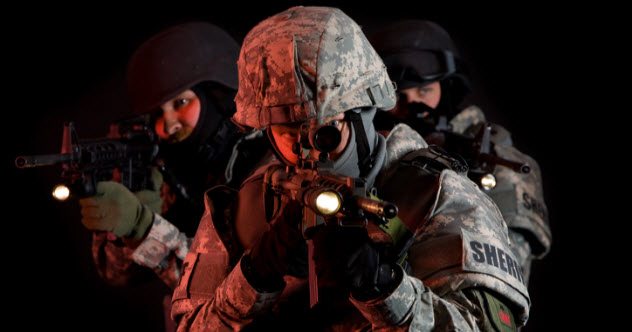
SWAT teams were created for the worst moments: hostage rescues, active shooters, barricaded suspects, and emergencies where regular patrol tactics are not enough. But when military-style force is used for routine searches, shaky warrants, wrong addresses, or rushed planning, the result can be less “precision operation” and more “disaster with a battering ram.”
This article looks at ten real U.S. SWAT or SWAT-style law enforcement assaults that went horribly wrong. Some involved federal tactical teams, some local narcotics squads, and some multi-agency raids. The common thread is not that every officer involved had bad intentions. The thread is that high-force policing leaves almost no room for errorand when the information is bad, the damage can be irreversible. The ACLU’s 2014 review of SWAT deployments found that most of the incidents it studied involved search warrants, commonly drug searches, rather than hostage or active-shooter emergencies.
Why SWAT Raids Can Go Wrong So Quickly
A SWAT raid compresses decision-making into seconds. Doors are breached, people wake up confused, pets bark, children scream, and armed homeowners may believe they are facing burglars. In that fog, a wrong address is not a typoit is a constitutional crisis in boots. A weak warrant is not paperwork dramait is the first domino. A flashbang in the wrong room is not “unfortunate”it can be life-changing.
That is why these cases remain important. They are not just tragic headlines. They are cautionary tales about investigation quality, judicial review, supervision, body-camera transparency, medical response, and whether a tactical team should have been used at all. In short: if the plan depends on everything going perfectly, the plan is already wearing roller skates on wet tile.
1. The MOVE Bombing in Philadelphia, 1985
When a police assault turned into an urban catastrophe
On May 13, 1985, Philadelphia police attempted to evict members of MOVE, a Black liberation and back-to-nature group, from a rowhouse on Osage Avenue. The confrontation escalated into one of the most infamous police actions in American history. Police dropped an explosive device from a helicopter onto the building. A fire spread, killing 11 people, including children, and destroying dozens of homes. WHYY’s retrospective on the official MOVE Commission notes that the commission later called the bombing an “unconscionable” act.
This was not a SWAT raid in the narrow modern sense, but it was a tactical police assault that showed how quickly force can outrun judgment. The mission moved from enforcement to devastation. The lesson is painfully simple: when police tactics begin to resemble battlefield tactics, the neighborhood becomes the battlefieldand neighbors did not sign up for that job.
2. Ruby Ridge, Idaho, 1992
A standoff where escalation became the story
Ruby Ridge began with an attempt by U.S. Marshals to arrest Randy Weaver on a fugitive warrant. A shootout followed, killing Deputy U.S. Marshal William Degan and Weaver’s teenage son, Samuel. The FBI’s Hostage Rescue Team was then called in, and the standoff escalated further. Vicki Weaver was killed by an FBI sniper while standing in the doorway of the family cabin. The Justice Department’s own review described the chain of events and the involvement of specialized federal units.
Ruby Ridge became a landmark example of how tactical pressure, poor communication, and aggressive rules of engagement can deepen a crisis rather than resolve it. It also damaged public trust in federal law enforcement for years. Once a tactical operation becomes a symbol, it does not stay in the mountains. It enters politics, courtrooms, training manuals, and every argument about government power that follows.
3. Waco, Texas, 1993
The raid that became a 51-day national trauma
On February 28, 1993, agents from the Bureau of Alcohol, Tobacco and Firearms attempted to serve warrants at the Branch Davidian compound near Waco, Texas. The raid erupted into a gun battle that killed four ATF agents and six Branch Davidians. The standoff lasted 51 days and ended on April 19 with a fire that killed dozens more people. A Justice Department report and congressional records both describe the raid’s planning failures and deadly consequences.
Waco remains one of the most studied law enforcement disasters in U.S. history. The key issue was not simply that the government used force. It was that the initial tactical plan depended heavily on surprise, and when surprise was lost, the operation still went forward. That is like realizing the bridge is out and deciding the car probably has enough confidence to make it across.
4. Ismael Mena in Denver, 1999
A no-knock raid, a wrong target, and no drugs found
In September 1999, Denver police conducted a no-knock raid at the home of Ismael Mena while searching for drugs. Mena was shot and killed by SWAT officers. No drugs were found. The ACLU argued that the no-knock warrant should not have been issued, and later accounts reported that the raid was tied to wrong or unreliable address information.
The Mena case became a lasting example of how bad intelligence can turn a home into a kill zone. Police may enter expecting suspects. Residents may see armed intruders. Both sides react in seconds. The tragedy is that the “seconds” were created by decisions made much earlier: informant handling, warrant review, address verification, and supervisory approval.
5. Kathryn Johnston in Atlanta, 2006
False information, a 92-year-old woman, and a fatal raid
Kathryn Johnston, a 92-year-old Atlanta woman, was killed in 2006 when police officers entered her home during a drug raid based on false information. The Justice Department later announced prison sentences for three former Atlanta officers, stating that the search warrant had been obtained through false information and that Johnston was fatally shot during its execution.
The Johnston case is especially chilling because it exposed misconduct not as a tiny paperwork wrinkle but as the foundation of the raid itself. If the warrant is fiction, everything built on it becomes a horror story with official letterhead. Her death led to scrutiny of Atlanta police practices and became one of the most cited examples in debates over no-knock warrants and drug-war policing.
6. The Berwyn Heights Mayor Raid, 2008
Wrong assumptions, dead dogs, and a stunned mayor
In 2008, a SWAT team raided the Maryland home of Cheye Calvo, then mayor of Berwyn Heights, after a package of marijuana was delivered to the residence. Calvo and his family were later cleared of wrongdoing, but officers killed the family’s two Labrador retrievers during the raid. The case drew national attention as an example of how a drug investigation could become a violent home invasion against people who were not suspects.
This case did not end in human death, but it still matters. Pets are not furniture with fur. For families, the killing of animals during raids creates trauma and outrage, especially when the household was innocent. The Berwyn Heights raid also highlighted a recurring question: why use overwhelming force before doing the boring-but-essential work of confirming who actually lives at the address?
7. Aiyana Stanley-Jones in Detroit, 2010
A child killed during a police raid
In May 2010, seven-year-old Aiyana Stanley-Jones was shot and killed during a Detroit police raid. Officers were searching for a murder suspect. The raid involved a flashbang device, and the shooting later became a national symbol of the risks children face when tactical teams enter homes at night or early morning. Charges against the officer who fired the fatal shot were eventually dismissed.
The death of a child during a raid is the kind of event that collapses every bureaucratic defense into one question: how did the plan account for the people inside? Tactical planning often focuses on the suspect, but homes are rarely empty movie sets. They contain children, grandparents, guests, pets, and people sleeping on couches. Reality has a rude habit of ignoring the neat boxes on an operations chart.
8. Jose Guerena in Tucson, 2011
A Marine veteran killed in a SWAT raid
Jose Guerena, a 26-year-old Marine veteran, was killed in May 2011 when a Pima County SWAT team raided his home near Tucson, Arizona. ABC News reported that SWAT members fired 71 times and hit Guerena 60 times, according to police statements. Other reporting noted that the case drew intense scrutiny because Guerena’s family said he believed intruders were entering the home, and questions remained about the evidence and raid planning.
For many observers, Guerena’s death captured the terrible overlap between armed home defense and aggressive police entry. In a country where many people legally own firearms, a forced-entry raid can create exactly the danger it claims to control. When police rely on shock and speed, residents may respond with fear and self-defense instincts. That combination is not a recipe; it is a pressure cooker.
9. Baby Bou Bou in Habersham County, Georgia, 2014
A flashbang grenade landed in a toddler’s playpen
In 2014, officers executing a drug raid in Georgia threw a flashbang device into a home. It landed in the playpen of 19-month-old Bounkham “Bou Bou” Phonesavanh, severely injuring him. ABC News reported that the child required multiple surgeries and that the family faced enormous medical bills. AP later reported on charges connected to the raid, and a federal judge approved a multimillion-dollar settlement for the family.
The Bou Bou case is often cited because it shows the danger of using explosive distraction devices in homes where officers do not know exactly who is inside. The point of a flashbang is to disorient. The problem is that babies are already pretty disoriented by life, and they do not come with tactical warning labels. A device meant to create temporary confusion caused lasting injury.
10. The Harding Street Raid in Houston, 2019
A no-knock raid built on lies
In January 2019, Houston police conducted a no-knock drug raid at the home of Dennis Tuttle and Rhogena Nicholas. Both were killed, and several officers were injured. AP reported that former Houston officer Gerald Goines was later convicted of murder after prosecutors said he used a fraudulent no-knock warrant and falsely portrayed the couple as dangerous drug dealers. The case led to reviews of numerous past cases tied to the officer.
The Harding Street raid is a modern warning flare. It shows that when the warrant process fails, the raid itself becomes the violent expression of that failure. It also shows why accountability after the fact, while necessary, can never fully repair what happened. A conviction may answer legal questions, but it cannot put people back at their kitchen table.
Related Case: Breonna Taylor and the National Reckoning Over No-Knock Raids
Although not always described as a traditional SWAT operation, the 2020 police raid that killed Breonna Taylor in Louisville, Kentucky, belongs in any serious discussion of tactical home entries gone wrong. Officers executed a drug warrant after midnight. Taylor’s boyfriend, Kenneth Walker, said he believed intruders were breaking in and fired one shot. Police returned fire, killing Taylor. AP has described the raid as botched, and the Justice Department later secured a policing reform agreement with Louisville nearly five years after Taylor’s death.
Taylor’s death reshaped national debate around no-knock warrants, warrant accuracy, police transparency, and whether forced-entry tactics should be used for drug investigations. Her case also made clear that legal technicalities do not soften public grief. When a person dies in her own home during a flawed raid, the phrase “policy reform” sounds very small next to the loss.
Common Patterns in SWAT Assaults That Went Awry
1. Bad intelligence becomes dangerous when paired with speed
Many failed raids begin long before the first door breaks. The most important moment may be an informant interview, a surveillance note, a warrant affidavit, or an address check. If those early steps are sloppy, tactical speed only makes the mistake arrive faster.
2. Drug raids create a special risk of overkill
Several high-profile disasters began as drug searches rather than hostage rescues or active-shooter responses. That distinction matters. A hostage rescue may require immediate force because lives are in visible danger. A drug search often involves evidence that could be investigated through surveillance, controlled buys, traffic stops, or arrests away from the home.
3. Night or early-morning entries increase confusion
Raids conducted when people are sleeping can create maximum surprise, but surprise cuts both ways. Officers may gain an advantage, but residents may not understand who is entering. In armed households, that confusion can be deadly for everyone.
4. Children and pets are often treated like afterthoughts
Homes are human spaces, not tactical diagrams. Children sleep in living rooms. Dogs run toward noise. Elderly residents move slowly. Guests may be present. A plan that does not account for ordinary household reality is not a plan; it is a wish wearing body armor.
5. Accountability usually arrives late
Settlements, indictments, reports, and reforms often come years after the raid. They matter, but they are reactive. The strongest protection is prevention: better warrant standards, stricter approval for forced-entry raids, clear body-camera rules, independent review, and a culture that treats “do we really need SWAT?” as a serious question.
Experiences and Lessons From Studying SWAT Team Assaults That Went Awry
When people read about botched SWAT raids, the first reaction is usually shock. The second is often argument. Some readers focus on officer safety. Others focus on civil liberties. Some say, “Well, police have dangerous jobs.” Others answer, “So do the people sleeping inside the house.” The uncomfortable truth is that both concerns can be real at the same time. Police do face danger. Residents also have a right not to be treated like enemy combatants because someone wrote a bad affidavit or trusted a shaky informant.
The biggest lesson from these incidents is that tactical force magnifies everything. Good information becomes more useful. Bad information becomes catastrophic. A normal mistake in an ordinary investigation might lead to embarrassment, a corrected report, or a dismissed charge. The same mistake during a forced-entry raid can lead to gunfire, trauma, death, lawsuits, and decades of public distrust. SWAT tactics are not just louder policing. They are higher-stakes policing.
Another experience that stands out is how often victims and families describe confusion. People do not wake up in the middle of the night and calmly think, “Ah, this must be a legally authorized search warrant.” They hear crashing, shouting, barking, and breaking glass. Their bodies react before their brains finish the paperwork. That human factor should be central to raid planning. If a tactic depends on residents instantly understanding chaos, it is probably not as safe as it looks in the briefing room.
There is also a community experience that outlasts the raid itself. A neighborhood remembers the house with the bullet holes. Children remember being pulled from beds. Families remember pets killed in hallways. Officers remember colleagues injured. Even when courts decide that an action was legally justified, the community may decide that it was morally reckless. Public trust is not rebuilt by saying, “The form was signed.” It is rebuilt by proving that the system learned something.
For policymakers, the experience is equally clear: do not wait for the next tragedy before tightening standards. Require stronger evidence for no-knock and forced-entry warrants. Make supervisors explain why a tactical team is necessary. Prefer arresting suspects outside homes when feasible. Record raids. Preserve evidence. Provide prompt medical care. Review wrong-address incidents publicly. And perhaps most importantly, reward restraint. In law enforcement culture, bravery is often imagined as action. Sometimes bravery is the commander who says, “Not this way. Not tonight. Not with this information.”
For readers, the takeaway is not that every SWAT team is reckless or that dangerous suspects do not exist. The takeaway is that power must be matched with humility. A battering ram is not a magic wand. A flashbang is not a substitute for investigation. A badge does not turn bad information into good information. When SWAT assaults go awry, the lesson is written in broken doors, grieving families, injured officers, and communities left asking why nobody slowed down before speeding up.
Conclusion
The history of SWAT team assaults that went awry is not a simple anti-police story. It is a pro-accountability story. Tactical teams can save lives in the right circumstances, but they can also destroy lives when used casually, aggressively, or on the basis of weak information. The cases above show that the most dangerous part of a raid may not be the weapon, the shield, or the armored vehicle. It may be the unchecked assumption.
Good policing requires more than courage. It requires patience, verification, restraint, and the willingness to admit that some doors should not be broken down at all. When the government enters a home with overwhelming force, “oops” is not an acceptable after-action report.