Late-night TV loves a villain. Sometimes it is a politician with a weird slogan. Sometimes it is a billionaire with a very normal hobby, like launching rockets or buying social media platforms at 2 a.m. And sometimes it is a federal regulator who, fairly or not, starts sounding less like a dry policy wonk and more like a character who walks into a bar and says, “Nice broadcast license you have there. Be a shame if something happened to it.”
That is why Jimmy Kimmel’s roasting of FCC Chair Brendan Carr landed with so much force. The jokes were funny, yes. But they were also plugged into a very real national argument about who gets to control speech, what counts as “the public interest,” and how much pressure the government can put on broadcasters before everyone stops calling it regulation and starts calling it intimidation. Kimmel did not just clown Carr because it was easy television. He did it because Carr had already become a symbol in a much bigger fight over comedy, politics, media power, and the increasingly blurry line between oversight and overreach.
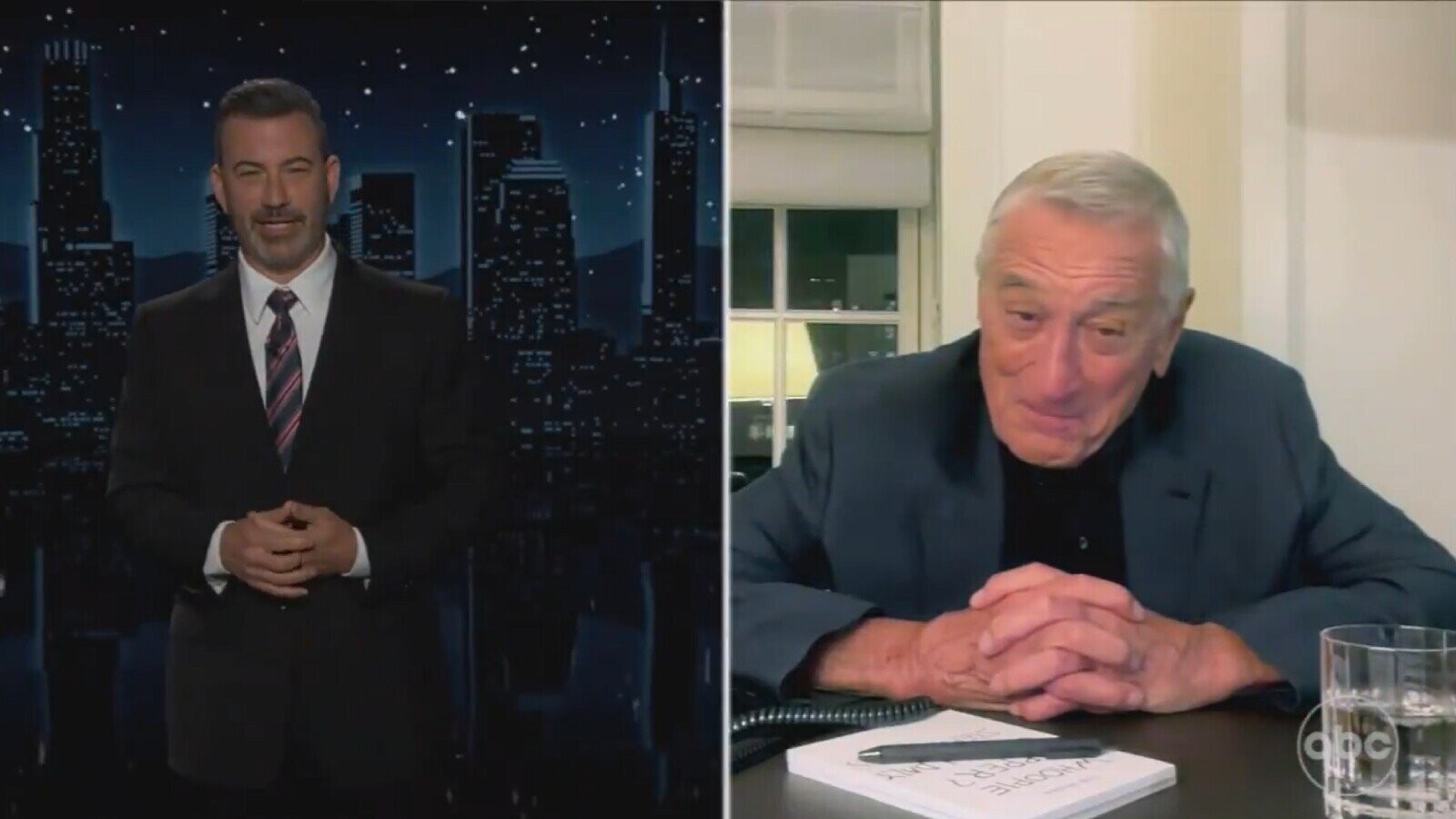
The result was one of those rare late-night moments that worked on multiple levels at once. It played as revenge comedy. It worked as political theater. It doubled as a civics lesson with better punch lines. And when Kimmel brought in Robert De Niro to heighten the mob-boss vibe, the bit became both absurd and oddly precise. Sometimes the broadest joke is the one that feels most accurate.
Why Kimmel’s Brendan Carr Roast Hit So Hard
The joke did not come out of nowhere. It had a paper trail, a television trail, and a public backlash trail. After controversy erupted over comments Kimmel made following the killing of conservative activist Charlie Kirk in September 2025, Carr publicly pushed Disney-owned ABC and local station groups to take action. His remarks, especially the now infamous “easy way or the hard way” line, triggered alarm well beyond Kimmel’s usual political fan club. Critics on the left called it censorship in a necktie. More surprising was the pushback on the right, including Sen. Ted Cruz, who said the language sounded like something out of Goodfellas.
That comparison changed the tone of the entire story. Once a Republican senator is saying the FCC chair sounds like a movie mobster, the phrase “mafioso” no longer looks like random late-night exaggeration. It becomes a tidy way to summarize the optics problem. Kimmel did what comedians do when public language gifts them a metaphor with chrome rims and a booming soundtrack: he got in, hit the gas, and drove it directly into prime time.
There is also a reason viewers responded so strongly. Americans have a radar for hypocrisy, and they especially dislike it when powerful people try to sound tough while insisting they are just following procedure. Bureaucratic menace is still menace. A threat delivered in regulatory vocabulary is still a threat. Kimmel understood that, so he translated Carr from policy-speak into pop culture. Instead of letting the chair of the FCC remain a distant Washington figure, he turned him into a character audiences could immediately recognize: the guy who says he is merely asking questions while everyone else hears a shakedown.
The Timeline Behind the Punch Lines
A controversy that moved very fast
The speed of the whole episode mattered. Carr’s criticism was not filed away in a boring docket somewhere for future scholars and insomniac media lawyers. It landed in real time and carried obvious practical consequences. Disney suspended Jimmy Kimmel Live!, and major affiliate groups moved to preempt the show. That made the story feel less theoretical and more like an instant demonstration of how power works in modern media: one public pressure campaign, a handful of corporate risk calculations, and suddenly a major late-night host is off the air.
That is why this story never stayed confined to celebrity gossip. It was about who flinched, who resisted, and who decided it was safer to keep quiet. Kimmel’s return therefore had to do more than crack jokes. It had to re-establish the premise that comedy shows are allowed to punch up without checking first whether a federal official is lurking nearby with a legal memo and a suspiciously cinematic attitude.
Ted Cruz accidentally writes a late-night setup
One of the strangest and most revealing features of the episode was that the harshest and most memorable criticism of Carr’s rhetoric did not initially come from a Hollywood writer’s room. It came from Cruz, a senator who has not exactly made “protect Jimmy Kimmel’s vibe” his signature cause. Cruz made clear he was no fan of Kimmel, but he still argued that using federal pressure against broadcasters over speech was “dangerous as hell.”
That mattered because it reframed the dispute. Suddenly, the issue was not whether one agrees with Kimmel’s politics or jokes. The issue was whether government officials should be nudging broadcasters with language that sounds like it belongs in a restaurant back room, not in a constitutional republic. When Kimmel later leaned into the “mafioso” framing, he was not inventing a slur. He was amplifying a criticism that had already escaped the usual partisan boxes.
Then came Robert De Niro
Kimmel’s return was sharp enough on its own, but the De Niro cameo pushed it into cultural-event territory. De Niro was the perfect choice because the gag was not subtle. It was not trying to be. Kimmel basically took the “this sounds like a mob movie” complaint and hired one of America’s most famous screen gangsters to make the point with a scowl. That is not just casting. That is an editorial decision with a cigar and a punchline.
The brilliance of the bit was that it let Kimmel avoid sounding preachy. Rather than give viewers a long lecture about regulatory overreach, he showed them a mob-coded parody and trusted them to connect the dots. Comedy works best when it lets the audience feel clever, and this sketch did exactly that. The joke was huge, obvious, and maybe wearing too much cologne. But it also carried real bite.
Why This Story Became Bigger Than One Monologue
On the surface, this looked like a fight between a late-night host and a regulator with a very active definition of “public interest.” But underneath that was a broader argument about broadcast television itself. Unlike cable channels, streaming platforms, podcasts, and social apps, broadcast stations operate under FCC licenses. That legal reality gives the government more room to police certain technical and electoral rules. Carr and his defenders lean heavily on that distinction.
Critics, however, argue that Carr has stretched that logic into something far more political. They point to the January 2026 FCC guidance on equal-opportunities requirements for broadcast television stations airing candidate-related programming, including late-night and daytime talk shows. On paper, that sounds like an old-school legal clarification. In practice, opponents saw it as a warning shot aimed directly at programs such as Jimmy Kimmel Live!, The Late Show, and The View. Kimmel himself described it as another attempt to “stifle” shows that do not line up with the administration’s preferences.
The reason that guidance caused so much anxiety is simple: rules can be used neutrally, but they can also be used selectively. If a regulator suddenly rediscovers an obscure or seldom-enforced principle only after high-profile political irritation, people are going to ask whether this is really about compliance or about punishment by paperwork. That is where Carr’s critics believe the danger lies. The issue is not just whether the FCC can raise questions. It is whether those questions are being raised in good faith or as part of a larger campaign to make broadcasters second-guess politically inconvenient content.
That suspicion intensified when Carr later suggested early license reviews and possible revocation were on the table for broadcasters under investigation. Even if such moves are unlikely to succeed, the message travels fast: the government is thinking about consequences. In media, that kind of signal does not need to end in formal punishment to have an effect. Sometimes the chill arrives before the storm.
What Carr Says He Is Doing
To be fair, Carr has not framed himself as the villain of a Scorsese remix. He has said broadcasters receive free access to public airwaves and therefore must operate in the public interest. He has also denied that government pressure caused Disney’s decision to suspend Kimmel. From Carr’s point of view, he is enforcing rules, not writing a censorship playbook. Supporters see him as someone finally willing to challenge a media culture they believe has gotten too comfortable, too ideological, and too insulated from scrutiny.
That defense is worth taking seriously because it explains why this conflict has lasted. Carr is not acting like a man embarrassed by the backlash. He is acting like a regulator convinced that broad public frustration with legacy media gives him room to be more aggressive. Whether that posture looks principled or provocative probably depends on whether you think the FCC should mainly referee technical obligations or actively police broadcast content at the edges.
Why Critics Think the FCC Chair Crossed a Line
The strongest criticism of Carr is not that he dislikes Kimmel. Plenty of people dislike Kimmel. The stronger criticism is that a federal official with real licensing power appears to be using that power, or the suggestion of that power, to reshape editorial decisions. That is where words like “bullying,” “chilling effect,” and yes, “mafioso,” start showing up.
Critics also note how vulnerable broadcasters can be to indirect pressure. Large station groups often have mergers, approvals, renewals, or other business matters that require regulatory goodwill. In that environment, nobody needs to receive a formal order to feel the weight of a public threat. Corporate executives are perfectly capable of reading the room, checking the political weather, and deciding that caution is cheaper than principle. That is one reason the Kimmel episode alarmed so many free-speech advocates. It looked like an example of soft censorship: no ban on paper, just enough pressure that someone else does the censoring for you.
And that is exactly where Kimmel’s comedy became effective analysis. He understood that the scariest version of censorship in America is rarely a dramatic book-burning scene. It is usually a conference call, a risk assessment, a quietly revised lineup, a decision to avoid trouble. Comedy can sometimes expose that reality faster than a think tank white paper ever could.
The Real Reason Kimmel’s Roast Worked
Kimmel’s best political comedy often works because it mixes outrage with ridicule. Outrage alone can sound sanctimonious. Ridicule alone can feel disposable. But put them together and you get something memorable. In roasting Carr, Kimmel made a serious argument without sacrificing entertainment value. He said, in essence, that if a regulator is going to posture like a strongman, then a comedian has every right to make him look ridiculous on national television.
That is also why De Niro mattered. The cameo turned an abstract constitutional fight into a living, sneering image. Viewers did not need to know the finer points of Section 315 or the FCC’s historic approach to bona fide news exemptions. They only needed to understand the emotional logic of the sketch: a powerful official is looming over the culture, and late night is refusing to bow. That is a classic American entertainment story. It is also, in this case, a democratic one.
In the end, Kimmel’s roast landed because it was not just about Brendan Carr the person. It was about Brendan Carr the symbol: the hard-charging FCC chair who, to critics, represents a new willingness to use media regulation as a political weapon. Once that symbolism settled in, the jokes practically wrote themselves.
Related Experiences: What This Fight Feels Like From the Studio, the Newsroom, and the Couch
If you want to understand why the Kimmel-Carr clash resonates beyond one show, imagine the experience from three different seats.
First, picture the late-night writer’s room. In comedy, timing is oxygen. Writers spend all day taking the loudest thing in the country and turning it into something sharper, stranger, and more watchable by 11:35 p.m. When a regulator starts talking about consequences for what airs on a broadcast signal, the experience is not just political. It is creative whiplash. Suddenly every joke is doing double duty. It has to be funny, and it has to survive the question nobody wants in a comedy meeting: “Are we going to get punished for this?” That question alone can ruin the atmosphere. Comedy hates fear. Fear edits early, before the standards team, before the lawyers, before the audience. It edits in the brain.
Now switch to the newsroom or the control room of a local affiliate. The experience there is different. It is not ideological in the dramatic, cable-news sense. It is operational. Local stations have schedules to fill, advertisers to keep, and parent-company relationships to manage. When pressure starts rising from Washington, the people on the ground are not debating theory over espresso. They are dealing with panicked emails, corporate calls, and a dozen variations of the phrase “out of an abundance of caution.” That phrase should be added to the American Museum of Euphemisms. It almost always means someone is nervous, someone is powerful, and everyone else is expected to pretend this is totally normal.
Then there is the viewer experience, which may be the most revealing of all. Viewers can tell when something feels off. They know when a comedian is doing a normal monologue and when he is coming out swinging because the show itself has become the story. That is part of what made Kimmel’s return so compelling. It did not feel like a routine opening segment. It felt like a host trying to reclaim the ground beneath his own desk. Even people who never watch late night regularly could understand the basic human drama of it. Someone took a shot at a microphone, and the microphone answered back.
There is also a broader cultural experience at play here, one that many Americans recognize even outside politics and television. It is the experience of dealing with authority that insists it is being perfectly reasonable while making everyone around it profoundly uneasy. Most people have met some version of that dynamic at school, at work, in a homeowners association, or in a family group chat dominated by one cousin who has confused “sharing concerns” with “launching investigations.” The details change, but the emotional shape stays the same. That is why Kimmel’s mockery connected. He gave audiences a familiar villain in a specific suit.
And maybe that is the clearest takeaway from the entire saga. This was not only a story about regulation, free speech, or late-night ratings. It was also a story about tone. Power has a tone. Intimidation has a tone. Defiance has a tone too. Carr’s critics heard one kind of voice coming from the FCC chair. Kimmel answered with another. One sounded like a warning. The other sounded like laughter. In television, and often in politics, the side that controls the tone controls the scene. For one memorable stretch of late night, Kimmel won that scene handily.
Conclusion
Jimmy Kimmel did not roast Brendan Carr merely because the FCC chair was available as a punch line. He roasted him because Carr had become a stand-in for a deeper anxiety inside American media: that regulatory power can be used not just to enforce rules, but to pressure speech. By leaning into the “mafioso” framing, Kimmel turned a dense policy dispute into instantly legible satire. Viewers did not need a law degree to understand what was being mocked. They only needed a sense of how power sounds when it stops asking nicely.
That is why the segment mattered. It was funny, but it was also diagnostic. It revealed how comedy can expose the emotional truth of a political moment faster than a committee hearing ever will. And in a media culture increasingly shaped by pressure, preemption, and plausible deniability, that kind of clarity may be the most dangerous joke of all.