Note: This article discusses films that include violence, trauma, grief, abuse, revenge, and emotional distress. Viewer discretion is advised, especially if your movie-night snack is popcorn and unresolved feelings.
For decades, movies treated women’s anger like a kitchen appliance with a faulty cord: dangerous, inconvenient, and best unplugged before guests arrive. A man could punch a wall, destroy a city, growl through three sequels, and call it character development. A woman raised her voice once and suddenly everyone in the room needed lavender tea and a family therapist.
Thankfully, cinema has slowly, stubbornly, gloriously made room for something richer: female rage that is not just “hysteria,” not just villain behavior, and not just a dramatic mascara moment in the rain. The best films about women’s anger understand that rage can be loud, quiet, icy, funny, ugly, elegant, justified, misdirected, healing, destructive, or all of the above before breakfast.
These 30 films do not all portray anger in the same way. Some are feminist revenge movies. Some are psychological thrillers. Some are horror films where the monster is patriarchy wearing a cardigan. Others are dramas about women who have swallowed their fury for so long that the silence becomes the scariest sound in the room. Together, they show why “female rage films” have become such a powerful cultural keyword: they let women be complicated.
What Makes A Great Female Rage Film?
A strong female rage movie does not simply show a woman getting angry. It shows why that anger exists. It gives the character context, pressure, history, stakes, and consequences. The rage might come from betrayal, assault, motherhood, grief, beauty standards, class pressure, racism, romantic manipulation, professional erasure, or the tiny daily humiliations that stack up like unpaid parking tickets from hell.
The best films on this list also avoid turning women into symbols only. Their anger is not always noble. Sometimes it is messy. Sometimes it is terrifying. Sometimes it is hilarious in a “please hide the good china” kind of way. But it feels human, and that is the point.
30 Films That Accurately Portray A Woman’s Anger
1. Thelma & Louise (1991)
Thelma & Louise remains the road movie that kicked open the glove compartment and found a feminist manifesto inside. Geena Davis and Susan Sarandon play two women whose weekend escape becomes a full-speed rejection of male violence, legal systems, and the expectation that “good women” should quietly endure bad men. Their anger is not a tantrum; it is a survival instinct with sunglasses.
2. Carrie (1976)
Brian De Palma’s Carrie turns teenage humiliation into supernatural catastrophe. Sissy Spacek’s Carrie White is bullied at school, controlled at home, and denied basic tenderness. When her rage finally erupts, the horror is not just the telekinesis. It is the awful recognition that everyone helped build the bomb and then looked shocked when it exploded.
3. Jeanne Dielman, 23 quai du Commerce, 1080 Bruxelles (1975)
Chantal Akerman’s masterpiece is the slowest burn on this list, and possibly the most devastating. The film follows a widow through domestic routines so precise they become a prison. Jeanne’s anger is not shouted. It is folded into chores, meals, silence, and repetition until one tiny disruption feels seismic. Domestic rage has rarely looked so calm or so frightening.
4. 9 to 5 (1980)
Workplace sexism gets the comedy treatment in 9 to 5, but the fury underneath is real. Jane Fonda, Lily Tomlin, and Dolly Parton play women pushed to the edge by a sexist boss who deserves every HR complaint ever invented. The movie is funny because the revenge fantasy is outrageous; it works because the frustration is painfully believable.
5. Possession (1981)
Isabelle Adjani’s performance in Possession is less “anger” and more “a nervous system filing for divorce from reality.” This surreal psychological horror captures female rage as bodily collapse, marital disgust, and emotional possession. It is not a tidy film. It is a scream with lighting design.
6. Fatal Attraction (1987)
Fatal Attraction is controversial, and for good reason: it helped cement damaging stereotypes about “dangerous” women. Yet Alex Forrest’s anger also reveals how cinema often punishes women for desire, loneliness, and refusal to disappear politely. Watching it today means seeing both a thriller and a cultural warning label.
7. Thelma’s Spiritual Cousin: Waiting to Exhale (1995)
Angela Bassett setting a cheating husband’s belongings on fire in Waiting to Exhale is practically in the Smithsonian of cinematic rage. The film explores heartbreak, friendship, betrayal, and the pressure on women to stay graceful while their lives are being treated like discount luggage. Sometimes healing starts with a match. Metaphorically, of course. Mostly.
8. Set It Off (1996)
Set It Off channels anger through economic desperation, friendship, and systemic injustice. Queen Latifah, Jada Pinkett Smith, Vivica A. Fox, and Kimberly Elise play women who turn to bank robbery after life gives them fewer options than a vending machine with one stale granola bar. Their rage is personal, but the film never lets us forget the social machinery behind it.
9. Girlfight (2000)
Michelle Rodriguez’s breakout performance in Girlfight gives teenage anger a physical language. Diana is not angry because the script needs “attitude.” She is angry because boxing offers control, discipline, and a way to exist in a world that keeps underestimating her. Every punch feels like punctuation.
10. Kill Bill: Vol. 1 and Vol. 2 (2003–2004)
Uma Thurman’s Bride is one of modern cinema’s most iconic revenge figures. Her anger is operatic, stylized, and soaked in genre references, but the emotional engine is simple: she was betrayed, nearly killed, and robbed of her future. Kill Bill turns female revenge into pop-art mythology, complete with swords, yellow jumpsuits, and emotional damage with choreography.
11. Hard Candy (2005)
Hard Candy is an uncomfortable psychological thriller built around confrontation, control, and moral unease. Elliot Page’s Hayley weaponizes calm in a way that makes the film feel like a locked-room nightmare. It is not a simple empowerment story; it is a tense look at rage shaped by predation and mistrust.
12. Lady Vengeance (2005)
Park Chan-wook’s Lady Vengeance is elegant, brutal, and emotionally icy. Lee Young-ae plays a woman released from prison after being wrongfully convicted, and her anger arrives with almost ceremonial precision. The film understands revenge not as instant satisfaction but as a long, morally complicated ritual.
13. The Brave One (2007)
Jodie Foster’s character in The Brave One turns trauma into vigilantism after a violent attack destroys her life. The movie asks whether rage can restore power or simply create another prison. Its strongest moments sit in that uneasy space between justice and obsession.
14. Jennifer’s Body (2009)
Dismissed by many at release and reclaimed later, Jennifer’s Body is a sharp horror-comedy about exploitation, female friendship, and monstrous transformation. Megan Fox’s Jennifer is not just a demon; she is a girl consumed by a culture that already treated her body like public property. The satire bites harder now than it did in 2009.
15. The Girl with the Dragon Tattoo (2011)
Lisbeth Salander’s anger is focused, private, and tactical. In The Girl with the Dragon Tattoo, rage becomes a tool for survival in a world of corruption and misogyny. Lisbeth does not perform pain for sympathy. She turns it into evidence, strategy, and retaliation.
16. Gone Girl (2014)
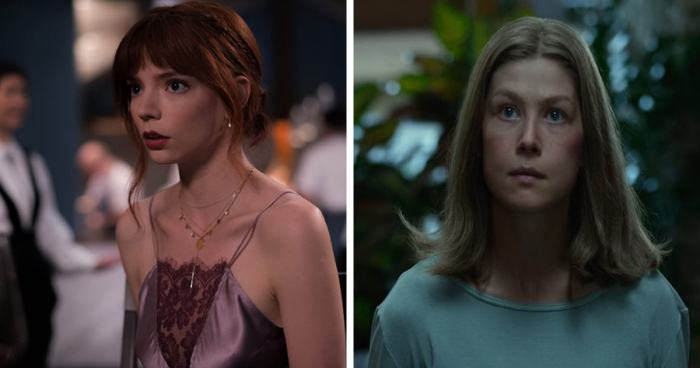
Rosamund Pike’s Amy Dunne is one of the most debated angry women in modern thrillers. Gone Girl is not saying Amy is “right.” It is showing what happens when a woman turns the performance of perfect femininity into a weapon. Her famous coolness is the point: rage can smile for cameras.
17. The Babadook (2014)
The Babadook transforms maternal exhaustion, grief, and resentment into a horror figure that will not stay in the basement. Essie Davis gives a fearless performance as a mother whose anger terrifies her precisely because she is not “supposed” to feel it. The movie understands the taboo of maternal rage with painful clarity.
18. Mad Max: Fury Road (2015)
Charlize Theron’s Furiosa does not waste words, which is convenient because the engines are very loud. Mad Max: Fury Road turns female rage into liberation cinema: women escaping reproductive slavery, fighting back, and refusing to be reduced to property. It is basically a car chase powered by feminist fury and gasoline.
19. The Witch (2015)
In The Witch, Thomasin’s anger is born from religious paranoia, family blame, and suffocating control. The film’s final movement feels like a dark fairy tale about what happens when obedience offers only punishment. Sometimes the goat is not the problem. Sometimes the problem is everyone else.
20. Lady Macbeth (2016)
Florence Pugh’s Katherine in Lady Macbeth is trapped in a cold marriage and a house built like a punishment. Her anger becomes rebellion, then cruelty, then something much darker. The film is powerful because it refuses to make oppression automatically ennobling. Rage can free a person and deform them.
21. Three Billboards Outside Ebbing, Missouri (2017)
Frances McDormand’s Mildred Hayes is grief with a blowtorch. In Three Billboards Outside Ebbing, Missouri, her anger at police inaction after her daughter’s murder becomes public, abrasive, and impossible to ignore. The film is messy, but Mildred’s fury captures a truth: politeness is a luxury grief often cannot afford.
22. Revenge (2017)
Coralie Fargeat’s Revenge flips the rape-revenge genre into a stylish, bloody survival story. Matilda Lutz’s Jen is first objectified, then underestimated, then transformed into a force her attackers never saw coming. The film is not subtle. Neither is a flare gun, and both make their point.
23. Hereditary (2018)
Toni Collette’s performance in Hereditary is a masterclass in grief curdling into rage. Annie’s anger is tangled with motherhood, guilt, family secrets, and unbearable loss. The dinner-table scene alone could power a small city, assuming the city runs on emotional devastation.
24. The Nightingale (2018)
Jennifer Kent’s The Nightingale is a brutal historical revenge drama about colonial violence, sexual assault, and grief. Aisling Franciosi’s Clare is driven by rage, but the film also questions what revenge can and cannot repair. It is difficult viewing, but its anger is morally serious.
25. Widows (2018)
Steve McQueen’s Widows gives female anger a heist structure. Viola Davis leads a group of women forced to clean up the mess left by dead husbands and criminal men. Their rage is practical: make the plan, get the money, survive the world that assumed they were side characters.
26. Midsommar (2019)
Florence Pugh’s Dani begins Midsommar drowning in grief and emotional neglect. By the end, her rage has been absorbed into ritual, community, and a smile that is either liberation, madness, or the world’s most alarming breakup announcement. The film captures how anger can feel like relief when sadness has nowhere else to go.
27. Promising Young Woman (2020)
Emerald Fennell’s Promising Young Woman is a candy-colored revenge thriller with a razor under the wrapper. Carey Mulligan’s Cassie is furious about sexual violence, institutional excuses, and the cheerful way society protects “nice guys.” Her anger is controlled, theatrical, and devastatingly tired.
28. Birds of Prey (2020)
Birds of Prey turns breakup rage into glittery chaos. Margot Robbie’s Harley Quinn is messy, violent, funny, and finally separated from a toxic relationship that defined her for too long. The film’s female anger is deliberately comic-book loud, but its emotional core is about reclaiming identity.
29. Pearl (2022)
Mia Goth’s Pearl performance is a full-course meal of resentment, ambition, loneliness, and delusion. Pearl wants out of farm life, out of family duty, out of invisibility. Her rage is theatrical because she has learned desire from the movies. Unfortunately, she also adds murder, which is rarely recommended for career development.
30. The Substance (2024)
The Substance turns female anger at ageism, beauty standards, and entertainment-industry cruelty into grotesque body horror. Demi Moore’s Elisabeth Sparkle is not simply afraid of aging; she is furious at a system that treats women’s bodies like products with expiration dates. The film is outrageous, bloody, and about as subtle as a chainsaw in a spa, but that excess is part of its power.
Why Female Rage Movies Resonate So Deeply
Female rage films resonate because they show emotions women are often pressured to edit, soften, or translate into something more socially acceptable. In real life, women are frequently expected to be patient, forgiving, emotionally available, and somehow pleasant while being wronged. Cinema gives that pressure a shape. Sometimes it looks like a prom in flames. Sometimes it looks like a quiet kitchen. Sometimes it looks like Florence Pugh crying in a flower crown while viewers whisper, “Honestly, fair.”
These films also remind us that anger is not automatically destructive. Anger can be information. It tells a character that a boundary has been crossed, a lie has been sold, a role has become unbearable, or a life has been made too small. The danger comes when anger is ignored until it mutates into vengeance, self-harm, cruelty, or collapse.
Experience-Based Reflections: Watching Female Rage On Screen
Watching a female rage movie can feel strangely personal, even when the plot involves telekinesis, assassins, cults, or body-horror goo that absolutely should not be FDA-approved. That is because the emotional root is often familiar. Most viewers may not relate to sword-fighting an entire criminal organization, but many understand the feeling of being dismissed, interrupted, underestimated, or told to “calm down” by someone who has just spent 40 minutes tap-dancing on their last nerve.
The most memorable experience with these films often comes from the silence after they end. Thelma & Louise leaves viewers debating freedom and consequence. Promising Young Woman makes the room feel colder because its anger is aimed at systems people recognize. The Babadook stays with parents because it admits something culture rarely allows: caregiving can include resentment, exhaustion, and fear. That honesty can feel uncomfortable, but it can also feel merciful.
There is also a communal pleasure in watching women finally refuse the script. In 9 to 5, the fantasy is workplace justice with jokes. In Mad Max: Fury Road, it is escape at full throttle. In Waiting to Exhale, it is the emotional satisfaction of watching a woman stop negotiating with disrespect. These movies do not always offer realistic solutions, but they offer recognition. Sometimes recognition is the first deep breath after years of emotional shapewear.
Another powerful part of the experience is realizing how different female rage can look from film to film. Carrie’s anger is volcanic. Jeanne Dielman’s is nearly invisible. Amy Dunne’s is strategic. Furiosa’s is disciplined. Pearl’s is delusional. Cassie’s is grief in costume. Annie’s in Hereditary is so raw it feels like the walls are listening. This variety matters because it pushes back against the lazy idea that angry women are all the same. They are not. Anger has accents, costumes, histories, and coping mechanisms.
Of course, not every female rage film is automatically feminist, and not every revenge story is healthy. Some films exploit women’s pain. Some confuse punishment with empowerment. Some make viewers cheer for violence without asking what created it. That is why the strongest films are not just satisfying; they are layered. They let us feel the thrill of rage while still asking what rage costs.
For writers, critics, and movie lovers, these films are useful because they expand what female characters are allowed to be. A woman on screen can be furious without becoming a punchline. She can be wrong without becoming worthless. She can be monstrous and still meaningful. She can be sympathetic without being saintly. That range is not just good politics; it is good storytelling. Perfect characters are decorative plates. Angry, complicated characters are the whole dinner party.
In the end, the appeal of female rage films is not that they tell women to burn everything down. It is that they ask why so many things were flammable in the first place.
Conclusion
“Female rage” is not a trend invented by the internet, though the internet did give it a dramatic name and probably a playlist. These films prove that women’s anger has always been one of cinema’s most revealing forces. It exposes social rules, private wounds, power imbalances, and the emotional labor people pretend not to notice.
From Carrie to The Substance, from domestic silence to neon revenge, these 30 films show that a woman’s anger can be terrifying, righteous, funny, tragic, cathartic, and deeply human. The best female rage movies do not ask audiences to approve every action. They ask us to pay attention to the pressure that came before the explosion.