They arrive in dark suits. They ask questions they should not know to ask. They drive black cars that look like they were ordered from a government catalog titled Absolutely Not Suspicious. And, according to decades of UFO folklore, they usually leave one message behind: stop talking.
The Men in Black, often called MIB, are among the strangest figures in American paranormal culture. Long before Hollywood gave them neuralyzers and buddy-cop banter, UFO witnesses described them as humorless visitors who appeared after sightings, interrogated people, demanded evidence, and sometimes behaved less like federal agents and more like badly programmed mannequins wearing clearance-rack suits.
This article explores 10 creepy stories of encounters with Men in Black, drawn from well-known UFO reports, folklore research, historical archives, skeptical analysis, and pop-culture history. These accounts are best understood as reported claims and legends rather than proven events. Still, they remain fascinating because they reveal something deeply American: our love of secrets, our fear of surveillance, and our suspicion that someone, somewhere, knows more than they are telling us.
Who Are the Men in Black?
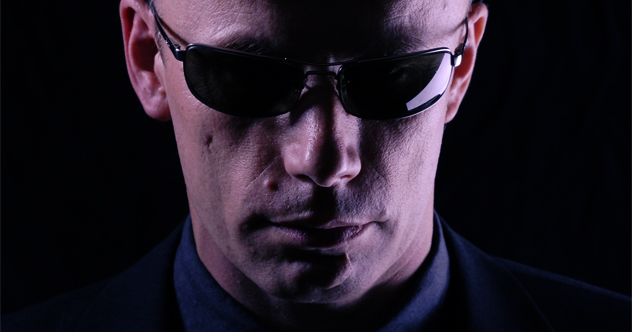
In UFO lore, Men in Black are mysterious visitors who allegedly intimidate witnesses after sightings of unidentified flying objects or other strange phenomena. They are usually described as men in black suits, black hats, black sunglasses, and black cars. Subtle? Absolutely not. If the goal was blending in, they failed the assignment.
Some witnesses portray them as government agents. Others describe them as pale, emotionless, robotic, or oddly unfamiliar with basic human behavior. In many stories, they already know private details about the witness. They may warn people not to speak, demand physical evidence, or vanish as quickly as they arrived.
The modern MIB legend grew from the same postwar soil that produced flying saucer mania, Cold War anxiety, intelligence secrecy, and official UFO investigations such as Project Blue Book. Even when the stories sound absurd, they make emotional sense: if you believe you saw something impossible, it is easy to imagine that someone powerful wants the impossible kept quiet.
10 Creepy Men in Black Encounters
1. Harold Dahl and the Maury Island Warning
One of the earliest Men in Black stories is tied to the Maury Island incident of 1947. Harold Dahl claimed he was on a boat near Maury Island in Puget Sound, Washington, when he saw strange aircraft in the sky. According to the story, one object released debris, injuring his son and killing the family dog. That detail alone is enough to make any UFO tale emotionally explosive.
The next morning, Dahl said he was approached by a man in a dark suit who invited him to breakfast. The stranger allegedly described the event in detail, then warned Dahl not to talk about what he had seen. The implication was simple: keep quiet, or unpleasant things might happen.
The Maury Island case is widely regarded by many historians and investigators as a hoax, but it still matters because it helped shape the MIB formula: a witness sees something weird, a dark-suited stranger appears, and silence becomes the price of curiosity. It is the paranormal equivalent of receiving a customer-service survey from the universe, except every question is a threat.
2. Albert K. Bender and the Three Visitors
Albert K. Bender is one of the central figures in Men in Black mythology. In the early 1950s, he founded the International Flying Saucer Bureau, a civilian UFO group that attracted attention from saucer enthusiasts. Then, in 1953, Bender abruptly shut it down.
He later claimed he had been visited by three men in dark suits who revealed terrifying information about flying saucers and ordered him to stop publishing. The visitors, according to later retellings, were not merely stern bureaucrats. They were eerie, overwhelming, and possibly not human.
Gray Barker popularized Bender’s account in the 1956 book They Knew Too Much About Flying Saucers, helping launch the Men in Black into UFO culture. Whether one views the story as confession, embellishment, folklore, or marketing genius, it became the template for generations of MIB encounters. Bender did not just claim he was silenced; he gave UFO culture its creepiest office dress code.
3. Gray Barker and the Birth of the MIB Industry
Gray Barker was not only a storyteller; he was a myth-maker with a talent for turning rumor into atmosphere. His writing helped transform scattered reports of mysterious visitors into a recognizable paranormal tradition. In Barker’s world, dark-suited strangers were not background characters. They were the enforcers of cosmic secrecy.
What makes Barker’s role creepy is not just the content of the stories but the uncertainty surrounding them. Some researchers have argued that Barker blurred the line between investigation, entertainment, and hoax. That makes the Men in Black legend even more slippery. Were people reporting real intimidation? Were they repeating stories shaped by earlier stories? Or were they participating in a spooky feedback loop where fear itself became the evidence?
In a way, Barker’s influence is scarier than a single alleged encounter. A man at your door is frightening for one evening. A myth that spreads across decades, mutates, and refuses to die is frightening forever.
4. Robert Richardson and the Missing Metal
In 1967, Robert Richardson of Toledo, Ohio, reportedly claimed that his car collided with a UFO-like object at night. The object vanished, but Richardson allegedly recovered a small piece of metal from the scene. Soon after, two men in black suits arrived and asked about the object.
The story gets nastier from there. Richardson reportedly told the men he had already sent the metal away for analysis. According to later accounts, the visitors became threatening and warned him to get the material back. Some versions include a chilling threat involving his wife, turning the encounter from strange to personally menacing.
This case has all the ingredients of classic Men in Black folklore: physical evidence, unexplained knowledge, intimidation, and a witness who suddenly finds himself in a story bigger than he wanted. It also reveals why these tales remain effective. The scariest part is not the UFO. It is the idea that evidence can make you a target.
5. Dr. Herbert Hopkins and the Impossible Coin
One of the most famous Men in Black encounters comes from 1976 and involves Dr. Herbert Hopkins, a physician and hypnotist in Maine. Hopkins was reportedly involved as a consultant in a UFO-related case when he received a phone call from a man claiming to represent a UFO research organization. The caller asked to visit. Minutes later, the stranger was allegedly at the door.
Hopkins described the visitor as pale, oddly dressed, and unsettling. The man supposedly spoke in a strange manner, seemed unfamiliar with ordinary behavior, and warned Hopkins to destroy his case materials. In the most theatrical part of the story, the visitor allegedly made a coin vanish and told Hopkins that the same thing could happen to him.
Is it verifiable? No. Is it creepy? Extremely. The Hopkins case feels like a scene from a low-budget horror movie that accidentally understood psychological terror. A silent car outside would be spooky. A disappearing coin and a warning about your own existence? That is nightmare fuel with pocket change.
6. John Keel and the Mothman Connection
Author John Keel helped make the Men in Black central to paranormal literature, especially through his investigations around Point Pleasant, West Virginia, during the 1960s. The area became famous for Mothman sightings, UFO reports, strange phone calls, odd visitors, and a rising sense that reality had taken a wrong turn and refused to ask for directions.
Keel described Men in Black not as ordinary agents but as bizarre figures connected to a broader pattern of high strangeness. In his telling, they were part of a theater of weirdness involving monsters, lights in the sky, prophecies, and unsettling coincidences.
What makes Keel’s MIB stories so powerful is their atmosphere. They are less about a single knock on the door and more about a whole region feeling watched. Whether one accepts Keel’s conclusions or not, his work gave the Men in Black a new identity: not just silencers of UFO witnesses, but ambassadors from the uncanny.
7. Woodrow Derenberger and Indrid Cold
In 1966, West Virginia salesman Woodrow Derenberger reported a bizarre highway encounter with a smiling humanoid who became known as Indrid Cold. Derenberger claimed the figure emerged from an unusual craft and communicated with him. Unlike the usual black-suited intimidators, Cold was often described as polite, smiling, and strangely calm.
So why include him in a list of Men in Black encounters? Because the case became tangled with the same Point Pleasant weirdness that produced Mothman lore and MIB reports. Indrid Cold represents a related category of “too human but not human enough” visitor. He is the cousin of the Men in Black who arrives smiling instead of scowling, which might actually be worse.
The story is creepy because it removes the simple explanation of intimidation. Cold did not need to threaten anyone to be unsettling. Sometimes the most disturbing visitor is not the one who says, “Be quiet.” It is the one who smiles as if he already knows you will not be believed.
8. Jaye P. Paro and Mount Misery
Long Island’s Mount Misery became associated with UFO sightings, strange figures, and Men in Black stories through the work of writers and local paranormal accounts. Radio personality Jaye P. Paro was connected to some of the folklore that later circulated through John Keel’s writing.
The stories around Mount Misery include shadowy visitors, odd lights, phantom figures, and a general sense that the landscape itself had become a magnet for the bizarre. As with many MIB cases, documentation is messy, and later retellings often lean heavily on earlier paranormal writers. Still, the legend works because it attaches the Men in Black to place. The road, the woods, the local rumors, and the darkness all become part of the encounter.
Mount Misery shows how MIB stories behave like campfire smoke. They drift, cling to local geography, and make ordinary places feel staged for something sinister. Once a location gets a reputation, every parked black car becomes suspicious. Even the mailman starts looking like he knows too much.
9. The “Government Agent” Who Was Too Strange
Many Men in Black reports follow a pattern: the visitor appears official but not convincingly human. Witnesses describe awkward speech, stiff posture, outdated clothing, unusual skin tone, or confusion about everyday objects. In some stories, the men ask questions in a flat voice, stare too long, or move with mechanical precision.
This is where MIB folklore becomes more unsettling than a simple conspiracy theory. A normal government agent would be intimidating because of authority. A not-quite-human agent is frightening because of uncertainty. Is he a spy? An alien? A hoaxer? A hallucination? A guy who lost a bet and had to dress like a haunted accountant?
Folklorists have noted that Men in Black stories share features with older supernatural visitor legends. The stranger arrives at a threshold, tests the witness, delivers a warning, and leaves behind dread. In other words, the MIB may be a modern version of an ancient fear: the visitor who knows your secrets and does not belong in your world.
10. Dan Aykroyd’s Modern MIB Story
Actor and paranormal enthusiast Dan Aykroyd has publicly discussed UFOs for years, and one modern MIB-related story often linked to him involves the cancellation of a UFO television project. In the account, Aykroyd noticed two men in black near a dark vehicle shortly before learning the project had been shut down.
This story is difficult to evaluate, and it sits closer to celebrity paranormal lore than classic UFO investigation. Still, it shows how flexible the Men in Black legend has become. The MIB no longer need to visit a lonely witness in a small town. They can appear near media projects, documentaries, interviews, and celebrity UFO discussions.
The creepiness here comes from timing. Coincidence is common, but the human brain hates coincidence when black suits are involved. If you see two mysterious men and then your UFO show disappears, your mind immediately starts connecting dots. Sometimes the dots form a conspiracy. Sometimes they form a very stylish parking lot misunderstanding.
Why Men in Black Stories Still Scare Us
Men in Black encounters remain popular because they combine several fears at once. There is the fear of the unknown, represented by UFOs. There is the fear of authority, represented by dark suits and threats. There is the fear of isolation, because witnesses often cannot prove what happened. And there is the fear of being watched, which has only grown stronger in the digital age.
Modern readers may laugh at the black hats and vintage cars, but the core anxiety still feels current. We live in a world of surveillance cameras, data tracking, facial recognition, classified programs, and official statements that often arrive long after public suspicion has already built a mansion and moved in. The Men in Black are old folklore wearing a modern badge.
Another reason these stories endure is their dramatic structure. A UFO sighting is weird, but it is often distant: lights in the sky, shapes in clouds, something moving too fast to identify. A Man in Black brings the mystery to your doorstep. Suddenly the cosmic becomes personal. The strange light is no longer up there. It is standing in your living room, asking what you told your neighbor.
Are Men in Black Real?
There is no solid public evidence proving that supernatural or extraterrestrial Men in Black exist. Official UFO investigations, including historical government programs, have collected and analyzed many sightings, but that does not confirm the MIB legend. Many famous cases are disputed, poorly documented, or filtered through writers who had a taste for drama.
That does not make the stories worthless. Folklore is not only about whether an event happened exactly as told. It is also about what people fear, what they believe, and how stories evolve. Men in Black encounters tell us that UFO culture has always been about more than objects in the sky. It is also about secrecy, trust, power, and the terrifying possibility that knowledge might come with consequences.
In other words, the Men in Black may or may not be real visitors. But as a cultural force, they are absolutely real. They have walked through books, films, podcasts, late-night radio shows, internet forums, and the nervous imaginations of anyone who has ever seen headlights slow down outside after reading too many UFO stories at 2 a.m.
Experiences Related to Men in Black Encounters
Reading Men in Black stories is a strange experience because they do not scare you all at once. They creep in politely, like a man in a black suit asking if he may step inside for just a moment. At first, the details seem almost funny: black cars, blank expressions, stiff conversation, hats that look borrowed from a 1950s funeral director. Then the pattern starts to work on you. The witness sees something impossible. The visitor arrives too quickly. The warning is too specific. The silence afterward feels too heavy.
People who spend time researching these accounts often describe a shift in mood. The UFO itself becomes less important than the aftermath. You begin to notice how many stories involve ordinary people suddenly feeling watched: boat workers, small-town researchers, drivers, doctors, radio hosts, writers, and curious amateurs who asked one question too many. That is what makes the MIB legend so sticky. It turns curiosity into danger.
The experience is even stronger when these stories are connected to real places. Maury Island is not an imaginary planet. Bridgeport, Connecticut, is not a fantasy kingdom. Point Pleasant, West Virginia, exists on a map. Mount Misery sounds like it was named by a horror novelist with no chill, but it is part of real Long Island folklore. When a creepy legend attaches itself to a real road, a real diner, or a real house, the brain does something inconvenient: it starts asking whether the world is thinner in some places than others.
There is also a social experience around Men in Black stories. Bring them up at a party and watch the room divide instantly. One person will say it is obviously government intimidation. Another will say it is sleep paralysis, hoaxes, or Cold War paranoia. Someone else will quietly admit their uncle once saw something over a cornfield in 1978, and suddenly everyone stops joking. That is the magic trick of UFO folklore: even skeptics lean in when the story is told well.
For writers, podcasters, and horror fans, Men in Black encounters are a goldmine because they rely on restraint. The best stories do not need explosions or alien battles. They need a knock at the door, a stranger who knows your name, and a sentence like, “You should forget what you saw.” That is enough. The imagination supplies the rest, usually while you are trying to sleep.
The lesson from these experiences is not that every report is true. It is that the Men in Black legend understands fear beautifully. Fear is not always a monster charging through the woods. Sometimes fear is a clean black car parked across the street, an unreadable face behind dark glasses, and the feeling that your private life has been quietly opened like a file.
Conclusion
The Men in Black remain one of the creepiest traditions in UFO folklore because they bring the unknown down to human size. A strange object in the sky can be dismissed as a weather balloon, aircraft, drone, planet, or mistake. A stranger at the door is harder to ignore.
From Harold Dahl’s alleged warning near Maury Island to Albert Bender’s three dark visitors, from Robert Richardson’s missing metal to Dr. Herbert Hopkins’ impossible coin, these stories endure because they combine mystery with intimidation. They ask a question that still makes people uncomfortable: if someone saw something truly extraordinary, would the truth be revealed, ridiculed, buried, or politely escorted away in a black sedan?
Maybe the Men in Black are government agents. Maybe they are aliens. Maybe they are folklore wearing sunglasses. Or maybe they are proof that the scariest character in any UFO story is not the thing in the sky, but the person who arrives afterward and tells you not to look up again.
Note: The accounts in this article are presented as reported stories, folklore, and historical claims. Many remain disputed, unverified, or interpreted differently by researchers, skeptics, and UFO enthusiasts.