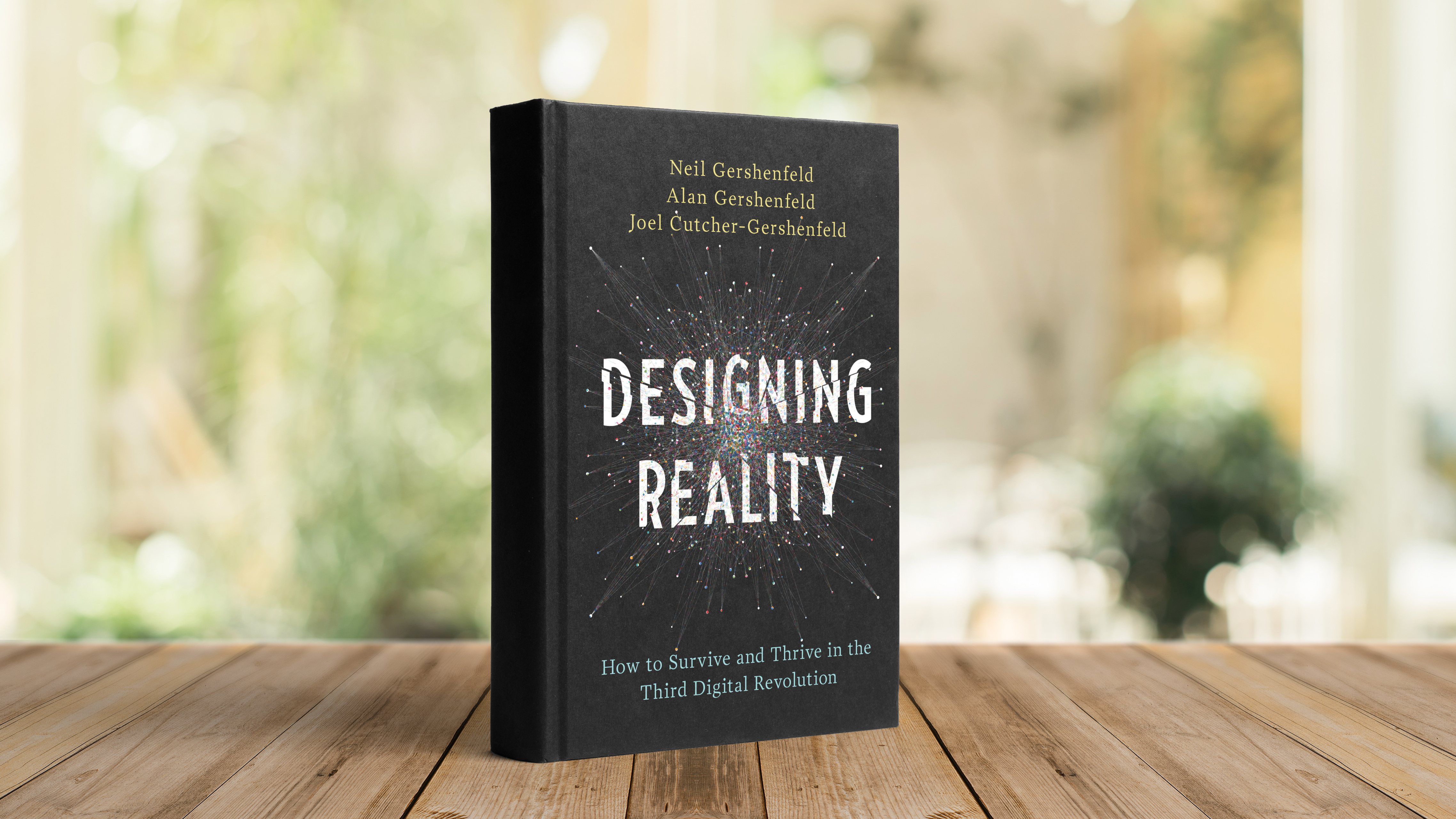
If most tech books either sound like a robot wrote them or like the future is arriving tomorrow on a hoverboard, Designing Reality is a pleasant surprise. It is ambitious without being smug, thoughtful without falling asleep in its own sentences, and visionary without pretending every shiny gadget automatically improves humanity. In other words, it is the rare technology book that can make you think hard and still keep your eyebrows from filing a formal complaint.
Written by Neil Gershenfeld, Alan Gershenfeld, and Joel Cutcher-Gershenfeld, Designing Reality argues that we are moving into a third digital revolution. The first transformed communication, the second transformed computation, and the third is beginning to transform fabrication. That sounds abstract until the book starts translating the idea into plain English: what happens when the power of digital systems no longer stops at screens and software, but moves into the physical world of objects, tools, materials, and production?
This is the question at the heart of the book, and it is a big one. Not “big” in the fake marketing way where everything is called disruptive, revolutionary, game-changing, and other words that usually mean “someone added Bluetooth to a toaster.” This book is big because it explores how digital fabrication could reshape work, education, supply chains, manufacturing, sustainability, community life, and access to opportunity. It is as much about society as it is about machines, which is exactly why it is worth reading.
What Designing Reality Is Really About
At its core, Designing Reality is about bringing the logic of digital technology into the world of making physical things. The authors describe a future where people and communities are able to design and produce more of what they need locally, while still sharing knowledge globally. That is the book’s most exciting promise: local self-sufficiency without isolation, and global connection without total dependence.
The authors do not present digital fabrication as “just 3D printing,” and that distinction matters. If you hear the phrase and immediately picture a tiny plastic dragon slowly emerging from a desktop printer over the course of nine dramatic hours, the book gently asks you to think bigger. Digital fabrication includes a wider ecosystem of tools, processes, and systems: laser cutters, milling machines, scanners, software workflows, programmable materials, electronics production, and eventually more advanced forms of machine-enabled assembly. The point is not one gadget. The point is an entire production logic.
That broader lens is what gives the book its weight. The authors are not merely asking whether fabrication tools will become cheaper and more accessible. They are asking what happens when the ability to make things begins to spread in the same way computing and communication once did. If that spread continues, then manufacturing stops being something done only by giant factories and becomes something more distributed, participatory, and customizable.
Why This Book Stands Out
What makes Designing Reality different from many books about innovation is its three-part brain. Neil Gershenfeld brings the scientific and technical vision. Joel Cutcher-Gershenfeld contributes the social science and labor perspective. Alan Gershenfeld adds a humanities and media lens. That combination keeps the book from becoming a one-note sermon about machines saving the day.
Too many future-focused books fall into one of two traps. Trap one: techno-utopian chest-thumping, where every invention is presented as destiny and every concern is waved away like a fruit fly at a barbecue. Trap two: gloomy anti-tech fatalism, where every new tool is basically the opening scene of a dystopian movie. Designing Reality avoids both. It is optimistic, yes, but it is also alert to risk, inequality, governance failures, and the possibility that powerful tools can deepen divides if access and literacy are ignored.
That balance gives the book credibility. It does not tell readers to worship technology. It tells them to participate in shaping it. That is a much more mature argument, and frankly, a lot more useful.
The Big Ideas That Make the Book Worth Your Time
1. The Third Digital Revolution Is Physical
The authors frame communication as the first digital revolution and computation as the second. Their argument is that fabrication is the third. This idea is simple enough to remember and powerful enough to reorganize how you think about the next phase of technology. For decades, society has become comfortable with turning real-world activity into digital information. Now the reverse process matters more: turning digital information back into physical objects, systems, and materials.
Once you see that shift, the book becomes much more than a discussion of maker culture. It becomes a book about the relationship between bits and atoms, between design files and real things, between code and material life. That is the kind of conceptual jump that sticks with readers long after the last page.
2. Fab Labs Matter Because Access Matters
One of the most compelling parts of the book is its attention to fab labs. These community-based spaces give people access to tools for digital fabrication, but they also do something more important: they widen participation. The book treats fab labs not just as workshops, but as social infrastructure. They are places where learning, experimentation, entrepreneurship, and problem-solving can happen together.
That matters because access to tools changes who gets to invent. If advanced means of production are locked behind corporate budgets, elite institutions, or geographic privilege, then innovation stays narrow. But if communities can access the tools, knowledge, and skills to make things themselves, the circle gets wider. The book keeps returning to this point, and it is one of its strongest ideas.
3. Technology Is Not Neutral Just Because It Has a Power Button
Designing Reality repeatedly emphasizes that technology does not automatically produce fair outcomes. That may sound obvious, but history suggests humans love learning this lesson the hard way. The authors argue that society largely failed to prepare for the social consequences of earlier digital revolutions. We got extraordinary connectivity and computing power, but we also got deep divides in access, opportunity, literacy, and influence.
The book’s warning is clear: if digital fabrication expands without serious attention to inclusion, governance, education, and ethics, then the same pattern could repeat. A tool that could help communities become more resilient could instead become another system that rewards the already powerful. This is where the book becomes genuinely important. It asks not only what can be built, but who gets to build, who benefits, and who gets left outside the workshop door.
4. Local Production Could Change the Shape of Everyday Life
The most exciting sections imagine a future in which products are made closer to where they are used, using shared designs and increasingly adaptable tools. That possibility could change supply chains, reduce delays, allow more customization, support repair cultures, and help communities respond more quickly to local needs. The vision is not isolationist. It is not “everyone hide in a garage and print a civilization.” It is a model where global knowledge and local making work together.
That tension between local and global is one of the book’s smartest themes. The authors suggest we may not have to choose between connectivity and self-sufficiency. That is a powerful argument in an era when many people feel trapped between fragile global systems and shrinking local control.
Specific Examples That Give the Book Real Muscle
A book like this succeeds or fails based on whether it can move from theory to tangible examples. Designing Reality does that well. Instead of floating off into abstract future-speak, it grounds its vision in communities, labs, and real-world use cases.
Examples connected to the broader fab lab ecosystem help the argument land. Readers encounter models where fabrication supports education, local problem-solving, infrastructure, food systems, and entrepreneurship. The idea is not that everyone will suddenly own a magical machine that spits out bicycles, kitchen cabinets, and emotional closure. The idea is that networks of accessible making spaces can help communities build capacity over time.
This practical grounding makes the book persuasive. It does not read like science fiction wearing a blazer. It reads like a serious attempt to understand where digital production is heading and how society might respond intelligently.
Who Should Read Designing Reality?
This book is a strong pick for several kinds of readers. If you care about technology but are tired of narrow gadget coverage, it gives you a wider framework. If you work in education, design, engineering, policy, manufacturing, or innovation, it offers ideas that stretch well beyond your immediate field. If you love books that connect tools to culture, it will probably stay on your desk longer than expected.
It is also a smart read for anyone interested in the future of work. The book does not treat work as a static category. It recognizes that when people gain new ways to make, repair, customize, and distribute products, labor systems and economic assumptions start to shift. That makes the book relevant not only to makers and engineers, but also to planners, civic leaders, and curious readers who want a better map of what may be coming next.
Even readers who are not deeply technical can follow the main argument. The prose asks for attention, but not a graduate degree in machine wizardry. If you can handle ideas larger than “Top 10 Apps to Organize Your Socks,” you will be just fine.
What the Book Does Especially Well
First, it gives readers a memorable framework. The “third digital revolution” concept is one of those rare ideas that is both easy to understand and hard to forget.
Second, it balances inspiration with caution. The book is hopeful without becoming naive. It imagines transformative possibilities while insisting that social systems, institutions, and values must evolve alongside technical systems. That is a much richer conversation than simple boosterism.
Third, it treats digital fabrication as part of a larger civic and human story. The authors are not obsessed with novelty for novelty’s sake. They are interested in dignity, capability, participation, and resilience. That human-centered perspective gives the book warmth and urgency.
If there is a challenge for some readers, it is that the book is less interested in delivering a neat prediction than in offering a framework for thinking. People looking for a page-by-page shopping list of future gadgets may want more hardware gossip. But readers looking for substance will likely consider that a strength, not a flaw.
Experiences Related to Designing Reality: Why the Book Feels So Immediate
One reason Designing Reality lingers in the mind is that it connects so easily to experiences people are already having, even if they do not realize it. Think about the first time you watched someone repair a broken object with a digitally designed replacement part. Suddenly, manufacturing no longer looked like something that only happened in a distant factory. It happened on a workbench, in a classroom, in a library, in a local lab. That experience changes your mental model. You stop seeing products as sealed mysteries and start seeing them as things that can be understood, modified, and remade.
Many readers will also recognize the strange thrill of walking into a maker space or fabrication lab for the first time. There is a mix of excitement and intimidation. On one side of the room, someone is laser-cutting a prototype. On another table, someone is soldering electronics. Across the room, a student is turning a rough concept into a physical model. It feels a little like stepping into the future and a little like stumbling into the world’s nerdiest garage band. That feeling matters, because the book captures exactly that moment when abstract technology becomes a lived social environment.
There is also the experience of frustration, which the book wisely does not ignore. Digital making is not magic. Files break. Measurements go sideways. Materials behave badly. Machines get moody in ways that would be charming only if they were not ruining your afternoon. But that frustration is part of the point. When people learn by making, failing, adjusting, and trying again, technology becomes less mysterious. It moves from spectacle to skill. The book understands that empowerment is not just access to tools; it is access to the confidence that comes from using them.
Another experience tied to the book is the growing awareness that supply chains are both impressive and fragile. Many people have now lived through delays, shortages, and moments when basic items suddenly became hard to get. In that context, the idea of local production stops sounding like a futuristic hobby and starts sounding practical. The book’s arguments about resilience, distributed production, and community capability feel more real because readers have seen what happens when centralized systems wobble.
Perhaps the most powerful experience connected to Designing Reality is educational. When students make something physical, learning changes. Concepts become visible. Mistakes become instructive. Collaboration becomes natural. A design can be discussed, tested, revised, and improved in public. That kind of learning is sticky. It stays with people because it involves the head and the hands at the same time. The book recognizes that digital fabrication is not only about producing objects. It is also about producing agency.
That is why the book resonates beyond technical circles. It speaks to a broader human experience: the desire to understand how the world is made, and maybe to have a hand in making it better. Not every reader will leave ready to build a fab lab in the neighborhood. But many will leave with a sharper sense that the future of production is not just a story about machines. It is a story about participation, literacy, creativity, and the courage to move from passive consumption toward active creation. That is a reading experience worth having.
Final Verdict
Designing Reality is one of those rare books that manages to be intellectually serious, socially grounded, and genuinely energizing at the same time. It offers a compelling framework for understanding where digital fabrication may be headed, but it also asks a harder and more useful question: how do we shape that future before it shapes us badly?
If you enjoy books that connect technology, society, design, and the future of work, this one deserves a place on your reading list. It is not a book about gadgets. It is a book about power, participation, and possibility. And in a world increasingly defined by who gets to build, fix, and imagine the future, that makes it a very smart read indeed.