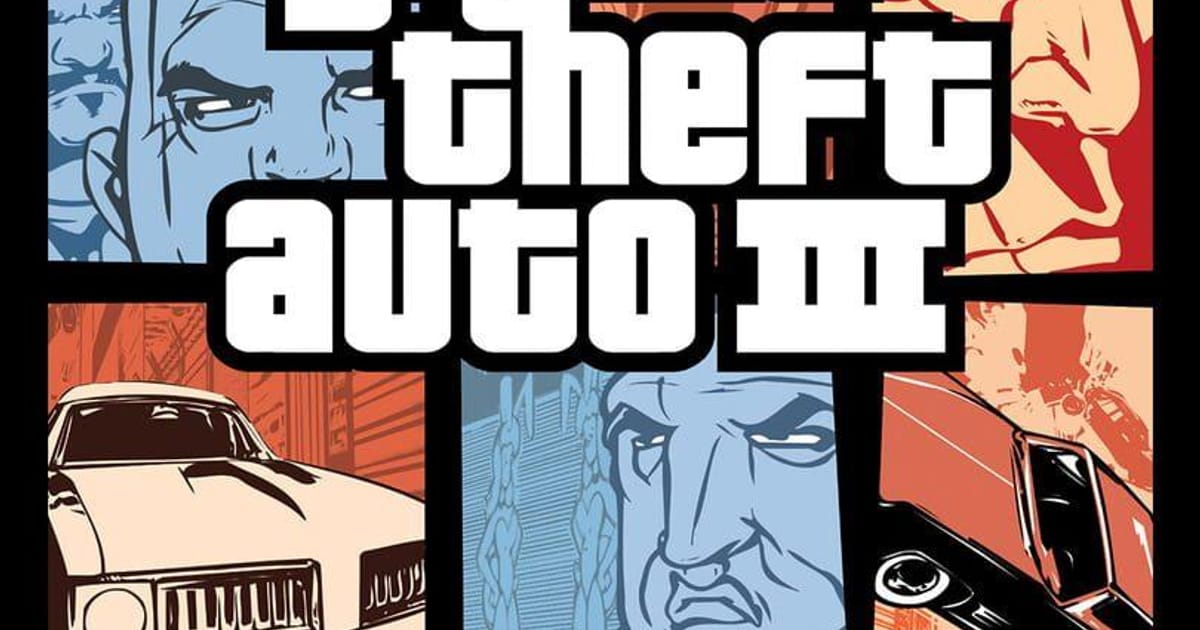
Grand Theft Auto III is one of those games that refuses to sit quietly on a shelf like a polite artifact from 2001. It kicks the door open, steals the shelf, drives it through Liberty City, and somehow ends up in a serious conversation about the most influential video games ever made. More than two decades after its original release, GTA III remains a fascinating ranking debate: Is it the best Grand Theft Auto game? Is it too dated to compete with Vice City, San Andreas, GTA IV, or GTA V? Or is it the awkward-but-brilliant ancestor that deserves respect even when modern players complain about its controls?
The most honest answer is: yes, yes, and also yes. Grand Theft Auto III is not perfect by modern standards. Its shooting feels stiff, its mission checkpoints can be cruel, and Claude has all the emotional range of a parking meter. Yet the game changed expectations for open-world design, mature storytelling, urban exploration, sandbox freedom, and player-driven chaos. When fans rank Grand Theft Auto games today, GTA III often lands below later, flashier entries. But when critics rank games by historical importance, it climbs like a wanted level after a bad decision.
Why Grand Theft Auto III Still Matters
Released in 2001 by Rockstar Games, Grand Theft Auto III moved the series from a top-down crime sandbox into a fully 3D Liberty City. That single shift sounds simple now, but at the time it was seismic. Players were not just selecting missions from a menu or moving across a flat map. They were driving through neighborhoods, listening to radio stations, spotting pedestrians, dodging police, stealing cars, taking jobs from criminals, and discovering that the city itself was the real star.
Liberty City was not the largest open world ever created, but it felt alive in a way that many games of its era did not. Traffic moved. Gangs fought. Police reacted. Radio hosts rambled. Weather changed the mood. Players could follow the campaign or ignore it entirely and spend an hour testing whether a stolen taxi could survive a police chase, a ramp jump, and a deeply questionable shortcut. Usually, it could not. That was part of the charm.
This is why GTA III remains a ranking heavyweight. It may not have the personality of Vice City, the scale of San Andreas, the cinematic ambition of GTA IV, or the online empire of GTA V. But it supplied the blueprint. In rankings, blueprint games are tricky. They can look old compared with the buildings constructed after them, but without the blueprint, those buildings do not exist.
Grand Theft Auto III In Critical Rankings
Critically, GTA III has long been treated as a landmark. On Metacritic, the PlayStation 2 version holds one of the strongest scores in gaming history, reflecting how stunned reviewers were by its freedom, ambition, and execution. At launch, reviewers praised its open-ended mission design, city atmosphere, voice performances, adult tone, radio satire, and sheer replay value. GameSpot’s original review called attention to how successfully the game reinvented the series for a new generation while keeping the chaotic freedom that made the earlier games interesting.
That critical praise matters because GTA III was not merely popular; it was transformative. Many games sell well. Fewer games permanently alter the vocabulary of design. After GTA III, “open world” and “sandbox” became selling points, not niche descriptions. Developers and publishers began chasing the Liberty City feeling: that strange joy of being dropped into a digital place where the main story was only one possibility among many.
Where GTA III Usually Ranks Among GTA Games
In fan rankings, Grand Theft Auto III commonly lands somewhere in the middle of the major 3D and HD-era GTA titles. A typical modern fan list might place San Andreas, GTA V, Vice City, or GTA IV above it. That does not mean GTA III is disliked. It means later games expanded the formula with stronger characters, bigger maps, better driving, improved shooting, more activities, and deeper narrative systems.
If we rank by playability today, GTA III struggles against its descendants. If we rank by impact, it belongs near the top. If we rank by atmosphere, it makes a strong case for itself. Liberty City’s gloomy bridges, industrial streets, mafia hangouts, rainy roads, and suspiciously explosive vehicles create a crime-film mood that still works. It is not cozy, unless your idea of cozy is a safehouse, a baseball bat, and an ambulance that absolutely does not want to stay upright.
A Practical Ranking Of GTA III’s Strengths
1. Innovation: Elite Tier
Grand Theft Auto III’s greatest strength is innovation. It helped define the modern open-world crime game and influenced countless titles that followed. The freedom to drive, explore, cause chaos, accept missions, or simply observe the city made it feel less like a level and more like a place. Today, players expect open worlds to be reactive. In 2001, GTA III made that expectation feel possible.
2. Atmosphere: Still Excellent
Liberty City has a cold, grimy identity. It does not have Vice City’s neon vacation energy or San Andreas’s massive state-wide variety, but it has mood. The game feels like a dirty urban crime movie with radio jokes. The islands open gradually, giving players a satisfying sense of progression. Each district has its own rhythm, dangers, and shortcuts. Even the foggy limitations of early PlayStation 2 hardware accidentally add to the vibe, as if the whole city is smoking three cigarettes at once.
3. Missions: Memorable But Sometimes Rude
The missions are a mixed bag in the best old-school way. Some are exciting slices of criminal escalation: deliveries, assassinations, chases, betrayals, and explosive errands. Others feel designed by someone who believed checkpoints were a luxury for weak souls. Failing near the end of a mission can mean repeating long drives and setup steps. Modern players may find this frustrating, especially if they are used to generous autosaves and retry screens. GTA III’s mission structure has teeth, and occasionally those teeth bite the controller.
4. Story And Characters: Important, But Not The Series’ Best
Claude, the silent protagonist, is iconic partly because he says nothing. That silence allows players to project onto him, but it also limits emotional depth. Later GTA protagonists such as Tommy Vercetti, Carl Johnson, Niko Bellic, Michael, Franklin, and Trevor bring more personality and conflict. GTA III’s supporting cast does the heavy lifting, with crime bosses, corrupt figures, and eccentric contacts giving Liberty City its narrative flavor.
The story works best as a criminal climb through a hostile city. It is not subtle, tender, or deeply introspective. It is a hard-boiled ladder of betrayal, revenge, and increasingly dangerous jobs. In rankings focused on narrative depth, GTA III usually loses to GTA IV or San Andreas. In rankings focused on pure criminal atmosphere, it still earns respect.
5. Gameplay Today: Historically Brilliant, Mechanically Rough
This is where opinions get spicy. For players who experienced GTA III around launch, the controls may feel nostalgic. For new players, they may feel like the game is asking them to parallel park a refrigerator during a thunderstorm. Shooting lacks the polish of later entries, melee combat is simple, and vehicle handling can be unpredictable. The game remains playable, but it demands patience.
That said, the roughness is not fatal. The driving still has a satisfying arcade feel. The city layout encourages exploration. The wanted system remains entertaining. The radio stations remain a key part of the experience. And the unscripted chaoscars flipping, cops swarming, pedestrians panicking, missions collapsing into absurditystill produces stories players remember.
Grand Theft Auto III Compared With Other GTA Classics
GTA III vs. Vice City
Vice City often ranks higher because it has stronger style. Its 1980s Miami-inspired setting, colorful visuals, licensed music, and voiced protagonist give it a more immediately lovable identity. GTA III is colder and less glamorous. Vice City feels like a criminal vacation in sunglasses. GTA III feels like being dropped behind a warehouse and told to figure it out.
However, GTA III deserves credit for making Vice City possible. Vice City refined the formula, but GTA III broke the ground. When ranking purely by influence, GTA III has the edge. When ranking by personality and replay comfort, Vice City often wins.
GTA III vs. San Andreas
San Andreas is bigger, deeper, funnier, stranger, and more ambitious. It offers character customization, multiple cities, countryside, planes, bikes, gang territory, role-playing elements, and one of the most beloved protagonists in the series. Against that mountain of content, GTA III looks modest.
But modest does not mean weak. GTA III is tighter and more focused. Its world is smaller, but easier to memorize. Its atmosphere is consistent. San Andreas is a buffet. GTA III is a strong black coffee served in a suspicious diner. Both have value; one just offers more side dishes.
GTA III vs. GTA IV
GTA IV returned to Liberty City with a more realistic tone, advanced physics, stronger writing, and a tragic lead character in Niko Bellic. Many players consider GTA IV the superior Liberty City experience. It has more emotional weight and technical sophistication.
Still, GTA III has a raw arcade quality that GTA IV intentionally moved away from. GTA IV wants players to feel the heaviness of its world. GTA III wants players to steal a Banshee, hit a ramp, and see what happens. Ranking between them depends on whether you prefer crime drama or crime playground.
GTA III vs. GTA V
GTA V is a giant by almost every modern measurement: map size, production value, mission variety, satire, online content, vehicles, and visual detail. It is unfair to compare them as products separated by more than a decade of technology. Yet GTA III can still win one category: purity. Its world is compact, its goals are direct, and its chaos is immediate. There are no stock markets, yoga jokes, online heists, or luxury apartments. Just Liberty City, crime jobs, bad decisions, and a police force with infinite patience until it suddenly has none.
Common Fan Opinions About GTA III
“It Changed Everything”
This is the most common positive opinion, and it is hard to dispute. GTA III changed how players and developers thought about open-world design. It made the city a playground, mission hub, driving space, comedy machine, and crime simulator all at once.
“It Has Aged Roughly”
This is also fair. Controls, camera movement, mission retries, aiming, and some difficulty spikes feel old. Players coming from modern open-world games may need time to adjust. GTA III is not a frictionless experience. It is more like shaking hands with history and discovering history has a very firm grip.
“Liberty City Is Still Iconic”
Many fans continue to love GTA III’s Liberty City because it is compact, memorable, and moody. It may not be the most beautiful open world, but it is readable. Players learn the bridges, alleys, hideouts, shortcuts, and danger zones. That familiarity builds attachment.
“Claude Is Boring”
Claude divides opinion. Some fans enjoy his silent, ruthless simplicity. Others find him dull compared with later protagonists. Both views make sense. Claude is less a character study and more a criminal avatar. He does not explain himself. He simply acts, survives, and keeps moving.
My Ranking Verdict On Grand Theft Auto III
If ranking the Grand Theft Auto series by modern enjoyment, I would place GTA III below San Andreas, Vice City, GTA IV, and GTA V. Those games offer richer systems, stronger personalities, or smoother gameplay. But if ranking by importance, GTA III belongs in the top two, and an argument for number one is completely reasonable.
My balanced verdict: Grand Theft Auto III is not the easiest GTA game to revisit, but it is one of the most essential. It is the foundation stone of Rockstar’s modern identity and a turning point for open-world games. Its best qualitiesfreedom, atmosphere, satire, and emergent chaosstill shine. Its flawsclunky combat, dated controls, limited character depthare real, but they do not erase its achievement.
In a modern ranking, GTA III is like an old muscle car. Newer models are faster, safer, smoother, and packed with features. But when that engine starts, everyone still turns to look.
Extra Experience: Playing GTA III Today Feels Like Visiting Gaming History With A Wanted Level
Replaying Grand Theft Auto III today is a strange and entertaining experience because your brain keeps switching between two modes. One mode says, “Wow, this is obviously old.” The other says, “Wait, this still works better than it has any right to.” That tension is the heart of the modern GTA III experience.
The first thing you notice is the simplicity. There are no enormous tutorials dragging you through seventeen systems before allowing you to breathe. GTA III trusts players to learn by doing, crashing, failing, and occasionally exploding near a payphone. The game gives you a city, a map, a few contacts, and a criminal career path that seems to have been approved by absolutely no guidance counselor. It is refreshing in a way. Modern games can sometimes feel overdesigned, but GTA III leaves room for mess.
Driving around Liberty City is still the best way to understand its appeal. The map is small compared with newer open worlds, yet it feels dense because the roads twist, the bridges matter, and each island has a personality. You start to remember where certain cars spawn, which turns are dangerous, and which streets become nightmares during police chases. The city becomes familiar not because a checklist tells you to explore it, but because survival teaches geography.
The radio stations remain a major highlight. They help Liberty City feel like a real media environment full of strange ads, fictional personalities, and absurd commentary. Even when the jokes are dated, the idea is still powerful. Rockstar understood that an open world is not just buildings and roads; it is noise, culture, nonsense, music, and overheard weirdness. The radio turns every drive into a little scene. Sometimes the mission is serious, but the radio is busy being ridiculous, and that contrast is pure GTA.
The missions can be both thrilling and irritating. When everything works, they create tense little crime stories: race across town, escape enemies, deliver a vehicle, eliminate a target, or survive a sudden betrayal. When things go wrong, the lack of modern checkpointing can make you stare silently at the screen like Claude himself. A mission failure after a long drive feels personal. The game does not apologize. It just sends you back out there, older and wiser, or at least older.
What surprised me most is how much fun still comes from doing nothing important. Steal a cab. Drive badly. Find a hidden package. Try a ramp. Annoy the police. Escape by accident. Get distracted by a faster car. Forget the mission entirely. This is the magic GTA III helped popularize: the player’s personal story can be as memorable as the scripted one. You might forget a mission name, but you remember the time three police cars, a delivery truck, and one very unlucky pedestrian created a disaster ballet under the train tracks.
For new players, I would recommend approaching GTA III with historical patience. Do not expect GTA V with fewer pixels. Expect a bold, rough, influential game that still has attitude. Let the controls feel old. Let the difficulty annoy you. Let Liberty City teach you its rules. Once you stop demanding modern smoothness, the game becomes easier to appreciate. It is not just a museum piece. It is still playable, still moody, still funny, and still capable of turning a five-minute drive into a story you want to tell someone.
That is why GTA III rankings remain interesting. The game is not merely competing against other GTA titles. It is competing against memory, influence, nostalgia, modern expectations, and the entire open-world genre it helped shape. Whether you rank it third, fifth, or first, dismissing it would be a mistake. Grand Theft Auto III is messy, sharp-edged, legendary, and stubbornly alive.
Conclusion
Grand Theft Auto III remains one of the most important games in open-world history. It may not be the smoothest GTA to play today, and it may not top every fan ranking, but its influence is enormous. It transformed Grand Theft Auto from a provocative crime series into a cultural force and helped establish the language of modern sandbox design. The best way to rank GTA III is to separate comfort from consequence: later entries may be more enjoyable moment to moment, but few games can match GTA III’s historical weight.
For players who love rankings and opinions, GTA III is the ultimate debate starter. It is dated but essential, frustrating but fascinating, simple but revolutionary. Liberty City may look rough around the edges now, but those edges cut a path that countless open-world games followed.