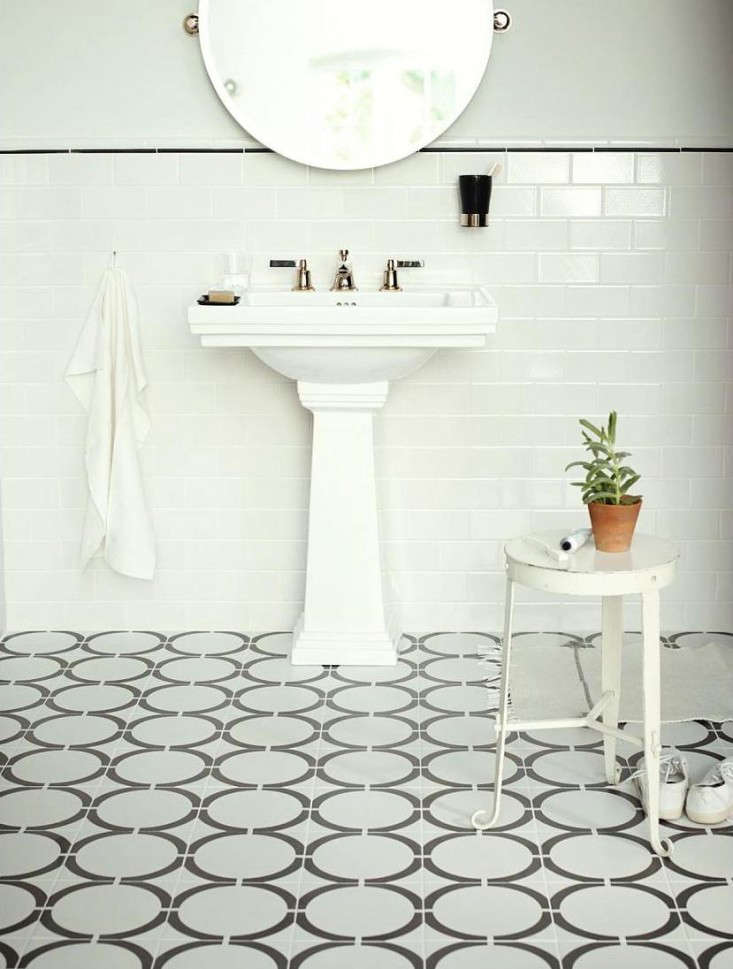
Some tiles politely cover a surface. Neisha Crosland’s Hula Hoop Black tiles arrive with considerably more confidence. Their looping black geometry turns an ordinary wall or floor into a repeating composition that feels architectural, playful, and just a little hypnotic. Look at the pattern for long enough and you may begin tracing invisible circles with your finger. This is normal. Your tile has not placed you under a spellprobably.
Created by renowned British pattern designer Neisha Crosland in collaboration with Fired Earth, the Hula Hoop design belongs to the Tulia porcelain range. It combines a crisp circular motif with a restrained monochrome palette and a gently glazed eggshell finish. The result is dramatic without being glossy, theatrical without looking like a stage set, and decorative without surrendering practicality.
For homeowners, designers, and renovators searching for distinctive black patterned tiles, this collection offers an appealing middle ground between plain utility tile and highly ornamental traditional designs. It works in contemporary bathrooms, compact powder rooms, kitchens, entryways, and other interiors where pattern can do more than merely behave itself.
What Are Neisha Crosland’s Hula Hoop Black Tiles?
Hula Hoop Black is a square porcelain tile featuring a repeating circular design in black against a light background. Individual arcs continue across neighboring tiles, allowing the small square units to form a much larger interlocking pattern once installed. Rather than presenting every tile as a separate picture, the design depends on repetition. One tile is interesting; a completed surface is where the visual rhythm truly comes alive.
The standard tile measures 20 by 20 centimeters, or approximately 7.9 by 7.9 inches, with a thickness of about 8 millimeters. Twenty-five tiles cover approximately one square meter before cuts and waste are considered. The manufacturer presents the product as an interior wall-and-floor tile, although buyers should always verify suitability for a specific wet area, shower floor, commercial setting, or high-traffic application before ordering.
| Designer | Neisha Crosland |
|---|---|
| Collection | Tulia by Fired Earth |
| Material | Porcelain |
| Nominal Size | 20 x 20 x 0.8 centimeters |
| Approximate U.S. Size | 7.9 x 7.9 x 0.31 inches |
| Finish | Soft eggshell appearance with a mild glaze |
| Primary Style | Black-and-white geometric patterned tile |
| Typical Uses | Interior floors, walls, backsplashes, and feature areas |
The Designer Behind the Pattern
Neisha Crosland is best known for sophisticated surface patterns used across wallpaper, textiles, rugs, flooring, accessories, ceramics, and tiles. Her work frequently explores symmetry, proportion, architectural forms, and unexpected relationships between color and shape. She has also received major design recognition, and examples of her work have entered museum and institutional collections.
That textile background matters when examining Hula Hoop Black. The tile does not look like a motif placed awkwardly onto a hard surface. It behaves more like a fabric repeat translated into porcelain. Every line anticipates the next tile, and every circle participates in a continuous arrangement. The pattern seems to travel rather than stop at the grout joint.
This continuity is one reason the design feels richer than a conventional printed square. The underlying unit is simple, but repetition creates secondary shapes. Depending on the viewer’s focus, the surface can resemble overlapping hoops, linked rings, stylized petals, architectural windows, or a modernist diagram produced by an unusually fashionable mathematician.
Why the Hula Hoop Pattern Works
Curves Soften the High-Contrast Palette
Black-and-white tile can become severe when its geometry relies entirely on hard angles. Hula Hoop Black avoids that problem by using generous curves. The dark lines provide definition, while the circular movement softens the overall effect. This makes the tile suitable for rooms that need energy but should not feel aggressive.
The result is especially effective in bathrooms, where plumbing fixtures, cabinets, mirrors, and shower enclosures already introduce plenty of straight edges. Circular tile graphics provide a counterpoint to those rectangles. A round mirror can echo the motif, while a boxy vanity keeps the composition grounded.
The Pattern Feels Both Modern and Familiar
Although the design has a graphic contemporary quality, repeated circles have appeared in architecture, textiles, ironwork, mosaics, and decorative arts for centuries. That historical familiarity helps the pattern resist becoming a short-lived novelty. It can sit comfortably beside streamlined modern cabinetry, traditional fixtures, vintage furniture, or midcentury-inspired lighting.
This versatility is valuable because permanent tile should ideally survive more than one decorating phase. Throw pillows can enjoy a six-month identity crisis. A tiled floor has a longer contract.
The Eggshell Finish Controls the Drama
The mildly glazed eggshell surface is an important part of the design. A mirror-like glaze could make the black lines feel harsher and create distracting reflections. A completely flat finish might remove too much depth. The gentle sheen occupies the useful space between those extremes, reflecting enough light to keep the surface lively without turning every lamp into a spotlight.
Where Hula Hoop Black Tiles Work Best
Bathroom Floors
A patterned bathroom floor is one of the most natural applications for Hula Hoop Black. The design can act like a permanent area rug, anchoring a white tub, simple vanity, or glass shower enclosure. In a compact bathroom, it creates a strong focal point without consuming wall space. In a larger room, it can define the bathing or vanity zone.
Keep nearby surfaces relatively calm. White, warm ivory, soft gray, plaster-like neutrals, or pale stone allow the floor to remain the star. Repeating another busy pattern on every wall may leave the room looking as though three wallpapers are arguing at once.
Powder Room Feature Walls
Powder rooms are excellent places for bold design because their limited size naturally controls the amount of pattern. Installing Hula Hoop Black behind a compact sink can create a striking backdrop for a sculptural mirror and wall-mounted faucet. Extending the tile from the floor to the ceiling produces more drama, while a half-height installation feels tailored and easier to balance.
Because powder rooms are often experienced briefly, they can handle stronger visual decisions than a large primary bathroom. Guests may not remember which hand soap you purchased, but they are likely to remember the wall covered in interlocking black hoops.
Kitchen Backsplashes
As a backsplash, the tile brings movement to kitchens dominated by flat cabinet fronts and rectangular appliances. It works particularly well with white, charcoal, natural oak, walnut, or muted green cabinetry. Black hardware can connect with the pattern, while brass or aged bronze adds warmth.
A patterned backsplash usually looks best with a relatively quiet countertop. Subtle quartz, soapstone, concrete-look surfaces, or lightly veined stone let the tile remain readable. Pairing energetic tile with heavily veined counters is possible, but it requires a careful sample board and a strong tolerance for visual conversation.
Entryways and Hall Floors
An entry floor made with Hula Hoop Black creates an immediate sense of identity. The circular repeat can visually widen a narrow hall and provide a decorative transition between adjacent rooms. Porcelain is also a practical material for areas that encounter shoes, umbrellas, and the occasional grocery bag that chooses the worst possible moment to split open.
Before using the tile in a busy entrance, confirm its current floor rating, slip characteristics, and installation requirements with the supplier. A beautiful pattern is even more enjoyable when it is used in the environment for which it was tested.
Fireplace Surrounds and Decorative Insets
The tile may also be considered for fireplace surrounds or decorative architectural panels, provided the proposed installation complies with the fireplace manufacturer’s clearance requirements and local building codes. A framed section of Hula Hoop Black can resemble graphic artwork while relating naturally to a black firebox or metal screen.
How to Style Neisha Crosland Hula Hoop Black Tiles
Add Warm Wood
Natural wood is one of the easiest ways to prevent a monochrome room from feeling cold. White oak creates a light Scandinavian mood, walnut adds sophistication, and reclaimed wood contributes texture and age. Even a small wooden stool, shelf, or mirror frame can make a black-and-white tiled bathroom feel more relaxed.
Choose Metals Intentionally
Matte black fixtures reinforce the graphic palette and produce a crisp contemporary result. Polished nickel and chrome add brightness without introducing another strong color. Brass, bronze, and copper warm the scheme and can make the pattern feel more decorative or vintage-inspired.
There is no rule requiring every metal finish to match perfectly. Two coordinated finishes often look more collected than one finish repeated with military discipline. The key is repetition: use each chosen metal more than once so it appears intentional.
Introduce One Controlled Color
Black-and-white patterned tile provides a flexible foundation for color. Dusty blue, deep green, clay pink, ocher, burgundy, and pale sage can all work well. A colored vanity is an effective option because it creates one substantial block of color rather than scattering tiny accessories throughout the room.
For a quieter interior, use color through towels, artwork, plants, or a painted ceiling. The neutral tile will support future changes, allowing the room to evolve without another renovationand without asking your bank account to perform acrobatics.
Limit Competing Patterns
Hula Hoop Black already provides significant movement. Other patterns should generally be smaller, quieter, or separated from the tile by an area of solid color. Narrow stripes, subtle natural stone, lightly textured plaster, or simple paneling can complement the design. Large florals or another dominant geometric print may compete unless the room is intentionally maximalist.
Choosing the Right Grout
Grout color can change the character of the entire installation. A light grout close to the background color helps neighboring tiles blend together, making the circular pattern appear more continuous. This is often the best choice when the goal is a seamless textile-like repeat.
Medium gray grout introduces a visible grid while remaining practical in areas exposed to foot traffic or splashes. Dark grout emphasizes each square tile and can create a more structured, graphic effect. However, a strong grout grid may interrupt the flowing hoops, so it should be tested before the final decision.
Always view grout samples beside an actual tile in the room’s lighting. Daylight, warm bulbs, and cool LEDs can make the same grout appear surprisingly different. Grout width matters as well: wider joints announce the grid, while narrower joints allow the printed repeat to dominate. Follow the manufacturer’s recommended joint size rather than improvising a hairline installation that the tile was not designed to accommodate.
Planning and Installing the Tiles
Order Samples First
Online photographs cannot fully communicate surface texture, background tone, sheen, or scale. Order a full-size sample and examine it beside flooring, paint, cabinetry, countertops, and hardware. Move it around the room during the day. A tile that looks crisp under morning sun may appear softer under evening lighting.
Dry-Lay the Pattern
Patterned tiles should be arranged before adhesive is applied. A dry layout helps the installer understand how the circular lines connect, where the design should be centered, and which edges will require cuts. This is particularly important in small bathrooms, where a poorly placed starting point can leave awkward fragments along the most visible wall.
Center the repeat on the primary sightline whenever possible. In a bathroom, that may be the view from the doorway. In a kitchen, it may be the area behind the range. Cuts are unavoidable, but they can usually be moved to less noticeable edges with thoughtful planning.
Prepare a Flat, Rigid Surface
Porcelain tile needs a clean, stable, properly prepared substrate. Uneven floors, flexible underlayment, loose wallboard, and moisture problems should be corrected before installation. Patterned square tiles are especially unforgiving because misalignment becomes obvious as the motif travels across the surface.
Wet areas also require an appropriate waterproofing system behind or beneath the tile. Tile and grout are finish materials; they are not substitutes for correctly installed waterproofing. Follow applicable U.S. standards, local codes, adhesive instructions, and the current technical guidance supplied with the product.
Buy Extra Material
A common starting allowance is roughly 10 percent extra for ordinary cuts, breakage, and future repairs. Complicated layouts, diagonal installation, unusual room shapes, or numerous corners may require more. Confirm the final quantity with the installer before placing the order.
Keep several unused tiles after the project. Years later, finding an identical production batch may be difficult. Spare tiles stored safely are far less glamorous than the finished floor, but they become extremely attractive the moment someone drops a cast-iron pan.
Cleaning and Maintenance
Routine porcelain-tile care is generally straightforward. Sweep or vacuum floors to remove grit, then clean them with a suitable neutral tile cleaner and soft mop. Backsplashes and walls can usually be wiped with a soft cloth or nonabrasive sponge. Rinse away cleaner residue with clean water rather than allowing it to dry on the surface.
Avoid abrasive powders, harsh scrubbing pads, and unapproved chemical cleaners that may affect the glaze or grout. Spills should be cleaned promptly, especially around cooking areas. Grout needs attention too, since dirt often accumulates in joints before it becomes obvious on the tile itself.
Sealing requirements depend on the grout and installation system. Many porcelain surfaces do not require sealing, but cement-based grout often benefits from appropriate protection. Epoxy and certain premixed grouts have different care requirements. Follow the grout manufacturer’s instructions rather than applying a mystery sealer simply because a well-meaning relative found it in the garage.
Advantages and Possible Drawbacks
Reasons to Choose Hula Hoop Black
- The circular repeat creates a distinctive designer look.
- The black-and-white palette works with many cabinet and fixture colors.
- The porcelain construction is practical for suitable interior wall and floor applications.
- The eggshell finish feels softer than a highly polished graphic tile.
- The pattern can connect vintage, modern, Art Deco, and transitional elements.
- A small installation can deliver considerable visual impact.
Points to Consider Before Buying
- The bold repeat may overwhelm rooms already filled with competing patterns.
- Precise layout is essential because alignment errors interrupt the circles.
- Replacement stock may be difficult to match later, making spare tiles important.
- Grout color and width have a major effect on the finished appearance.
- Wet-area, slip-resistance, and traffic ratings should be confirmed for the exact application.
- Designer tile may cost more than basic field tile and can require more installation planning.
Living With Hula Hoop Black Tiles: The Real Design Experience
The experience of living with a strong patterned tile is different from evaluating one sample on a desk. A single Hula Hoop tile looks graphic and neatly contained. Once repeated across a floor or wall, the design becomes less about individual squares and more about movement. The eye follows one circle into another, then discovers secondary forms created where the tiles meet.
In a small bathroom, that movement can make the room feel more intentional. Instead of noticing limited square footage, visitors notice the floor. The pattern gives the space an identity before accessories are added. A plain white sink and inexpensive mirror can suddenly look carefully selected because the tile supplies the visual architecture around them.
Daily use also reveals the advantage of a monochrome pattern. Black and white are easy to coordinate, so towels, artwork, hardware, and paint can change without forcing the tile into retirement. Sage towels create a gentle botanical mood. Rust-colored textiles make the room warmer. Bright yellow adds a cheerful modern accent. When those colors become tiresome, replacing them is much easier than replacing porcelain.
Lighting changes the experience throughout the day. In bright natural light, the pale background appears clean and the black arcs feel sharply drawn. Under warm evening lights, the eggshell surface becomes quieter and slightly softer. Because the glaze is restrained, reflections tend to add life without obscuring the pattern. This makes the tile feel decorative in daylight and more atmospheric at night.
The installation phase is where patience pays for itself. When the first rows are perfectly aligned, the design seems to assemble naturally. If one tile rotates incorrectly or slips out of position, the circular path reveals the mistake faster than a witness under cross-examination. A meticulous installer will regularly step back, inspect the emerging repeat, and correct small problems before the adhesive sets.
Furniture and fixtures can alter how much of the pattern remains visible. A floating vanity preserves more floor area and lets the hoops travel beneath it visually. A large cabinet resting on the floor conceals part of the repeat, but it can also calm the composition. Neither approach is automatically better; the choice depends on whether the tile should dominate or serve as a textured foundation.
Homeowners sometimes worry that bold tile will become exhausting. Hula Hoop Black avoids some of that risk because its palette is neutral and its curves are orderly. The design is expressive, but it is not random. Repetition creates predictability, and predictability makes a strong pattern easier to live with. It can feel energetic on first impression and surprisingly settled after the room is furnished.
Maintenance becomes part of the practical experience as well. The patterned surface may disguise an occasional speck better than a completely white floor, but it does not make cleaning optional. Dark hair, pale dust, and soap residue have an impressive ability to select whichever half of the design makes them most visible. Regular light cleaning is more effective than waiting for the floor to submit a formal complaint.
The most satisfying rooms usually give the tile enough space to speak while surrounding it with quieter materials. Warm wood, simple painted walls, clear glass, and understated stone allow the hoops to remain legible. The room feels designed rather than decorated, because the principal visual idea is built directly into the architecture.
Ultimately, living with Hula Hoop Black tiles feels like living with a piece of functional pattern design. The surface handles the ordinary work expected of tile while contributing rhythm, personality, and a touch of wit. It is not the correct choice for someone seeking a nearly invisible background. It is an excellent choice for someone who believes a floor can be practical and still know how to make an entrance.
Conclusion
Neisha Crosland’s Hula Hoop Black tiles demonstrate how a carefully constructed repeat can transform a practical porcelain surface into an architectural feature. Their interlocking circular motif, black-and-white palette, and soft eggshell glaze create a look that is bold yet controlled. The design can energize a bathroom floor, distinguish a kitchen backsplash, enliven an entryway, or turn a small powder room into one of the most memorable spaces in the house.
Successful results depend on restraint and planning. Pair the tile with quieter surfaces, choose grout only after testing samples, prepare the substrate correctly, and map the pattern before installation. When those details receive proper attention, Hula Hoop Black offers something rarer than a fashionable finish: a distinctive surface with enough balance, geometry, and versatility to remain compelling for years.
Note: Product availability, pricing, technical ratings, and installation recommendations may change. Confirm current specifications, wet-area approval, slip performance, grout requirements, and ordered quantities with the supplier and installer before beginning a project.