Note: This article is written for general informational and editorial purposes. The central allegation remains disputed: treasure hunters believe the FBI recovered valuable Civil War-era gold in Pennsylvania, while the FBI says it found no gold and rejects claims of a cover-up.
The Treasure Story That Refuses to Stay Buried
Every great treasure story needs three things: a legend, a map, and at least one government agency arriving just when the shovels get interesting. The Dents Run gold mystery has all three, plus a courtroom paper trail, angry treasure hunters, eyewitnesses, geophysical scans, and a question big enough to make any metal detector start sweating: did the FBI steal $500 million from treasure hunters?
The short answer is: there is no public proof that the FBI stole the gold. The longer answer is much more fascinating. In 2018, the FBI excavated a remote site in Dents Run, Pennsylvania, after treasure hunters Dennis Parada and his son Kem Parada, operating as Finders Keepers, helped point federal agents toward what they believed was a massive cache of lost Civil War-era gold. The FBI later said the dig came up empty. The treasure hunters say that explanation has more holes than a prospector’s boot.
At the heart of the story is a legend that an 1863 shipment of Union gold vanished while traveling through Pennsylvania on its way to the U.S. Mint in Philadelphia. Depending on who tells the tale, the missing load was lost, stolen, hidden by Confederate sympathizers, or buried by people who were very serious about keeping secrets. Over time, the story grew into a kind of American folklore casserole: one part Civil War history, one part treasure map, and one generous scoop of “wait, what did the government just do?”
Who Are the Treasure Hunters?
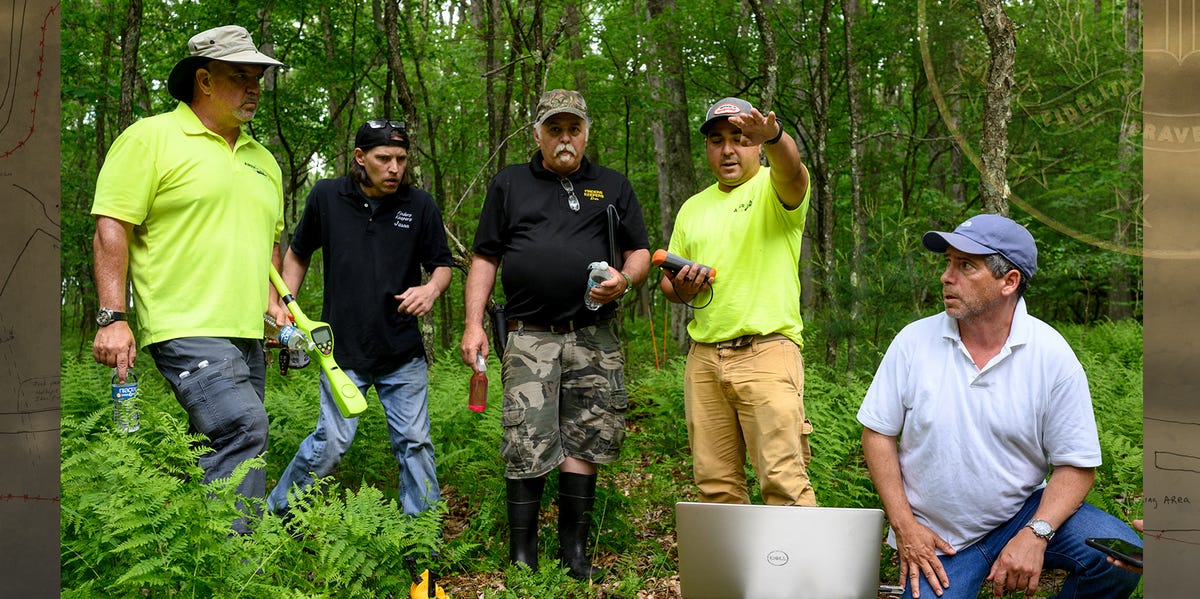
Dennis and Kem Parada are not casual weekend hobbyists who tripped over a rusty can and declared themselves Indiana Jones. They spent years researching the Dents Run legend, searching the area, and building a case that something valuable might be buried underground. Their company, Finders Keepers, became closely tied to the mystery because they claimed their equipment identified signs of a large metallic object deep beneath the surface.
According to public reporting and court records, the Paradas eventually connected with federal authorities. The theory was simple: if the gold was stolen U.S. government property, the FBI could lawfully get involved. That detail is important. The treasure hunters were not merely asking the FBI to help them chase a campfire story. They were presenting the possible recovery of federal propertygold allegedly tied to the U.S. Mint and the Civil War.
And here is where the plot stops wearing hiking boots and puts on a suit. The FBI obtained a federal warrant to excavate the site in March 2018. In court documents, the government described evidence suggesting that one or more tons of gold might be hidden in an underground cave or cavity. Later accounts referenced testing that suggested a metallic mass weighing as much as seven to nine tons. At modern gold prices, that could place the treasure’s value in the hundreds of millions of dollarshence the famous $500 million question.
What Happened at Dents Run?
The FBI’s excavation took place in a wooded area of Elk County, Pennsylvania, near Dents Run. The site was remote, rugged, and perfectly designed for a mystery: trees, hills, snow, narrow roads, and just enough isolation to make every engine noise sound like a conspiracy podcast warming up.
The FBI has consistently said it found nothing. No gold. No bars. No glittering treasure chest with dramatic movie lighting. According to the Bureau’s position, the dig was court-authorized, professionally conducted, and unsuccessful.
Finders Keepers tells a different story. The Paradas say they were largely kept away from the excavation area, despite having helped lead investigators to the site. They expected to observe the operation more closely. Instead, they say, they were held back and later shown an empty hole. To the treasure hunters, that was not closure. It was the beginning of a bigger mystery.
The Suspicion: A Secret Night Dig
The strongest claim from the treasure hunters is that the FBI may have conducted an overnight excavation after the official daytime work paused. Nearby residents and witnesses later described lights, machinery noises, and activity during hours when work was supposedly not happening. Some witnesses also described seeing armored vehicles in the area, including one truck that appeared heavily loaded.
To the Paradas and their supporters, these details suggest a secret removal operation. Their argument is not simply, “We wanted gold and did not get it.” Their argument is closer to: “The scans showed something large, the FBI got a warrant, activity allegedly continued overnight, vehicles were seen, and afterward the readings disappeared.” That is why the story has remained alive for years.
The FBI rejects this version. The Bureau has said no gold or evidence was recovered and has denied speculation that it secretly removed treasure. It has also disputed claims about armored trucks and covert activity. In other words, the two sides are not arguing over a minor misunderstanding. They are standing on opposite sides of a canyon, shouting across it, while America peers over the edge with popcorn.
Why the FOIA Fight Matters
After the dig, Finders Keepers sought records through the Freedom of Information Act, better known as FOIA. This is where the story moves from buried gold to buried paperwork, which is less shiny but often just as dramatic.
The treasure hunters wanted photographs, videos, operational plans, reports, communications, travel records, and other documents that could show exactly what happened during the excavation. The FBI released some records, including photos, videos, and written materials. But the releases did not satisfy Finders Keepers. Their attorneys argued that important records were missing, incomplete, altered, redacted, or insufficiently explained.
In federal court, judges reviewed disputes over what the FBI had searched for, what it had produced, and what it could legally withhold. Some rulings favored the treasure hunters by requiring the government to speed up or better justify its handling of records. Other rulings accepted parts of the FBI’s explanation, including its search for certain video material. That mixed legal record is important: the court battles show real questions about transparency, but they do not prove the FBI stole gold.
The Evidence That Fuels the Mystery
1. The Geophysical Readings
The first major mystery is the underground target. Before the excavation, testing reportedly suggested a dense metallic mass beneath the hillside. If that mass was not gold, what was it? If it was a natural formation, why did it appear so interesting? If it was scrap metal, why was no scrap publicly identified? The FBI’s “nothing found” answer leaves skeptics asking what happened to the original readings.
2. The Empty Hole
Finders Keepers says the site no longer gives the same readings it once did. That matters because, from their perspective, the target was there before the FBI dig and gone afterward. The FBI says it recovered no gold. The treasure hunters say the missing signal is suspicious. This is the kind of disagreement that turns a woodland excavation into a national rabbit hole.
3. The Witness Accounts
Eyewitnesses have described late-night noises, lights, machinery, and vehicles. Witness accounts are not the same as physical proof, but they add texture to the story. They also explain why the case has attracted so much public attention. A quiet “we found nothing” statement sounds less final when local residents say they heard a mountain getting rearranged after dark.
4. The Records Dispute
Transparency has become almost as important as treasure. If the FBI had released a clean, complete, easy-to-understand record of the dig from the start, the mystery might have faded. Instead, delays, redactions, partial releases, and disputes over videos and operational plans helped fuel suspicion. In treasure stories, silence is not golden. It is gasoline.
Did the FBI Have a Motive?
If the gold existed and belonged to the federal government, the FBI would not have needed to “steal” it in the ordinary sense. It could argue that it was recovering U.S. property. That is one reason the word “steal” gets legally complicated. The treasure hunters’ grievance is not only that the gold may have been taken; it is that they believe they were excluded, misled, and denied the truth after helping locate the site.
They hoped that if treasure was recovered, they might receive recognition, a finder’s fee, or at least an honest accounting. Instead, they got the official answer: nothing was found. To them, that feels impossible. To the FBI, it is the end of the matter. To everyone else, it is the kind of unresolved dispute that makes search engines very happy.
Why Historians Are Skeptical
There is another side to the story: the original legend itself is not rock-solid history. The tale of a lost Union gold shipment has circulated for decades, but researchers have noted gaps in the historical record. Clear documentation of the shipment, its disappearance, and its exact route is difficult to pin down. Some versions of the story rely on folklore, old documents of uncertain origin, and theories involving secret Confederate-linked groups.
That does not mean the treasure never existed. History is full of missing records, especially from wartime. But it does mean readers should separate three questions: Did a Civil War gold shipment disappear? Did treasure hunters locate something valuable at Dents Run? Did the FBI secretly recover it? Each question requires its own evidence. A strong legend does not automatically prove a stolen treasure. A suspicious dig does not automatically prove a cover-up. And a government denial does not automatically erase public doubt.
So, Did the FBI Steal $500 Million from Treasure Hunters?
Based on the public record, the most accurate answer is: it has not been proven. The FBI says it found nothing and continues to reject the allegation. Finders Keepers believes the FBI recovered gold and covered it up. Court records and reporting show a real excavation, real pre-dig interest from federal authorities, real disputes over records, and real eyewitness claims that complicate the official timeline.
The case remains compelling because both sides leave readers with questions. If nothing was found, what caused the original readings? Why were the treasure hunters kept so far from a search they helped initiate? Why did records become such a long fight? On the other hand, if gold was secretly removed, where is the undeniable proof? Where are the chain-of-custody records, photographs, inventory logs, or whistleblowers who can conclusively show a recovery?
For now, the Dents Run story is not a solved crime. It is an unresolved American mystery with enough documented facts to be serious and enough missing answers to be irresistible.
Why This Story Became an Internet Obsession
The Dents Run gold mystery hits several cultural buttons at once. Americans love buried treasure. Americans also love arguing about government secrecy. Put those together and you have a story that practically writes its own documentary trailer.
There is also a fairness issue. Many readers sympathize with the treasure hunters because they spent years chasing the lead, brought the government in, and then felt pushed aside. Even people who doubt the gold existed can understand why the Paradas want a complete explanation. After all, if you invite someone to help open a mystery box and they send you to sit in the car, you are probably going to wonder what was in the box.
The FBI’s position may be true. The dig may have produced nothing but mud, rock, and disappointment. But public trust depends not only on being correct. It depends on being transparent enough that reasonable people can follow the story. In Dents Run, the fog never fully lifted.
Experiences and Lessons from the Dents Run Gold Mystery
One of the most useful ways to understand this case is not as a courtroom drama, but as a lesson in what happens when passion, folklore, science, and bureaucracy collide. Anyone who has ever chased a family legend, researched an old property, or followed a local mystery knows the feeling: the story starts small, then suddenly every clue feels like a locked door.
The first experience this story highlights is the emotional pull of treasure hunting. Treasure hunting is rarely just about money. Of course, $500 million would make anyone’s coffee taste better. But for many searchers, the real fuel is the possibility of proving that an old story was true. It is the thrill of connecting a rumor from the past to a physical object in the ground. That is why the Dents Run case resonates. The Paradas were not chasing a random rumor for a weekend; they invested years of work, research, travel, equipment, and belief.
The second lesson is that technology can create confidence, but not certainty. Ground scans, metal detectors, density readings, and geophysical surveys can point investigators toward anomalies. They can say, “Something interesting may be here.” They cannot always say, “Congratulations, you have found a historically significant gold cache, please choose your yacht responsibly.” Underground environments are messy. Rocks, voids, water, old mine activity, buried debris, and instrument limitations can all complicate interpretation.
The third experience is the frustration of dealing with institutions. Once the FBI became involved, the story changed. The treasure hunters were no longer simply exploring a legend. They were dealing with federal procedures, warrants, evidence rules, public-record laws, exemptions, and official statements. For ordinary people, that shift can feel disorienting. A search that began with curiosity can quickly become a legal marathon where the most valuable tool is not a shovel, but a patient attorney.
The fourth lesson is about documentation. If there is one practical takeaway from Dents Run, it is this: document everything. Photographs, dates, locations, permissions, equipment readings, witness names, maps, communications, and independent verification all matter. In a dispute this large, memories are not enough. A treasure hunter who wants to be taken seriously needs records as carefully organized as a museum archive. Preferably with fewer coffee stains.
The fifth experience is learning how quickly mystery fills empty space. When official explanations are brief and records arrive slowly, people naturally build theories. Some theories may be reasonable. Others may sprint into the woods wearing a tinfoil hat. The best protection against wild speculation is clear evidence. In the Dents Run case, the lack of a simple, satisfying public explanation helped keep the story alive.
Finally, the case reminds readers that treasure stories are really human stories. They are about trust, recognition, ownership, history, and the need to know what happened. Whether the Dents Run hillside once held gold or only disappointment, the people involved are still digging for answers. And sometimes, in America, the hardest thing to unearth is not buried metal. It is the truth.
Conclusion
The question “Did the FBI steal $500 million from treasure hunters?” has a dramatic ring, but the responsible answer is more careful: the allegation is unproven. The FBI says no gold was found at Dents Run. Finders Keepers believes the opposite and continues to seek records and answers. The public record confirms a real FBI excavation, serious pre-dig interest, continuing FOIA litigation, and unresolved questions about what happened in those Pennsylvania woods.
That is why the story refuses to disappear. It has gold, secrecy, history, technology, court fights, and enough ambiguity to keep skeptics and believers arguing for years. Until stronger evidence emerges, Dents Run remains one of America’s strangest modern treasure mysteries: a place where the FBI says there was nothing, treasure hunters say there was everything, and the rest of us are left staring at the dirt, wondering who is right.