Note: This article is written as an original, web-ready analysis based on real bullying-prevention guidance, parenting etiquette discussions, school inclusion practices, and child-development resources. Source links are intentionally not inserted, as requested.
A Birthday Party, A Guest List, And One Very Complicated Cupcake
Children’s birthday parties look simple from the outside. Balloons, cake, juice boxes, maybe a magician who has seen too much. But underneath the frosting, these little events can become full-blown social diplomacy. One invitation too many, one invitation too few, and suddenly a six-year-old’s celebration has turned into a neighborhood summit meeting with sprinkles.
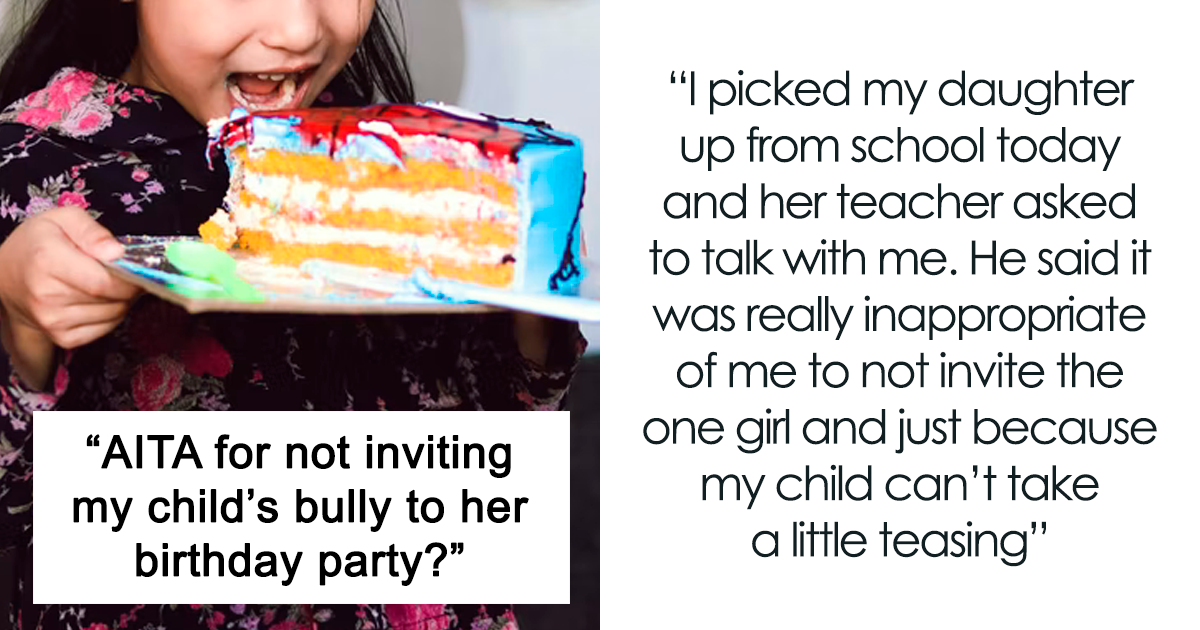
That is exactly why the story of a mother who invited her daughter’s whole class to a birthday party except for one childthe child she says had bullied her daughtersparked such a heated debate. According to the situation, the mother wanted her daughter to feel safe and happy on her own birthday. The teacher, however, called the mother out, arguing that excluding only one student from an otherwise whole-class invitation was hurtful and unfair.
So the question is not as easy as “Was the mom right?” or “Was the teacher overstepping?” The real issue is trickier: when does protecting your child become public exclusion of another child? And when does promoting classroom inclusion accidentally ask a victim to smile politely while sharing cake with someone who made school miserable?
In other words, welcome to parenting: where even the birthday candles come with ethical footnotes.
Why This Story Hit A Nerve With Parents
The reason this birthday party drama spread so quickly is that it touches two values most parents care deeply about: kindness and boundaries. Parents want their kids to be inclusive. Nobody wants to raise the child who turns the classroom into a tiny social monarchy where invitations are handed out like royal decrees. At the same time, parents also want their children to understand that being kind does not mean being forced to welcome someone who repeatedly mistreats them.
Bullying is not just “kids being kids.” It can include teasing, name-calling, social exclusion, spreading rumors, intimidation, and repeated behavior that makes another child feel unsafe or powerless. Modern bullying-prevention guidance often emphasizes that adults should take reports seriously, document patterns, involve schools when necessary, and avoid forcing children to “just get over it.”
That is why many readers immediately sympathize with the mother. A birthday party is not a public service. It is a private celebration. If a child has been targeted by a classmate, parents naturally ask: why should the birthday child have to host that person at her own party?
But the teacher’s concern also deserves a fair hearing. If every student in the class is invited except one, the exclusion becomes extremely visible. Even if the mother’s intention was protection, the social message received by the excluded child may be, “Everyone belongs here except you.” That can become its own form of harm, especially in an elementary-school classroom where children are still learning empathy, accountability, and how not to turn lunch into a courtroom.
The Mother’s Argument: A Child Should Feel Safe At Her Own Party
The strongest argument in the mother’s favor is simple: the birthday girl should not have to entertain someone who has bullied her. A birthday party is supposed to be joyful, not a stress test with cupcakes. If the daughter had been repeatedly hurt, embarrassed, threatened, or isolated by this classmate, then inviting the bully could feel like rewarding bad behavior.
Parents often teach children that actions have consequences. If someone is cruel, refuses to apologize, or continues to make another child uncomfortable, that person may not be included in private social events. That is not necessarily revenge. It can be a boundary.
This matters because children, especially girls, are sometimes taught to be “nice” in a way that ignores their discomfort. They may be encouraged to include everyone, smile anyway, and avoid making trouble. But healthy social development includes learning that friendship is voluntary. You can be respectful to someone at school without inviting them into your home, your party, or your birthday photos where everyone is wearing paper hats and pretending the pizza is not cold.
If the mother’s daughter clearly said, “I do not feel comfortable with this child at my party,” a responsible parent should listen. Ignoring that request could send the wrong message: your feelings matter, unless an adult is afraid of awkwardness.
The Teacher’s Argument: Excluding One Child Can Become Public Humiliation
The teacher, however, was likely looking at the situation through a classroom lens. Teachers deal with the aftermath of social drama every day. A birthday invitation may leave the house as a cheerful little envelope, but by 9:15 a.m. it can become the emotional centerpiece of the entire classroom.
Many schools have informal or written birthday invitation rules for this reason. Some allow invitations to be distributed at school only if the entire class is invited. Others ask families to send invitations privately through email, mail, text, or parent directories. These policies are not usually about controlling private parties. They are about preventing public exclusion inside the classroom.
From the teacher’s perspective, inviting twenty children and excluding one is different from inviting four close friends. A small guest list is normal. A whole-class-minus-one guest list feels like a spotlight. Even if the excluded child has behaved badly, a public snub can escalate resentment, embarrassment, and classroom tension.
Teachers are also responsible for every child in the room, including the child accused of bullying. That does not mean excusing bullying. It means adults should correct behavior without turning the child into the official class villain. Kids can behave badly and still need guidance, consequences, and a path back toward better choices.
The Key Difference: Private Boundary Or Public Punishment?
The heart of this debate is not whether the daughter had to invite her bully. She did not. The better question is how the invitation decision was handled.
If the mother privately invited a handful of her daughter’s genuine friends outside of school, there would be very little controversy. Children are allowed to have close friends. They are allowed to choose who comes to their party. No family is required to rent a banquet hall, order forty cupcakes, and financially collapse in the name of classroom harmony.
But inviting the entire class except one student is a very specific social statement, even if the mother did not mean it that way. It tells every other child, “This one person is not welcome.” If the invitations were discussed at school, handed out in class, or made obvious during the school day, the exclusion becomes public.
A useful rule of thumb is this: if the guest list excludes only one or two children from a natural group, handle it with extreme care. Either invite a smaller circle or keep the invitations completely private. The goal is to protect your child without creating a second wound.
Was The Excluded Child Really A Bully?
Another important question is whether the excluded child was truly bullying or had simply been mean on occasion. That distinction matters. Bullying usually involves repeated behavior, a power imbalance, and harm. A one-time argument, a rude comment, or a playground disagreement may still need correction, but it is not always the same as ongoing bullying.
This is where parents need to slow down before applying a permanent label. Calling a child “a bully” can become a sticky identity. Kids are still developing. They make mistakes, copy behavior, seek attention, and sometimes act out because they lack skills. That does not excuse cruelty, but it does mean adults should focus on behavior rather than branding the child forever.
A better approach is to say, “This child has been unkind to my daughter,” or “There has been repeated behavior that made my daughter feel unsafe.” That keeps the focus on the actions and the impact. It also leaves room for accountability, apologies, and change.
In the birthday party case, if the classmate had repeatedly targeted the daughter and the school had failed to address it, the mother’s protective instinct makes complete sense. If the “bully” label came from one playground dispute over a swing, then excluding one child from a whole-class party may be too harsh.
What The Mother Could Have Done Differently
The mother’s best move would have been to avoid the “whole class except one” structure. She could have invited a smaller group of close friends, perhaps five or six classmates her daughter genuinely enjoys. That would protect the daughter’s comfort without making the excluded child the only one left out.
She also could have sent invitations privately outside of school. No backpack parade. No colorful envelopes waved around like tiny social trophies. No classroom chatter about who made the list. Just a quiet invitation process between parents.
If the bullying was serious, the mother could also have requested a meeting with the teacher or school counselor separately. Birthday parties should not become the main tool for addressing bullying. Schools need to know when a child feels targeted, and they should help create a plan for safety, supervision, and behavior correction.
Another option would be to plan a party based on a smaller theme: a sleepover with two friends, a craft afternoon with cousins, a skating party with a limited number of guests, or a backyard celebration for a mixed group from school, family, and activities. The more natural the guest list feels, the less it looks like a social penalty.
What The Teacher Could Have Done Better
The teacher may have had a valid concern, but calling out the mother without first understanding the bullying context could also be unfair. If a child has been mistreated, the adult response should not be, “Invite the child anyway because exclusion is bad.” That can sound like the comfort of the aggressor matters more than the safety of the child who was hurt.
A more balanced teacher response might be: “I understand why your daughter may not want this child at her party. However, because nearly the entire class is invited, this is likely to cause problems at school. Please distribute invitations privately, or consider a smaller guest list. Also, let’s discuss the bullying concern so we can address it properly.”
That response validates both sides. It does not force the birthday girl to host someone who hurt her, but it also prevents the classroom from becoming an arena of public rejection.
Teachers are not party police, and most of them would rather grade a mountain of spelling tests than mediate birthday invitation drama. Still, they do have a role when private events spill into the classroom and affect students’ emotional well-being.
What Parents Should Teach Kids About Boundaries And Kindness
This story is useful because it shows that boundaries and kindness are not enemies. In fact, children need both.
Kindness teaches children not to humiliate others, not to brag about invitations, and not to turn social events into weapons. Boundaries teach children that they do not have to reward harmful behavior with access to their private life. A child can say, “I will be polite to you at school, but I do not want you at my birthday party.” That is not cruelty. That is self-respect.
The missing skill is discretion. Children need help learning that not every decision has to become a public announcement. If someone is not invited, the invited kids should not tease, gossip, or repeatedly talk about the party in front of that child. Parents can prepare their kids with simple scripts: “My mom handled the invitations,” or “It is a small party,” or “Let’s talk about something else.”
That may sound small, but it prevents a private boundary from turning into a public performance.
So, Was The Mother Wrong?
The fairest answer is: the mother was not wrong for wanting to protect her daughter, but she may have handled the guest list in the most explosive way possible.
If the excluded child had truly bullied the birthday girl, the daughter should not be forced to invite that child. A birthday party should feel safe. No child should have to share cake with someone who repeatedly made them anxious, embarrassed, or afraid just so adults can feel that the guest list looks tidy.
However, inviting the whole class except one child is a risky choice. It can look less like a boundary and more like a public punishment. Even when the excluded child has behaved badly, adults should avoid modeling humiliation as a consequence. Accountability is important. Social exile is a blunt instrument, especially with young children.
The better solution would have been to invite a smaller group, keep invitations private, and address the bullying through the school. That approach protects the daughter without creating a classroom spectacle.
In short: Mom’s instinct was understandable. Her execution needed a little less confetti cannon and a little more strategy.
Practical Advice For Parents Facing The Same Situation
1. Do Not Use The Birthday Party As The Bullying Policy
If your child is being bullied, a party invitation decision should not be the only response. Document what happened, ask your child for details, contact the teacher, and request a plan. Bullying needs adult attention, not just a missing cupcake.
2. Avoid “Everyone Except One” Invitations
If one child is excluded from an otherwise complete group, the message becomes loud. Choose a smaller guest list or invite the whole group only when it is emotionally safe and practical.
3. Keep Invitations Off School Grounds
Private parties should be handled privately. Use text, email, parent directories, mailed invitations, or direct parent contact. The classroom should not become a red-carpet event where children discover their social ranking between math and recess.
4. Teach Your Child Not To Brag
Even if the guest list is fair, children can unintentionally hurt others by talking nonstop about the party. A quick reminder helps: “It is okay to be excited, but do not make others feel bad.”
5. Leave Room For Growth
If the child who bullied your child apologizes, changes behavior, and the school confirms improvement, future social decisions may look different. Boundaries can be firm without being permanent prison sentences.
Related Experiences: What Birthday Drama Teaches Parents In Real Life
Many parents discover that birthday party drama is less about cake and more about the social skills children are still building. One common experience happens when a child wants to invite “almost everyone.” Maybe the class has twenty-four students, and the child names twenty-two. At first, the parent thinks, “Great, my child is friendly.” Then the realization arrives like a balloon popping: two children will clearly know they were left out. That is when many parents switch plans and either invite everyone or shrink the party to a small group of close friends.
Another common experience involves the child who has been unkind but is still part of the larger friend group. Parents may feel stuck. Invite the child, and the birthday kid may feel tense. Exclude the child, and the school week may become awkward. In these cases, parents often learn to ask better questions: “Do you feel unsafe around this child, or are you just annoyed with them right now?” “Has this happened many times?” “Would you enjoy your party less if they came?” These questions help separate true bullying from normal childhood conflict.
Some families also learn that children care less about huge parties than adults assume. A child who seems to want the entire class may actually want three favorite friends, a movie, pizza, and the right to stay up thirty minutes later. Parents sometimes create giant parties because they fear exclusion, but a smaller celebration can be warmer, cheaper, and less socially messy. Honestly, fewer children also means fewer mystery stains on the carpet, which is not a parenting philosophy but should be.
Teachers have their own experiences with this issue. A teacher may watch one child sit silently while everyone else talks about a party they were not invited to. Even if the teacher understands why the guest list happened, the emotional fallout still lands in the classroom. Tears happen. Cliques form. Learning time disappears. Suddenly, the teacher is trying to explain fractions while half the class is investigating who got an invitation and who did not. This is why many teachers prefer simple rules: no invitations at school unless everyone receives one.
Parents of children who have been excluded also learn a difficult lesson. Their first instinct may be anger, but the healthier response is often calm support. Instead of calling the host parent immediately, they can validate their child’s feelings: “That hurts. I understand why you feel sad.” Then they can help the child regain perspective: “Not being invited to one party does not mean you are not liked.” This kind of response builds resilience without pretending rejection feels good.
Parents of children who bully face a different challenge. Nobody wants to receive that call. It is tempting to deny, minimize, or say, “My child would never.” But children are still learning, and some do hurtful things. The most constructive response is to ask what happened, set clear expectations, require accountability, and work with the school. A missed birthday invitation may sting, but it can also be a signal that behavior needs attention.
The biggest real-life lesson is that children are always watching how adults handle conflict. If adults respond with revenge, gossip, and public shaming, children learn that exclusion is a weapon. If adults respond with boundaries, privacy, and problem-solving, children learn something better: you can protect yourself without becoming cruel.
That is the balance every parent is trying to strike. You do not have to invite someone who hurts your child. You also do not have to turn that decision into a classroom announcement. The best parenting choices often happen quietly, with less drama, more empathy, and maybe a few extra cupcakes for the adults who survived the guest list.
Conclusion
The mother in this story was not heartless for wanting her daughter’s birthday to feel safe. In fact, many parents would make the same instinctive choice. A child who has been bullied should not be pressured to host the person who hurt her simply to preserve appearances.
Still, the teacher’s concern was not nonsense. When nearly every child is invited except one, the exclusion becomes obvious and potentially harmful. The smartest answer lives in the middle: protect the birthday child, keep invitations private, avoid whole-class-minus-one guest lists, and address bullying through the proper school channels.
Birthday parties should teach children joy, friendship, and respectnot that social life is a courtroom with frosting. With a little care, parents can honor their child’s boundaries without turning another child into the party’s official outcast.