Note: This review is written in a parent-tested editorial style and is based on current product information, hands-on review patterns, and real parent-reported experiences across reputable sources.
Choosing between the Yoto Player and the Toniebox is a very specific modern parenting problem. Nobody warns you that one day you will be standing in your kitchen, holding a half-eaten granola bar, Googling “Yoto vs. Toniebox” like your family’s future depends on it. Yet here we are.
Both devices promise the same beautiful dream: screen-free audio for kids. Stories, songs, bedtime routines, independent play, fewer “Can I watch a show?” negotiations, and maybejust maybefive uninterrupted minutes to drink coffee while it is still technically coffee and not room-temperature bean soup.
But the Yoto and Toniebox are not the same kind of toy. After comparing both as a parent would actually use themin bedrooms, cars, quiet time, bedtime meltdowns, road trips, and the mysterious under-couch toy graveyardthe simple answer is this: Toniebox is usually better for toddlers and preschoolers, while Yoto is better for older kids, travel, long-term value, and families who want more flexible content.
That does not mean one is perfect and the other should be banished to the garage next to the abandoned scooter. It means each one solves a different parenting problem. Let’s break it down honestly.
What Are Yoto and Toniebox?
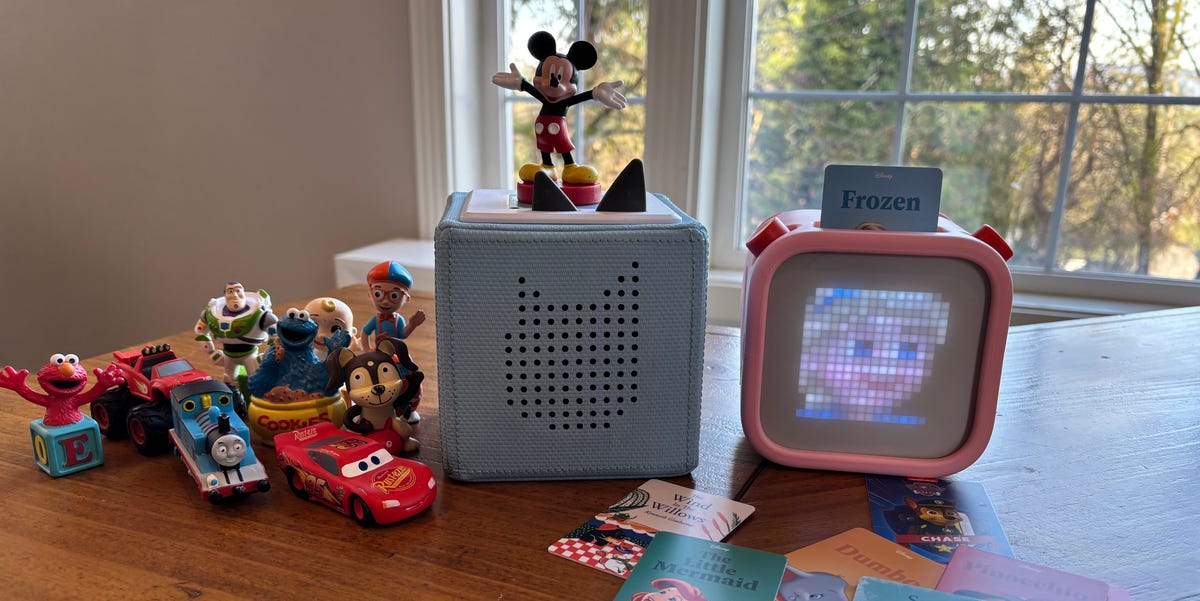
The Yoto Player is a screen-free kids’ audio player that uses physical cards. A child inserts a card, and the player starts an audiobook, music album, podcast, activity, sleep sound, or custom recording. Yoto also makes the smaller Yoto Mini, which is especially popular for travel. The full-size Yoto Player has a pixel display, night light, room thermometer, sleep sounds, radio, alarms, and app-based parental controls.
The Toniebox is a soft, squishy audio cube that plays content when a child places a little character figure, called a Tonie, on top. Remove the figure and the story stops. Squeeze the ears for volume. Tap or tilt to change tracks. It is basically a toddler-friendly speaker disguised as a magical story cube. The newer Toniebox 2 adds updated features such as USB-C charging, app controls, a light ring, sleep features, and Tonieplay interactive games.
In plain parent English: Yoto uses cards; Toniebox uses figurines. That one difference changes almost everything.
Yoto Vs. Toniebox: Quick Verdict
If you are shopping for a child under 4, especially a toddler who loves characters, the Toniebox is the easier win. It is soft, intuitive, adorable, and nearly indestructible. A small child understands it immediately: put Elsa, Peppa, Paw Patrol, or another favorite character on top and the magic happens.
If you are shopping for a child 5 or older, or you want one device that can grow into chapter books, educational podcasts, music, independent bedtime routines, and travel, Yoto is the stronger long-term choice. It feels less like a toy and more like a kid-safe audio system.
My honest parent verdict: Toniebox wins the toddler years. Yoto wins the long game.
Design and Durability
Toniebox: Built Like a Pillow With a Speaker Inside
The Toniebox feels made for the child who believes gravity is a toy-testing method. It is padded, soft, and forgiving. If it falls from a bed, it usually bounces instead of creating that expensive “crack” sound that makes every parent’s soul briefly leave their body.
The controls are brilliantly simple. Kids squeeze one ear to raise the volume and the other to lower it. They place a figure on top to play. They remove it to stop. There are no menus, no tiny buttons, and no “Mom, it says error code dinosaur waffle” situation.
The downside? The Tonies are little figures, which means they are fun to collect and also fun to lose. One may end up in a backpack. Another may join the bath toys. A third may vanish into the same alternate dimension that holds single socks and missing puzzle pieces.
Yoto: More Grown-Up, Less Toddler-Proof
The Yoto Player has a clean, modern design with a card slot, two chunky control knobs, and a charming pixel display. It looks like something a child can use but not something that screams “nursery only.” That matters if you want a device that a 7-year-old or 9-year-old will still happily keep on a nightstand.
Yoto is durable enough for normal family life, but it does not feel as drop-proof as the Toniebox unless you add a protective case. The Yoto Adventure Jacket or similar protective accessory is worth considering, especially for younger kids or travel.
Cards are also easier to store than Tonies. You can keep them in a binder, case, drawer, or travel pouch. They do not double as toys, which makes them slightly less exciting for toddlers but much more practical when packing for a road trip.
Ease of Use for Kids
For very young kids, Toniebox is easier. A 2-year-old can understand it in about six seconds. Character goes on. Music comes out. Character comes off. Silence returns, at least theoretically.
Yoto is still simple, but it requires a little more coordination. Kids need to insert cards correctly and learn what the knobs do. For a 3-year-old, that may be totally fine. For a 1- or 2-year-old, Toniebox usually feels more natural.
However, older kids may outgrow the Toniebox’s toy-like feel faster. Yoto’s cards, app features, chapter books, podcasts, radio, and sleep routines make it feel more flexible. A 6-year-old may still love Tonies, but a 6-year-old who enjoys longer stories will probably get more mileage from Yoto.
Content Library: Stories, Songs, and Real-Life Use
Yoto Content
Yoto offers a large library of cards, including audiobooks, music, educational content, soundscapes, podcasts, activities, and brand-name favorites. It also has Yoto Originals, free app content, radio, daily podcasts, and Make Your Own Cards.
The Make Your Own feature is one of Yoto’s biggest advantages. You can record a grandparent reading a bedtime story, add family messages, create playlists, or link supported audio. For families with relatives far away, this feature is genuinely sweet. It turns the device from “kid gadget” into “tiny emotional time capsule.”
Yoto is especially strong for chapter books and content that grows with your child. A toddler may start with nursery rhymes and sleep sounds, then move into short stories, then longer books, podcasts, language learning, music, and educational audio.
Toniebox Content
Toniebox shines with character-based content. Disney, Sesame Street, Paw Patrol, Peppa Pig, and other familiar figures make it instantly appealing to younger kids. The child sees the character, grabs it, and knows what they are choosing. No reading required.
The figures also encourage imaginative play. A child may listen to the story, then carry the figure around, line it up with other toys, or make it the mayor of a block city. The Tonie itself is part of the experience.
Creative Tonies allow custom recordings, but they are more limited than Yoto’s Make Your Own system. Still, they are wonderful for recording family voices, songs, or special messages.
Battery Life and Charging
Yoto has the edge for battery life, especially if you compare the Yoto Mini or newer Yoto Player models with older Toniebox versions. The full-size Yoto Player is designed for home use and includes features such as USB-C charging, offline storage, a night light, and sleep functions. The Yoto Mini is particularly strong for travel because it is small, light, and easy to pack.
The Toniebox 2 improves on earlier models with USB-C charging and a longer battery life than the original Toniebox. Still, in everyday family use, Toniebox tends to live more naturally at home: bedroom, playroom, kitchen floor, blanket fort, repeat.
If your main concern is airplane rides, car trips, and compact packing, Yoto Mini is the most travel-friendly option. If your main concern is a toddler using something independently at home, Toniebox is easier and sturdier.
App and Parental Controls
The Yoto app is one of the strongest reasons to choose Yoto. Parents can manage cards, adjust volume limits, set alarms, control the night light, use sleep timers, access free audio, and organize content. It feels like a parent command center, but thankfully not the kind that requires a technology degree and a small sacrifice to the Wi-Fi gods.
Toniebox also has app support, especially with the newer Toniebox 2, where parents can manage settings, monitor battery, and control parts of the listening experience. The original Toniebox was more intentionally child-led with less remote control. That simplicity can be a pro or con depending on your parenting style.
If you like customization, routines, and managing content from your phone, Yoto feels more powerful. If you want your child to operate the device with minimal parent involvement, Toniebox is beautifully simple.
Sound Quality
Neither device is trying to replace your home speaker system. These are kids’ audio players, not tiny concert halls. That said, Yoto generally has stronger sound quality and more flexible listening options, especially for music, longer audiobooks, and travel use.
The Toniebox sound is perfectly fine for stories, songs, and toddler dance parties. Young children are not exactly audiophiles. Their main technical requirement is usually “Can I hear it while wearing a cape and eating crackers?” The answer is yes.
For older kids, headphones, travel, and more varied listening, Yoto feels more versatile.
Cost and Long-Term Value
Both systems can become expensive because the player is only the beginning. After that, you buy cards or Tonies. This is how parents discover that “screen-free” does not always mean “wallet-free.”
Yoto cards are usually easier to store and often feel more cost-effective, especially if your child listens to longer books or if you use Make Your Own Cards. Yoto Club can also make sense for families building a library.
Tonie figures are more expensive per piece in many cases, but they have toy value. For a toddler, a Tonie is not just content; it is also a character, a collectible, and occasionally a passenger in a dump truck.
For long-term value, I give the advantage to Yoto. For immediate toddler excitement, I give it to Toniebox.
Which Is Better for Travel?
Yoto wins for travel, especially the Yoto Mini. It is smaller, lighter, easier to pack, and the cards take up almost no space. You can bring several stories without filling your bag with figurines. That matters when you are already carrying snacks, wipes, backup clothes, a water bottle, stickers, and an emotional support banana.
Toniebox can travel, but it is bulkier. Tonies are cute but less convenient in a carry-on. If a figure gets lost at the airport, congratulations: your child’s favorite bedtime story now lives in Terminal B.
Which Is Better for Bedtime?
Both can help with bedtime, but in different ways. Toniebox is cozy and familiar for younger kids. They can pick a bedtime character, place it on the box, and settle in.
Yoto is better if you want a full bedtime system. The night light, sleep sounds, clock, alarms, OK-to-wake settings, and app controls make it more useful as part of a routine. If your child responds well to structure, Yoto can become a bedside helper rather than just a story player.
Pros and Cons of Yoto
Yoto Pros
Yoto has a broad content library, strong app controls, travel-friendly card storage, Make Your Own Cards, sleep features, radio, podcasts, and a design that grows with kids. It is excellent for preschoolers, early elementary kids, and families that want a long-term audio solution.
Yoto Cons
It is less instantly toddler-friendly than Toniebox. The cards are practical but not as magical as figures. The device may need a protective case for rough use, and younger kids may need more help at first.
Pros and Cons of Toniebox
Toniebox Pros
Toniebox is incredibly intuitive, durable, soft, cute, and perfect for toddlers. The character figures make choosing content easy and fun. It encourages independence and imaginative play, and the newer Toniebox 2 adds features that help it last longer.
Toniebox Cons
The figures take up more space, can get lost, and may cost more to collect. The system can feel more toddler-focused, especially as kids grow into longer stories and more varied content. Customization is useful but not as flexible as Yoto’s.
My Final Recommendation
Choose Toniebox if your child is 1 to 4, loves characters, needs something extremely durable, and would enjoy a toy-like audio player they can operate without help.
Choose Yoto if your child is 4 or older, you travel often, you want more educational content, you care about long-term value, or you like the idea of custom cards, podcasts, sleep tools, and a device that will not feel babyish in two years.
If you have multiple kids at different ages, there is a strong argument for both. In a house with a toddler and an older child, Toniebox can live in the playroom while Yoto becomes the bedroom, road trip, and quiet-time champion.
Extra Parent Experience: What It Feels Like to Live With Both
The biggest difference between Yoto and Toniebox does not show up on a product page. It shows up at 6:47 a.m. when one child is building a couch fort and the other is asking for breakfast with the urgency of a tiny landlord collecting rent.
The Toniebox is the one my younger child reaches for when they want comfort. It feels like a toy. The figures are familiar, chunky, and satisfying to place on top. There is no learning curve. A toddler can carry it from room to room, drop it on a rug, squeeze the ears, and feel totally in charge. That independence matters. It gives little kids the joy of choosing their own entertainment without handing them a tablet and hoping they do not somehow buy 400 cartoon stickers.
The Toniebox is also better when emotions are running high. If a child is tired, cranky, or entering that special preschool mood where socks become a personal insult, the Toniebox is calming because it is so simple. Pick the favorite character. Put it on. Listen. No decisions beyond that.
Yoto, on the other hand, has become the device I appreciate more as a parent. It is less flashy at first, but it becomes more useful over time. The cards are easier to organize, the content feels deeper, and the app gives me more control. I like being able to use sleep sounds, adjust settings, manage volume, and keep bedtime routines consistent. I also like that it does not look too babyish. A child who has outgrown cartoon figurines may still happily listen to a Yoto card before bed.
For travel, Yoto is the clear winner in our imaginary-but-very-realistic family chaos test. A few cards fit into a tiny pouch. The Yoto Mini can slip into a backpack. It is easier to use in the car, at a hotel, or while waiting somewhere painfully boring, like a doctor’s office where the only magazine is from 2018 and somehow sticky.
The Toniebox is still wonderful for home. It is the one that gets dragged into blanket forts and play kitchens. It invites physical play. But the figures do scatter. If your child has a favorite Tonie, you may eventually find yourself whispering, “Where is the puppy?” with the seriousness of a detective in a prestige crime drama.
Yoto cards can also be lost, of course, because children are gifted chaos artists. But cards are flatter, easier to store, and less likely to become part of a pretend soup recipe. The Make Your Own Cards are also a quiet superpower. Recording family voices, custom playlists, or special bedtime messages adds value that goes beyond entertainment.
If I had to describe the difference in one sentence, I would say this: Toniebox feels like a beloved toy, while Yoto feels like a kid-friendly audio library. One is more magical for the youngest listeners. The other is more practical and future-proof.
So, which one should you buy? For a toddler’s birthday, I would choose Toniebox. For a 5-year-old starting to enjoy longer stories, I would choose Yoto. For a family that travels often, Yoto Mini would be my first pick. For a child who needs a cozy, tactile bedtime buddy, Toniebox is hard to beat.
And if you already own one, do not panic that you picked “wrong.” You probably did not. Both are good. Both reduce screen time. Both give kids independence. Both can rescue a rainy afternoon. The best choice is the one your child will actually useand the one you will not resent finding under the couch next to three raisins and a Lego head.
Conclusion
The Yoto vs. Toniebox debate does not have one universal winner because kids are not universal. They are tiny, opinionated individuals with surprising brand loyalty and questionable storage habits.
The Toniebox is best for younger children who love characters, tactile play, and simple controls. It is durable, charming, and toddler-approved. The Yoto Player is best for families who want more content variety, stronger long-term value, travel convenience, bedtime tools, and a device that grows beyond the preschool years.
For toddlers, choose Toniebox. For older kids, choose Yoto. For families with both age groups, having both actually makes senseone for cozy character play, one for bigger-kid listening adventures. Your coffee may still go cold, but at least someone else will be telling the story for a few minutes.