Note: This is an original, source-synthesized article based on public entertainment reporting, film-design resources, image-editing documentation, and widely discussed examples of movie Photoshop fails. No source links are embedded, per request.
Movies ask us to believe a lot. We accept superheroes punching holes in the sky, haunted dolls with better career longevity than most actors, and one action hero defeating 47 henchmen with a limp, a chair, and unresolved childhood trauma. But sometimes the spell breaks for a much smaller reason: a framed family photo on a shelf looks like it was assembled by a raccoon with a free trial of Photoshop.
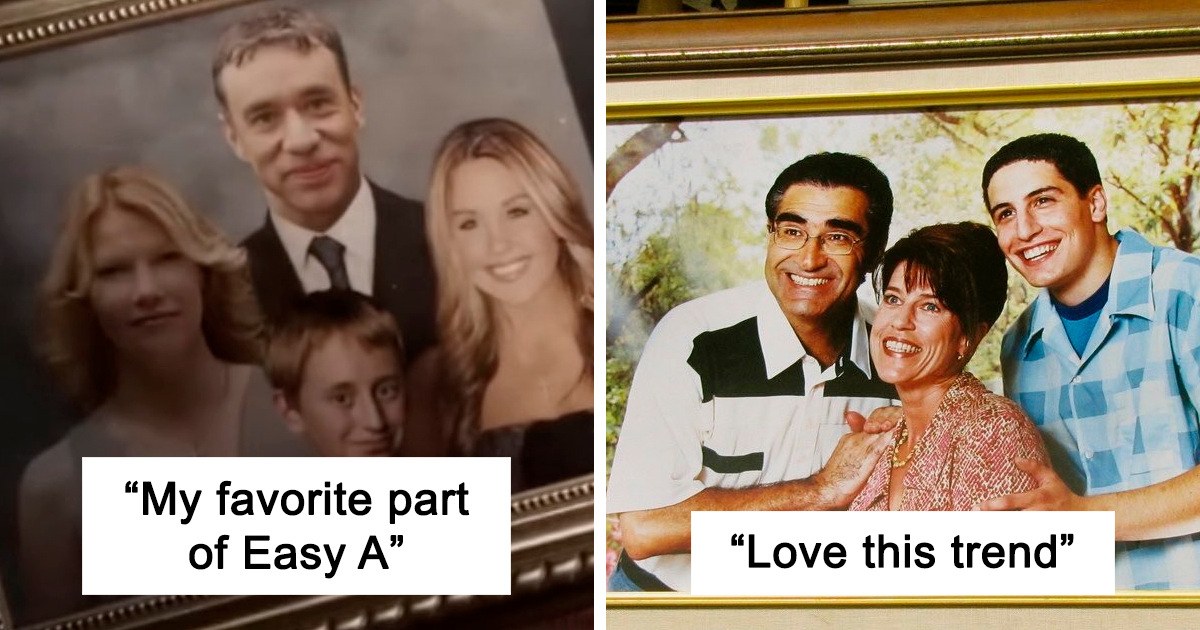
That tiny background detail became internet gold when a viral Twitter thread collected poorly Photoshopped and awkwardly staged “family photos” from movies. The thread, started by film fan Justin Gerber and later amplified by entertainment sites, turned a niche habit into a communal sport. Suddenly, viewers were not just watching movies. They were scanning the walls, pausing during exposition, zooming into mantelpiece portraits, and asking the important cinematic question: “Why does this child have the emotional lighting of a hostage photo?”
The phenomenon is funny because it is so specific. We expect huge visual effects to occasionally look dated. We know movie posters are often polished until human bodies resemble luxury candles. But a family photo? That should be easy. Put people in a room. Take picture. Print picture. Done. Yet Hollywood, with all its cranes, colorists, costume departments, stunt coordinators, and coffee budgets, can still produce a fake family portrait where nobody appears to be sharing the same oxygen.
Why Movie Photoshop Fails Are So Addictive
Photoshop fails in movies work like cinematic Easter eggs, except instead of rewarding fans with a clever hidden reference, they reward us with a dad floating behind a couch like a ghost who pays property tax. The joy is not mean-spirited so much as wonderfully human. Film production is a massive machine, and these odd little photos remind us that somewhere inside that machine, someone had three hours, two actor headshots, a fake beach background, and a deadline named “yesterday.”
Gerber reportedly began collecting these images during the early pandemic, when many people were suddenly watching more movies at home. One especially bad family photo in the thriller The Intruder helped kick off the obsession. From there, the hunt became part detective work, part comedy routine, and part visual anthropology. The internet joined in because once you notice these photos, you cannot un-notice them. Every framed prop becomes suspicious. Every family portrait in a movie starts whispering, “Look closer, coward.”
One reason these fails go viral is that they are low-stakes. Nobody is claiming a film is ruined because a background portrait looks strange. In fact, many people love the films even more because of it. The fail becomes a tiny souvenir, a reminder that movies are handmade illusions. A perfect film can feel untouchable. A film with a hilariously fake photo on the wall feels like it left the blooper reel in the living room.
The 30 Most Ridiculous Types Of Photoshop Photo Fails In Movies
The viral thread spotlighted many individual examples, but the funniest movie Photoshop fails usually fall into familiar categories. Here are 30 recurring sins of cinematic photo fakery, ranked not by scientific accuracy but by how loudly they make viewers say, “Wait, pause that.”
- The Floating Head: A face hovers above a body with the spiritual commitment of a sticker slapped on a lunchbox.
- The Lighting War: One person is lit by golden sunset, another by fluorescent office bulbs, and a third by pure existential dread.
- The Wrong-Scale Relative: A child’s head is the size of a decorative pumpkin while the adult beside them appears borrowed from a dollhouse.
- The Phantom Background: The family stands in front of a vacation destination nobody has ever visited, including the pixels.
- The Cutout Shoulder: A shoulder disappears because the crop tool got ambitious and the deadline got personal.
- The Same Smile Syndrome: Every person looks pasted in from a different school picture day.
- The No-Shared-Moment Photo: Nobody is looking at the same camera, feeling the same emotion, or possibly living in the same year.
- The Stock Photo Parent: A background adult looks suspiciously like they came free with a template called “Suburban Concern.”
- The Impossible Hug: Arms wrap around bodies at angles that would require three elbows and a minor medical waiver.
- The Neck Extension: The person’s neck has been stretched as if the designer confused family warmth with giraffe elegance.
- The Ghostly Edge: A white halo around the hair reveals the person was cut from a brighter image, perhaps heaven.
- The Flat Person: One family member has no depth, no shadow, and no chance of passing a basic physics inspection.
- The “Everyone Is Young Except One Person” Problem: The ages do not match the supposed timeline, which is bold storytelling from a picture frame.
- The Tourist Trap Composite: A family is “at” a landmark, but the landmark looks like it was downloaded during a weak Wi-Fi signal.
- The Mismatched Resolution: One face is crisp, another is blurry, and the family dog is somehow in 4K.
- The Haunted Baby: A child’s face is pasted so stiffly that the prop photo becomes the scariest thing in the movie.
- The Clone Relative: Two people appear to share the same face base, suggesting either poor editing or an unannounced sci-fi subplot.
- The Fake Sports Memory: A character is supposedly in a big game photo, but the body, uniform, and lighting disagree in court.
- The Vacation From Nowhere: Tropical background, winter clothing, confused smiles. Nobody packed correctly for this lie.
- The “We Forgot Shadows” Special: People stand together, yet only some cast shadows, proving one cousin may be a vampire.
- The Wall Photo That Knows Too Much: A fake portrait gets a dramatic close-up, inviting viewers to inspect the crime scene.
- The Poster-Hand Problem: Like the famous The Babysitter promotional image with two right hands, some edits fail anatomy class with confidence.
- The Over-Airbrushed Star: Movie marketing sometimes edits actors until they look less like themselves and more like polite wax sculptures.
- The Tomb Raider Neck Effect: The much-mocked Tomb Raider poster became a classic example of body proportions gone rogue.
- The Family That Never Met: Each person’s expression says they were photographed alone and introduced during export.
- The Wrong Era: A “decades-old” family photo has modern posing, modern hair, and the vibe of a mall kiosk in 2019.
- The Disaster Frame: The prop is meant to communicate love, grief, or backstory, but instead communicates “graphic design emergency.”
- The Crooked Memory: The image is framed like a cherished keepsake, but the composition looks like someone sneezed during placement.
- The Background Character With Main-Character Energy: A random pasted-in relative is so visually strange they steal the whole scene.
- The “Nobody Will Notice” Masterpiece: The most dangerous category of all, because the internet absolutely will notice.
Why Do These Fails Happen In Professional Movies?
It is tempting to imagine one sleepy designer alone in a dark room, dragging heads across a canvas while muttering, “Good enough.” The reality is more complicated. Film art departments handle enormous amounts of visual information. Sets, props, printed graphics, decorations, labels, documents, posters, books, phones, and background photos all have to match the story world. A family photo may only appear onscreen for two seconds, but it still needs to be cleared, created, printed, framed, placed, lit, shot, and approved.
Production design exists to build the physical and visual world of a film. Art directors, set decorators, graphic artists, prop teams, and production designers all contribute to what appears in front of the camera. A framed family portrait is not just decoration. It tells viewers who a character loved, lost, resented, missed, or lied about. In a thriller, it may reveal a hidden past. In a comedy, it may sell a joke. In a horror movie, it may sit quietly in the background while the audience screams at a basement door.
The trouble begins when the photo has to represent a fictional past that never happened. Maybe the actors were never available on the same day. Maybe a child actor aged out of the timeline. Maybe the script changed and suddenly the character needs a brother, a spouse, or a tragic softball memory. Maybe legal clearance makes it easier to create an original composite than to use real family photographs. And maybe, just maybe, the production had $47 left in the “fake memories” budget.
Modern editing tools are powerful, but power is not the same as polish. Layer masks, selections, retouching, object removal, background replacement, and compositing can create seamless images when handled carefully. They can also create a family portrait in which Aunt Linda appears to be emerging from a shrub. The difference is time, skill, review, and whether anyone zoomed in before the prop was printed.
Famous Examples Beyond The Viral Thread
The viral movie-photo thread belongs to a larger tradition of internet sleuthing around bad entertainment design. One widely discussed case was the poster for Netflix’s The Babysitter, where viewers noticed the central figure seemed to have two right hands. It was subtle enough to miss at first, then impossible to ignore once spotted. That is the perfect recipe for a viral Photoshop fail: a tiny visual glitch that turns into a group puzzle.
Another famous example came from the 2018 Tomb Raider reboot poster, where Alicia Vikander’s neck appeared unusually long and twisted. Social media responded with jokes, edits, and anatomy commentary delivered with the seriousness of medieval scholars interpreting a comet. The issue was not that audiences hate stylized posters. It was that the human body has limits, and the poster seemed to treat those limits as light suggestions.
Then there was the controversy around the U.K. poster for The Heat, where Melissa McCarthy’s face appeared heavily altered. That example shows how Photoshop fails can move beyond comedy into criticism. When edits make actors look unreal, thinner, younger, smoother, or less like themselves, the conversation becomes about beauty standards as much as design quality. Bad compositing is funny when Uncle Steve is floating behind the couch. It is less funny when a performer’s actual appearance is treated like a problem to be solved.
Why Viewers Love Catching Tiny Movie Mistakes
Spotting movie mistakes is one of the internet’s favorite hobbies because it turns passive viewing into active play. A background Photoshop fail is not just a mistake; it is a challenge. Can you find the strange hand? Can you tell which face was pasted in? Can you identify the fake skyline? Can you explain why everyone in this “loving family memory” looks like they are waiting for separate rideshares?
There is also a comforting absurdity to it. Hollywood often presents itself as sleek, expensive, and untouchable. A bad prop photo punctures that glamour with a tiny squeak. It reminds viewers that every movie is made by humans under pressure. Someone had to choose that frame. Someone had to print it. Someone had to put it on the wall. Someone filmed it. Someone edited the scene. And still, the floating head survived all the way to streaming.
That survival is part of the magic. Movies are not perfect objects. They are collaborative storms. For every flawless production design choice, there is a background diploma with nonsense Latin, a fake newspaper repeating the same paragraph, or a family portrait in which the dog looks more realistically composited than the parents.
How Filmmakers Can Avoid Photoshop Photo Fails
For filmmakers, designers, and content creators, these fails are not just jokes. They are useful reminders. First, shoot original photos whenever possible. If the scene needs a family portrait, gather the actors, light them consistently, and take a real photo. Even a quick snapshot can look more convincing than a complicated composite if the people share space, shadows, and awkward human chemistry.
Second, match the story period. A photo from 1998 should not look like it was taken on a modern phone with a lifestyle-blog filter. Hair, clothes, color, grain, print quality, and framing all carry time signals. Viewers may not consciously analyze them, but they feel when something is wrong.
Third, review prop graphics at the size and distance they will appear onscreen. A photo that looks passable as a thumbnail may collapse under a close-up. If a director plans to push in on the frame during an emotional monologue, that family portrait deserves more attention than a background cereal box.
Fourth, respect anatomy. Hands, necks, arms, shoulders, and ears are where bad edits go to confess. If a composite looks almost right but still “off,” check the body parts first. The human brain is annoyingly good at detecting impossible people.
Finally, embrace imperfection intentionally. Some awkward photos are funny because real family portraits are often awkward. Not every fake memory needs to look like a glossy catalog. The trick is to make it believably awkward, not “cousin accidentally pasted from another dimension” awkward.
What These Fails Say About Movie Magic
The best part of the viral thread is that it does not make movies less enjoyable. It makes watching them stranger, richer, and more participatory. Once viewers start noticing fake photos, they begin noticing the work behind the illusion: the set dressing, the printed graphics, the choices that make a fictional room feel lived in. A bad Photoshop job is funny, but it also points toward the thousands of good design choices we never notice because they work.
That is the paradox of production design. When it is excellent, it disappears. When it fails, it becomes a meme. Nobody tweets, “Incredible job on that totally believable family photo; I did not think about it for even one second.” But if a teenager’s face is pasted onto a body with the proportions of a retired linebacker, congratulations: the internet has plans for you.
Personal Viewing Experience: Once You See It, You Become The Problem
Watching movies after learning about these Photoshop photo fails is a little like buying a red car and suddenly seeing red cars everywhere. The habit rewires your brain. A character walks into a living room, and instead of focusing on the argument, you are examining the mantelpiece like a tiny forensic accountant. Is that a real wedding photo? Why is the bride sharper than the groom? Why does the beach behind them look like it came from a cruise brochure printed in 2006? The movie wants tears. You want answers.
The funniest experience is watching with someone who has not been infected yet. You pause a serious drama and say, “Look at the picture frame behind the lamp.” They stare at you with concern. Then they see it: the father’s head is too large, the child is glowing, and the mother appears to have been photographed at noon while everyone else was photographed inside a cave. Suddenly the room changes. You are no longer watching a movie. You are hosting a seminar titled Domestic Memories And Their Crimes Against Shadow Logic.
This topic also makes you appreciate the genuinely good prop photos. When a film uses believable family snapshots, yearbook pictures, old newspaper clippings, or childhood portraits, those details quietly strengthen the story. They make characters feel like they existed before the opening scene. They suggest holidays, grief, bad haircuts, birthdays, divorces, vacations, and all the messy little moments that form a life. Good prop photography is invisible emotional architecture.
On the other hand, bad prop photography can accidentally create comedy in the middle of tragedy. Imagine a detective mourning a lost child while the framed photo beside him shows a kid whose face has clearly been inserted onto a body at the wrong angle. The intention is heartbreak. The result is a viewer whispering, “That child was composited by a committee.” It is not respectful, but it is extremely human.
For bloggers, film fans, and SEO writers, the viral thread is a reminder that audiences love specific, shareable observations. “Bad movie Photoshop” is broad. “Fake family photos in movies where nobody appears to have met” is deliciously precise. That specificity is what makes people click, laugh, comment, and send the article to a friend with the message, “We need to start looking for these.”
There is also a useful creative lesson here: details matter most when viewers do not expect them to matter. A background photo, a fake ID, a restaurant menu, or a school certificate can either deepen the world or pull people out of it. The audience may forgive a dragon. It may forgive time travel. It may even forgive a villain explaining his entire plan to the hero instead of leaving the room. But a family portrait with two different suns? Absolutely not. The court of public opinion is now in session, and the evidence is laminated.
In the end, ridiculous Photoshop photo fails are not just mistakes. They are tiny windows into the chaos of moviemaking, the sharpness of online viewers, and the joy of noticing things together. They make us laugh, but they also make us look closer. And that may be the most loving kind of film criticism: paying attention so hard that even the fake cousin in the background gets his moment.
Conclusion
“30 Ridiculous Photoshop Photo Fails In Movies, As Shared On A Viral Twitter Thread” is more than a funny internet headline. It is a celebration of the weird little flaws that sneak into polished entertainment. From fake family portraits to impossible hands, stretched necks, mismatched lighting, and background memories that look like ransom collages, these fails prove that movie magic is built from countless tiny choices. Most of those choices disappear beautifully. A few wave at us from the mantelpiece wearing someone else’s jawline.
That is why the viral thread hit such a nerve. It gave viewers a new game to play and a new reason to rewatch familiar films. It also reminded creators that even small visual details deserve care. Because in the streaming era, someone will pause. Someone will zoom. Someone will notice. And if Uncle Steve is floating three inches above the family barbecue, the internet will lovingly escort him into meme history.