The Wicked: For Good press tour already had enough drama to power the Emerald City for a decade: glittering gowns, emotional interviews, viral fan debates, travel hiccups, and enough pink-and-green styling to make a highlighter pack feel underdressed. But two moments changed the conversation from movie promotion to something more serious: Cynthia Erivo stepping in when Ariana Grande was rushed by a fan at the Singapore premiere, and Grande later revealing a COVID diagnosis during the final stretch of the tour.
Erivo has now addressed why she reacted so quickly in that tense red-carpet moment. Her answer was simple, human, and not at all theatrical: she wanted to make sure her friend was safe. That sentence may sound small, but in celebrity culture, where every hand gesture is screenshot, slowed down, narrated, and turned into a 14-part theory thread, it landed with unusual clarity.
This story is not just about a headline-grabbing incident. It is about boundaries, friendship, public safety, media pressure, health, and the strange modern expectation that celebrities must remain polished even when real life barges onto the yellow carpet wearing muddy boots.
What Happened At The Singapore Wicked: For Good Premiere?
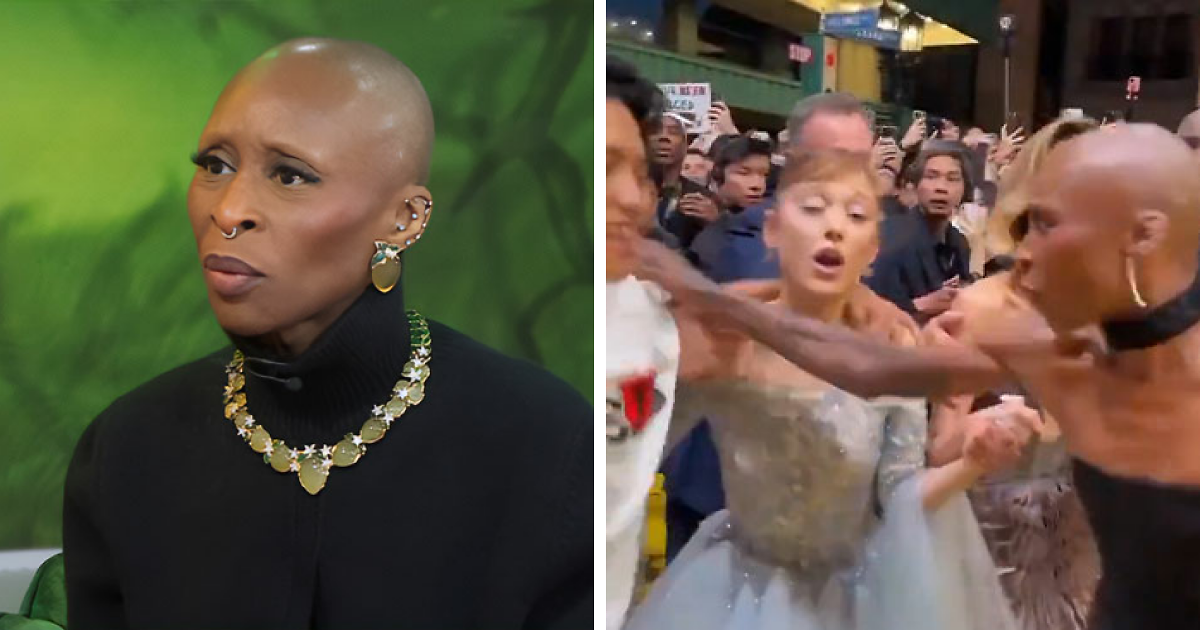
During the Asia-Pacific premiere of Wicked: For Good at Universal Studios Singapore in November 2025, Ariana Grande was walking the yellow carpet with co-stars Cynthia Erivo, Michelle Yeoh, and Jeff Goldblum when a man breached the barrier and rushed toward her. Videos from the event showed the man grabbing Grande before security intervened.
Erivo reacted almost immediately. She moved toward Grande, helped separate her from the intruder, and stayed close as security took control of the situation. Michelle Yeoh also appeared to move in support. For a red carpet designed to celebrate one of the year’s biggest movie events, the scene quickly turned into a reminder that fame does not cancel a person’s right to personal space.
The man was later identified in multiple reports as Johnson Wen, a social media personality known for interrupting celebrity events. He was charged in Singapore and sentenced to a short jail term for public nuisance. The legal details mattered, but the emotional image that stayed with many fans was Erivo instinctively protecting Grande before the machinery of security fully caught up.
Cynthia Erivo Breaks Silence: “I Wanted To Make Sure My Friend Was Safe”
When Erivo later spoke about the incident, she did not frame herself as a hero or turn the moment into a dramatic monologue. She explained that she was not really thinking; she simply wanted to make sure her friend was safe. That response resonated because it felt refreshingly ordinary in an extraordinary setting.
In a world where public figures often speak through carefully polished statements, Erivo’s explanation sounded like what anyone might say after protecting someone they care about. She acknowledged that the man may not have intended harm, but she also stressed the obvious truth: in a fast-moving situation, you do not know what someone’s intentions are. You respond first, analyze later.
That instinct is especially understandable when the person being approached is Ariana Grande, a global star whose public life has included serious trauma, intense scrutiny, and years of fans treating proximity as if it were a prize they are owed. Even if a fan believes they are acting out of admiration, crossing a barrier and grabbing someone is not affection. It is a violation.
Ariana Grande’s Health Announcement Added Another Layer Of Concern
Soon after the Singapore incident, the Wicked: For Good rollout faced another disruption. Ariana Grande revealed that she had tested positive for COVID-19, sharing the update after a run of appearances tied to the movie’s release. Reports noted that the diagnosis led to canceled or missed promotional stops, including planned interviews and talk-show appearances.
The timing made fans especially concerned. Erivo had also been dealing with vocal issues during the tour, losing her voice around the New York premiere. Universal reportedly said Erivo was not feeling well and would skip interviews; Grande joined her in skipping most press that night, a gesture many fans interpreted as solidarity. In show business language, that is roughly the equivalent of saying, “No, we are not pretending the human body is a press release.”
COVID remains a real health concern, especially in busy indoor environments, travel-heavy schedules, and promotional events where stars interact with hundreds of people. Public-health guidance continues to emphasize practical steps such as staying home when sick, improving ventilation, masking when appropriate, hand hygiene, and taking extra precautions after respiratory illness symptoms improve.
The Press Tour Became A Case Study In Celebrity Exhaustion
The Wicked: For Good campaign was enormous. It moved across international cities, included premieres, interviews, special appearances, fan events, and the kind of fashion coverage that makes every outfit feel like a diplomatic summit between couture houses. For fans, it was dazzling. For the cast, it was also workconstant, emotional, physically demanding work.
Erivo and Grande were not just promoting a movie. They were carrying one of the most beloved modern musicals into its final film chapter. Every answer they gave was watched for chemistry. Every hug became a theory. Every skipped interview became a headline. Every tired expression invited speculation from strangers with Wi-Fi and too much confidence.
That is why Grande’s health announcement and Erivo’s voice loss mattered beyond gossip. They reminded audiences that a press tour is not a magical bubble. Bodies get tired. Voices wear down. Immune systems do not care about premiere schedules. A virus does not pause because the carpet is custom-colored.
Why Erivo And Grande’s Friendship Became The Center Of The Story
The bond between Cynthia Erivo and Ariana Grande has been one of the defining features of the Wicked film era. As Elphaba and Glinda, they play two women whose connection changes both of their lives. Off-screen, their closeness has become part of the franchise’s emotional appeal.
Interviews over the past two years have shown the pair speaking about trust, vulnerability, vocal preparation, and the pressure of honoring a musical that fans treat almost like sacred text. That kind of project can create intense bonds. When you spend months singing, crying, rehearsing, flying, posing, and explaining your feelings to interviewers who ask what color your friendship aura is, you either become close or you start communicating exclusively through blinking.
Erivo’s protective response in Singapore fit into that larger story. It was not random. It looked like the behavior of someone who had spent years building trust with a co-star and reacted from that trust in a frightening moment.
The Problem With Turning Concern Into Speculation
One of the less helpful side effects of the Wicked press cycle has been the internet’s habit of turning concern into invasive commentary. When celebrities look tired, emotional, or physically different, social media often rushes to diagnose, judge, or create theories. That is not care. That is curiosity wearing a tiny fake mustache.
Grande’s COVID announcement was a real health update. Erivo’s lost voice was a real performance-related concern. But neither situation gives the public permission to speculate wildly about private medical details, body image, mental health, or personal relationships. Responsible coverage should stick to confirmed information: what was announced, what happened publicly, and how it affected the tour.
Fans can wish Ariana Grande well without analyzing every photograph. They can admire Cynthia Erivo’s quick reaction without turning her into a security meme. They can discuss the pressures of fame without pretending they personally live in the group chat.
Why The Red-Carpet Breach Hit Fans So Hard
Celebrity events often look controlled from the outside. There are barricades, cameras, handlers, publicists, guards, lighting teams, and enough laminated credentials to wallpaper a small apartment. But the Singapore incident showed how quickly that controlled environment can break.
For fans watching the footage, the most upsetting part was not only that someone reached Grande. It was that the moment happened in a space designed to celebrate her work. A premiere is supposed to be a victory lap, not an obstacle course. Grande had spent years preparing to play Glinda, and the tour was meant to honor that achievement alongside Erivo’s Elphaba.
Erivo’s response became powerful because it restored a sense of care to a scene that had briefly lost control. She did not wait for a perfect plan. She saw her friend in distress and moved.
What This Says About Boundaries In Fan Culture
The modern fan economy can blur lines. Social media makes celebrities feel accessible. Livestreams create the illusion of closeness. Behind-the-scenes clips make audiences feel like participants. But emotional connection is not the same as personal permission.
Admiring Ariana Grande does not give anyone the right to touch her. Loving Wicked does not justify rushing a carpet. Wanting a viral moment does not outrank another person’s safety. These should not be controversial statements, but the internet occasionally needs them printed in large font and possibly laminated.
Erivo’s silence-breaking comment cut through the noise because it returned the focus to the basic issue: safety. Not celebrity gossip. Not viral fame. Not whether the attacker “meant harm.” Safety comes first.
The Movie Still Soared Despite The Setbacks
The chaos surrounding the press tour did not stop Wicked: For Good from becoming a major box-office event. The film opened strongly, with reports describing a huge domestic debut and a global launch that reinforced the commercial power of the franchise. That success is not surprising. Wicked has been a cultural giant for years, and the pairing of Erivo and Grande gave the film adaptation serious star power.
Still, the promotional turbulence may become part of how this movie era is remembered. Not because it overshadowed the film, but because it revealed the emotional cost of selling a blockbuster in real time. The cast had to sing, smile, travel, answer questions, manage illness, handle fear, and remain gracious while millions watched.
That is a lot to ask from anyone, even people wearing couture and surrounded by studio lighting.
Experience-Based Reflection: What This Story Teaches About Care, Pressure, And Public Life
Anyone who has ever supported a friend through a stressful public moment can recognize something familiar in Cynthia Erivo’s reaction. You do not need to be on a movie carpet in Singapore to understand the instinct. Maybe it happens at school when someone freezes during a presentation. Maybe it happens at work when a colleague is overwhelmed. Maybe it happens at a family event when someone becomes the center of attention for all the wrong reasons. The setting changes, but the emotional math is the same: someone you care about looks unsafe or shaken, and your body moves before your brain finishes the meeting agenda.
That is what makes the Erivo-Grande moment bigger than celebrity news. It reflects a type of friendship that is active rather than decorative. Some friendships are mostly selfies and birthday captions. Others show up when the room gets weird. Erivo’s response belonged to the second category. She did not need a microphone, a dramatic speech, or a capethough, given the Wicked wardrobe department, a cape was probably nearby. She simply stepped in.
Grande’s health announcement also offers a lesson about limits. In many industries, people feel pressure to keep going even when they are sick, tired, or emotionally drained. Entertainment makes that pressure more visible, but it is not unique to celebrities. Students push through exams while ill. Workers attend meetings with fevers. Parents keep functioning because laundry has apparently signed a contract to reproduce overnight. The cultural message is often: perform first, recover later.
But the Wicked: For Good tour showed why that message needs updating. Rest is not laziness. Canceling an appearance because of illness is not weakness. Protecting someone’s voice, health, or personal space is not diva behavior. It is basic maintenance for being human. Even the most talented performers are not rechargeable stage props.
There is also a lesson for audiences. Concern should not become ownership. Fans can care deeply about Ariana Grande and Cynthia Erivo while still respecting privacy. In fact, real care requires boundaries. It means accepting that a public figure can share a health update without inviting a full amateur investigation. It means understanding that a frightening incident can be discussed without replaying it endlessly for entertainment. It means remembering that behind the songs, gowns, memes, interviews, and box-office numbers are people who deserve ordinary dignity.
From a media perspective, this story is a reminder that the best celebrity coverage does not have to be cruel to be interesting. The facts are compelling enough: a major film tour, a shocking security breach, a co-star’s instinctive protection, a COVID diagnosis, a lost voice, and a blockbuster release that kept moving despite the setbacks. There is no need to invent darker theories or turn health into spectacle. Sometimes the truth already has enough plot twists.
In the end, Cynthia Erivo breaking her silence was not about creating another viral moment. It was about naming what the public saw: care under pressure. Ariana Grande’s health announcement was not a scandal; it was a reminder that even global pop stars get sick and need space to recover. Together, these moments made the Wicked rollout feel less like a flawless Hollywood machine and more like a human story wrapped in sequins.
Conclusion
Cynthia Erivo’s response to the Singapore red-carpet incident was fast, protective, and deeply human. Ariana Grande’s later COVID announcement added a sobering layer to an already intense press tour, reminding fans that even the brightest stars are still dealing with ordinary vulnerabilities: illness, exhaustion, fear, and the need for trusted people nearby.
The larger takeaway is simple. Celebrity admiration should never erase personal boundaries. Friendship should not be mocked when it appears in public. Health updates should be met with respect, not speculation. And when someone says they only wanted to make sure their friend was safe, maybe the best response is to believe them.