Google My Business may have changed its name to Google Business Profile, but the same question still makes local business owners stare at the dashboard like it is a spaceship control panel: “Which fields actually help me rank?”
It is a fair question. A Google Business Profile gives you fields for your name, categories, website, services, products, photos, hours, questions, posts, attributes, and more. Some of those fields help Google understand your business. Some help customers decide whether to call you. And some are mostly there to make your listing look alive instead of abandoned in a digital parking lot.
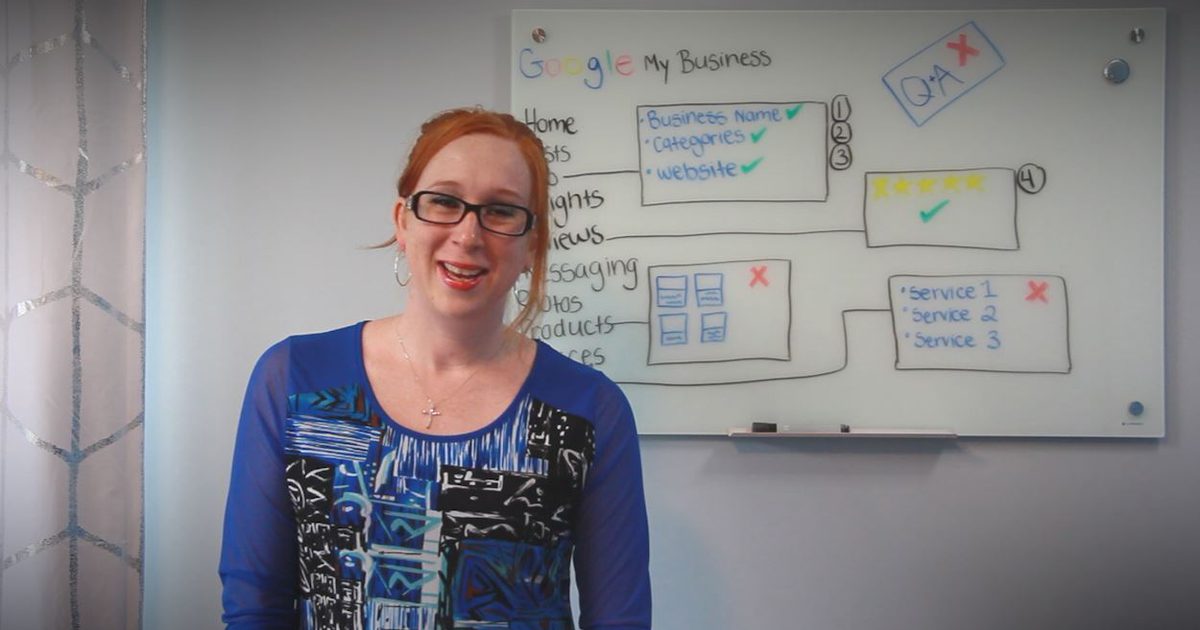
The famous Moz Whiteboard Friday topic featuring Joy Hawkins of Sterling Sky made this issue wonderfully practical: not every editable field is a ranking factor. In the original analysis, four Google My Business fields stood out as having a direct ranking impact: business name, categories, website, and reviews. Three fields were found not to move rankings directly at the time: Q&A, services, and products.
Today, the local SEO world is a little more nuanced. Google’s local results are still mainly shaped by relevance, distance, and prominence. However, newer testing and industry research suggest that some fields once considered “conversion only” may influence visibility in specific contexts. So let’s unpack the classic Whiteboard Friday idea, update it for modern Google Business Profile SEO, and separate ranking power from dashboard decoration.
First, What Does Google Actually Use to Rank Local Businesses?
Before we crown any single field king of the local pack, remember that Google says local ranking is built around three main pillars: relevance, distance, and prominence.
Relevance
Relevance is how well your Business Profile matches what someone is searching for. If someone searches “emergency plumber near me,” Google wants to understand whether you are actually an emergency plumber, a bathroom remodeler, a pipe supplier, or a person with a wrench and impressive confidence.
Distance
Distance is how close your business is to the searcher or to the location included in the query. You cannot optimize your way from Chicago to Phoenix, which is rude but mathematically reasonable.
Prominence
Prominence is how well-known, trusted, and discussed your business appears to be. Reviews, links, mentions, brand recognition, and general online authority all help Google decide whether your business deserves attention.
The best Google Business Profile optimization strategy supports these three pillars. It helps Google understand what you do, where you do it, and why people trust you.
The 4 Google Business Profile Fields That Impact Ranking
1. Business Name
The business name field is one of the most powerful ranking signals in local SEO. It is also one of the easiest fields to abuse, which is why Google watches it closely.
If your real-world business name includes a keyword, you may have an advantage. For example, “Denver Dental Implants Center” naturally tells Google more than “Bright Smile Studio.” The first name includes a service and a location. The second sounds friendly, but Google may need more supporting signals to understand what it should rank for.
That does not mean you should stuff keywords into your profile name. “Bright Smile Studio Best Dentist Cheap Dental Implants Emergency Dentist Denver Open Now” is not a business name. It is a cry for help wearing a name tag.
Google’s guidelines say your profile name should match your real-world business name as used on signage, your website, stationery, and customer-facing materials. Extra keywords, promotional phrases, locations, or service descriptions that are not part of your real brand can trigger edits, suspensions, or re-verification.
Best practice: Use your real business name. If you are rebranding legally, choose a name that is clear and descriptive without becoming spammy. If competitors are stuffing keywords into their names, do not copy them. Report inaccurate names through Google’s correction or redressal process and keep your own listing clean.
2. Business Categories
Your primary category is one of the strongest relevance signals in Google Business Profile SEO. It tells Google what your business is, not just what it sells occasionally.
A personal injury law firm should not choose “Law Firm” if “Personal Injury Attorney” is available and accurate. A bakery should not choose “Restaurant” when “Bakery” is more specific. A roofing contractor should not choose “Construction Company” just because it sounds bigger and more impressive at networking events.
Google allows one primary category and multiple secondary categories. The primary category carries the most weight because it defines your main business identity. Secondary categories can help you appear for related searches, but they should still be accurate. Categories are not keyword tags. They are classifications.
Categories also change over time. Google adds, removes, and adjusts category options regularly. That means a category audit is not a one-time chore. It is more like changing the oil: not glamorous, but ignoring it long enough can make the engine complain.
Best practice: Check the primary categories used by top-ranking competitors in your market. Choose the most specific category that accurately describes your main service. Add relevant secondary categories, but avoid selecting categories for services you do not actually provide.
3. Website Field
The website field matters because it connects your Google Business Profile to the page Google should use for deeper context. For a single-location business, the homepage may be the right choice. For a multi-location brand, a dedicated location page often works better.
Imagine a dental group with offices in Austin, Dallas, and San Antonio. If every listing links to the same homepage, Google has to work harder to understand which page supports which location. If each profile links to a dedicated location page with matching name, address, phone number, hours, services, reviews, and local content, the relevance signal becomes much cleaner.
The same idea applies to practitioner listings, department listings, and service-area businesses. The landing page should reinforce the profile, not confuse it. If your Google Business Profile says you are a “Tree Service” in Tampa, but your linked page mostly talks about landscaping in Orlando, Google may raise an algorithmic eyebrow.
Best practice: Link each profile to the most relevant page on your website. Use unique location pages for multi-location businesses. Make sure the page title, headings, copy, schema, and contact information support the same services and location shown in the profile.
4. Reviews
Reviews influence both rankings and conversions. They help Google evaluate prominence, and they help customers decide whether you are trustworthy enough to call, visit, book, or buy from.
Review quantity matters, especially when a business moves from having very few reviews to having enough social proof to compete. But quantity alone is not the whole story. Review recency, velocity, rating, text, and owner responses all matter for real-world performance.
A business with 700 reviews but no new feedback in two years may look less active than a competitor earning fresh reviews every week. Local SEO is not only about collecting reviews like trophies. It is about building a steady rhythm of customer trust.
Review text can also reinforce relevance. If customers naturally mention “emergency roof repair,” “same-day dental appointment,” or “gluten-free birthday cake,” that language can help both searchers and Google understand what the business is known for. Do not coach customers to write fake keyword-heavy reviews. Ask honestly, make it easy, and let real customers describe real experiences.
Best practice: Build a consistent review request process. Ask happy customers shortly after service. Respond professionally to positive and negative reviews. Never buy reviews, gate reviews, or offer rewards in exchange for positive ratings.
The 3 Google Business Profile Fields That Usually Do Not Directly Impact Ranking
1. Q&A
The Questions and Answers section can be useful for customers, but it is not generally considered a direct ranking lever. Adding keywords to questions or answers is not a secret trapdoor into the local pack.
That said, Q&A is still worth managing. Customers may ask about parking, pricing, appointments, warranties, accessibility, delivery, or service areas. If you ignore those questions, random strangers may answer them for you. Sometimes they are helpful. Sometimes they are confidently wrong. The internet is generous like that.
Best practice: Seed your profile with helpful, real customer questions and clear answers. Monitor new questions and respond quickly. Treat Q&A as a conversion and customer-service feature, not a ranking hack.
2. Products
Products can make a Google Business Profile more useful and visually appealing. Retailers, florists, bakeries, auto dealers, salons, and service businesses can use product listings to showcase offers, prices, photos, and descriptions.
However, products are generally better understood as a conversion feature than a direct ranking factor. They can help searchers choose you after they find you. They can support engagement. They can make your profile look richer. But adding 40 products does not automatically push you from position seven to position one.
Best practice: Add products if they help customers understand what you sell. Use clear names, accurate pricing when appropriate, strong images, and concise descriptions. Keep seasonal or unavailable products updated.
3. Services
Services are the trickiest field on this list because the local SEO conversation has evolved. In the original Whiteboard Friday discussion, services were not found to directly influence rankings. More recent testing from local SEO practitioners suggests that predefined services may help visibility for some explicit and implicit searches.
So the modern answer is: services may not be as powerful as business name, categories, website, or reviews, but they should not be ignored. They help customers understand what you offer, and in some cases they may help Google match your profile to relevant queries.
The key distinction is between using services responsibly and treating them like a keyword junk drawer. A plumber should list “water heater repair,” “drain cleaning,” and “emergency plumbing” if those services are real. A plumber should not add “best cheap luxury bathroom lawyer pizza near me” because, again, Google is not a raccoon that can be distracted by shiny keyword trash.
Best practice: Fill out relevant predefined services first. Add custom services only when they accurately reflect what you offer. Keep descriptions helpful, short, and customer-focused.
Fields That May Not Rank You Directly But Still Matter
Local SEO is not only about rankings. A top-three map pack position is wonderful, but if your profile looks abandoned, confusing, or untrustworthy, customers may scroll right past you.
Photos and Videos
Photos help people understand your business before they visit. Exterior photos reduce “Is this the right place?” anxiety. Interior photos build comfort. Team photos create trust. Product and project photos show proof.
Hours and Special Hours
Accurate hours prevent bad customer experiences. If your listing says you are open and your door says “gone fishing,” customers will not admire your work-life balance. They will leave frustrated.
Attributes
Attributes such as accessibility options, service options, amenities, ownership identity, and appointment availability can help customers filter and choose. They vary by category and region, so review them regularly.
Posts
Google Business Profile posts are useful for updates, offers, events, and calls to action. They may not be a major direct ranking factor, but they can improve engagement and help customers take the next step.
How to Prioritize Google Business Profile Optimization
If you are short on time, do not spend three hours polishing your business description while your primary category is wrong. That is like alphabetizing your spice rack while your kitchen is on fire.
Start with the fields that influence relevance and trust the most:
- Confirm that your business name follows Google guidelines.
- Choose the best primary category and accurate secondary categories.
- Link to the most relevant website or location page.
- Create a steady review generation and response process.
- Fill out services, products, attributes, hours, photos, and Q&A for conversion support.
- Track rankings, calls, website clicks, direction requests, bookings, and search terms monthly.
Good Google Business Profile SEO is not a one-day setup. It is an ongoing system. The businesses that win local search tend to keep their profiles accurate, earn reviews consistently, align their websites with their listings, and watch competitors carefully.
Common Mistakes to Avoid
Keyword-Stuffing the Business Name
This may create a temporary boost, but it violates Google’s guidelines if the words are not part of your real business name. A suspension can cost far more than the ranking bump was worth.
Choosing Broad or Irrelevant Categories
Specific beats broad. Accuracy beats ambition. Choose what you are, not what you vaguely hope Google rewards.
Sending Every Listing to the Homepage
For multi-location businesses, dedicated location pages usually create clearer relevance signals.
Ignoring Review Recency
Review campaigns should not happen once every leap year. Build review requests into your regular customer workflow.
Optimizing Only for Rankings
A profile can rank and still fail to convert. Photos, products, services, Q&A, hours, and posts may not all be direct ranking powerhouses, but they help people choose you.
Experience-Based Notes: What Happens in Real Local SEO Work
In real local SEO projects, the biggest wins usually come from fixing boring things. That may not sound exciting, but neither does dental floss, and dentists continue to be annoyingly correct about it.
The first common experience is category mismatch. A business believes it is not ranking because it needs more posts or prettier photos. Then a quick competitor review shows that every top-ranking competitor uses a more specific primary category. After changing the category, rankings often become more aligned with the right searches. The lesson is simple: Google cannot confidently rank you for what it cannot confidently classify.
The second common experience is the business-name dilemma. Keyword-rich names frequently perform well, but they create a strategic and ethical fork in the road. If the name is legitimate, consistent, and legally used, it can be a strong advantage. If it is stuffed only into Google Business Profile, it is risky. For serious businesses, the smarter long-term move is not spam. It is brand clarity. A real rebrand, DBA, or naming strategy can support rankings while keeping the business compliant.
The third experience involves location pages. Multi-location brands often underperform because every profile links to the homepage. Once each listing connects to a strong, unique location page, Google gets a cleaner cluster of signals: local title tag, matching address, embedded map, localized services, staff details, testimonials, and driving directions. This does not magically defeat proximity, but it often improves relevance and reduces confusion.
The fourth experience is review rhythm. Many businesses collect reviews only when rankings drop, which is like watering a plant after it has already written its will. A better approach is to request reviews continuously. The best systems are simple: ask after a successful job, send one reminder, make the link easy, and respond to every review with a human tone. Over time, fresh reviews create trust, improve conversion, and support prominence.
The fifth experience is that conversion fields matter more than impatient SEOs admit. Products, services, photos, Q&A, and posts may not always act like direct ranking buttons, but they help customers make decisions. A florist with beautiful product photos, current arrangements, clear hours, and recent reviews may convert better than a competitor with a slightly higher ranking but a dusty profile. Visibility gets the customer to the window. Profile quality gets them through the door.
The final experience is that Google Business Profile optimization works best when paired with website SEO. A great profile connected to a thin website has a ceiling. A strong local landing page, relevant service pages, consistent citations, quality backlinks, and real-world reputation all reinforce the profile. Local SEO is not one field. It is a chorus. If one singer is off-key, everyone notices.
Conclusion
The Whiteboard Friday lesson still holds up: not every Google Business Profile field has the same ranking impact. Business name, categories, website, and reviews remain among the most important fields to audit first. Q&A, products, and posts are typically stronger for conversion than direct ranking. Services deserve a modern footnote because newer testing suggests they may influence visibility in some situations, especially when predefined services match real customer searches.
The smartest strategy is not to obsess over one field. Build a complete, accurate, customer-friendly profile that supports Google’s three local ranking pillars: relevance, distance, and prominence. Choose the right category. Use your real business name. Link to the right page. Earn fresh reviews. Then fill out the rest of the profile so customers have every reason to choose you.
Local SEO rewards clarity, consistency, and trust. Do those three things well, and your Google Business Profile becomes more than a listing. It becomes your hardest-working local salesperson, minus the coffee breaks.