Every once in a while, the internet hands us a story so perfectly structured that it feels like a romantic comedy writer spilled coffee on a screenplay and called it fate. That is exactly why the viral tale of a girl asking out a barista still makes people smile years later. It had everything: a quiet café, two nervous coworkers, one emotionally invested customer, and Twitter doing what Twitter used to do bestturning a tiny real-life moment into a global group chat.
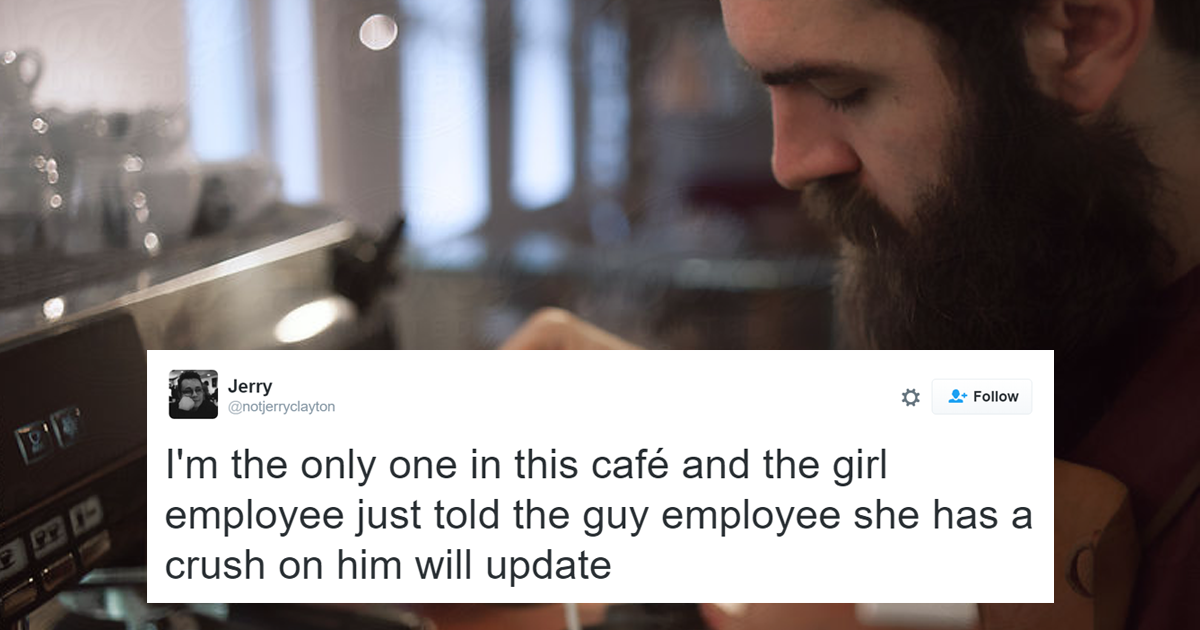
The story unfolded in a Brooklyn café, where a customer who went by Jerry on Twitter found himself alone with two baristas working behind the counter. Instead of simply drinking coffee and minding his business like a normal civilian, Jerry accidentally became the audience for a confession. A female barista told her male coworker that she had feelings for him. Not yesterday-feelings. Not “you make a nice latte” feelings. According to the updates, she had liked him for months.
And because the universe apparently enjoys dramatic timing, Jerry began live tweeting the conversation. What followed became a charming viral Twitter thread about courage, coffee shop romance, workplace crushes, and the very human thrill of watching someone risk embarrassment for a shot at happiness. The result was not just a cute barista love story. It was a reminder that meet-cutes still happen outside dating apps, even if a stranger with a phone might be narrating them in real time.
The Viral Coffee Shop Moment That Felt Like A Movie Scene
The appeal of the story starts with its simplicity. A woman likes a man. She works beside him. She has waited long enough. Finally, in a nearly empty café, she decides to say something. That is the kind of emotional bravery most people imagine doing in the shower, rehearse in the mirror, and then abandon immediately when the other person says, “Can you pass the oat milk?”
But this girl actually made her move. The male barista reportedly asked how long she had felt that way, and the answer made the situation even more dramatic: about six months. Six months is not a crush. Six months is a limited series. Six months is enough time to build an entire imaginary relationship, name two future pets, and develop strong opinions about how he loads the dishwasher.
At first, the guy did not instantly respond with a grand declaration. He needed a moment. In many versions of the story, this is where the suspense begins. He disappeared to the back, leaving the girl waiting and Jerry spiritually clutching his pearls from the customer area. The internet loves anticipation, and this situation had it in espresso-shot form.
Then came the twist. The male barista returned and kissed her. He admitted he had also had feelings for her. Suddenly, what could have become a painful workplace awkwardness story turned into a full-blown coffee shop romance. The two reportedly stepped away briefly, came back smiling and holding hands, and later gave the witness a muffin for enduring their emotional weather system.
That detail may be the best part. A free muffin is not just a pastry. In this context, it is a certificate of participation. It says, “Thank you for being trapped in our romantic origin story. Please accept this baked good as compensation.”
Why The Internet Loved This Barista Love Story
The viral thread worked because it hit several emotional buttons at once. First, it was wholesome. Online spaces are often crowded with arguments, outrage, and people typing “actually” with the energy of a courtroom objection. A simple story about two people admitting they liked each other felt like a warm cup of coffee in a feed full of cold leftovers.
Second, it felt real. The awkward pauses, the waiting, the uncertainty, and the witness’s growing investment made the whole scene believable. Love stories that go viral often have a messy, unscripted rhythm. People do not usually confess feelings in perfectly polished speeches. They stumble, laugh, panic, retreat, return, and occasionally bring muffins.
Third, the setting mattered. Coffee shops have long been treated as “third places”not home, not work, but somewhere people gather, talk, study, flirt, recover from emails, and pretend they bought one small cappuccino for reasons other than access to a table. A café naturally creates the kind of casual intimacy where conversations can become meaningful without feeling formally staged.
Finally, it gave people hope. In an era when many singles rely on dating apps, a spontaneous in-person connection can feel refreshingly old-school. Pew Research Center has reported that three in ten U.S. adults have used dating sites or apps, which means online dating is normalbut not always magical. The barista story offered something different: no profile prompts, no filtered photos, no “pineapple on pizza?” icebreaker. Just one person standing in front of another and saying the scary thing out loud.
Asking Someone Out In Real Life Still Hits Different
There is a reason people still love a good meet-cute. Meeting someone in real life carries a charge that swiping cannot always recreate. You notice someone’s laugh, rhythm, kindness, eye contact, or the way they handle a rush-hour coffee line without losing their soul. Those details are hard to compress into a bio.
The girl in this story did something many people struggle to do: she accepted that rejection was possible and asked anyway. That is the part worth remembering. The happy ending is sweet, but the courage came before the answer. She did not know he would return her feelings. She did not know the moment would become a viral Twitter thread. She simply reached the point where silence felt worse than risk.
That is why this story became more than gossip from a café. It became a tiny case study in vulnerability. Asking someone out is not only about romance. It is about choosing honesty over endless guessing. It is about refusing to live forever in the mental courtroom of “Does he like me?” and “Was that smile normal or emotionally significant?”
Of course, real-life dating also requires tact. The best version of asking someone out is clear, respectful, and pressure-free. If the answer is no, the answer is no. No campaign. No follow-up presentation. No mysterious playlist sent at 2 a.m. The charm of the barista story comes partly from mutual interest, but also from the fact that the confession appears to have been direct rather than manipulative.
The Workplace Romance Angle: Cute, Complicated, And Very Human
Because both people in the story were baristas, the moment also touches on workplace romance. Coworker crushes are common, and not just in sitcoms where everyone is suspiciously attractive and nobody seems to answer emails. SHRM has reported that more than a quarter of U.S. workers have been in a workplace romance or are in one, and many of those relationships involve peers rather than supervisors.
That distinction matters. A romance between coworkers at similar levels can still be complicated, but it is very different from a relationship involving a boss and subordinate. Power dynamics can create pressure, favoritism concerns, or uncomfortable consequences if the relationship ends badly. In a café, restaurant, office, hospital, school, or warehouse, the same principle applies: attraction may be natural, but professionalism still has to clock in.
If a coworker asks another coworker out, the healthiest version usually includes three things: clarity, consent, and dignity. Clarity means saying what you mean without turning the workplace into a guessing game. Consent means accepting the other person’s answer without debate. Dignity means continuing to treat each other respectfully afterward, whether the answer is yes, no, or “I need to go into the back and think about my entire life.”
The Brooklyn barista story became adorable because the feelings were mutual. But the broader lesson is not “confess to your coworker immediately.” The better lesson is “be brave, but be considerate.” Romance is lovely. Making someone dread their shift is not.
Live Tweeting A Private Moment: Funny Or Too Much?
Now we must talk about the customer. Jerry’s live tweeting is what made the story famous, and his reactions were part of the entertainment. He behaved like the audience member we all imagine ourselves being: stunned, delighted, invested, and politely desperate for more coffee. Without his thread, the moment might have remained a private memory between two café workers.
But the story also raises a modern question: when does documenting become intruding? A conversation in a public or semi-public place can be overheard, but that does not automatically mean everyone involved expects it to be broadcast. Laws around recording conversations vary by state, and federal rules set one baseline while some states impose stricter consent requirements. Live tweeting is not the same as secretly recording audio, but the ethical question still matters.
In this case, the story was shared without obvious identifying details about the café or the people involved, which likely helped it feel more wholesome than invasive. The baristas were not named. The thread focused on the emotional arc rather than exposing personal information. Still, the situation is a reminder that “public” and “publishable” are not always the same thing.
A good rule for social media storytelling is simple: if the people involved would feel humiliated, endangered, or exposed by your post, do not turn their life into your content. If a moment is sweet, anonymized, and harmless, it may become a shared joy. If it is identifiable and sensitive, the internet does not need it. Not every overheard conversation deserves a ring light.
Why Viral Twitter Threads Were Perfect For This Kind Of Story
The thread format made the barista story addictive. Each update arrived like a tiny episode. The girl confessed. The guy paused. The witness panicked. The guy returned. The kiss happened. The muffin appeared. It was serialized romance in miniature.
That structure is why live tweeting can be so powerful. It creates suspense through timing. A completed story tells you what happened. A live story lets you feel the uncertainty while it is happening. Readers become emotionally attached because they are waiting with the narrator. They are not just consuming the ending; they are refreshing for it.
In 2016, Twitter was especially suited to this kind of spontaneous public storytelling. Short posts, fast sharing, and real-time reactions made a café confession feel like breaking news from the Department of Feelings. Today, the same story might unfold as a TikTok, Reddit post, Instagram carousel, or Threads update. But the emotional engine would be the same: people love watching a small human moment become bigger than expected.
What This Story Says About Modern Romance
The reason the story still circulates is not only that it is cute. It also speaks to a hunger for sincerity. Many people are tired of ambiguous texting, noncommittal “situationships,” dating app burnout, and conversations that feel like job interviews with better lighting. A direct confession in a coffee shop cuts through all of that.
Modern dating often rewards coolness. Do not seem too eager. Do not reply too fast. Do not admit you care until the moon is in the correct emotional phase. The girl in the café did the opposite. She was uncool in the best possible way. She was honest.
That honesty is what made the story feel refreshing. There was no elaborate strategy, no viral stunt, no grand public proposal with a flash mob and twelve unwilling saxophonists. Just one person telling another person the truth. In a world full of curated posts and carefully edited first impressions, plain sincerity can feel almost rebellious.
Lessons From The Barista Confession
1. Courage Usually Feels Awkward First
Most meaningful risks do not feel smooth while they are happening. They feel sweaty, shaky, and wildly inconvenient. The girl’s confession was brave because it happened before she knew the ending.
2. A Pause Is Not Always A Rejection
The male barista needed time to respond. That pause created suspense, but it did not mean the answer was no. Sometimes people need a minute because they are surprised, overwhelmed, or trying not to say something ridiculous like, “I, too, have been emotionally marinating.”
3. Respect Makes Romance Safer
Workplace crushes need boundaries. One honest invitation can be sweet. Repeated pressure is not romantic; it is a problem wearing cologne.
4. Small Moments Can Become Big Memories
The setting was ordinary. The stakes were personal. That combination is why the story worked. Life-changing moments rarely announce themselves with dramatic lighting. Sometimes they happen beside a cash register.
5. The Internet Still Likes Hope
For all its chaos, the internet has a soft spot for tenderness. A genuine love story can travel far because people want proof that good things still happen between real humans in real places.
Experience Notes: What We Can Learn From Coffee Shop Crushes And Public Confessions
Anyone who has spent enough time in cafés knows they are little theaters of human behavior. People study for exams, break up quietly, conduct job interviews, write novels, stare dramatically out windows, and order one latte with the seriousness of a Senate hearing. That is why a story like this feels so believable. Coffee shops are public enough to feel casual, but intimate enough for real conversations to slip out.
Many people have experienced some version of the barista crush. Maybe it was the person who remembered your order. Maybe it was the coworker who made a boring shift feel tolerable. Maybe it was someone at the next table who laughed at the same overheard joke. These small connections can feel surprisingly powerful because they happen inside routine. You are not at a singles event. You are not trying to perform. You are just existing, and suddenly someone becomes interesting.
The challenge is knowing what to do with that feeling. A respectful approach is everything. If you like someone who is working, especially someone serving you, remember that they are paid to be pleasant. A warm smile from a barista may mean “I am deeply attracted to you,” but it may also mean “Please take your receipt and allow me to survive this line.” Customers should be careful not to confuse service friendliness with romantic interest.
Coworker crushes are different but equally delicate. When two people work together, they already share time, stress, jokes, routines, and tiny rituals. Attraction can grow naturally. But the workplace is not a dating playground; it is where people earn rent, health insurance, and the right to complain about the schedule. If feelings are confessed, the other person must be able to say no without fearing awkwardness, gossip, or consequences.
That is what makes the Brooklyn café story unusually satisfying. The confession appears to have landed safely. The feeling was returned. The witness was delighted. The internet received a muffin-shaped burst of serotonin. But real life does not always resolve so neatly, and that is okay. The real victory is not always getting the yes. Sometimes it is expressing yourself with honesty and handling the outcome with grace.
For readers thinking about asking someone out in real life, the best advice is boring but useful: choose the right moment, keep it simple, and leave room for a comfortable no. Try something like, “I like talking with you and would enjoy getting coffee sometime when you are not working. No pressure if not.” That sentence will not win a poetry award, but it is clear, kind, and unlikely to cause a workplace incident report.
For anyone tempted to live tweet a stranger’s romantic moment, the advice is also simple: protect people. Remove names, locations, faces, and details that could embarrass them. Ask yourself whether the story spreads joy or simply feeds your need for attention. The best public storytelling notices humanity without exploiting it.
In the end, the girl who asked out the barista gave the internet more than a cute story. She gave people a tiny reminder that vulnerability is still possible. The customer gave the world a front-row seat, but the courage belonged to her. She took the risk. He answered. Somewhere between the coffee refill and the free muffin, an ordinary shift became a story strangers would still talk about years later.
Conclusion
The viral story of a girl asking out a barista worked because it was funny, suspenseful, and deeply human. It combined the charm of a coffee shop meet-cute with the real-time drama of a Twitter thread, creating a miniature romantic comedy that people could follow from their phones. More importantly, it reminded readers that honest feelings still matter. In a dating culture often shaped by apps, mixed signals, and polished online personas, a simple confession can feel wonderfully bold.
Of course, the story also invites a little reflection. Workplace romance needs respect. Public storytelling needs boundaries. And asking someone out requires accepting that the other person gets a real choice. But when courage, kindness, and mutual interest meet in the same room, even an ordinary café can become the setting for something unforgettable. Sometimes love is not hiding in a grand gesture. Sometimes it is behind the counter, wearing an apron, waiting for someone brave enough to say what everyone else would only overthink.