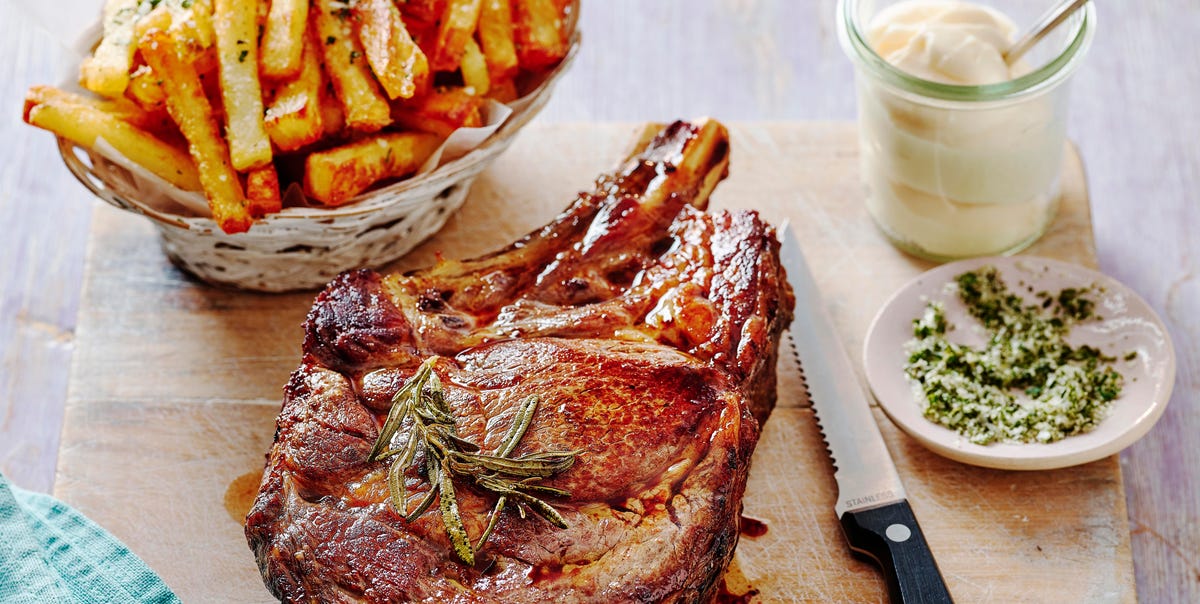
Some dinners whisper. This one walks into the room wearing a tailored jacket, orders the good butter, and politely asks everyone to stop scrolling. A proper Côte de Boeuf with Rosemary Salt Fries and Truffle Mayo is not just a steak dinner; it is a full-table event. The beef is thick, bone-in, deeply browned, juicy in the center, and dramatic enough to make a regular Tuesday feel like it deserves candlelight.
Côte de boeuf, essentially a thick bone-in ribeye, is beloved for a reason: it carries generous marbling, a bold beefy flavor, and the kind of presentation that makes guests say, “Oh, we’re doing this?” Yes. We are doing this. The key is not fancy chef magic. It is control: dry seasoning, even heat, a thermometer, a hard sear, and enough resting time for the juices to settle instead of sprinting across the cutting board like they are late for a meeting.
This recipe pairs the steak with crisp rosemary salt fries and a quick truffle mayo that feels luxurious without requiring a second mortgage. The result is a steakhouse-style meal at home: golden fries, creamy dip, carved beef, and a little kitchen confidence served on the side.
What Is Côte de Boeuf?
Côte de boeuf is a French-style bone-in rib steak cut from the rib primal. In American butcher language, think of it as a thick-cut bone-in ribeye, often large enough for two people. The bone adds visual drama, while the ribeye meat brings richness from its intramuscular fat. That marbling melts during cooking, helping the steak stay tender and flavorful.
Because this cut is thick, it needs a different approach than a thin supermarket steak. A blazing-hot pan from start to finish can burn the outside before the center warms properly. A slow-first, sear-last method gives the best of both worlds: an evenly cooked interior and a crust that looks like it has its own fan club.
Why This Is the Ultimate Steak Recipe
The secret is balance. The steak is rich, the rosemary fries are salty and crisp, and the truffle mayo brings creamy earthiness. Each part supports the others. The fries are not an afterthought. The mayo is not a random “fancy” blob. Together, they create contrast: tender beef, crunchy potatoes, herbal salt, and silky sauce.
The method also respects the meat. A côte de boeuf can be expensive, so guessing is not a strategy; it is a suspense movie. Use an instant-read thermometer. Pull the steak slightly before the final target temperature because carryover cooking continues as it rests. For many steak lovers, medium-rare lands around 130°F to 135°F, while official food-safety guidance recommends cooking whole beef cuts to 145°F with a 3-minute rest. Choose your doneness based on preference and health needs, especially when serving children, older adults, pregnant guests, or anyone with a compromised immune system.
Ingredients
For the Côte de Boeuf
- 1 côte de boeuf or thick bone-in ribeye, about 2 to 2 1/2 pounds and 1 1/2 to 2 inches thick
- 2 teaspoons kosher salt
- 1 teaspoon freshly ground black pepper
- 1 tablespoon neutral oil with a high smoke point
- 2 tablespoons unsalted butter
- 3 garlic cloves, lightly smashed
- 3 fresh rosemary sprigs
For the Rosemary Salt Fries
- 2 1/2 pounds russet potatoes, scrubbed
- 2 tablespoons distilled vinegar, optional for blanching
- 2 to 3 tablespoons neutral oil or olive oil
- 1 1/2 teaspoons kosher salt
- 1 tablespoon finely chopped fresh rosemary
- 1/2 teaspoon garlic powder
- 1/4 teaspoon black pepper
For the Truffle Mayo
- 3/4 cup high-quality mayonnaise
- 1 to 2 teaspoons truffle oil, added gradually
- 1 teaspoon lemon juice
- 1/2 teaspoon Dijon mustard
- 1 small garlic clove, finely grated
- Pinch of kosher salt
- Freshly ground black pepper, to taste
Equipment You Will Need
- Cast-iron skillet or heavy stainless steel pan
- Rimmed baking sheet
- Wire rack
- Instant-read thermometer
- Sharp carving knife
- Large bowl for soaking potatoes
Step-by-Step Recipe
Step 1: Season the Steak Early
Pat the côte de boeuf dry with paper towels. Season it all over with kosher salt, including the edges. For the best crust, place it uncovered on a wire rack set over a plate or baking sheet and refrigerate for at least 4 hours, or overnight if possible. This dry-brining step seasons the meat more deeply and helps the surface dry, which means better browning later.
If you are short on time, season the steak at least 45 minutes before cooking. Avoid salting it five minutes before it hits the pan unless you enjoy watching moisture sabotage your crust like a tiny culinary villain.
Step 2: Prepare the Rosemary Salt
Mix the kosher salt, chopped rosemary, garlic powder, and black pepper in a small bowl. Rub the mixture lightly between your fingers to release the rosemary oils. Set it aside. This simple seasoning will cling to the hot fries and make them taste like they came from a restaurant that charges extra for water with lemon.
Step 3: Cut and Soak the Fries
Cut the russet potatoes into thick fries, about 1/2 inch wide. Place them in a bowl of cold water for at least 30 minutes. Soaking removes excess surface starch, helping the fries crisp instead of turning leathery. After soaking, drain the potatoes and dry them thoroughly. Moisture is the enemy of crispness. It is also the reason many oven fries look sad.
Step 4: Blanch or Pre-Bake for a Fluffy Interior
For extra-crisp fries, simmer the potatoes in salted water with a splash of vinegar for 5 to 6 minutes, just until the edges begin to soften but the fries still hold their shape. Drain carefully and let them steam-dry. This step gives the fries a fluffy center and a surface that roughens slightly, creating more edges to crisp in the oven.
Step 5: Roast the Fries
Heat the oven to 425°F. Toss the dried potatoes with oil, then spread them on a rimmed baking sheet in a single layer. Do not crowd them. Crowded potatoes steam, and steamed fries are just potato sticks with broken dreams.
Roast for 25 to 35 minutes, flipping halfway through, until the fries are golden brown and crisp at the edges. While they are hot, toss them with the rosemary salt. Keep them warm while the steak finishes.
Step 6: Slow-Cook the Côte de Boeuf
Reduce the oven to 250°F. Place the steak on a wire rack over a baking sheet. Roast slowly until the center reaches about 115°F for rare, 120°F to 125°F for medium-rare after searing, or 130°F for medium. The exact time depends on thickness, starting temperature, and your oven, but a thick steak may take 30 to 50 minutes.
The goal is not to finish the steak in the oven. The goal is to gently bring the interior close to doneness so the final sear can build a crust without overcooking the center.
Step 7: Sear Hard and Baste
Heat a cast-iron skillet over high heat until very hot. Add the neutral oil. Pat the steak dry again if needed, then place it in the pan. Sear for 60 to 90 seconds per side, pressing gently so the meat makes good contact with the pan. Sear the fat cap and edges as well.
Lower the heat slightly. Add butter, smashed garlic, and rosemary. Tilt the pan and spoon the foaming butter over the steak for 30 to 60 seconds. This adds aroma and gloss, but do not baste forever. Butter can burn, and the steak does not need a bubble bath.
Step 8: Rest, Then Carve
Transfer the steak to a cutting board and rest it for 8 to 12 minutes. Resting allows juices to redistribute, making each slice more tender and less likely to flood the board. To serve, cut the meat away from the bone, then slice against the grain into thick strips. Sprinkle with flaky salt if desired.
Step 9: Make the Truffle Mayo
Stir together mayonnaise, lemon juice, Dijon mustard, grated garlic, salt, and pepper. Add truffle oil gradually, starting with 1 teaspoon. Truffle oil is powerful, and too much can take the sauce from “elegant steakhouse” to “perfume accident in a mushroom shop.” Taste, then add more only if needed.
If making homemade mayonnaise, use pasteurized eggs for better food safety. For the easiest version, high-quality store-bought mayonnaise works beautifully and keeps the recipe approachable.
How to Serve Côte de Boeuf Like a Steakhouse
Arrange the sliced steak on a warm platter with the bone placed alongside for presentation. Add a pile of rosemary salt fries and a small bowl of truffle mayo. A crisp green salad with lemon vinaigrette is a smart side because it cuts through the richness. Roasted asparagus, sautéed mushrooms, or charred broccolini also work well.
For a finishing touch, spoon any resting juices over the sliced beef. Add a few rosemary sprigs for aroma. Then step back and admire your work for exactly three seconds before everyone attacks the fries.
Pro Tips for Perfect Results
Use a Thermometer, Not Hope
Thick steak is not the place for guesswork. Insert the thermometer into the thickest part of the meat, away from the bone and large pockets of fat. Check early and often near the end of cooking.
Dry Surfaces Brown Better
Moisture delays browning. Pat the steak dry before roasting and again before searing. Dry potatoes thoroughly before roasting. These little steps create big texture.
Do Not Skip the Rest
Cutting steak immediately after cooking is tempting, but patience pays. Resting helps the meat stay juicy and gives you time to finish the fries, pour drinks, or pretend your kitchen always smells this impressive.
Keep Truffle Oil in Check
Truffle oil should be used as a finishing flavor, not a cooking oil. Add it sparingly to the mayo and taste as you go. A little gives depth; a lot can dominate the entire plate.
Common Mistakes to Avoid
The first mistake is starting with a wet steak. A damp surface steams before it sears, which weakens crust formation. The second mistake is using a pan that is not hot enough. A proper sear needs strong heat and confident contact. The third mistake is overcrowding the fries. Potatoes need room so steam can escape.
Another common issue is slicing the steak with the grain. Look at the direction of the muscle fibers and cut across them. This shortens the fibers and makes the steak more tender to chew. Finally, do not drown the fries in truffle mayo before serving. Serve the sauce on the side so the fries stay crisp.
Flavor Variations
Garlic-Parmesan Rosemary Fries
Toss the hot fries with rosemary salt, finely grated Parmesan, and a small amount of minced parsley. This version is savory, aromatic, and dangerously snackable.
Peppercorn Côte de Boeuf
Add cracked black pepper after the slow roast and before the sear. Pepper can burn if exposed to high heat for too long, so adding it later keeps the flavor bold without bitterness.
Lemon-Herb Mayo
For a lighter sauce, skip the truffle oil and add lemon zest, chopped chives, parsley, and a little extra Dijon. It is bright, fresh, and excellent with both steak and fries.
Storage and Reheating
Store leftover steak in an airtight container in the refrigerator for up to 3 days. Reheat gently in a low oven until warmed through, then briefly sear if you want to revive the crust. Avoid microwaving thick slices for too long, unless rubbery steak is part of your personal growth journey.
Fries are best eaten fresh, but leftovers can be reheated in an oven or air fryer at 400°F until hot and crisp. Truffle mayo should be refrigerated and used within a few days, especially if you add fresh garlic.
Experience Notes: What Cooking This Steak Teaches You
Cooking Côte de Boeuf with Rosemary Salt Fries and Truffle Mayo feels like a kitchen confidence test, but in the best possible way. The first lesson is that patience is not optional. A thick steak does not care that you are hungry. It wants gradual heat, a proper sear, and a rest. Rush it, and it will punish you with a gray band around the edge and a center that looks confused.
The second lesson is that great food is often about small controls rather than complicated tricks. Dry the steak. Salt early. Give potatoes enough space. Taste the mayo before adding more truffle oil. None of those steps are dramatic, but together they make the difference between “nice dinner” and “why did we ever pay steakhouse prices?”
There is also something genuinely satisfying about carving a côte de boeuf at the table. It creates a moment. People lean in. Someone comments on the crust. Someone else tries to steal a fry before the plate is finished. The bone gives the dish a rustic, celebratory look, while the sliced meat makes it easy to share. This is the kind of recipe that turns dinner into a small event without requiring restaurant-level equipment.
The fries bring their own personality. Rosemary salt smells warm, piney, and savory, and it clings beautifully to hot potatoes. When the fries are crisp outside and fluffy inside, they become more than a side dish. They become the thing people keep reaching for while insisting they are “just having one more.” This is a lie, of course, but a harmless and delicious one.
Truffle mayo is where restraint matters most. The goal is not to make the sauce scream “truffle” from across the room. The goal is a creamy dip with a subtle earthy note that makes the fries taste special and complements the beef. Lemon juice and Dijon keep the mayo from feeling heavy, while garlic adds a little backbone. It should taste polished, not overpowering.
The best part of this recipe is that it teaches repeatable skills. Once you understand slow roasting, searing, resting, and thermometer control, you can apply the same logic to ribeye, strip steak, porterhouse, or even thick pork chops. Once you learn how to make fries crisp, you will never look at a crowded baking sheet the same way again. And once you make a balanced dipping sauce, you will realize that condiments are not background characters. They are supporting actors with excellent timing.
This meal is ideal for date night, birthdays, Father’s Day, holidays, or any evening when you want dinner to feel like an occasion. It is rich, yes, but it is also focused. One showpiece steak, one excellent potato side, one memorable sauce. No unnecessary chaos. No tower of garnish. Just bold flavor, smart technique, and enough crispy fries to keep everyone friendly.
Conclusion
The ultimate steak recipe does not depend on mystery. It depends on choosing a great cut, seasoning it properly, cooking it with control, and serving it with sides that make sense. Côte de boeuf delivers deep beef flavor and beautiful presentation, while rosemary salt fries add crunch and comfort. Truffle mayo brings a creamy, earthy finish that makes the whole plate feel restaurant-worthy.
Whether you are cooking for guests or simply treating yourself to a serious steak night, this recipe proves that steakhouse luxury can happen at home. Use a thermometer, respect the rest, season boldly, and do not underestimate the emotional power of a perfectly crisp fry.